How Long Do Concrete Piers Last? Lifespan & Durability Analysis
Discover the true lifespan of concrete piers. Analyze durability factors, common failure modes, and mix designs that ensure 100-year foundation stability.
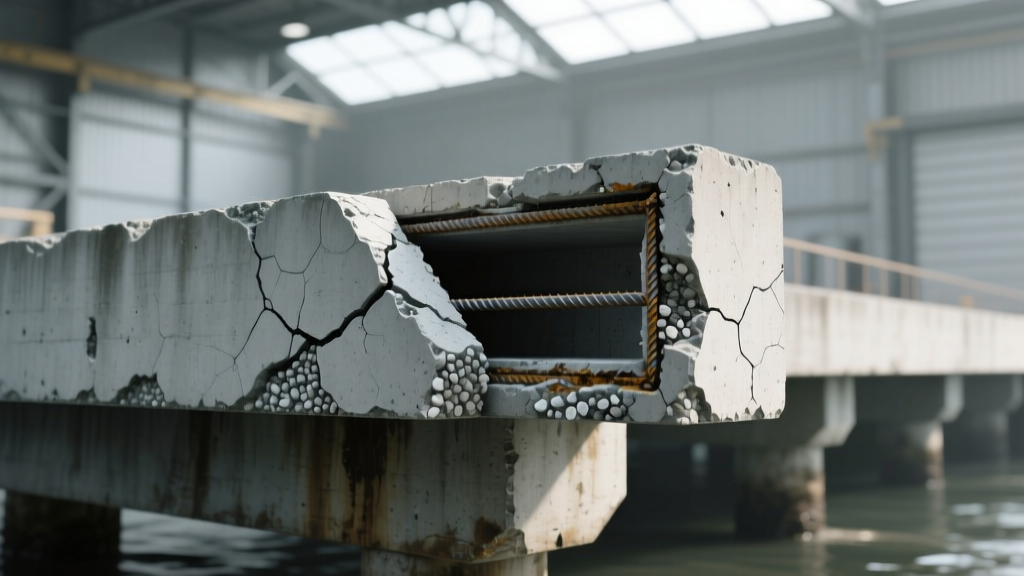
The structural integrity of any elevated building, deck, or bridge relies entirely on the subterranean performance of its foundation elements. When evaluating concrete piers, longevity is not a fixed number but a variable dictated by soil chemistry, mix design, and environmental loading. While a properly engineered poured concrete pier can easily exceed a century of service life, marginal specifications can lead to catastrophic spalling, differential settlement, or frost-induced uplift within a single decade. Understanding the degradation mechanics of concrete in subgrade environments is essential for specifying materials that outlast the structures they support.
The Baseline Lifespan Expectancy
Industry standards and historical performance data establish clear lifespan baselines for concrete foundation piers, provided they are installed below the local frost line and protected from severe chemical attack.
- Poured-in-Place (Standard 3,000 PSI): 75 to 100+ years in stable, well-draining soils.
- Poured-in-Place (High-Durability 4,000+ PSI, low w/c): 100 to 150+ years, effectively outlasting the superstructure.
- Precast Concrete Deck Blocks (Surface Bearing): 20 to 40 years, highly susceptible to frost heave and lateral soil movement.
- Drilled Shafts with Steel Casing: 100+ years, though the steel casing requires cathodic protection in high-chloride environments.
Degradation Mechanics: Why Concrete Piers Fail
Concrete is inherently durable, but subgrade piers face aggressive environmental vectors that actively degrade the matrix and the internal reinforcement.
Frost Heave and Adfreezing Uplift
The most common cause of premature pier failure in northern climates is not the degradation of the concrete itself, but the geotechnical displacement of the pier. When the ground freezes, water in the soil expands by 9%. If the base of the pier does not extend below the local frost depth—which ranges from 12 inches in the deep South to over 60 inches in northern tier states—the freezing soil will push the pier upward. Furthermore, adfreezing occurs when freezing soil grips the vertical shaft of the pier. Even if the base is below the frost line, the lateral shear force of the expanding soil can lift the entire pier. To mitigate this, structural engineers specify a 6-mil polyethylene slip coat around the upper 36 inches of the pier or use a bell-shaped base to anchor the pier in unfrozen soil.
Carbonation and Rebar Corrosion
Concrete is highly alkaline (pH 12-13), which creates a passive oxide layer that protects embedded steel rebar from rusting. Over time, carbon dioxide from the atmosphere and soil penetrates the concrete pores, reacting with calcium hydroxide to form calcium carbonate. This carbonation process lowers the concrete's pH. Once the carbonation front reaches the rebar and the pH drops below 9.5, the passive layer breaks down. In the presence of moisture and oxygen, the steel oxidizes. Iron oxide occupies up to six times the volume of the original steel, generating internal tensile stresses that exceed concrete's 400-600 PSI tensile limit, resulting in severe spalling and structural compromise.
Sulfate Attack in Expansive Soils
In regions with high clay content or coastal marshlands, soils often contain soluble sulfates. Sulfates react with the tricalcium aluminate (C3A) in standard Portland cement to form ettringite, a compound that expands massively within the hardened concrete matrix. This causes the pier to crack, crumble, and lose its load-bearing capacity from the outside in.
Specification Matrix: Engineering for 100-Year Durability
Achieving maximum lifespan requires strict adherence to mix design parameters. According to the Portland Cement Association, controlling the water-to-cementitious materials (w/c) ratio is the single most critical factor in preventing moisture ingress and subsequent degradation. Below is the specification matrix for high-durability concrete piers based on 2026 material science standards.
| Application / Environment | Target Compressive Strength | Max w/c Ratio | Cement Type (ASTM C150) | Air Entrainment |
|---|---|---|---|---|
| Standard Residential (Well-drained) | 3,000 PSI | 0.50 | Type I / I-II | 4% - 6% |
| Heavy Load / Commercial | 4,000 PSI | 0.45 | Type I / I-II | 5% - 7% |
| Severe Freeze-Thaw Exposure | 4,000 PSI | 0.40 | Type I / I-II | 6% - 8% |
| Moderate Sulfate Soils (0.10-0.20%) | 4,000 PSI | 0.45 | Type II | 5% - 7% |
| Severe Sulfate / Coastal Marine | 5,000 PSI | 0.38 | Type V + Fly Ash | 6% - 8% |
Reinforcement Strategies and 2026 Cost Realities
Standard carbon steel rebar (ASTM A615) remains the default for interior and well-drained subgrade piers. However, to guarantee a 100-year lifespan in aggressive environments, alternative reinforcements are necessary. The National Ready Mixed Concrete Association highlights the growing adoption of non-corrosive alternatives in modern foundation work.
- Epoxy-Coated Rebar (ASTM A775): Provides a physical barrier against chlorides. As of 2026, epoxy-coated #5 bar costs approximately $2.15 per linear foot, a 40% premium over black steel, but adds decades of service life in de-icing salt environments.
- GFRP (Glass Fiber Reinforced Polymer): Completely immune to electrochemical corrosion. Ideal for marine piers and coastal boardwalks. GFRP #5 rebar runs about $3.60 per linear foot. It is also electrically non-conductive and non-magnetic.
- Stainless Steel Clad Rebar: Used in critical infrastructure where structural failure is not an option. Costs can exceed $8.00 per linear foot, restricting its use to high-budget commercial or municipal projects.
Critical Cover Requirement: Regardless of the rebar type, maintain a minimum of 3 inches of concrete cover between the steel and the surrounding soil. This physical barrier slows the carbonation front and protects against physical abrasion from shifting aggregates.
Hardware Integration and Moisture Management
The interface where the concrete pier meets the wooden or steel superstructure is a primary vulnerability. Concrete is capillary-porous and will wick ground moisture upward. If a wooden post is embedded directly into the concrete or sits flush against it, the wood will absorb moisture, leading to fungal decay and structural rot within 5 to 10 years.
Expert Specification: Never embed wood posts in concrete. Always use a galvanized or stainless steel standoff post base (such as the Simpson Strong-Tie ABA44Z or PB44Z). These anchors elevate the wood post exactly 1 inch above the concrete surface, breaking the capillary wicking path and allowing air circulation to keep the timber end-grain dry.
The Biennial Inspection and Maintenance Protocol
Even the most durable concrete piers require periodic verification to ensure site drainage and soil conditions have not altered the structural loading. Implement this 5-point inspection protocol every 24 months:
- Grade and Drainage Check: Verify that the soil slope around the pier directs water away at a minimum 5% grade. Ponding water accelerates freeze-thaw cycling and sulfate ingress.
- Sonotube Form Removal: If the pier was poured using a cardboard Sonotube form, ensure the above-grade portion of the tube was stripped away. Leaving cardboard attached traps moisture against the concrete and invites termite bridging.
- Spalling and Crack Mapping: Inspect the exposed concrete for horizontal cracking or surface spalling. Hairline vertical shrinkage cracks (under 1/16 inch) are normal, but horizontal cracks indicate shear stress or frost heave damage.
- Hardware Corrosion Audit: Check the post base anchor and anchor bolts for white rust (galvanic corrosion) or red rust. Replace any compromised hardware with hot-dip galvanized or 316 stainless steel equivalents.
- Plumb and Level Verification: Use a digital level to check the pier's plumbness. A deviation of more than 1/4 inch over 4 feet indicates differential settlement or frost uplift requiring geotechnical intervention.
By specifying low w/c ratios, utilizing appropriate cement chemistries for local soil profiles, and isolating the superstructure from capillary moisture, concrete piers will reliably serve as a permanent, maintenance-free foundation system for well over a century.