Concrete Stain Cost Calculator and Coverage Estimation Guide
Calculate your concrete stain cost and coverage. Detailed pricing for acid vs. water-based stains, prep materials, and sealing for 2026 projects.
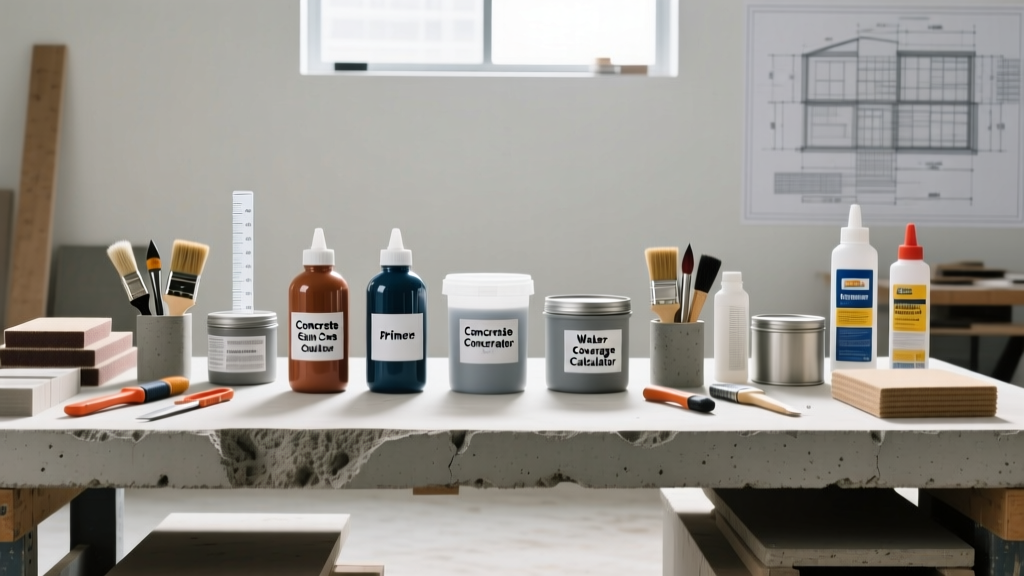
The True Cost of Concrete Staining
Accurately estimating concrete stain requires moving beyond the square-footage numbers printed on the manufacturer's can. A 5-gallon pail of acid stain might claim 1,500 square feet of coverage, but real-world application on a weathered exterior patio versus a machine-troweled interior basement yields drastically different consumption rates. As of 2026, material costs for decorative concrete have stabilized, but the hidden expenses of surface preparation and chemical sealing frequently push budgets 20% to 35% higher than initial estimates.
This guide provides a precise framework for calculating your exact material requirements, factoring in concrete porosity, stain chemistry, and the mandatory sealing phase that protects your investment.
Material Cost & Coverage Matrix
Different stain chemistries interact with the calcium hydroxide in concrete in fundamentally different ways. Selecting the right product dictates both your material cost per square foot and the visual outcome.
| Stain Type | Avg. Cost per Gallon | Theoretical Coverage | Real-World Coverage | Opacity & Finish |
|---|---|---|---|---|
| Acid (Reactive) | $45 - $65 | 250 - 300 sq ft | 175 - 225 sq ft | Translucent, marbled, earth tones |
| Water-Based (Non-Reactive) | $55 - $80 | 300 - 400 sq ft | 250 - 300 sq ft | Semi-transparent, broad color palette |
| Acetone Dye | $90 - $130 | 400 - 600 sq ft | 350 - 450 sq ft | Highly translucent, vibrant, fast-drying |
| Antiquing (Pigmented) | $60 - $85 | 200 - 250 sq ft | 150 - 200 sq ft | Opaque, hides imperfections, solid colors |
The Quantity Calculator: Factoring in Porosity
The most common estimation failure is ignoring the substrate's absorption rate. New, tightly troweled concrete resists penetration, while older, weathered, or broom-finished concrete acts like a sponge. To calculate your exact volume needs, use the Porosity-Adjusted Formula.
Total Gallons = (Total Sq Ft / Base Coverage Rate) × Porosity Multiplier × 1.15 (Waste Buffer)
Determining Your Porosity Multiplier
Apply the correct multiplier based on your specific slab condition before running the math:
- 1.0 (Base Rate): New interior concrete, power-troweled to a hard, dense finish. Less than 2 years old.
- 1.2 (Moderate Absorption): Standard exterior broom-finish driveways, patios, or interior concrete that has been lightly ground or etched.
- 1.4 (High Absorption): Weathered exterior concrete (10+ years exposed to elements), heavily spalled surfaces, or highly porous lightweight concrete mixes.
Step-by-Step Calculation Example
- Measure the Area: A standard 2-car driveway is approximately 400 square feet.
- Select the Product: Water-based stain with a base coverage of 300 sq ft per gallon.
- Assess Porosity: The driveway is 8 years old with a broom finish (Multiplier: 1.2).
- Run the Math: (400 / 300) = 1.33 gallons. Multiply by 1.2 (porosity) = 1.6 gallons. Multiply by 1.15 (waste/overlap buffer) = 1.84 gallons.
- Purchasing Decision: Buy 2 gallons. Never buy the exact calculated decimal; you need material for touch-ups and future repairs.
Hidden Costs: Surface Prep and Chemical Sealing
Stain is only 30% of the total material budget. The remaining 70% is consumed by preparation and protection. According to industry standards detailed by the Concrete Network, failing to properly prepare or seal the slab will result in premature UV fading, chemical peeling, and water intrusion.
Surface Preparation Budgeting
Acid stains require a chemically clean surface, free of curing compounds, sealers, and drywall mud. Water-based stains require a mechanical profile (CSP 1 or 2) to allow the acrylic polymers to bite into the pores.
- Diamond Grinder Rental: $120 - $180 per day (essential for removing old sealers and opening pores on troweled concrete).
- TSP (Trisodium Phosphate) Cleaner: $15 - $25 per gallon (covers ~400 sq ft for heavy degreasing).
- Muriatic Acid / Etcher: $20 per gallon (only required if the slab is highly contaminated with mineral deposits, though mechanical grinding is preferred in 2026 to avoid altering the acid stain's reactive pH).
- Acid Stain Neutralizer: $15 - $30 (Baking soda or specialized ammonia-based neutralizers are mandatory to stop the chemical reaction of acid stains before sealing).
Sealer Selection and Coverage Costs
Unsealed stain will wear away under foot traffic within months. Your sealer choice dictates the final sheen, slip resistance, and maintenance cycle.
| Sealer Chemistry | Cost per Gallon | Coverage Rate | Durability & Use Case |
|---|---|---|---|
| Acrylic (Solvent-Based) | $45 - $60 | 250 - 300 sq ft | 1-2 years. Enhances color, easy to reapply. Best for exterior patios. |
| Polyurethane (Water-Based) | $85 - $110 | 300 - 400 sq ft | 3-5 years. High abrasion resistance, UV stable. Ideal for interior floors. |
| Epoxy (100% Solids) | $120 - $160 | 200 - 250 sq ft | 5-10 years. Extreme chemical/impact resistance. Garages and commercial spaces. |
| Penetrating Silane/Siloxane | $50 - $75 | 300 - 450 sq ft | 3-5 years. Matte finish, does not enhance color, prevents water intrusion. |
DIY vs. Professional Application Costs
While DIY staining saves on labor, professional contractors utilize high-volume, low-pressure (HVLP) sprayers and auto-scrubbers that ensure uniform application without lap marks. As noted in comprehensive home improvement cost analyses by Bob Vila, professional labor rates for decorative concrete have adjusted upward due to specialized certification requirements for handling reactive chemicals and VOC-compliant sealers.
| Cost Factor | DIY Approach (Per Sq Ft) | Professional Contractor (Per Sq Ft) |
|---|---|---|
| Materials (Stain, Prep, Seal) | $0.85 - $1.40 | $1.20 - $2.00 (Wholesale pricing) |
| Equipment Rental / Depreciation | $0.30 - $0.60 | Included in labor rate |
| Labor & Expertise | $0.00 (Your time) | $2.50 - $5.00 |
| Total Estimated Cost | $1.15 - $2.00 | $3.70 - $7.00 |
Common Estimation Failures to Avoid
When building your final budget, audit your plan against these frequent miscalculations:
- Ignoring the Two-Coat Sealer Rule: Most acrylic and polyurethane sealers require a minimum of two thin coats to achieve a continuous protective film. Calculating sealer volume based on a single coat will leave you with half-finished protection and visible roller marks.
- Underestimating Anti-Slip Additives: High-gloss sealers become dangerously slick when wet. Budget an extra $15 to $25 per gallon of sealer for micronized polyethylene anti-slip grit, especially for exterior walkways and pool decks.
- Forgetting the Moisture Vapor Test: Applying a non-breathable sealer like epoxy over a slab with high moisture vapor emission rates (MVER) will cause blistering and delamination. Budget $40 for a calcium chloride MVER test kit before purchasing high-build sealers.
By utilizing the porosity-adjusted formula and accounting for the full chemical lifecycle—from mechanical prep to the final UV-stable topcoat—you can generate a highly accurate budget that prevents mid-project supply runs and compromised finishes.