Concrete Tool Durability: Lifespan Analysis for Finishing Equipment
Analyze concrete tool durability, expected lifespans for steel, magnesium, and polyurethane finishes, and expert maintenance protocols to maximize ROI.
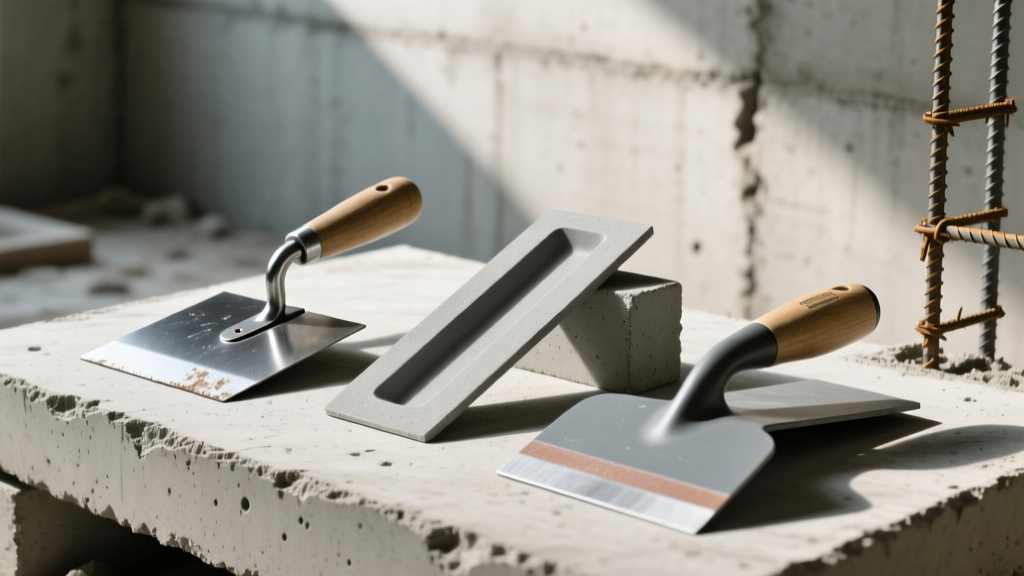
The True Cost of Tool Degradation in Concrete Finishing
In commercial and residential flatwork, the lifespan of a concrete tool directly impacts project margins and surface quality. A degraded finishing implement does not merely slow down production; it introduces micro-tears, trowel chatter, and uneven burnishing that can ruin a $15,000 decorative polish or structural slab. While a standard 14-gauge steel trowel might cost between $45 and $85 in 2026, the labor cost of replacing a failed tool mid-pour or grinding out surface defects caused by a warped blade can exceed $1,200 per incident. Understanding the material science, failure modes, and precise maintenance protocols of finishing equipment is essential for contractors looking to maximize their equipment ROI.
Material Science: What Dictates a Concrete Tool's Lifespan?
The durability of any concrete tool is fundamentally dictated by its metallurgical or polymer composition. Concrete is a highly alkaline (pH 12-13), aggressively abrasive matrix composed of silica sand, crushed aggregate, and Portland cement. The interaction between this matrix and the tool's working surface determines wear rates.
High-Carbon Blue Steel
Manufactured from 10-gauge to 14-gauge (0.134 to 0.075 inches) high-carbon steel, these blades are heat-treated to achieve a Rockwell hardness of 45-50 HRC. Blue steel offers the highest abrasion resistance and holds a sharp edge for burnishing. However, its primary vulnerability is oxidation. Without rigorous post-pour maintenance, high-carbon steel will develop surface pitting within 48 hours, which translates directly into surface scratching on subsequent pours.
Cast Magnesium
Magnesium floats and bull floats are favored for their weight—approximately 33% lighter than aluminum equivalents—reducing operator fatigue on large commercial pours. However, magnesium is highly reactive. It is exceptionally vulnerable to galvanic corrosion and acidic chemical attacks. Using standard muriatic acid or harsh phosphoric cleaners on a magnesium float will cause rapid hydrogen embrittlement, leading to catastrophic brittle failure under load.
6061-T6 Extruded Aluminum
Aluminum tools offer a middle ground. They do not rust, making them ideal for wet environments or contractors who lack stringent cleaning protocols. The trade-off is galling. Aluminum is softer than steel and will develop grooves when used on high-silica or exposed aggregate mixes, requiring more frequent replacement of the working face.
Ultra-High-Molecular-Weight (UHMW) Polyurethane
Modern polyurethane and UHMW plastics are increasingly used for edgers, groovers, and hand floats. These polymers are entirely immune to alkaline corrosion and rust. Their lifespan is dictated by thermal degradation; high-friction troweling on stiff, low-slump concrete generates localized heat that can warp or melt the polymer edge, limiting their use in heavy burnishing applications.
Material Comparison Matrix: Durability vs. Application
| Material | Abrasion Resistance | Corrosion Risk | Best Application |
|---|---|---|---|
| Blue Steel (14ga) | Excellent | High (Rust/Pitting) | Final burnishing, hard-trowel finishes |
| Cast Magnesium | Moderate | Extreme (Acid/Alkaline) | Initial floating, large-area bull floating |
| 6061-T6 Aluminum | Moderate | Low (Oxidation only) | General screeding, wet-environment use |
| UHMW Polyurethane | Low-Moderate | None (Chemical inert) | Edging, jointing, decorative stamping |
Lifespan Benchmarks: Expected Durability by Tool Category
Industry data tracked by equipment managers and published in resources like Concrete Construction Magazine indicates that tool lifespan is best measured in active square footage or operational hours rather than chronological time. Below are the 2026 benchmark lifespans for heavily used commercial finishing tools.
- Hand Trowels (Steel): 300 to 450 hours of active troweling. Beyond this, the 14-gauge blade thins to an effective 16-gauge, altering the flex profile and causing edge-catching.
- Power Trowel Blades (Clip-on): 15,000 to 25,000 square feet per set, depending on the aggregate hardness (Mohs scale) of the mix design. Quartz-heavy mixes will reduce this by 40%.
- Magnesium Bull Floats: 500+ hours if cleaned with pH-neutral solutions. Drops to under 100 hours if exposed to acidic curing compound removers.
- Concrete Edgers (Stainless/Poly): 2 to 3 years of daily commercial use. Stainless steel edgers rarely wear out from abrasion; they fail at the shank weld due to repetitive torsional fatigue.
The 4 Primary Failure Modes of Concrete Finishing Tools
To extend the life of your equipment, you must understand how it fails. Most contractors attribute tool death to 'old age,' but forensic analysis of returned equipment reveals four specific, preventable failure modes.
1. Abrasive Profile Loss
As silica sand scours the working face of a steel trowel, the blade loses its flat profile, developing a convex 'belly.' This belly prevents the edges from biting into the surface, forcing the operator to apply excessive downward pressure, which accelerates fatigue and causes uneven slab densification.
2. Galvanic and Chemical Corrosion
When dissimilar metals (e.g., a steel shank riveted to an aluminum blade) are exposed to the alkaline electrolyte of wet concrete, galvanic corrosion rapidly eats away the lesser noble metal. Furthermore, using unapproved solvents to strip acrylic cure-and-seal compounds from tool faces will chemically degrade polymer handles and magnesium faces.
3. Torsional Fatigue at the Shank
The connection point between the blade and the handle (the tang or shank) absorbs immense torsional stress. Micro-fractures initiate at the spot-welds or rivet holes. If a shank snaps during a high-tension power trowel pass, it poses a severe safety hazard and ruins the slab surface.
4. Thermal Warping
Leaving high-carbon steel blades in the bed of a truck under direct summer sunlight, or storing them resting on their edges on uneven ground, will cause permanent thermal and mechanical warping. A warped blade cannot be flattened without compromising its heat-treated crystalline structure.
⚠️ Critical Safety Warning: Dry Brushing and Silica Dust
Never use compressed air or dry wire brushing to clean dried concrete off tools. The OSHA Respirable Crystalline Silica standard strictly limits exposure to silica dust, which causes incurable silicosis. According to NIOSH guidelines, always use wet washing methods or HEPA-filtered vacuum attachments when removing cured concrete slurry from tool surfaces to maintain compliance and protect worker lung health.
Advanced Maintenance Protocols for Maximum Longevity
Implementing a strict, standardized post-pour maintenance protocol can double the functional lifespan of your concrete tool inventory. Follow this exact sequence after every pour:
- Immediate Alkaline Neutralization: Before the concrete slurry cures, rinse tools with water. For stubborn buildup, use a 50/50 mixture of white vinegar and water, or a commercially available alkaline concrete dissolver. Never use muriatic acid on magnesium or aluminum tools.
- Non-Abrasive Scrubbing: Use a stiff nylon bristle brush (not stainless steel wire) to remove residual paste. Wire brushes embed microscopic steel particles into aluminum and magnesium faces, which later rust and cause pitting.
- Thorough Drying: Wipe tools down with a microfiber cloth and allow them to air dry completely. Storing damp tools in a closed gang box guarantees flash rusting on carbon steel within 12 hours.
- Corrosion Inhibitor Application: Apply a light, even coat of a dedicated corrosion inhibitor like Boeshield T-9 or WD-40 Specialist Corrosion Inhibitor. Avoid standard WD-40, as its light solvent base evaporates quickly and leaves a tacky residue that attracts abrasive silica dust in the truck bed.
- Proper Storage Orientation: Store flat blades horizontally on padded racks. Hang floats and edgers by their handles. Never lean steel trowels against a wall at an angle, as gravity and temperature fluctuations will induce a permanent bow.
When to Retire vs. Refurbish: A Decision Framework
Knowing when to throw a tool away is just as important as knowing how to maintain it. Use this framework to evaluate your equipment at the start of every quarter:
Refurbish When:
- The shank or handle is broken, but the working blade is flat and retains at least 70% of its original thickness.
- Wooden handles are splintered or cracked (easily replaced with standard hardwood dowels and epoxy).
- Power trowel clip-on blades show edge rounding but the core steel is unwarped (can be sent to a specialized sharpening service).
Retire and Replace When:
- A steel trowel blade exhibits visible light transmission through the center (indicating extreme thinning and loss of structural integrity).
- A magnesium float shows white, powdery oxidation spots that cannot be scrubbed away (indicating deep galvanic rot).
- The blade exhibits a permanent warp or 'oil-canning' effect when pressed flat against a known true surface, like a steel workbench.
By treating your finishing equipment as precision instruments rather than disposable commodities, you ensure consistent slab quality, reduce overhead costs, and maintain compliance with modern safety standards.