Figure Cement Selection Guide for Sculptural Casting
Discover the material taxonomy of figure cement for sculptural casting. Compare white Portland, calcium aluminate, and polymer-modified mixes.
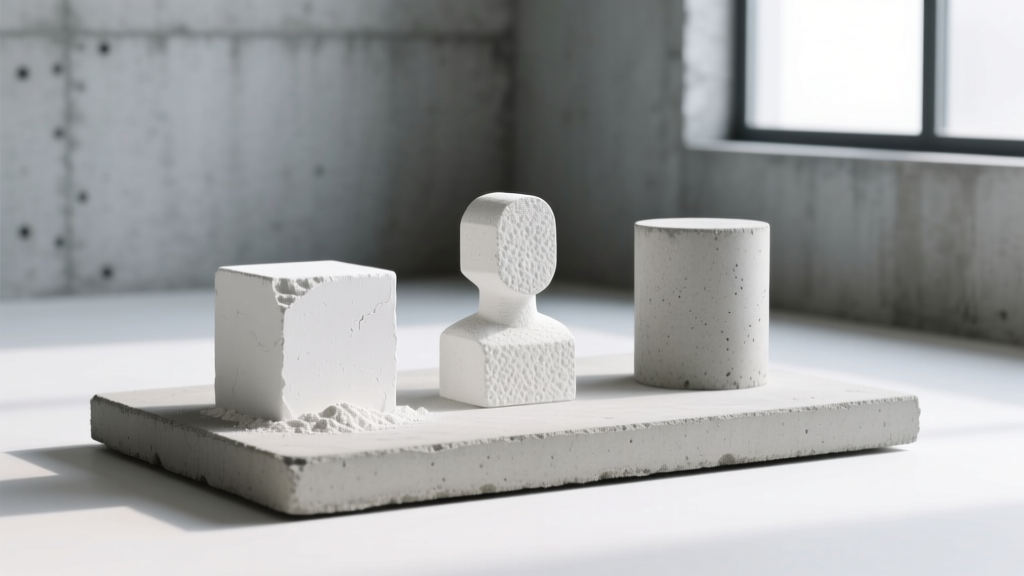
Defining Figure Cement in Architectural and Sculptural Casting
In the specialized fields of architectural precast, garden statuary, and ornamental manufacturing, standard structural concrete is entirely inadequate. The industry relies on figure cement—a functional classification of hydraulic binders, polymer-modified matrices, and ultra-fine aggregate blends engineered specifically to capture sub-millimeter mold details, resist environmental degradation, and support thin cross-sections without structural failure.
Selecting the correct figure cement requires navigating a complex material taxonomy. A mix designed for a 6-foot classical garden statue will fail catastrophically if used for a high-detail, 12-inch indoor miniature. This guide breaks down the binder chemistry, aggregate sizing, and additive protocols required to select the optimal figure cement for your specific casting application.
The Material Taxonomy of Figure Cement Binders
The foundation of any figure cement mix is the hydraulic binder. Unlike gray Portland cement, which contains high levels of iron and manganese oxides that muddy pigments and limit aesthetic versatility, figure cements rely on specialized chemistries.
1. White Portland Cement (ASTM C150 Type I/III)
White Portland cement is the workhorse of the figure casting industry. By minimizing iron oxide (Fe2O3) to less than 0.5%, manufacturers achieve a high-albedo base that accepts integral oxide pigments with absolute color fidelity. According to the National Precast Concrete Association, white cement provides the same structural reliability as gray cement but is mandatory for any architectural figure requiring integral coloring or acid-staining post-treatment.
2. Calcium Aluminate Cement (CAC)
For high-volume production facilities where mold turnaround time dictates profitability, Calcium Aluminate Cement is the preferred binder. CAC achieves 80% of its ultimate compressive strength within 24 hours, allowing for rapid demolding. However, CAC is susceptible to 'conversion'—a chemical degradation in warm, moist environments that reduces long-term strength. It must be strictly reserved for controlled, indoor-cured architectural ornaments.
3. Polymer-Modified and Acrylic Cements
For ultra-thin figures, miniature statuary, or pieces subjected to high flexural stress, standard hydraulic cements are too brittle. Polymer-modified figure cements integrate acrylic emulsions or styrene-butadiene rubber (SBR) latex directly into the matrix. This creates a co-matrix where the polymer films bridge the micro-cracks between cement hydrates, increasing flexural strength by up to 50% and drastically reducing water permeability.
Comparative Matrix: Figure Cement Binder Profiles
| Binder Type | Initial Set Time | 28-Day Compressive Strength | Detail Resolution | Pigment Compatibility | Approx. Cost (per 50lb) |
|---|---|---|---|---|---|
| White Portland (Type I) | 45 - 90 mins | 4,500 - 5,500 PSI | High (with fine agg.) | Excellent | $28 - $35 |
| White Portland (Type III) | 30 - 45 mins | 5,000 - 6,000 PSI | High | Excellent | $32 - $40 |
| Calcium Aluminate (CAC) | 15 - 25 mins | 7,000+ PSI (Rapid) | Medium-High | Poor (Dark base) | $55 - $70 |
| Polymer-Modified Acrylic | 60 - 120 mins | 6,000 - 8,000 PSI | Ultra-High | Good | $80 - $110 |
Aggregate Sizing: The Secret to High-Fidelity Detail
The binder provides the glue, but the aggregate dictates the surface finish and detail resolution of the figure cement. Standard concrete sand (ASTM C33) is far too coarse for sculptural casting and will obliterate fine textures like facial features, fabric folds, or leaf veins.
- 200-Mesh Silica Flour: Essential for the 'face coat' or detail layer. At 75 microns, silica flour flows into the deepest recesses of silicone molds, capturing fingerprints and micro-textures without air entrapment.
- 50-70 Mesh Micro-Sand: Used for the structural backup layers of the figure. It provides bulk and compressive strength while maintaining a smooth surface finish.
- Calcium Carbonate Powder: Often blended with silica flour to reduce the high water demand of pure silica, improving the workability of the figure cement slurry.
Decision Framework: Selecting Your Figure Cement Mix
Use this practical framework to specify your mix design based on the end-use environment and physical dimensions of the cast figure.
Scenario A: Large-Scale Outdoor Garden Statuary (Over 36 Inches)
Recommended Matrix: White Portland Type I + 50-70 Mesh Micro-Sand + Alkali-Resistant (AR) Glass Fibers.
Rationale: Outdoor figures face freeze-thaw cycles and UV exposure. AR-glass fibers (added at 1.5% to 2% by volume) provide the necessary tensile strength to prevent cracking during thermal expansion. Avoid CAC, as outdoor moisture triggers chemical conversion and structural weakening.
Scenario B: High-Detail Indoor Miniatures & Tabletop Figures
Recommended Matrix: Polymer-Modified Acrylic Cement + 200-Mesh Silica Flour.
Rationale: Miniatures require extreme flowability to fill intricate silicone molds without vibration. The polymer modification allows for a lower water-to-cement ratio while maintaining a self-leveling consistency, yielding a glass-smooth, pore-free surface straight out of the mold.
Scenario C: High-Volume Architectural Ornaments (Corbels, Finials)
Recommended Matrix: Calcium Aluminate Cement (CAC) + 70-Mesh Sand + PCE Superplasticizer.
Rationale: Production environments demand rapid demolding. CAC allows molds to be stripped in 4 to 6 hours. Because these pieces are often painted or sealed post-cast, the dark color of CAC is irrelevant, and its high early strength prevents handling damage on the factory floor.
Critical Additives for Figure Cement Optimization
To elevate a basic mix into a professional-grade figure cement, precise chemical admixtures are non-negotiable. The Portland Cement Association emphasizes that modern mix designs rely on chemical admixtures to achieve performance metrics impossible through water manipulation alone.
- Polycarboxylate Ether (PCE) Superplasticizers: Standard figure cement mixes with fine silica flour require excessive water to become workable, which destroys compressive strength and causes severe shrinkage. PCE superplasticizers (dosed at 0.5% to 1.0% of binder weight) disperse cement particles electrostatically, allowing for a water-to-cement (W/C) ratio as low as 0.32 while maintaining a fluid, pourable consistency.
- Defoamers / Air-Detraining Agents: Fine aggregates and polymer modifiers trap microscopic air bubbles, which manifest as surface pinholes on the cast figure. Adding a liquid defoamer (typically 0.1% by weight) breaks the surface tension of these bubbles during mixing, ensuring a flawless, dense surface.
- Shrinkage-Compensating Admixtures (SCA): Figures with long, thin appendages (arms, wings, branches) are highly susceptible to drying shrinkage cracks. SCAs utilize expansive agents that offset the volumetric shrinkage of the cement paste during the critical first 48 hours of hydration.
Mixing and Casting Protocols for Zero-Defect Fidelity
Even the most meticulously designed figure cement will fail if the mixing and casting protocols are flawed. Follow this strict sequence to eliminate air voids and ensure complete mold reproduction.
Step 1: Precision Dry Blending
Weigh all dry components (binder, silica flour, micro-sand, dry pigments) on a digital scale accurate to 1 gram. Blend in a forced-action pan mixer for a minimum of 4 minutes. Gravity mixers (like standard drum mixers) cannot properly disperse 200-mesh powders and will leave dry clumps.
Step 2: Liquid Integration and Rheology Check
Pre-mix your water, liquid defoamer, and PCE superplasticizer. Add the liquid to the dry blend slowly over 2 minutes. Mix for an additional 3 minutes. The target rheology is a 'heavy cream' consistency—it should hold a slight peak when scooped, but flow smoothly under its own weight when the trowel is tilted.
Step 3: Mold Preparation and Face Coating
Apply a high-quality, semi-permanent silicone mold release. For high-detail figures, brush a 2mm 'face coat' of pure silica-flour figure cement into the deepest recesses of the mold first. This ensures no coarse particles block fine details.
Step 4: High-Frequency Vibration
Pour the structural backup mix and immediately apply vibration. Use a high-frequency orbital vibrator (minimum 10,000 RPM) applied to the outside of the mold table, not the mold itself. Vibrate in 15-second bursts until a fine layer of cement paste (laitance) rises to the surface, indicating all entrapped air has been expelled.
Curing Regimens for Maximum Durability
The curing environment dictates the ultimate strength and weatherability of the figure. As detailed in industry curing guidelines, improper moisture loss during the first 72 hours leads to plastic shrinkage and micro-cracking.
For White Portland figure cements, demold at 24 hours and immediately submerge the figure in a lime-saturated water bath for 7 days. This prevents calcium hydroxide leaching and eliminates surface efflorescence. For Polymer-Modified cements, a 48-hour moist cure followed by a 5-day air cure allows the polymer films to coalesce properly, forming the secondary binding matrix that provides flexural toughness.
By treating figure cement not as a generic building material, but as a precision-engineered composite, manufacturers and sculptors can achieve flawless surface fidelity, structural longevity, and absolute aesthetic control in every cast piece.