Top Product Lines for a Concrete Block Foundation Build
Compare top brands for a concrete block foundation, including Echelon CMU, Tremco waterproofing, and Simpson anchors, with 2026 pricing and specs.
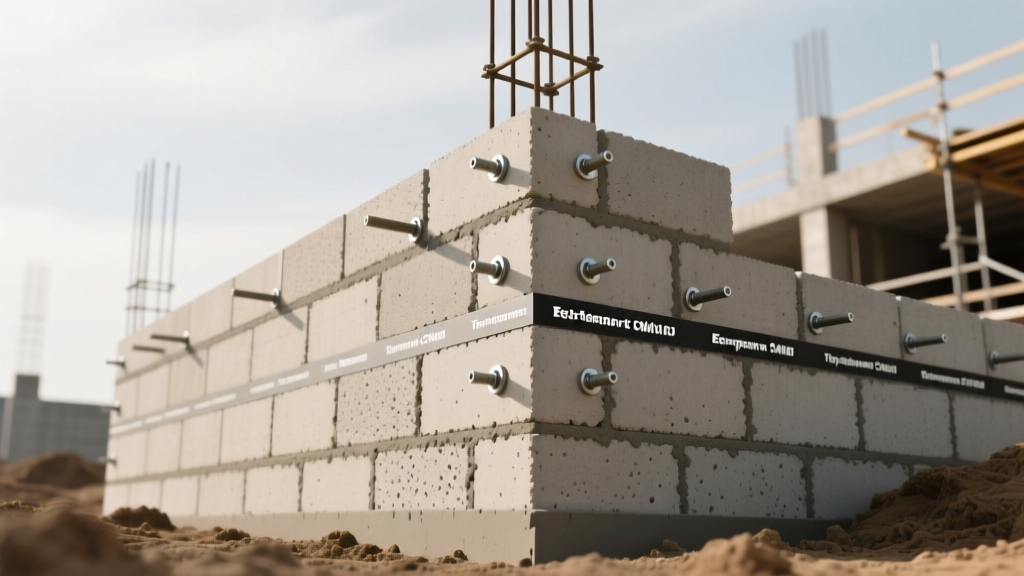
The Anatomy of a Premium CMU Foundation System
Designing a durable concrete block foundation requires moving beyond generic material lists and specifying integrated product lines that perform under hydrostatic pressure, soil expansion, and seismic shear. A modern Concrete Masonry Unit (CMU) foundation is a composite system. The blocks themselves are only one variable; the mortar chemistry, waterproofing membranes, and structural anchors dictate the assembly's lifespan. As of 2026, supply chain stabilization has normalized pricing for heavy masonry products, allowing builders to specify premium commercial-grade lines without the severe premiums seen in previous years. This deep-dive evaluates the specific product lines from industry-leading manufacturers that define a high-performance CMU foundation.
Core Masonry Units: Echelon and Oldcastle APG
For below-grade structural walls, the National Concrete Masonry Association (NCMA) mandates adherence to ASTM C90 standards for loadbearing units. While local block plants produce functional generic CMUs, national brands like Echelon Masonry (a division of Oldcastle APG) offer tighter dimensional tolerances and specialized mix designs that reduce efflorescence and improve core grout bonding.
Echelon Standard and ThermaLock Lines
Echelon’s standard 8-inch nominal CMU (actual dimensions: 7.625" x 7.625" x 15.625") is manufactured to a minimum net-area compressive strength of 2,000 psi. For residential foundations requiring higher thermal resistance without sacrificing structural mass, their ThermaLock insulated block line integrates expanded polystyrene (EPS) inserts directly into the block web, achieving R-values up to R-14 while maintaining the structural shell required for below-grade backfill loads.
| Weight Class | Density (lbs/ft³) | Acoustic/Thermal Profile | Best Foundation Application |
|---|---|---|---|
| Normal Weight | 125 - 145 | High Mass / Low R-Value | Retaining walls, high hydrostatic pressure zones, seismic shear walls |
| Medium Weight | 105 - 125 | Moderate Mass / Moderate R-Value | Standard residential basements, walk-out foundations |
| Lightweight | 85 - 105 | Low Mass / High R-Value | Above-grade stem walls, frost-protected shallow foundations (FPSF) |
Mortar and Grout Systems: SPEC MIX vs. Quikrete Commercial
The mortar joint is the weakest link in any CMU foundation. Below-grade applications require ASTM C270 Type S mortar, which delivers a minimum compressive strength of 1,800 psi and high tensile bond strength to resist lateral soil loads.
For large-scale foundation pours, SPEC MIX pre-blended silo systems deliver exact water-to-cement ratios via automated dispensing, eliminating the human error inherent in on-site shovel mixing. For smaller residential builds or repair work, Quikrete Commercial Grade Type S Mortar Mix (Product #1136) provides reliable, factory-controlled proportions of Portland cement, hydrated lime, and masonry sand. For core grouting, specify a high-slump (8-11 inches) fine grout like SPEC MIX Core Grout to ensure complete consolidation around vertical rebar without honeycombing.
Waterproofing Membranes: Tremco vs. PROSOCO
According to the Portland Cement Association, moisture intrusion is the primary cause of CMU foundation degradation, leading to rebar corrosion and interior mold. Traditional parging (a thin coat of Portland cement) is a dampproofing measure, not a waterproofing system, and will crack under structural deflection.
Tremco Paraseal Universal
For below-grade exterior waterproofing, the Tremco Paraseal Universal membrane is the industry benchmark. This 60-mil self-adhering sheet membrane features a high-density polyethylene (HDPE) cross-laminated facing that bridges hairline cracks in the CMU up to 1/16 inch. When applied over a Tremco-approved primer, it creates a continuous, fully-adhered hydrostatic barrier capable of withstanding 231 feet of head pressure.
PROSOCO Sure Klean for Efflorescence Control
For the above-grade portion of the foundation stem wall, PROSOCO Sure Klean Weather Seal Siloxa-Seal provides a breathable, penetrating water repellent. Unlike surface-forming acrylics that trap moisture inside the block (causing spalling during freeze-thaw cycles), Siloxa-Seal reacts chemically with the silica in the concrete to form a permanent hydrophobic barrier within the pore structure.
'The most common failure in CMU waterproofing is treating the membrane as a standalone solution. A complete system requires a drainage mat (like Tremco Drain Mat), a perforated footer drain, and clean washed gravel backfill to relieve hydrostatic pressure before it reaches the membrane.' — Structural Engineering Best Practices, 2026
Structural Anchoring: Simpson Strong-Tie and Hilti
A concrete block foundation must be mechanically tied to both the poured concrete footing below and the wood/steel framing above. Generic J-bolts cast into wet concrete frequently miss the block cores or fail to provide adequate uplift resistance.
- Footing Dowels (Hilti HIT-HY 200): Instead of relying on wet-set dowels that get kicked out of plumb during the footing pour, drill 1/2-inch holes into the cured footing and inject Hilti HIT-HY 200 hybrid epoxy. This ICC-ES evaluated adhesive provides exceptional bond strength in both cracked and uncracked concrete, securing #5 vertical rebar dowels directly into the block cores.
- Sill Plate Anchors (Simpson Strong-Tie ABU44Z): The Simpson Strong-Tie ABU44Z (ZMAX galvanized) adjustable base anchor is cast into the grouted block core. The ZMAX coating provides a triple-zinc barrier essential for resisting the highly alkaline environment of curing Portland cement grout, preventing the rapid corrosion seen with standard hot-dipped galvanized or bare steel anchors.
- Shear Transfer (Simpson LSTA Straps): For high-wind or seismic zones, integrate Simpson LSTA14Z straps vertically along the foundation wall, tying the top sill plate directly down into the grouted CMU cores to resist uplift and shear.
2026 Material Cost Matrix: Standard vs. Premium Lines
Budgeting a CMU foundation requires understanding the delta between builder-grade materials and engineered product lines. The following matrix reflects Q1 2026 national average material costs (excluding labor and equipment).
| System Component | Standard / Builder-Grade Line | Cost (2026) | Premium / Engineered Line | Cost (2026) |
|---|---|---|---|---|
| 8" CMU Block (per unit) | Local Plant Normal Weight | $2.45 - $2.85 | Echelon ThermaLock Insulated | $8.50 - $11.00 |
| Type S Mortar (per 80lb bag) | Generic Hardware Store Blend | $8.00 - $9.50 | SPEC MIX Pre-Blended Silo (bulk) | $5.50 - $6.50 (equiv.) |
| Waterproofing (per sq. ft.) | Asphalt Dampproofing Spray | $0.85 - $1.20 | Tremco Paraseal 60-mil Membrane | $4.25 - $5.10 |
| Sill Plate Anchor (per unit) | 1/2" Cast-in-Place J-Bolt | $1.50 - $2.00 | Simpson ABU44Z ZMAX Anchor | $12.50 - $14.00 |
Critical Failure Modes and Brand-Specific Mitigations
Understanding how CMU foundations fail informs product selection. Address these specific failure modes during the specification phase:
- Step Cracking at Mortar Joints: Caused by differential settlement. Mitigation: Use Echelon blocks with tight dimensional tolerances to ensure uniform joint thickness (3/8"), and specify Type S mortar with high bond strength. Install horizontal joint reinforcement (Dur-O-Wall Truss-Tie) every 16 inches on center.
- Hydrostatic Blowout: Occurs when exterior drainage fails and water pressure exceeds the wall's lateral capacity. Mitigation: Combine Tremco Paraseal membrane with a rigid dimpled drainage board (like Tremco Drain Mat 200) to create an air gap that channels water immediately to the footer drain.
- Anchor Corrosion and Pull-Out: Standard zinc plating dissolves in high-pH grout. Mitigation: Mandate Simpson ZMAX or stainless steel (Type 304/316) anchors for all embedded hardware to prevent section loss and subsequent sill plate detachment during uplift events.
Sourcing and Specification Strategy
When drafting your foundation plans, do not simply write '8-inch concrete block' on the structural notes. Specify the exact ASTM standards (C90 for block, C270 Type S for mortar), the required net compressive strength (2,000 psi minimum), and the named product lines for waterproofing and anchoring (e.g., 'Tremco Paraseal Universal or approved equal'). Partnering with specialized masonry supply distributors—rather than general lumber yards—ensures access to commercial-grade silos, ZMAX hardware, and certified sheet membranes, ultimately securing the structural integrity of the build for decades.