How Much Does It Cost to Build a 12x24 Shed? Budget Hacks
Discover how much it costs to build a 12x24 shed and learn expert money-saving strategies to cut material and labor expenses without sacrificing quality.
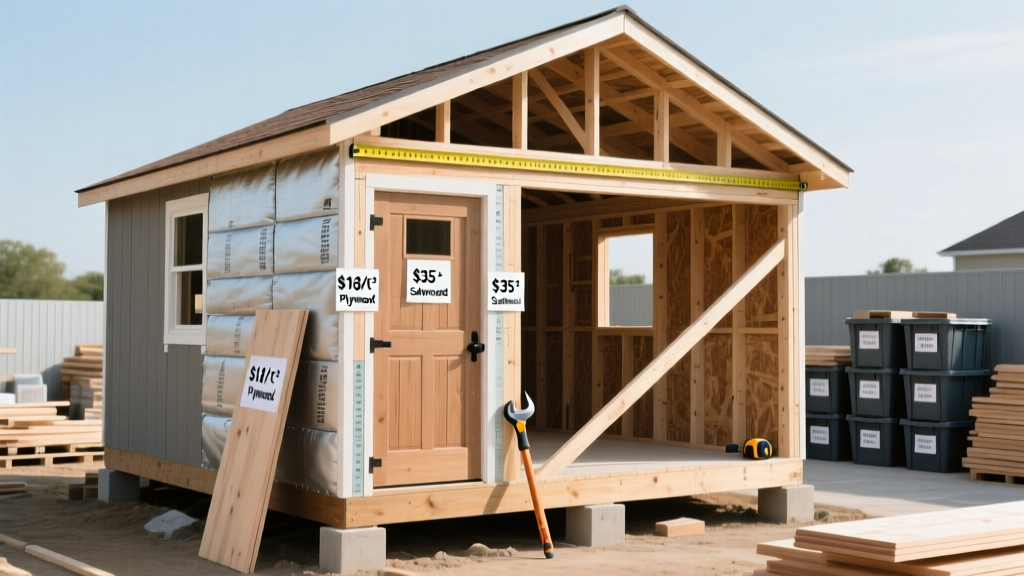
Baseline Breakdown: How Much Does It Cost to Build a 12x24 Shed?
A 12x24 shed provides 288 square feet of usable space, bridging the gap between a standard backyard storage unit and a fully functional workshop or studio. Because it exceeds the 200-square-foot threshold common in many municipal zoning codes, it typically requires a formal building permit and must adhere to the International Residential Code (IRC) standards for structural integrity and wind/snow loads.
When calculating how much it costs to build a 12x24 shed, the baseline ranges from $8,640 to $14,400 for a DIY build ($30–$50 per square foot) and $17,280 to $28,800 for a professional contractor build ($60–$100 per square foot). However, these numbers are highly malleable based on your foundation choice, material sourcing, and labor strategy.
| Cost Category | DIY Budget Build | DIY Premium Build | Pro Contractor Build |
|---|---|---|---|
| Site Prep & Foundation | $450 (Gravel/Skids) | $2,800 (Concrete Slab) | $3,500+ (Engineered Slab) |
| Framing Lumber (SPF #2) | $2,100 | $3,200 (2x6 Walls) | $4,500 (Includes labor) |
| Roofing & Sheathing | $1,400 (Architectural) | $2,500 (Standing Seam) | $4,000+ |
| Siding & Trim | $1,800 (T1-11) | $3,500 (LP SmartSide) | $5,500+ |
| Doors, Windows, Hardware | $800 | $1,800 | $2,500 |
| Labor & Project Management | $0 (Sweat Equity) | $0 | $6,000 - $10,000 |
| Total Estimated Cost | $6,550 | $13,800 | $26,000+ |
Strategic Foundation Choices: Skids vs. Monolithic Slabs
The single largest opportunity for cost reduction in a 12x24 shed build lies beneath the floor joists. A 4-inch monolithic concrete slab with thickened edges requires extensive forming, rebar, and a professional concrete pump, easily consuming $3,000 to $4,500 of your budget.
The Money-Saving Alternative: A crushed gravel pad with pressure-treated timber skids. By excavating 6 inches of topsoil, laying a geotextile fabric, and filling with 3/4-inch crushed limestone, you create a frost-heave-resistant base for roughly $450 in materials. You then mount the shed on three or four 4x6 UC4A-rated (ground contact) pressure-treated skids. This method is fully compliant for accessory structures in most jurisdictions, allows for future relocation, and saves upwards of $2,500.
The Material Matrix: Siding and Roofing Optimization
Exterior cladding accounts for nearly 25% of your material budget. Choosing the right profile and substrate prevents premature rot and reduces long-term maintenance costs.
Siding Comparison for 288 Sq Ft Sheds
- T1-11 Plywood Siding ($1.50 - $2.50/sq ft): The ultimate budget option. It serves as both sheathing and siding, eliminating the need for a separate layer of OSB wall sheathing. Drawback: Highly susceptible to moisture wicking at the bottom edge; requires strict flashing and a 6-inch ground clearance.
- LP SmartSide ExpertFinish ($2.50 - $4.00/sq ft): An engineered wood product treated with zinc borate to resist termites and fungal decay. It mimics the look of cedar lap siding but costs 40% less. Requires OSB sheathing underneath.
- Vinyl Siding ($3.00 - $5.00/sq ft): Zero maintenance, but requires a perfectly flat OSB or foam backer board substrate to prevent waviness. Higher upfront material and trim costs.
For roofing, bypass standard 3-tab asphalt shingles. While they save about $200 upfront on a 12x24 footprint, their 15-year lifespan and vulnerability to wind uplift make them a poor investment. Upgrade to architectural shingles (like GAF Timberline HDZ), which cost only marginally more but offer a 30-year warranty and superior dimensional stability.
Framing Hacks to Reduce Lumber Waste and Costs
A 12x24 shed is mathematically optimized for standard 4x8 sheet goods, but only if you frame it correctly. The 24-foot walls will perfectly accept three 8-foot sheets of OSB or plywood with zero ripping required. The 12-foot walls require one 8-foot sheet and one 4-foot sheet.
Implement Advanced Framing (Optimum Value Engineering)
If your local building department permits it, switch from traditional 16-inch on-center (OC) stud spacing to 24-inch OC advanced framing using 2x6 studs. This technique yields massive savings:
- 30% fewer studs: Reduces your framing lumber package by nearly a third.
- Insulation readiness: If you plan to finish the interior later as a studio or office, 2x6 walls allow for R-21 batt insulation, whereas 2x4 walls max out at R-15.
- Header optimization: Use insulated headers or single-piece headers with structural sheathing rather than built-up multi-ply dimensional lumber headers, saving heavy timber costs.
When cutting costs, never downgrade your structural fasteners. Modern pressure-treated lumber (ACQ or MCQ) is highly corrosive to standard zinc-plated nails and screws. According to the American Wood Protection Association (AWPA) and fastener engineering guidelines from Simpson Strong-Tie, you must use hot-dipped galvanized (ASTM A153) or proprietary ZMAX-coated fasteners for all connections touching treated wood. Using standard electroplated screws will result in severe galvanic corrosion, leading to catastrophic structural failure within 3 to 5 years.
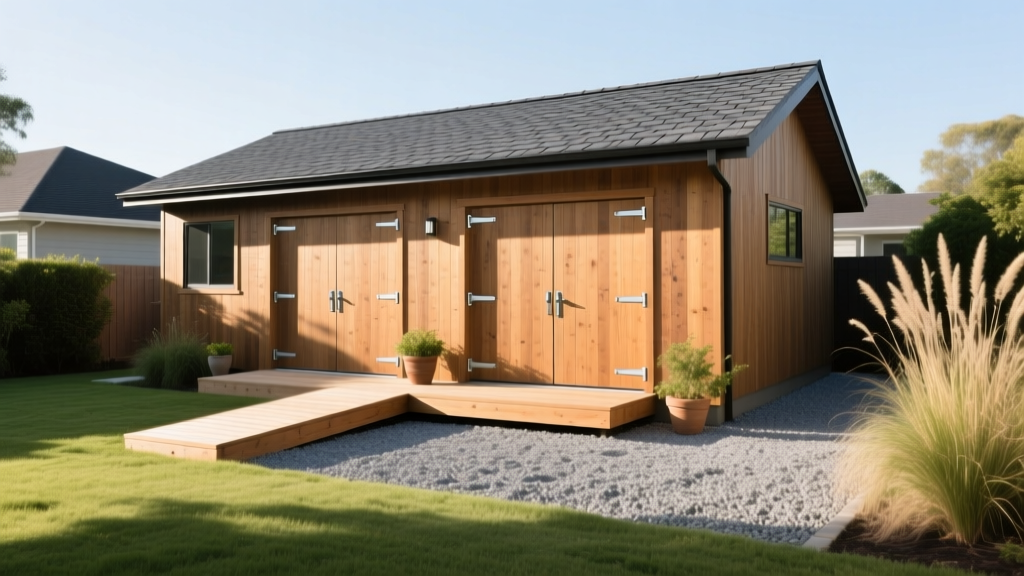
Labor vs. DIY: Calculating Your True Sweat Equity ROI
Hiring a general contractor to build a 12x24 shed adds a 30% to 50% premium to the total project cost. However, a full DIY build requires significant time and specialized tools. The most financially sound strategy is a hybrid labor approach.
Tasks to DIY (High ROI on Sweat Equity):
- Site clearing and gravel pad installation: Renting a mini-excavator for a weekend ($400) and spreading gravel by hand saves $1,500 in site-work labor.
- Floor and wall framing: Stick-framing walls on the subfloor and tilting them up is highly manageable for two people and saves thousands in carpentry labor.
- Siding and trim installation: Requires patience and a good miter saw, but carries low structural risk if mistakes are made.
Tasks to Hire Out (High Risk / Specialized Licensing):
- Electrical rough-in and panel tie-in: The International Residential Code (IRC) strictly mandates that electrical work be performed or inspected by licensed professionals. A botched DIY electrical job can void your property insurance.
- Concrete pouring (if opting for a slab): Concrete sets rapidly; paying a professional crew ensures a level, properly sloped, and troweled finish that won't crack prematurely.
Phased Construction: The "Shell-First" Budget Strategy
If your budget is strictly capped at $10,000 but you want a premium 12x24 structure, utilize the phased construction method. Focus 100% of your year-one budget on the weather-tight shell. This includes the foundation, floor system, framed walls, roof sheathing, underlayment, shingles, exterior siding, and exterior doors.
Leave the interior completely unfinished. Exposed studs and rafters are perfectly fine for storing lawnmowers, tools, and seasonal items. In year two or three, when cash flow allows, you can retroactively add insulation, vapor barriers, interior drywall or OSB lining, and electrical outlets. This prevents you from taking on high-interest contractor loans or settling for sub-par, cheap materials just to finish the interior on a tight timeline.
Frequently Asked Budget Questions
Can I use reclaimed pallet wood to build a 12x24 shed?
While pallet wood is free, it is not structurally graded. You cannot use it for load-bearing wall studs, floor joists, or roof rafters. Building inspectors will fail a 288 sq ft structure that lacks stamped, grade-marked dimensional lumber (like SPF #2). You can, however, use reclaimed pallet wood for interior shelving, non-structural wainscoting, or decorative trim to save on finish materials.
Does a 12x24 shed increase property taxes?
In most municipalities, a permanent structure on a fixed foundation (like a concrete slab) is considered a taxable improvement and will trigger a property tax reassessment. A shed built on a gravel pad with timber skids is often classified as "personal property" or a temporary accessory structure, potentially shielding you from immediate tax increases. Always verify this with your local county assessor before pouring concrete.
Expert Takeaway: The secret to building a 12x24 shed on a budget isn't about buying the cheapest materials available; it's about strategic allocation. Spend heavily on the foundation footprint, structural fasteners, and roof envelope. Save aggressively by utilizing advanced framing techniques, opting for a skid foundation, and phasing your interior finishes over time.
Written by
Marcus ChenMarcus Chen is a licensed structural engineer (PE) and building materials analyst with over 12 years of experience across residential, commercial, and industrial construction. He holds a Master of Science in Civil Engineering from UC Berkeley and spent six years at Thornton Tomasetti before transitioning to independent consulting and technical writing. Marcus specializes in material selection for seismic-prone regions, concrete reinforcement strategies, and lifecycle cost analysis. His work has been cited by the American Concrete Institute (ACI) and the Structural Engineers Association of California (SEAOC). When he is not on a job site or at his desk, you will find him hiking the Sierra Nevada or restoring a 1920s craftsman bungalow in Oakland, CA.
More from Marcus Chen
View all
Construction Cost
How Much Did the Eiffel Tower Cost to Build?
How much did the Eiffel Tower cost to build in 1889? We adjust for inflation and compare its budget to modern skyscraper construction.
Aug 4, 2026

Fire Resistance
What Is a Fire Resistant Material? Testing & Certification Guide
Discover what is a fire resistant material through ASTM and UL testing. Learn how fire ratings, certifications, and assemblies work in construction.
Aug 4, 2026

Construction Cost
How Much Did the Burj Khalifa Cost to Build?
How much did the Burj Khalifa cost to build? We break down the $1.5B project and extract 5 money-saving strategies for your next build.
Jul 30, 2026