How Much Did Alligator Alcatraz Cost to Build? Enclosure Guide
Discover how much Alligator Alcatraz cost to build and explore a complete 2026 cost guide for high-security commercial crocodilian enclosures.
Decoding the Alligator Alcatraz Build Cost
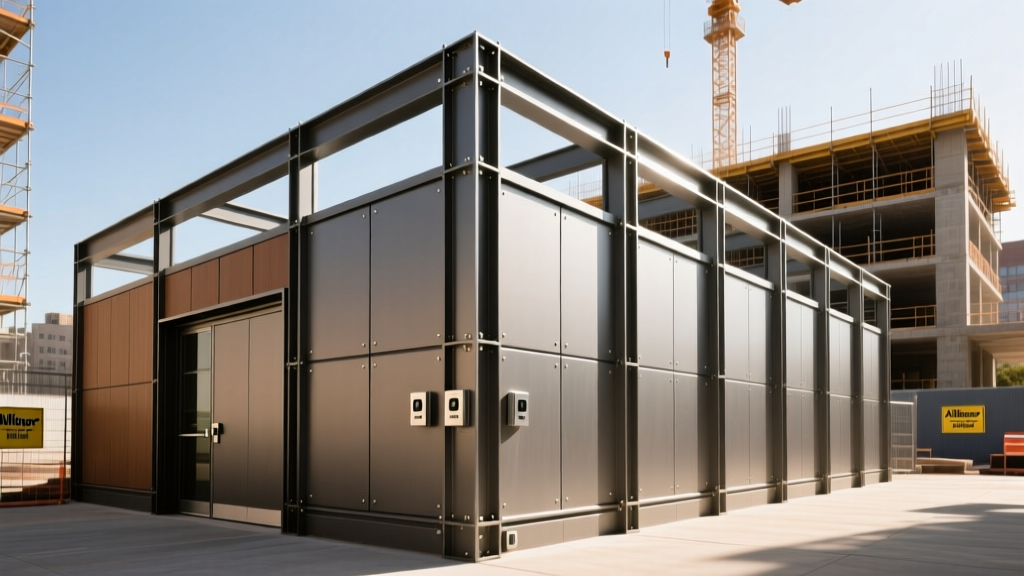
When wildlife enthusiasts, zoo architects, and private sanctuary owners ask how much did Alligator Alcatraz cost to build, they are referencing the gold standard of maximum-security crocodilian containment. Colloquially dubbed 'Alligator Alcatraz,' these high-security reptile habitats are engineered to be entirely inescapable, utilizing deep concrete moats, inward-cantilevered steel fencing, and specialized life support systems (LSS). While mid-century reptile pits were built for mere thousands of dollars using basic cinderblocks, replicating this fortress-level containment in 2026 requires a significant capital investment driven by modern animal welfare standards, advanced materials, and stringent regulatory compliance.
Historically, early maximum-security enclosures built in the 1970s and 1980s cost between $40,000 and $85,000 (adjusted for inflation). However, a modern, commercial-grade 'Alcatraz-style' alligator enclosure spanning 5,000 square feet typically ranges from $850,000 to $1.4 million today. This comprehensive cost guide breaks down the exact materials, engineering specifications, and hidden expenses required to construct an inescapable apex predator habitat.
Cost Reality Check: The 'Alcatraz' Premium
Building a standard backyard pond or basic farm enclosure costs roughly $15 to $30 per square foot. Upgrading to an 'Alligator Alcatraz' specification—featuring 6,000 PSI concrete, anti-dig subterranean barriers, and acrylic underwater viewing—pushes the cost to $170 to $280+ per square foot. The premium is non-negotiable for facilities housing bull alligators or saltwater crocodiles, where structural failure poses severe public safety risks.
2026 Construction Cost Breakdown: High-Security Perimeter
The foundation of any maximum-security reptile enclosure is its physical barrier system. Alligators possess immense bite force, abrasive scutes, and the ability to lunge vertically up to 5 feet. Standard residential materials will degrade or fail under these conditions.
| Component | Specification | 2026 Estimated Cost |
|---|---|---|
| Excavation & Earthwork | Deep trenching for moats & anti-dig footings | $14 - $22 per cubic yard |
| Reinforced Concrete Walls | 6,000 PSI, #5 rebar grid, steel-troweled | $160 - $210 per cubic yard |
| Polyurea/Epoxy Sealing | Acid-resistant, seamless aquatic coating | $9 - $14 per sq. ft. |
| Steel Cantilever Fencing | Schedule 40 pipe, 45° inward overhang | $135 - $180 per linear ft. |
| Underwater Acrylic Panels | 2.5-inch cell-cast (e.g., Reynolds Polymer) | $950 - $1,400 per sq. ft. |
Engineering the Inescapable Perimeter
To understand the costs, one must understand the engineering required to keep a 1,000-pound apex predator contained. The Crocodile Specialist Group (CSG) outlines rigorous husbandry and containment guidelines that inform modern 'Alcatraz' designs.
Concrete & Substrate Specifications
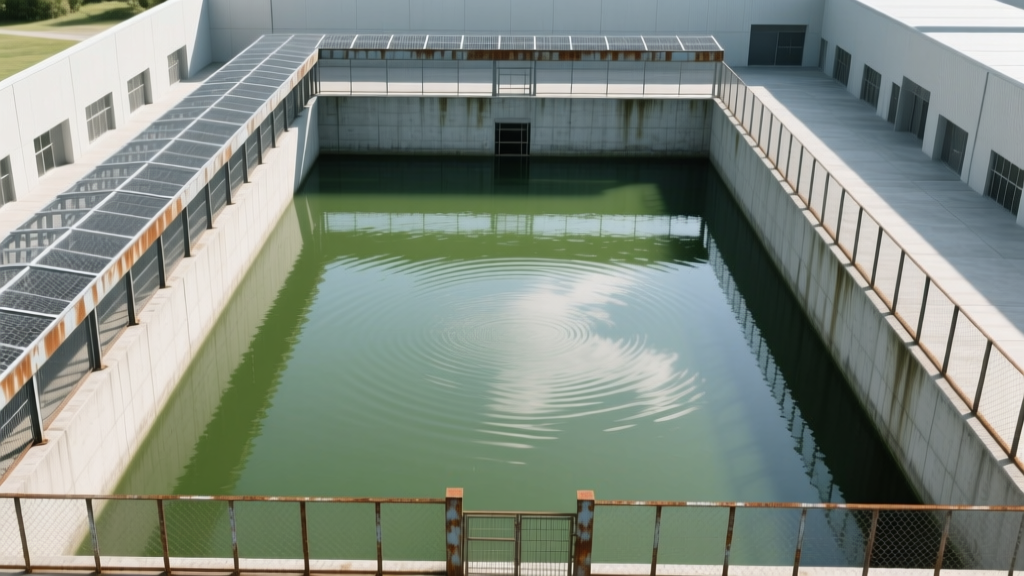
Standard 3,000 PSI residential concrete is highly porous and susceptible to spalling when exposed to the acidic waste and constant moisture of a crocodilian habitat. High-security enclosures mandate 5,000 to 6,000 PSI air-entrained concrete. Furthermore, the surface must be steel-troweled to a glass-smooth finish. If the concrete is left with a broom finish, alligators can use the microscopic ridges to gain claw traction and scale vertical walls. After curing, a seamless polyurea coating is sprayed on to prevent bacterial harboring and protect the concrete from uric acid degradation.
Moat Dimensions & Anti-Dig Barriers
Alligators are explosive jumpers. A dry moat must be a minimum of 6 feet deep and 8 feet wide to prevent a large gator from bridging the gap or leaping out. Beneath the soil line, an anti-dig concrete footer must extend at least 3 feet downward to prevent burrowing escapes, a critical detail often missed in budget-tier farm builds.
Cantilever Fencing & Overhangs
Where moats are not feasible, heavy-duty steel fencing is required. Chain link is entirely insufficient; a large alligator can crush standard chain link with its jaws or body weight. 'Alcatraz' perimeters utilize Schedule 40 galvanized steel pipe welded into 4x4 inch grids. The top 3 feet of the fence must feature a 45-degree inward cantilever to defeat climbing attempts, bringing the total fence height to a minimum of 8 feet.
Life Support Systems (LSS) & Water Filtration
A high-security enclosure is only half the battle; maintaining water quality in a high-bioload environment dictates the long-term viability of the habitat. Alligators produce massive amounts of waste, requiring commercial-grade aquatic filtration.
- Turnover Rate: The entire water volume must cycle through the filtration system every 2 to 4 hours.
- Bio-Bead Filtration: Large-scale pressurized bio-bead filters (costing $15,000 - $30,000 per unit) are required to process ammonia and nitrites.
- UV Sterilization: Industrial UV clarifiers (e.g., Emperor Aquatics) are installed inline to destroy waterborne pathogens and control algae blooms, adding $8,000 to $12,000 to the initial build.
- Radiant Heating: In temperate climates, hydronic radiant heating tubes are embedded into the concrete basking pads, tied to a commercial boiler system ($25,000+) to ensure winter thermoregulation.
Pro-Tip: Double-Door Airlock Systems
Never design a single-entry gate. USDA and Association of Zoos and Aquariums (AZA) standards require a double-door vestibule (airlock) for all predator enclosures. The inner gate must be mechanically interlocked or procedurally locked so that the outer door cannot be opened while the inner door is unlatched. Budget $12,000 to $18,000 for heavy-duty hydraulic or pneumatic gate operators with fail-safe magnetic locks.
Regulatory Compliance & Hidden Expenses
When calculating how much an Alligator Alcatraz-style facility costs to build, developers frequently underestimate the soft costs associated with permitting and compliance. Because crocodilians are heavily regulated, you must navigate a web of local, state, and federal mandates.
- USDA APHIS Licensing: Facility blueprints must be submitted and approved by the USDA before construction begins to ensure compliance with the Animal Welfare Act.
- State Fish & Wildlife Permits: States like Florida and Louisiana require specific Class I or Class II wildlife permits, which mandate minimum enclosure dimensions based on the snout-vent length of the largest specimen.
- Environmental Impact Studies: If the enclosure utilizes natural waterways or requires extensive runoff management, an environmental engineering survey ($10,000 - $25,000) may be required to prevent nutrient loading into local ecosystems.
- Specialized Insurance: Standard commercial liability policies exclude apex predator containment. Specialty exotic animal liability insurance carries high premiums, often requiring an independent structural engineer's stamp on the enclosure plans before binding coverage.
Standard Farm Enclosure vs. 'Alcatraz' Grade: A Comparison
Not every facility requires fortress-level containment. Breeding farms often utilize budget-friendly designs, whereas zoos and high-traffic tourist attractions require the 'Alcatraz' standard. Here is how the two approaches compare in 2026:
| Feature | Standard Breeding Farm | Commercial 'Alcatraz' Grade |
|---|---|---|
| Perimeter Fencing | Heavy gauge chain link, 6 ft | Welded Schedule 40 steel, 8 ft w/ cantilever |
| Concrete PSI | 3,000 - 4,000 PSI | 6,000 PSI + Polyurea Coating |
| Viewing Experience | Overhead walkways only | Submerged acrylic tunnels & viewing walls |
| Water Filtration | Continuous flow-through / flush | Closed-loop bio-bead & UV sterilization |
| Estimated Cost (5k sq ft) | $75,000 - $150,000 | $850,000 - $1.4 Million+ |
Frequently Asked Questions
Can alligators climb chain link fences?
Yes. Large alligators can use their claws and immense body strength to scale or crush standard chain link fencing if the gauge is insufficient or if the fence lacks an inward overhang. This is why high-security facilities exclusively use welded steel pipe grids.
Why is acrylic used instead of glass for underwater viewing?
Glass is brittle and prone to catastrophic shattering upon high-impact force, such as a 1,000-pound alligator striking the panel with its tail. Cell-cast acrylic (like those manufactured by Reynolds Polymer Technology) is up to 15 times more impact-resistant than glass and can be manufactured in massive, seamless sheets to withstand immense hydrostatic pressure.
How deep does an alligator enclosure pond need to be?
While alligators are semi-aquatic and spend significant time basking, the water depth should range from 4 to 8 feet. This allows for natural diving behaviors, thermoregulation, and provides enough volume to dilute waste between filtration cycles. Shallow water (under 3 feet) heats up too quickly in summer and freezes too easily in winter.
Written by
David NakamuraDavid Nakamura is a licensed architect (AIA) and construction technology writer focused on sustainable building methods, mass timber engineering, and high-performance building envelopes. He holds a Master of Architecture from the University of Washington and is a certified Passive House Consultant (CPHC). David spent eight years at the Seattle firm Mithun, where he led the design of three LEED Platinum projects, before founding his own practice specializing in net-zero residential design. He serves on the editorial advisory board of GreenBuilder Magazine and has authored peer-reviewed papers on cross-laminated timber (CLT) connections for the Journal of Structural Engineering. In his spare time, David teaches woodworking at Pratt Fine Arts Center and kayaks the Puget Sound.
More from David Nakamura
View all
Construction Cost
Labor Cost to Build a Deck Per Sq Ft: 2026 Installation Guide
Discover the exact labor cost to build a deck per sq ft in 2026. This installation guide breaks down contractor rates, complexity factors, and hidden fees.
Aug 4, 2026

Construction Cost
How Much Does It Cost to Build a 3 Bedroom House? Financing Guide
Learn exactly how much it costs to build a 3 bedroom house and explore 2026 financing options, construction loan types, and budget frameworks for your build.
Aug 4, 2026

Construction Cost
Cost to Build a Tennis Court: 2026 Guide
How much does it cost to build a tennis court in 2026? Breakdowns for asphalt, concrete, and synthetic surfaces plus fencing and lighting.
Jul 30, 2026