Average Cost to Build a Custom Home: 2026 Detailed Breakdown
Explore the average cost to build a custom home with our 2026 detailed breakdown. Get exact pricing for site prep, framing, materials, and labor.
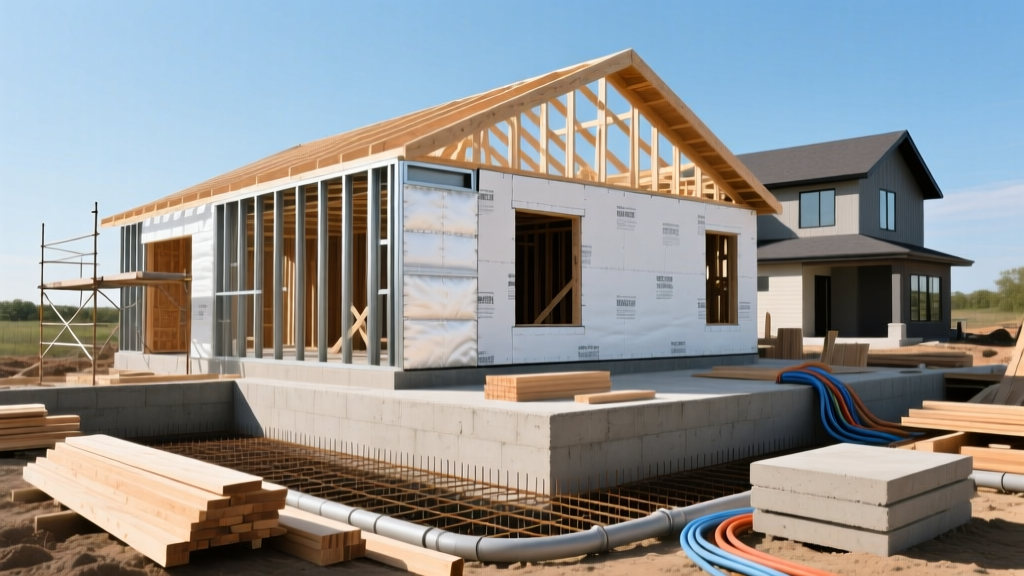
The True Average Cost to Build: Beyond the Square Footage Myth
When evaluating the average cost to build a custom home, relying on national square-footage averages is a critical budgeting error. According to the U.S. Census Bureau New Residential Construction data, the national median cost for builder-owned production homes hovers around $150 to $185 per square foot. However, custom builds—where the homeowner controls the lot selection, architectural design, and material specifications—routinely range from $250 to $450+ per square foot in 2026. This gap exists because production builders leverage economies of scale, standardized plans, and bulk material purchasing that custom projects inherently lack.
2026 Custom Home Cost Baselines
- Entry-Level Custom (Builder-grade finishes, simple roofline): $225 - $275 / sq ft
- Mid-Tier Custom (Upgraded appliances, engineered hardwood, complex framing): $280 - $350 / sq ft
- High-End Luxury (Smart home integration, premium masonry, geothermal HVAC): $375 - $500+ / sq ft
Phase 1: Pre-Construction and Site Work (10-15% of Budget)
Site preparation is where custom builds experience the highest variance in cost. A flat, cleared lot in a suburban subdivision might require only $5,000 in prep work, while a sloped, wooded rural parcel can demand $40,000+ before the foundation is even dug.
Hidden Site Prep Costs to Anticipate
- Geotechnical Soil Boring ($1,200 - $3,000): Essential for identifying expansive clay or high water tables. If expansive clay is found, over-excavation and backfilling with non-expansive select fill can add $8,000 to $15,000 to your foundation budget.
- Bedrock Blasting ($15,000 - $40,000+): If your lot sits on shallow limestone or granite, mechanical excavation is impossible. Blasting and rock removal are priced by the cubic yard and frequently cause severe schedule delays.
- Utility Trenching and Taps ($8,000 - $25,000): Running municipal water and sewer 300 feet from the street to your build site costs roughly $75 to $120 per linear foot. If municipal sewer is unavailable, a modern aerobic septic system (required in many jurisdictions for poor-percolation soils) costs $18,000 to $28,000 installed.
Phase 2: The Shell and Framing (15-20% of Budget)
The structural shell dictates your home's longevity, energy efficiency, and acoustic performance. While traditional 2x6 stick framing remains the baseline, advanced building envelopes are shifting the cost-to-value ratio.
| Framing System | Cost per Sq Ft (Wall Area) | R-Value (Whole Wall) | Best Application |
|---|---|---|---|
| 2x6 Advanced Stick Framing | $3.50 - $5.00 | R-20 to R-24 | Standard budgets, straightforward designs |
| SIPs (e.g., Premier Building Systems) | $6.00 - $8.50 | R-24 to R-32 | Complex roofs, high wind zones, fast dry-in |
| ICF (e.g., Fox Blocks, Nudura) | $7.50 - $11.00 | R-23 to R-26 (Mass effect) | Tornado/hurricane zones, extreme temp swings |
While Insulated Concrete Forms (ICF) carry a 15% to 20% premium over stick framing for the shell, they reduce HVAC sizing requirements by up to 30%, partially offsetting the initial capital outlay. For roofing, architectural asphalt shingles (like GAF Timberline HDZ) cost $4.50 to $7.00 per square foot installed, whereas 24-gauge standing seam metal roofing (Galvalume finish) costs $14.00 to $19.00 per square foot but offers a 50-year lifespan and superior hail resistance.
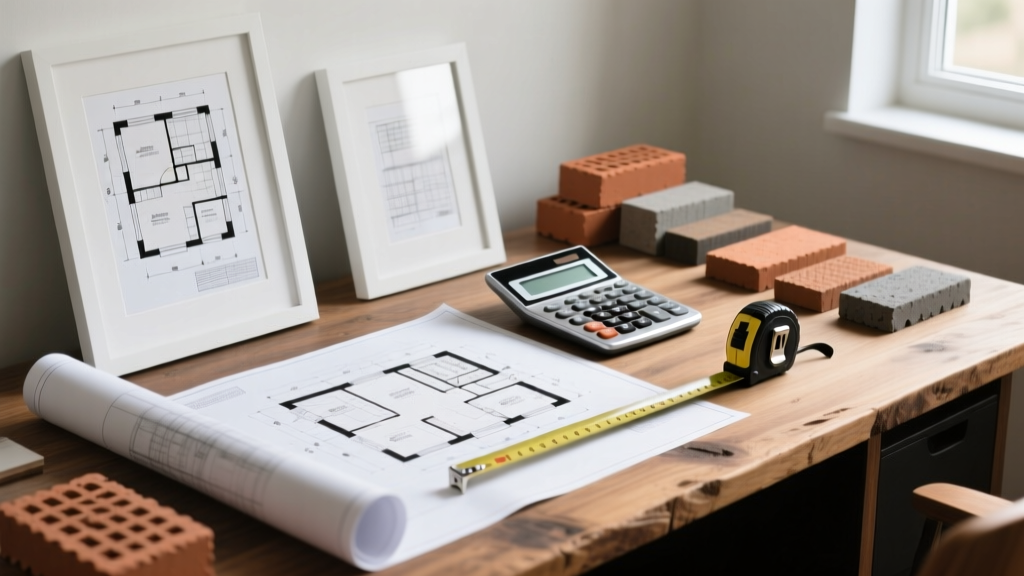
Phase 3: Major Systems and Rough-Ins (12-15% of Budget)
Mechanical, electrical, and plumbing (MEP) systems represent the central nervous system of the home. Upgrading these systems yields long-term operational savings but requires significant upfront capital.
HVAC System Decision Matrix
According to the U.S. Department of Energy Efficient Home Design guidelines, sealing the envelope tightly must be paired with proper ventilation. A standard 16 SEER2 variable-speed split system (e.g., Bosch Climate 5000) costs $8,000 to $14,000. However, if you are building in a climate with extreme temperature deltas, a Ground-Source Heat Pump (GSHP) like the WaterFurnace 7 Series costs $25,000 to $40,000 installed (including vertical well drilling). The GSHP operates at 400% to 500% efficiency compared to the 250% efficiency of the best air-source heat pumps, yielding a 7-to-10-year payback period in northern climates.
Phase 4: Interior Finishes (25-35% of Budget)
Interior finishes are the most volatile category in the average cost to build, as they are entirely dictated by aesthetic preference. This is also where budget overruns are most common.
High-ROI vs. Low-ROI Finish Allocations
- High-ROI (Allocate Budget Here): Kitchen cabinetry and countertops. Opt for custom plywood-box cabinetry with soft-close Blum hardware and quartzite or Dekton countertops. These surfaces endure heavy daily wear and drive appraisal values.
- High-ROI (Allocate Budget Here): Primary bathroom plumbing fixtures. Invest in thermostatic shower valves (e.g., Grohe SmartControl) and solid brass fittings. Cheap valves fail behind the wall, requiring $1,500+ tile demolition to repair.
- Low-ROI (Save Budget Here): Secondary bedroom carpeting and light fixtures. Use high-quality Luxury Vinyl Plank (LVP) like CoreTec Pro Plus ($6-$9/sq ft installed) instead of site-finished hardwood in low-traffic zones, and source decorative lighting from commercial suppliers rather than designer showrooms.
Phase 5: Exterior Finishes and Landscaping (10-15%)
Exterior cladding protects the structural shell and defines the curb appeal. James Hardie fiber cement siding (ColorPlus Technology) remains the benchmark for custom homes, costing $9.00 to $13.00 per square foot installed. It offers a Class A fire rating and resists woodpecker and termite damage, unlike natural cedar ($14.00 - $20.00/sq ft) which requires biennial sealing.
Landscaping is frequently left until the budget is depleted. Allocate a minimum of 5% of your total build cost for final grading, drainage swales, and foundational planting. Improper final grading is the leading cause of basement water intrusion and foundation settling in new builds.
Regional Cost Multipliers for 2026
Labor availability and local building codes drastically alter the average cost to build. Apply these multipliers to your baseline square-footage estimates to account for regional variances.
| Region | Cost Multiplier | Primary Cost Drivers |
|---|---|---|
| Northeast (NY, MA, CT) | 1.15x - 1.25x | High union labor rates, strict energy codes, deep frost walls |
| West Coast (CA, WA, OR) | 1.20x - 1.35x | Seismic engineering, Title 24 compliance, permitting delays |
| Southeast (FL, GA, NC) | 0.95x - 1.05x | Hurricane tie-downs, high water table mitigation, lower labor costs |
| Midwest (OH, IN, MO) | 0.85x - 0.95x | Favorable labor markets, standard frost depths, minimal code hurdles |
Expert Framework: Protecting Your Budget
The most critical component of estimating the average cost to build is structuring your contingency fund. Never treat a 10% contingency as a buffer for design upgrades. In custom construction, a 15% to 20% contingency is mandatory, categorized into two distinct buckets:
- Design Contingency (5%): Reserved for incomplete architectural details. If the blueprints lack specific framing details for a vaulted ceiling, the structural engineer will require steel beams or LVLs that weren't in the initial lumber quote.
- Construction Contingency (10-15%): Reserved for site unknowns and material volatility. Lumber and steel prices fluctuate based on global supply chains, and underground surprises (like unmarked utility lines or boulders) will require immediate, unbudgeted change orders.
Pro Tip: Require your general contractor to use a 'Cost-Plus with a Guaranteed Maximum Price (GMP)' contract rather than a fixed-bid contract for custom builds. Fixed-bid contractors will pad their estimates by 20% to cover their own risk. A GMP contract ensures you pay actual material and labor costs plus a fixed fee, while capping your maximum exposure.
Written by
Marcus ChenMarcus Chen is a licensed structural engineer (PE) and building materials analyst with over 12 years of experience across residential, commercial, and industrial construction. He holds a Master of Science in Civil Engineering from UC Berkeley and spent six years at Thornton Tomasetti before transitioning to independent consulting and technical writing. Marcus specializes in material selection for seismic-prone regions, concrete reinforcement strategies, and lifecycle cost analysis. His work has been cited by the American Concrete Institute (ACI) and the Structural Engineers Association of California (SEAOC). When he is not on a job site or at his desk, you will find him hiking the Sierra Nevada or restoring a 1920s craftsman bungalow in Oakland, CA.
More from Marcus Chen
View all
Construction Cost
How Much Did the Eiffel Tower Cost to Build?
How much did the Eiffel Tower cost to build in 1889? We adjust for inflation and compare its budget to modern skyscraper construction.
Aug 4, 2026

Fire Resistance
What Is a Fire Resistant Material? Testing & Certification Guide
Discover what is a fire resistant material through ASTM and UL testing. Learn how fire ratings, certifications, and assemblies work in construction.
Aug 4, 2026

Construction Cost
How Much Did the Burj Khalifa Cost to Build?
How much did the Burj Khalifa cost to build? We break down the $1.5B project and extract 5 money-saving strategies for your next build.
Jul 30, 2026