How Much Does It Cost to Build a Driveway? 2026 Guide
Discover how much it costs to build a driveway in 2026. Compare concrete, asphalt, gravel, and paver pricing, labor rates, and hidden site prep fees.
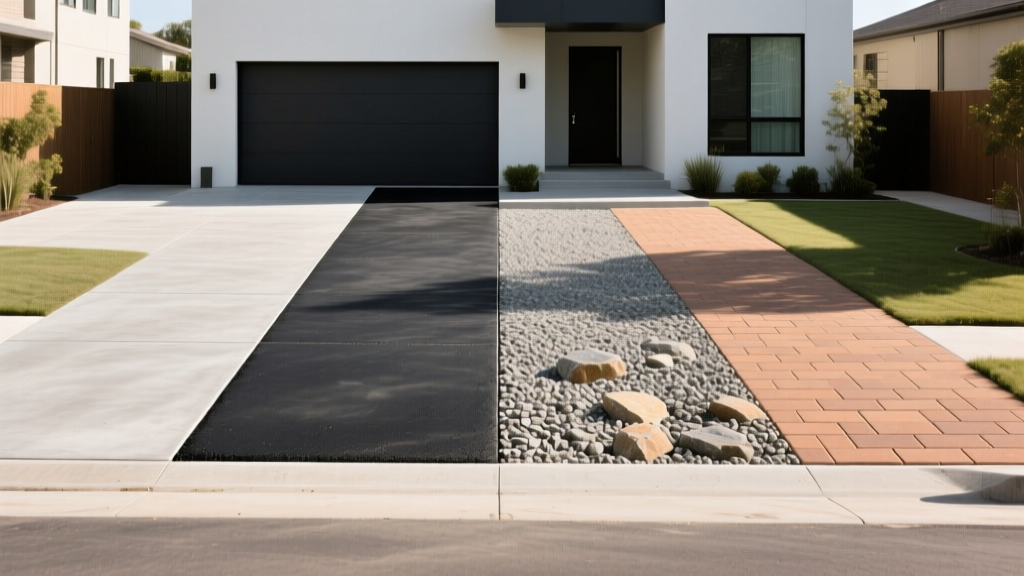
The True Cost to Build a Driveway: Beyond the Square Footage
When homeowners ask how much does it cost to build driveway, the answer extends far beyond a simple per-square-foot material metric. In 2026, the national average to install a standard 600-square-foot, two-car driveway ranges from $3,200 to $7,800. However, this baseline assumes a flat, easily accessible lot with stable soil. The final invoice is heavily dictated by material selection, site preparation complexity, and regional labor rates. According to HomeGuide's 2026 driveway cost data, material costs account for roughly 45% of the total project, while labor, heavy equipment rental, and site grading consume the remaining 55%.
Quick Cost Summary (600 Sq. Ft. Driveway)
- Gravel (Crushed Stone): $900 – $1,800 ($1.50 – $3.00 / sq. ft.)
- Asphalt (Hot-Mix): $3,000 – $7,200 ($5.00 – $12.00 / sq. ft.)
- Concrete (Standard Broom Finish): $4,800 – $10,800 ($8.00 – $18.00 / sq. ft.)
- Permeable Pavers: $10,500 – $21,000+ ($17.50 – $35.00+ / sq. ft.)
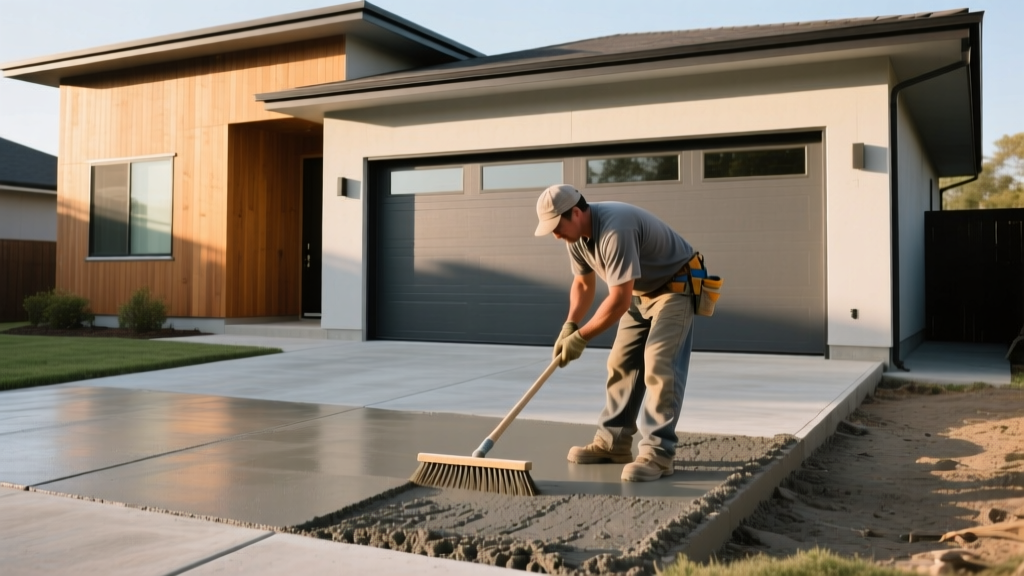
Material Comparison Matrix: 2026 Pricing and Performance
Choosing the right surface material requires balancing upfront capital expenditure with long-term maintenance liabilities. The matrix below breaks down the core performance metrics and installed costs for the four dominant driveway materials in the current market.
| Material Type | Installed Cost / Sq. Ft. | Sub-Base Requirement | Expected Lifespan | Maintenance Cadence |
|---|---|---|---|---|
| Asphalt | $5.00 - $12.00 | 4-8" crushed aggregate | 15 - 25 Years | Sealcoat every 3-5 years |
| Concrete | $8.00 - $18.00 | 4-6" compacted gravel | 30 - 50 Years | Seal every 2-3 years |
| Gravel | $1.50 - $3.00 | Geotextile fabric + base | 100+ Years (with top-ups) | Re-grade and top-up annually |
| Concrete Pavers | $15.00 - $35.00 | 8-12" open-graded base | 50+ Years | Re-sand joints every 3 years |
Site Preparation: The Hidden Variable in Driveway Estimates
The most common reason driveway quotes vary wildly between contractors is site preparation. If you are replacing an existing driveway, demolition and haul-away will add $1.00 to $2.50 per square foot. However, virgin land excavation introduces complex variables.
- Soil Testing and Grading: Expansive clay soils require over-excavation and replacement with a structural sub-base to prevent heaving. Professional grading costs between $1.50 and $3.00 per square foot to ensure a minimum 2% slope away from the garage foundation.
- Geotextile Fabric Installation: For gravel and permeable systems, laying a non-woven geotextile fabric (such as Mirafi 500X) is non-negotiable. It separates the subgrade soil from the aggregate base, preventing the gravel from sinking into the mud over time.
- Sub-Base Compaction: A proper driveway requires a vibratory plate compactor or a smooth-drum roller to achieve 95% Proctor density on the base layer. Skipping this step guarantees premature cracking in concrete and rutting in asphalt.
Climate-Specific Decision Framework: Asphalt vs. Concrete
According to Forbes Home's material comparison guides, the debate between asphalt and concrete is ultimately decided by your local climate rather than just aesthetics. Use this framework to make your selection:
Choose Asphalt If:
- You live in a region with severe freeze-thaw cycles (e.g., the Midwest or Northeast). Asphalt is flexible and can expand/contract without structural failure.
- You use rock salt for de-icing. Salt chemically attacks concrete, causing surface spalling, but does not harm asphalt.
- Your budget is constrained, and you need a usable surface within 48 hours of installation.
Choose Concrete If:
- You reside in a hot, southern climate. Asphalt softens and can rut under heavy RVs or boat trailers when ambient temperatures exceed 90°F.
- You want to minimize lifetime maintenance. While the upfront cost is 40% higher, concrete eliminates the need for periodic sealcoating.
- You require specific aesthetic finishes, such as stamped patterns, exposed aggregate, or integral color dyes.
Concrete Specification Pro-Tip
If you choose concrete, do not accept a standard 3,000 PSI mix. Specify a 4,000 PSI air-entrained mix with a maximum 4-inch slump. Air-entrainment introduces microscopic bubbles that give water room to expand when it freezes, which is critical for preventing winter surface scaling. Furthermore, ensure your contractor cuts control joints at intervals no greater than 1.5 times the slab width (typically every 10 feet) to control where shrinkage cracking occurs.
Permeable Systems and Municipal Stormwater Rebates
As urban areas struggle with stormwater runoff, many municipalities are updating zoning codes to limit impermeable surface coverage. This has driven a surge in permeable paver installations. The Environmental Protection Agency (EPA) notes that permeable pavements can reduce runoff volume by up to 80% while filtering out heavy metals and hydrocarbons from vehicle drips.
While a permeable paver driveway costs between $17.50 and $35.00 per square foot installed, the financial sting is often offset by local municipal rebates. Many cities offer stormwater retention credits or direct cash rebates ranging from $2.00 to $5.00 per square foot of permeable surface installed. The structural secret to a permeable driveway lies in the sub-base: it requires an 8-inch to 12-inch bed of clean, open-graded crushed stone (typically ASTM No. 57 or No. 89) that acts as an underground reservoir to hold water before it slowly percolates into the native soil.
Frequently Asked Questions
Is it cheaper to resurface or replace an existing driveway?
If your current concrete or asphalt driveway has isolated surface cracking but a structurally sound base, resurfacing is highly cost-effective. Asphalt overlays cost $2.50 to $4.50 per square foot, while concrete resurfacer applications cost $4.00 to $7.00 per square foot. However, if the base has failed—evidenced by deep, uneven heaving, alligator cracking, or potholes that return immediately after patching—resurfacing is a waste of capital. The new layer will mirror the underlying structural failures within 12 to 18 months.
Do I need a permit to build a new driveway?
In most jurisdictions, replacing an existing driveway in the exact same footprint does not require a permit. However, widening a driveway, adding a new curb cut, or altering the drainage flow toward a municipal storm drain almost always requires a grading and encroachment permit. Permit fees typically range from $75 to $250, and failing to pull one can result in fines or being forced to tear out non-compliant concrete.
How thick should a concrete driveway be for heavy vehicles?
A standard residential driveway designed for sedans and light SUVs requires a 4-inch slab thickness. If you plan to park a Class C motorhome, a heavy-duty truck, or a loaded boat trailer, you must increase the slab thickness to 6 inches and upgrade the reinforcement from welded wire mesh to #4 rebar placed on a 2-foot grid. This upgrade adds roughly $1.50 to $2.50 per square foot to the total project cost but prevents catastrophic corner snapping under heavy point loads.
Written by
Sarah WhitfieldSarah Whitfield is a chartered quantity surveyor (MRICS) and construction cost analyst with 15 years of experience in material pricing, procurement strategy, and project budgeting. She earned her degree in Construction Management from the University of Reading (UK) and has worked on projects ranging from $2M custom homes to $180M mixed-use developments across North America and Europe. Sarah currently leads cost estimating for BuildMat Insight, maintaining a proprietary database of 4,000+ material price points updated quarterly. She is a frequent contributor to RSMeans cost data panels and has presented at the International Cost Engineering Council (ICEC) congress. Based in Denver, CO, Sarah is an avid trail runner and volunteer mentor for Women in Construction.
More from Sarah Whitfield
View all
Wood & Lumber
What Are the Different Types of Wood? A Builder's Guide
Compare structural softwoods, finish hardwoods, and engineered lumber. Analyze Janka ratings, MOE values, and 2026 pricing for construction.
Aug 4, 2026

Walls & Panels
Steel Framing vs Wood Framing: Corrosion and Moisture Defense
Compare steel framing vs wood framing for moisture resistance. Learn about galvanized coatings, condensation risks, and corrosion protection strategies.
Jul 21, 2026

Stone & Masonry
How to Cut Stone Veneer: Wet Saw vs Grinder Comparison
Compare the best tools for cutting stone veneer. We review wet saws, angle grinders, and chop saws to help you achieve clean, chip-free cuts.
Jul 21, 2026