How Much Does It Cost to Build a House in Utah? 2026 Guide
Discover how much it costs to build a house in Utah in 2026. Compare regional pricing, material costs, and labor rates across the Beehive State.
The 2026 Baseline: Utah Construction Costs by Square Footage
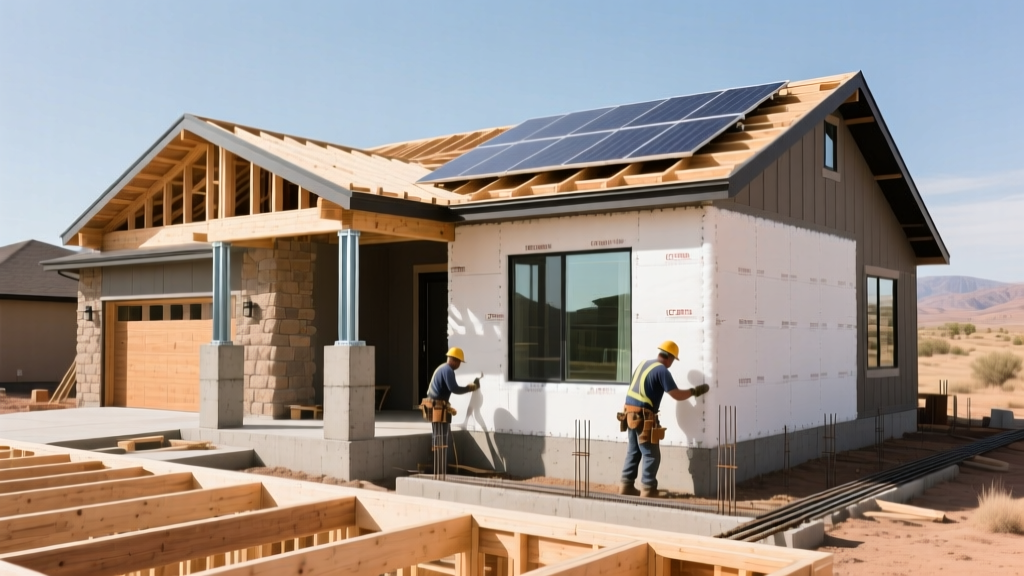
When evaluating how much does it cost to build a house utah, the baseline metric is the price per square foot of conditioned living space. As of early 2026, the average cost to build a custom, single-family home in Utah ranges from $165 to $260 per square foot, excluding land acquisition, site preparation, and landscaping. For a standard 2,500-square-foot home, this translates to a hard construction cost between $412,500 and $650,000.
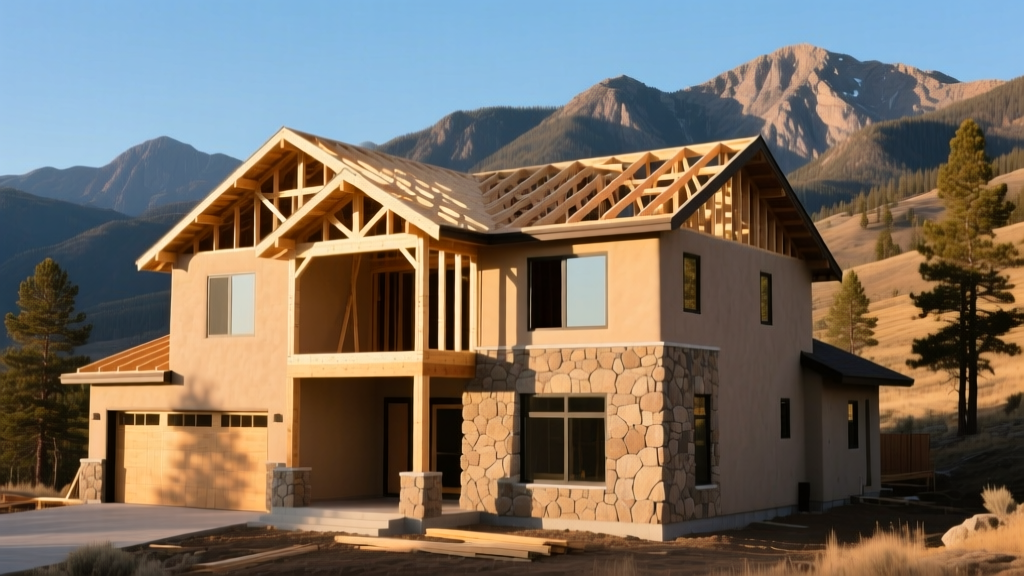
However, treating Utah as a monolithic market is a critical estimating error. The state features drastic topographical and economic shifts that wildly alter labor availability, material transport logistics, and municipal fee structures. Data tracked by the Kem C. Gardner Company at the University of Utah highlights that construction premiums in mountain resort towns can easily triple the baseline costs found in rural valleys.
Regional Cost Variations: Salt Lake City vs. Park City vs. St. George
To build an accurate budget, you must localize your pricing. Below is a comparative matrix of 2026 construction costs across four distinct Utah micro-markets, factoring in local labor rates, material delivery premiums, and municipal impact fees.
| Region | Avg. Cost / Sq. Ft. | Primary Cost Drivers | Labor Availability |
|---|---|---|---|
| Salt Lake Valley | $175 - $230 | High permit fees, strict energy codes | High |
| Park City / Heber | $350 - $550+ | Mountain logistics, luxury finishes, snow load engineering | Low (Premium) |
| St. George / Washington Co. | $160 - $210 | Heat mitigation, expansive soil foundations | Moderate |
| Rural (e.g., Cache, Iron) | $150 - $190 | Material transport distances, well/septic installs | Low |
Utah-Specific Engineering: Seismic and Snow Load Requirements
Building in Utah requires navigating two extreme environmental factors that do not exist in many other US markets: the Wasatch Fault zone and high-alpine snow loads. Ignoring these in your preliminary estimate will result in massive change orders during the framing and foundation phases.
Utah building codes in the Wasatch Front require enhanced lateral load resisting systems. Expect to pay an additional $4,500 to $7,500 for specialized foundation hold-downs (such as the Simpson Strong-Tie HDU series), continuous tie-down rods, and engineered shear walls using 5/8-inch structural plywood rather than standard OSB.
Snow Load Engineering by Elevation
Roof truss pricing is directly tied to the ground snow load (psf) mandated by your specific parcel's elevation. According to the U.S. Census Bureau construction data and local engineering standards, truss manufacturers price based on these load thresholds:
- Valley Floors (SLC, Ogden, Provo): 20 to 30 psf. Standard truss spacing (24" on center) applies. Truss package for a 2,500 sq ft home: $12,000 - $15,000.
- Bench Communities (Draper, Bountiful, Alpine): 40 to 55 psf. Requires heavier top/bottom chords and closer web spacing. Truss package: $16,000 - $21,000.
- Mountain Resorts (Park City, Sundance, Brian Head): 70 to 125+ psf. Requires engineered timber trusses or structural steel I-beams. Truss/beam package: $35,000 - $60,000+.
Material Selection for the Arid West
Utah's high-desert climate, characterized by intense UV radiation, low humidity, and drastic diurnal temperature swings, dictates specific exterior material choices. Traditional wood lap siding requires heavy maintenance and is increasingly restricted in Wildland-Urban Interface (WUI) zones due to fire codes.
The Dominant Exterior Claddings in 2026
- Three-Coat Portland Cement Stucco: The undisputed king of Utah exteriors. It offers superior fire resistance and handles thermal expansion well. Installed cost: $11.50 to $16.00 per square foot of wall area.
- Fiber Cement (James Hardie Artisan/Statement Collections): Highly resistant to UV fading and woodpecker damage (a common nuisance in Utah bench areas). Installed cost: $13.00 to $19.00 per square foot.
- Thin Brick Veneer & Cultured Stone: Frequently used as wainscoting or accent columns to complement stucco. Material and mortar labor add $22.00 to $35.00 per square foot of coverage area.
Furthermore, landscaping budgets must account for municipal water conservation mandates. Most cities along the Wasatch Front now enforce strict xeriscaping ratios, limiting turf grass to 20% or less of the total landscaped area. Budget $8,000 to $14,000 for a compliant, drip-irrigated desert landscape with mature boulders and native grasses, which is actually more expensive upfront than traditional sod but heavily subsidized by local water districts.
Production vs. Custom Builders: A Decision Framework
When determining how much it costs to build a house in Utah, the type of builder you hire fundamentally alters the financial structure of the project. Use this framework to decide which route fits your capital and timeline.
Production Builders (e.g., Perry Homes, Ivory Homes, Richmond American)
Production builders buy materials in massive bulk and use standardized floor plans. They control the lot inventory and dictate the architectural review process.
- Cost Profile: $150 - $190 per sq. ft. (Base price, before design center upgrades).
- The Catch: Design center upgrades (moving from builder-grade carpet to engineered hardwood, or standard cabinets to soft-close custom cabinetry) typically add 15% to 25% to the final contract price.
- Best For: Buyers who want a predictable, fixed-price contract and a 6-to-9-month completion timeline.
Custom / Semi-Custom General Contractors
Hiring an independent GC to build on your own land requires navigating the Utah Division of Occupational and Professional Licensing (DOPL) to ensure your contractor holds an active B100 (General Building) license.
- Cost Profile: $190 - $300+ per sq. ft., plus a 15% to 20% GC management fee.
- The Catch: You bear the risk of material price volatility. If the price of SPF (Spruce-Pine-Fir) framing lumber spikes during your build, your budget absorbs the shock.
- Best For: Buyers with steep, non-standard lots, specific architectural visions, or a desire for high-performance building envelopes (e.g., passive house standards, ICF foundations).
Frequently Asked Questions
Are solar panels required for new construction in Utah?
As of 2026, Utah has not adopted a statewide solar-ready or solar-mandate code for all residential builds, unlike California. However, several municipalities, including Salt Lake City and Park City, have implemented local ordinances requiring new homes to be 'solar-ready' (pre-wired and structurally engineered for future panels) or to meet strict net-zero energy targets that practically necessitate a 5kW to 10kW solar array. Budget $18,000 to $28,000 for a fully installed grid-tied solar system if building in these eco-conscious jurisdictions.
How much does it cost to drill a well and install a septic system in rural Utah?
If you are building outside municipal boundaries in counties like Tooele, Juab, or Sanpete, utility hookups are your responsibility. Drilling a 200-to-400-foot water well costs between $12,000 and $22,000, heavily dependent on the bedrock composition. A standard engineered septic system for a 4-bedroom home ranges from $18,000 to $28,000, but if your soil fails a perc test and requires an alternative mound or aerobic treatment unit (ATU), expect costs to exceed $35,000.
What are the current concrete prices in Utah?
Ready-mix concrete in the Salt Lake and Utah County markets averages $165 to $195 per cubic yard in 2026, delivered. However, pump truck fees (required for most residential pours where the truck cannot back directly up to the forms) add $900 to $1,400 per day. For a standard 2,500 sq ft home with a 2-car garage and a standard 4-inch slab-on-grade foundation, expect to pour roughly 110 to 130 yards, totaling $20,000 to $26,000 for the concrete material alone, excluding forming and finishing labor.
Written by
David NakamuraDavid Nakamura is a licensed architect (AIA) and construction technology writer focused on sustainable building methods, mass timber engineering, and high-performance building envelopes. He holds a Master of Architecture from the University of Washington and is a certified Passive House Consultant (CPHC). David spent eight years at the Seattle firm Mithun, where he led the design of three LEED Platinum projects, before founding his own practice specializing in net-zero residential design. He serves on the editorial advisory board of GreenBuilder Magazine and has authored peer-reviewed papers on cross-laminated timber (CLT) connections for the Journal of Structural Engineering. In his spare time, David teaches woodworking at Pratt Fine Arts Center and kayaks the Puget Sound.
More from David Nakamura
View all
Construction Cost
Labor Cost to Build a Deck Per Sq Ft: 2026 Installation Guide
Discover the exact labor cost to build a deck per sq ft in 2026. This installation guide breaks down contractor rates, complexity factors, and hidden fees.
Aug 4, 2026

Construction Cost
How Much Does It Cost to Build a 3 Bedroom House? Financing Guide
Learn exactly how much it costs to build a 3 bedroom house and explore 2026 financing options, construction loan types, and budget frameworks for your build.
Aug 4, 2026

Construction Cost
Cost to Build a Tennis Court: 2026 Guide
How much does it cost to build a tennis court in 2026? Breakdowns for asphalt, concrete, and synthetic surfaces plus fencing and lighting.
Jul 30, 2026