Does It Cost More to Build or Buy a House? Size & Scope Breakdown
Use our size and scope calculator to answer: does it cost more to build or buy a house? Compare current construction costs vs existing home prices.
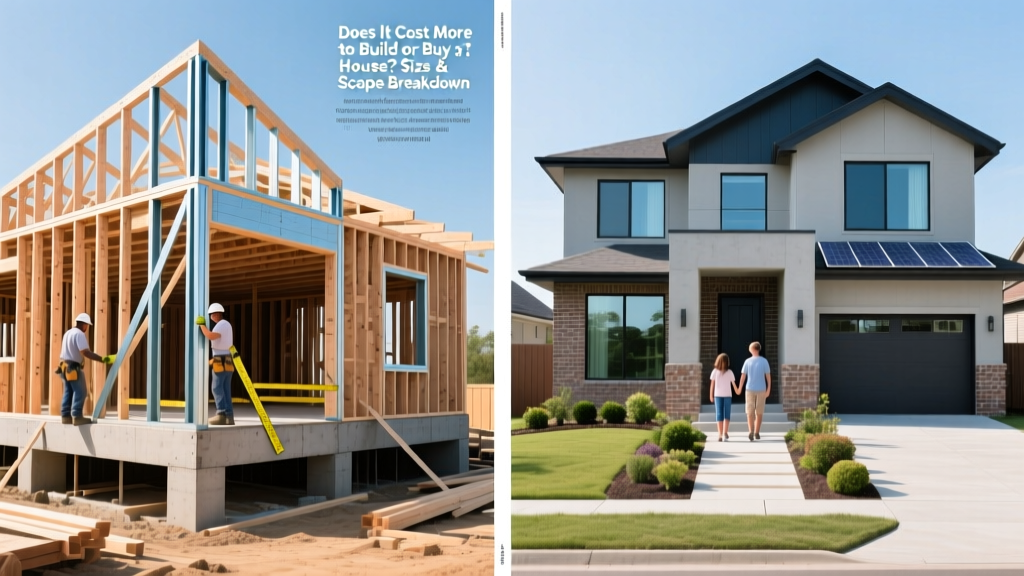
The Core Question: Does It Cost More to Build or Buy a House?
When evaluating housing options, the fundamental question every prospective homeowner asks is: does it cost more to build or buy a house? The short answer is that building a custom home from scratch typically costs 15% to 30% more upfront than purchasing an existing resale home of the same square footage. However, this gap narrows—or even reverses—when you factor in the size, scope, and immediate renovation needs of the existing inventory.
According to data from the National Association of Realtors (NAR), the median price of an existing home reflects a blend of aging building stock and localized land values. Conversely, new construction pricing is driven by current material indices, labor shortages, and stringent municipal impact fees. To accurately determine which route makes financial sense for your specific situation, you must run the variables through a size and scope calculator rather than relying on national averages.
TL;DR: The Financial Tipping Point
- Buying is cheaper when: You need a standard layout, are purchasing in an established neighborhood with mature infrastructure, and plan to stay under 5 years.
- Building is cheaper when: You already own unencumbered land, require a highly specialized footprint (e.g., ADA-compliant or multi-generational), or are building in rural areas where existing inventory is severely limited and overpriced.
The Size & Scope Calculator: Variables That Shift the Balance
National averages obscure the reality of local construction economics. A true size and scope calculator evaluates three primary multipliers that dictate whether building or buying yields a better return on investment.
Base Square Footage vs. Complex Footprints
The cost to build is not strictly linear. A 2,000-square-foot home built as a simple rectangle (a 1.0x complexity multiplier) will cost significantly less per square foot than a 2,000-square-foot U-shaped home with a central courtyard (a 1.35x multiplier). Complex footprints require more exterior wall framing, additional roof valleys, extended foundation perimeters, and complex HVAC zoning.
When you buy an existing home, you are absorbing the cost of that complexity at a depreciated rate. If your scope requires a highly complex layout, building new will expose you to premium framing and roofing labor costs that make buying a comparably sized existing home vastly more economical.
Finish Levels and Material Specifications
Builder-grade specifications in new construction are designed to hit a specific appraisal target. Upgrading from standard 3-tab asphalt shingles to 24-gauge standing seam metal roofing, or swapping vinyl windows for fiberglass-clad wood casements, can increase the construction budget by $40,000 to $85,000. Existing homes often feature these premium materials already installed, but their cost is amortized into the home's overall market value, often at a fraction of the replacement cost.
Cost Matrix: Buying Existing vs. Building New
The following matrix breaks down the estimated capital required for a 2,500-square-foot, 4-bedroom home in a mid-tier suburban market, contrasting the purchase of a 15-year-old resale home against building a comparable new spec home.
| Cost Category | Buying Existing (15 Yr Old) | Building New (Spec Level) |
|---|---|---|
| Land / Lot Acquisition | $0 (Included in price) | $85,000 - $150,000 |
| Site Prep & Utilities | $0 | $15,000 - $35,000 |
| Base Construction / Purchase Price | $410,000 | $375,000 ($150/sq ft) |
| Soft Costs (Permits, Impact Fees) | $0 | $12,000 - $28,000 |
| Immediate Repairs / Upgrades | $25,000 (HVAC, Roof, Paint) | $0 |
| Total Initial Capital Outlay | $435,000 | $487,000 - $623,000 |
As illustrated by National Association of Home Builders (NAHB) cost breakdowns, the hard costs of framing and finishing are only part of the equation. The soft costs and land acquisition are where building new typically surpasses the cost of buying existing.
Hidden Scope Creep in Building
When using a size and scope calculator, first-time builders frequently omit geotechnical and municipal requirements. Budget an additional $1,500 to $3,000 for soil boring tests, $2,000 to $4,000 for an ALTA land survey, and up to $20,000 for municipal sewer tap fees or septic engineering. Failing to account for these pre-construction scopes can instantly blow a 5% contingency budget.
The 'Renovation Hybrid' Alternative
If the size and scope calculator reveals that building new is out of reach, but existing homes lack the required layout, the renovation hybrid model offers a middle ground. This involves purchasing an older, structurally sound home with a large lot and executing a targeted 800-square-foot addition.
- Pros: Bypasses the highest costs of new construction (land acquisition, full site grading, primary utility tap fees, and foundational slab pouring for the entire footprint). You leverage the existing roof and HVAC infrastructure if properly sized.
- Cons: Tying into existing foundations requires structural engineering to prevent differential settling. Matching exterior cladding (e.g., sourcing discontinued brick or matching aged cedar shake) can incur premium custom-milling costs.
Decision Framework: When to Build vs. When to Buy
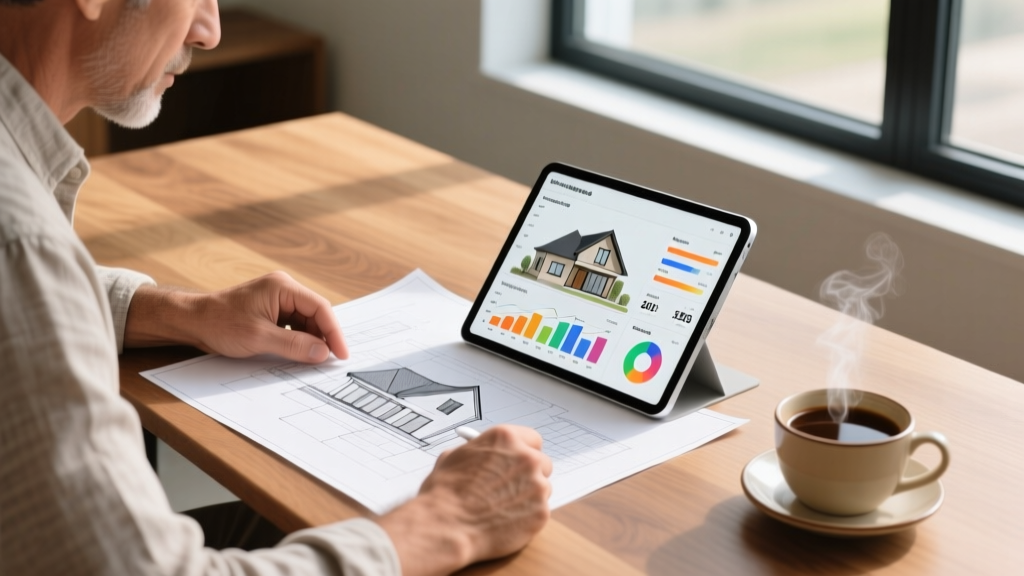
Use this practical framework to finalize your decision based on your specific scope requirements.
- Evaluate Land Ownership: If you do not own land, buying existing is almost always cheaper. If you own land free and clear, building new becomes highly competitive with buying.
- Assess Layout Rigidity: If your scope requires specific ceiling heights (e.g., 10-foot main floor), specialized structural loads (e.g., reinforced floors for heavy gym equipment or aquariums), or passive solar orientation, existing inventory will force costly retrofits. Build new.
- Calculate the Time Value: Building a 2,500 sq ft home takes 9 to 14 months. During this time, you are paying rent or a mortgage on your current residence, plus construction loan interest. Factor 12 months of carrying costs into your building budget.
- Review Local Inventory Data: Consult the U.S. Census Bureau new residential construction data for your region. If local new-build completions are low, builders hold pricing power, making existing homes the better financial play.
Frequently Asked Questions
Is it cheaper to build a house if I act as my own general contractor?
Acting as an owner-builder can save the 15% to 20% general contractor fee (roughly $45,000 to $80,000 on a $400,000 build). However, this requires deep knowledge of construction sequencing, building codes, and subcontractor management. Mistakes in scheduling or failing to secure proper lien waivers can easily erase the savings through delays and legal disputes.
How does the size of the house affect the cost per square foot?
Economies of scale apply heavily to residential construction. The most expensive components of a home—kitchens, bathrooms, and mechanical rooms—have high fixed costs. A 1,200-square-foot home might cost $250 per square foot to build, while a 4,000-square-foot home with the same finish level might drop to $185 per square foot because the cost of the expensive 'wet' rooms is diluted across a larger total area.
Do energy efficiency standards make building new more cost-effective long-term?
Yes. New builds must comply with the latest International Energy Conservation Code (IECC) standards, requiring continuous exterior insulation, high-efficiency HVAC (16+ SEER), and airtight building envelopes. While this adds 3% to 5% to upfront construction costs, it typically reduces monthly utility burdens by 30% to 40% compared to a 20-year-old existing home, altering the long-term cost-of-ownership calculation.
Written by
David NakamuraDavid Nakamura is a licensed architect (AIA) and construction technology writer focused on sustainable building methods, mass timber engineering, and high-performance building envelopes. He holds a Master of Architecture from the University of Washington and is a certified Passive House Consultant (CPHC). David spent eight years at the Seattle firm Mithun, where he led the design of three LEED Platinum projects, before founding his own practice specializing in net-zero residential design. He serves on the editorial advisory board of GreenBuilder Magazine and has authored peer-reviewed papers on cross-laminated timber (CLT) connections for the Journal of Structural Engineering. In his spare time, David teaches woodworking at Pratt Fine Arts Center and kayaks the Puget Sound.
More from David Nakamura
View all
Construction Cost
Labor Cost to Build a Deck Per Sq Ft: 2026 Installation Guide
Discover the exact labor cost to build a deck per sq ft in 2026. This installation guide breaks down contractor rates, complexity factors, and hidden fees.
Aug 4, 2026

Construction Cost
How Much Does It Cost to Build a 3 Bedroom House? Financing Guide
Learn exactly how much it costs to build a 3 bedroom house and explore 2026 financing options, construction loan types, and budget frameworks for your build.
Aug 4, 2026

Construction Cost
Cost to Build a Tennis Court: 2026 Guide
How much does it cost to build a tennis court in 2026? Breakdowns for asphalt, concrete, and synthetic surfaces plus fencing and lighting.
Jul 30, 2026