How Much Do Self Storage Units Cost to Build in 2026?
Discover exactly how much self storage units cost to build in 2026. Get detailed cost breakdowns, material comparisons, and site development budgets.
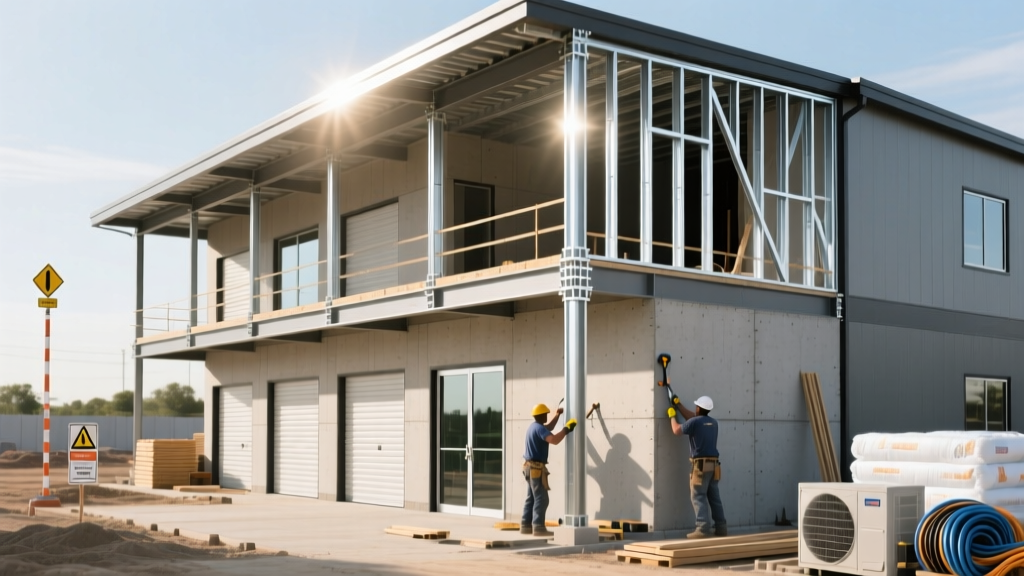
Executive Summary: The 2026 Self-Storage Construction Landscape
Developing a self-storage facility remains one of the most resilient commercial real estate investments, but capital requirements have shifted significantly. When calculating how much do self storage units cost to build in 2026, developers must account for stabilized steel prices, updated municipal stormwater mandates, and the rising baseline expectation for climate-controlled inventory. According to the Self Storage Association (SSA), the industry continues to see strong absorption rates, but the barrier to entry has increased due to stricter zoning and higher hard construction costs.
• Single-Story, Non-Climate Controlled: $48 – $68
• Multi-Story, Non-Climate Controlled: $82 – $115
• Single-Story, Climate-Controlled: $95 – $135
• Multi-Story, Climate-Controlled: $125 – $170+
These figures represent hard building costs and basic site work. They do not include land acquisition, soft costs, or specialized security technology integrations, which we will break down in detail below.
Hard Costs: Breaking Down the Physical Build
The physical structure represents roughly 55% to 65% of your total project budget. The primary cost drivers are the building footprint, verticality, and environmental controls. Industry data tracked by Inside Self-Storage highlights a definitive shift toward multi-story and climate-controlled builds in urban infill markets, while rural markets still favor sprawling single-story layouts.
Cost Matrix by Facility Type
| Facility Type | Cost per Sq. Ft. (2026) | Typical Timeline | Primary Use Case |
|---|---|---|---|
| Single-Story Standard | $48 - $68 | 6 - 9 Months | Suburban/Rural, high land availability |
| Multi-Story Standard | $82 - $115 | 12 - 18 Months | Urban infill, expensive land |
| Single-Story Climate | $95 - $135 | 8 - 11 Months | High-income suburbs, document/wine storage |
| Multi-Story Climate | $125 - $170+ | 14 - 20 Months | Dense metro areas, premium consumer goods |
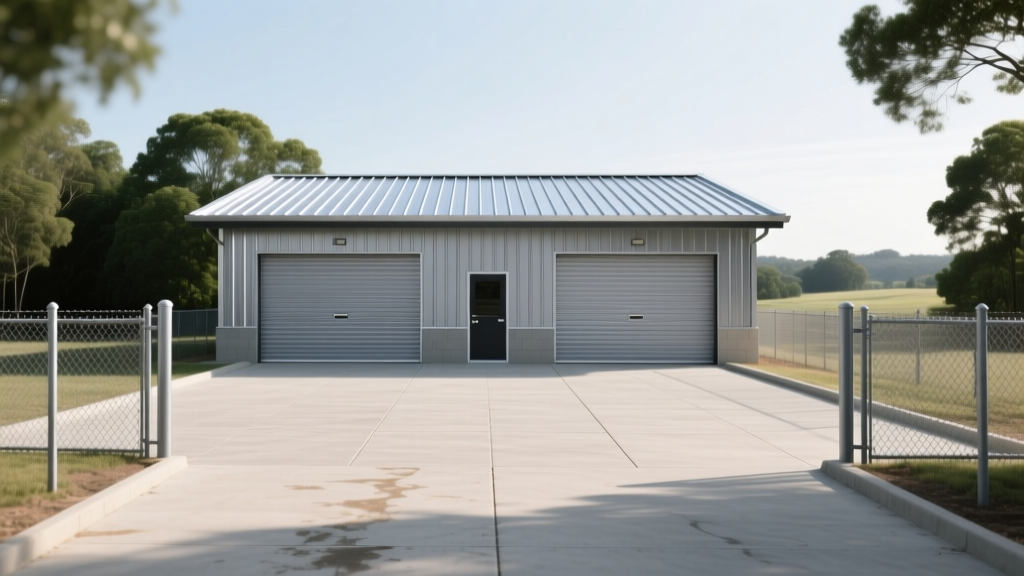
Material Selection: Pre-Engineered Metal vs. Tilt-Up Concrete
Choosing the right structural system dictates both your upfront capital expenditure and your long-term maintenance liabilities. While Pre-Engineered Metal Buildings (PEMB) have historically dominated the sector, tilt-up concrete is gaining market share in regions with high wind loads or strict aesthetic zoning overlays.
Pre-Engineered Metal (PEMB)
- Cost: $18 - $24 per sq. ft. (shell only)
- Pros: Rapid erection (weeks, not months), clear-span interiors allow flexible unit mixing, highly recyclable.
- Cons: Susceptible to dents, higher acoustic transmission, requires additional insulation batting for climate control.
- Best For: Standard single-story facilities, rural expansions, fast-tracked developments.
Tilt-Up Concrete
- Cost: $26 - $35 per sq. ft. (shell only)
- Pros: Superior thermal mass (lowers HVAC costs), high impact resistance, meets strict municipal facade requirements.
- Cons: Requires massive crane staging area, longer curing and erection timelines, difficult to modify post-build.
- Best For: Multi-story urban builds, climate-controlled facilities, coastal/high-wind zones.
The Hidden Budget Killers: Site Work and Soft Costs
Developers frequently underwrite the building shell accurately but fail to account for site development and soft costs, which can consume 35% to 45% of the total project budget. In 2026, environmental regulations and utility capacity are the primary friction points.
- Grading and Earthwork ($4 - $12 per sq. ft.): Self-storage requires massive, flat pads. If your site requires cut-and-fill balancing or retaining walls to maximize pad size, costs escalate rapidly.
- Stormwater Management ($3 - $8 per sq. ft.): Municipalities now frequently mandate underground detention systems or large bioswales to handle the runoff from expansive metal roofs and concrete drive aisles. An underground stormwater vault can easily add $150,000 to a 50,000 sq. ft. project.
- Utility Tap Fees ($50,000 - $250,000+): Climate-controlled facilities require substantial electrical capacity. Upgrading a municipal transformer or running new 3-phase power from a distant mainline is a common budget buster.
- Architectural and Engineering (6% - 10% of hard costs): Includes civil engineering, structural stamping, and MEP (Mechanical, Electrical, Plumbing) design. For climate-controlled buildings, MEP design is highly complex due to the need for continuous air circulation to prevent condensation and mold.
Specialized Components: Doors, Insulation, and HVAC
The interior fit-out of a self-storage facility relies on highly specialized commercial components. Standard residential or commercial warehouse materials will fail under the high-cycle usage of a storage facility.
Roll-Up Doors and Partitions
The industry standard for roll-up doors is Janus International. For standard 10x10 units, the Janus Model 650 (26-gauge galvanized steel) costs approximately $650 to $850 installed per door. For premium or multi-story facilities where higher wind loads and security are required, upgrade to the Janus Model 2000 (24-gauge) or their insulated doors for climate-controlled zones, which push the cost to $1,100 to $1,500 per door. Interior partition walls typically utilize 26-gauge corrugated steel panels, costing $3.50 to $5.00 per linear foot installed.
Climate Control and Insulation
According to EPA Energy Star guidelines for self-storage, maintaining a stable interior environment (typically 55°F to 80°F with humidity below 55%) requires a continuous thermal envelope.
Insulation Requirements: Expect to install R-19 to R-25 fiberglass batts or spray foam in the walls, and R-30+ in the roof. Spray foam, while 30% more expensive upfront, acts as both an insulator and a vapor barrier, drastically reducing the risk of interior condensation—a leading cause of mold claims in climate-controlled facilities.
HVAC Systems: Avoid residential split systems. Commercial Packaged Rooftop Units (RTUs) with variable frequency drives (VFDs) or commercial ductless mini-split systems (like Mitsubishi City Multi) are required. Budget $6 to $10 per square foot for a complete commercial HVAC installation in a climate-controlled building.
Security and Technology Infrastructure
Modern tenants expect automated, frictionless access, and insurers demand comprehensive surveillance. Budget $40,000 to $85,000 for a complete technology stack on a standard 50,000 sq. ft. facility.
- Access Control: PTI Security Systems or similar commercial gate operators with Bluetooth/NFC mobile credentials. Eliminates the recurring cost and lost-key liability of physical keypads.
- Smart Locks: Electronic cylinder locks (e.g., InstaFob or Nokē) that integrate directly with your management software, allowing automated lockouts for delinquent accounts.
- Surveillance: 4K IP cameras with License Plate Recognition (LPR) at all ingress/egress points. Ensure NVR (Network Video Recorder) storage is sized for a minimum of 60 days of high-definition retention.
- Management Software: Cloud-based platforms like SiteLink or StorEdge, which integrate access control, billing, and smart locks into a single API.
Pro-Tip: The Phased Expansion Strategy
Developer Insight: Never build 100% of your planned capacity on day one if the site allows for expansion. Build the site infrastructure (grading, utilities, stormwater, fencing) for the full master plan, but erect only Phase 1 (typically 60% of total rentable space) of the building shell. This reduces initial capital outlay, allows you to stabilize the facility, and lets you use Phase 1 cash flow to fund Phase 2 construction without seeking secondary mezzanine debt.
Frequently Asked Questions
Is it cheaper to buy an existing facility or build from scratch?
Buying an existing, stabilized facility typically commands a premium (cap rates of 5% to 6.5% in 2026), meaning you pay for the established cash flow. Building from scratch (development yield) often targets an 8% to 10% stabilized yield, making it cheaper on a per-square-foot basis and offering higher long-term equity creation, albeit with 18-24 months of negative cash flow during lease-up.
How much does it cost to convert an existing warehouse into self-storage?
Converting a clear-span warehouse into a standard non-climate storage facility costs between $15 and $25 per square foot. This covers interior steel partitioning, roll-up door installation on the exterior facade, security upgrades, and software integration. However, converting to climate-controlled is rarely cost-effective due to the difficulty of retrofitting adequate insulation and commercial HVAC ductwork into existing warehouse envelopes.
What is the ideal unit mix for a new build in 2026?
The days of building mostly 10x10 units are over. Modern household sizes have increased, and the optimal 2026 unit mix heavily favors larger spaces. A highly optimized mix includes 15% small (5x5, 5x10), 40% medium (10x10, 10x15), and 45% large/jumbo (10x20, 10x25, 10x30). Large units lease faster, have significantly lower turnover rates, and require fewer interior partition walls to construct.
Written by
Priya KapoorPriya Kapoor is a real estate market analyst and construction economics researcher with expertise in housing affordability, development feasibility, and infrastructure investment. She holds a Master of Regional Planning from Cornell University and previously worked as a senior analyst at CBRE's Investment Properties group, where she modeled returns for $4B in mixed-use development pipelines. Priya now runs an independent research practice advising developers, municipalities, and REITs on construction cost forecasting and market timing. She publishes the quarterly "BuildMat Market Pulse" report tracking material price indices across 12 commodity categories. Based in Austin, TX, Priya serves on the board of Habitat for Humanity Austin and is a marathon runner.
More from Priya Kapoor
View all
Construction Cost
Cost to Build a 1600 Sq Ft Home in 2026: Full Breakdown
Accurate 2026 cost to build a 1600 sq ft home—material, labor, and regional pricing breakdowns included. Plan your budget with real-time estimates.
Aug 11, 2026

Wood & Lumber
Name the Types of Wood for Pressure Treatment and Preservation
Learn how to name the types of wood best suited for pressure treatment. Compare species treatability, chemical retention levels, and 2026 preservation costs.
Aug 4, 2026

Stone & Masonry
Stone Veneer Suppliers Lindenhurst: 2026 Cost Analysis
Analyze 2026 stone veneer costs in Lindenhurst, NY. Compare local supplier pricing, delivery fees, and Suffolk County installation labor rates.
Aug 4, 2026