How Much Did It Cost to Build the Burj Khalifa? A Regional Analysis
Discover how much it cost to build the Burj Khalifa and analyze Dubai's construction pricing versus global megacities like New York and London.
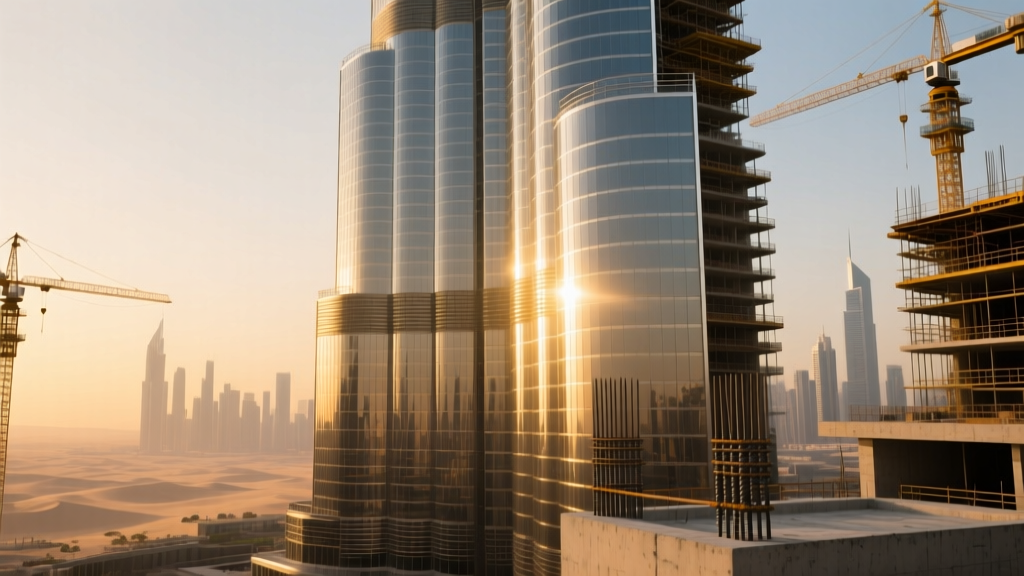
The $1.5 Billion Baseline: Answering the Core Question
When addressing the question of how much did it cost to build the burj khalifa, the widely accepted final figure stands at $1.5 billion USD (approximately 5.5 billion AED). Completed in 2010, this 828-meter (2,717-foot) supertall skyscraper redefined structural engineering. However, for modern construction cost estimators, the raw dollar amount is only half the story. The true value lies in understanding the regional price dynamics of the Middle East during the mid-2000s construction boom and how those costs compare to building a similar megatall structure in today's global markets.
Unlike standard commercial high-rises, the Burj Khalifa required unprecedented logistical coordination, extreme-weather material adaptations, and a massive labor force. To understand the financial anatomy of this project, we must break down the capital expenditure and analyze it through a regional pricing lens.
Capital Expenditure Breakdown: Where the Money Went
The $1.5 billion budget was distributed across highly specialized trades. According to data archived by the Council on Tall Buildings and Urban Habitat (CTBUH), the structural and facade requirements consumed the lion's share of the budget.
| Construction Phase | Estimated Cost (USD) | Percentage of Total | Key Cost Drivers |
|---|---|---|---|
| Substructure & Foundations | $165 Million | 11% | 192 concrete piles driven 50m+ deep; cathodic protection against corrosive groundwater. |
| Superstructure (Concrete & Steel) | $525 Million | 35% | 330,000 cubic meters of concrete; 39,000 tonnes of steel rebar; buttress core system. |
| Facade & Cladding | $240 Million | 16% | 26,000 custom glass panels; aluminum and stainless steel mullions; wind-tunnel testing. |
| MEP (Mechanical, Electrical, Plumbing) | $300 Million | 20% | High-pressure water pumping systems; massive HVAC cooling loads for desert climate. |
| Interior Finishes & Fit-Out | $195 Million | 13% | Armani Hotel fit-out; corporate suite luxury finishes; observation deck infrastructure. |
| Contingency & Soft Costs | $75 Million | 5% | Design fees (Skidmore, Owings & Merrill); project management; site logistics. |
Regional Price Analysis: Dubai vs. Global Megacities
To contextualize the $1.5 billion price tag, we must compare Dubai's construction economics to other major hubs. If a developer attempted to build the exact Burj Khalifa blueprint in New York City or London in 2026, the cost would easily exceed $4.5 billion USD. Why the massive discrepancy?
The 'Desert Premium' vs. The 'Union Premium'
Construction costs are heavily dictated by local labor rates, regulatory environments, and material sourcing. The Turner & Townsend International Construction Market Survey consistently highlights the stark contrast between Middle Eastern and Western megacity building costs.
- New York City (The Union Premium): NYC boasts some of the highest construction costs globally, often exceeding $3,500 per square foot for supertall residential towers. Unionized labor, strict OSHA regulations, limited staging areas in Manhattan, and complex local procurement laws drive costs upward. Building the Burj Khalifa's 3.9 million square feet in NYC would cost upwards of $13 billion today.
- London (The Regulatory Premium): London's costs are inflated by stringent environmental mandates (BREEAM), heritage sightline restrictions, and high import costs for specialized steel and glass post-Brexit. Estimated cost for a Burj-equivalent: $7.2 billion.
- Dubai (The Desert Premium): Dubai's cost per square foot for the Burj Khalifa averaged roughly $385 USD. While the desert environment introduced a 'Desert Premium'—requiring specialized cooling for materials and workers—the reliance on a massive, low-cost migrant workforce from South Asia kept labor expenditures a fraction of Western equivalents.
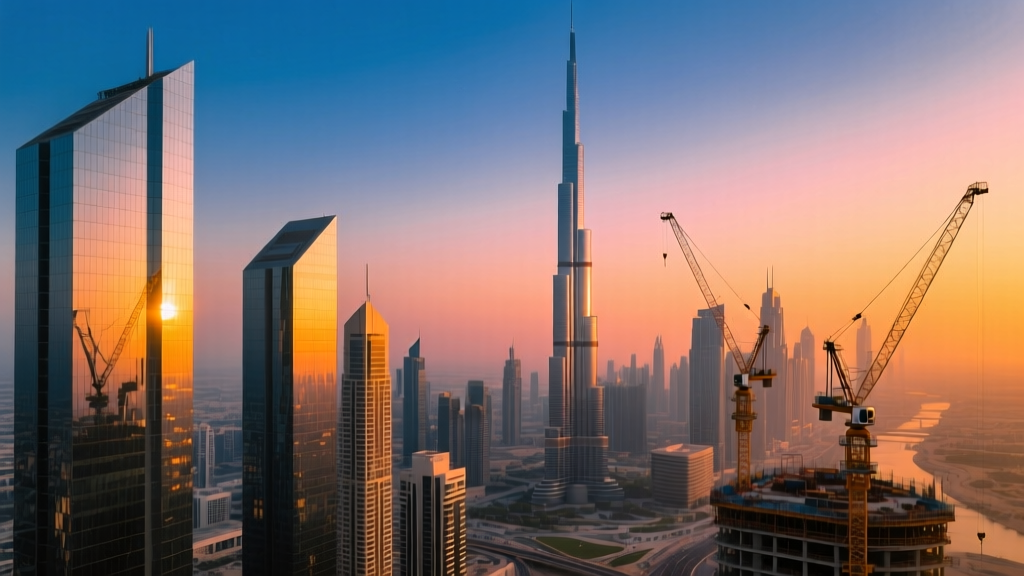
Material Sourcing and Extreme Climate Logistics
The regional pricing analysis is incomplete without examining how Dubai's extreme heat altered material procurement and application costs. The Skyscraper Center notes the sheer volume of materials used, but the *method* of installation is where the hidden costs lie.
The Ice-in-Concrete Innovation
Pouring concrete in Dubai’s summer, where daytime temperatures regularly exceed 45°C (113°F), presents a critical failure mode: premature setting in the transit trucks. To mitigate this, the engineering team implemented a highly specific logistical workaround. They mixed chipped ice into the concrete mixture at the batching plant. As the ice melted during transit, it maintained the concrete's temperature, ensuring it remained workable upon arrival. This required capital investment in industrial ice-making plants on-site, adding a unique line item to the substructure and superstructure budgets that estimators in temperate regions never have to consider.
Facade Engineering for Desert Winds
The cladding system, covering 174,000 square meters, was not standard curtain wall glass. The regional environment demanded a custom silver-coated, low-emissivity glass to reject solar heat gain, combined with a textured stainless steel mullion system to withstand abrasive desert sandstorms. Sourcing this specific glass required global procurement, primarily from manufacturers in Europe and Asia, introducing heavy freight and import tariff costs that were offset by the UAE's generally low-tax import environment.
Macroeconomic Factors: Currency Pegs and the 2008 Crisis
A critical, often overlooked aspect of the Burj Khalifa's cost is the macroeconomic environment during its 2004–2010 construction window. The UAE Dirham (AED) is pegged to the US Dollar. This peg provided Emaar Properties (the developer) with stable procurement power when buying international steel and elevator systems priced in USD or Euros.
However, the 2008 Global Financial Crisis severely impacted Dubai's real estate liquidity. As property values plummeted, the project faced a funding shortfall. This led to a $10 billion bailout from the neighboring emirate of Abu Dhabi. In recognition of this financial rescue, the tower was renamed from 'Burj Dubai' to 'Burj Khalifa' (after Abu Dhabi's ruler, Sheikh Khalifa bin Zayed Al Nahyan) just days before its opening. For cost estimators, this highlights the necessity of robust contingency planning and sovereign backing when underwriting megaprojects in emerging markets.
Lessons for Modern Commercial Estimators
What can today's construction estimators learn from the Burj Khalifa's financial blueprint?
- Climate Dictates Logistics Budgets: Never use baseline labor productivity rates for extreme climates. In Dubai, mandatory midday summer work bans require shift-work premiums and extended project timelines. Always apply a 1.2x to 1.4x labor-hour multiplier for projects in regions with extreme heat indices.
- Geotechnical Mitigation is Non-Negotiable: The Burj Khalifa's foundation relies on a massive concrete mat and friction piles. In regions with high water tables and corrosive soils, estimators must include line items for cathodic protection systems and specialized sulfate-resisting cement (SRC), which costs 15-20% more than standard Portland cement.
- Wind Tunnel Testing as a Hard Cost: For any structure exceeding 300 meters, aerodynamic shaping (like the Burj's Y-plan buttress core) requires extensive wind tunnel testing. Allocate $1.5M to $3M in soft costs specifically for aerodynamic modeling and structural tuning.
Frequently Asked Questions
How long did it take to build the Burj Khalifa?
Excavation began in January 2004, and the exterior was completed in October 2009. The total construction timeline was exactly six years, with the tower officially opening on January 4, 2010. The pace of floor construction peaked at one floor every three days.
Who were the primary contractors and designers?
The architectural and structural design was led by Skidmore, Owings & Merrill (SOM) out of Chicago. The primary contractor was Samsung C&T of South Korea, working in a joint venture with BESIX (Belgium) and Arabtec (UAE).
Is the Burj Khalifa still the most expensive building ever built?
No. While $1.5 billion was a record at the time, modern megaprojects have surpassed it. The Abraj Al Bait complex in Mecca cost roughly $15 billion, and the One World Trade Center in New York cost approximately $3.9 billion. Inflation, stricter safety codes, and Western union labor rates have drastically pushed the ceiling for supertall construction costs since 2010.
Written by
Sarah WhitfieldSarah Whitfield is a chartered quantity surveyor (MRICS) and construction cost analyst with 15 years of experience in material pricing, procurement strategy, and project budgeting. She earned her degree in Construction Management from the University of Reading (UK) and has worked on projects ranging from $2M custom homes to $180M mixed-use developments across North America and Europe. Sarah currently leads cost estimating for BuildMat Insight, maintaining a proprietary database of 4,000+ material price points updated quarterly. She is a frequent contributor to RSMeans cost data panels and has presented at the International Cost Engineering Council (ICEC) congress. Based in Denver, CO, Sarah is an avid trail runner and volunteer mentor for Women in Construction.
More from Sarah Whitfield
View all
Wood & Lumber
What Are the Different Types of Wood? A Builder's Guide
Compare structural softwoods, finish hardwoods, and engineered lumber. Analyze Janka ratings, MOE values, and 2026 pricing for construction.
Aug 4, 2026

Walls & Panels
Steel Framing vs Wood Framing: Corrosion and Moisture Defense
Compare steel framing vs wood framing for moisture resistance. Learn about galvanized coatings, condensation risks, and corrosion protection strategies.
Jul 21, 2026

Stone & Masonry
How to Cut Stone Veneer: Wet Saw vs Grinder Comparison
Compare the best tools for cutting stone veneer. We review wet saws, angle grinders, and chop saws to help you achieve clean, chip-free cuts.
Jul 21, 2026