Calculate Pool Costs to Build: Size & Scope Breakdown
Accurately calculate pool costs to build using our size and scope breakdown. Compare gunite, fiberglass, and vinyl pricing by dimensions and features.
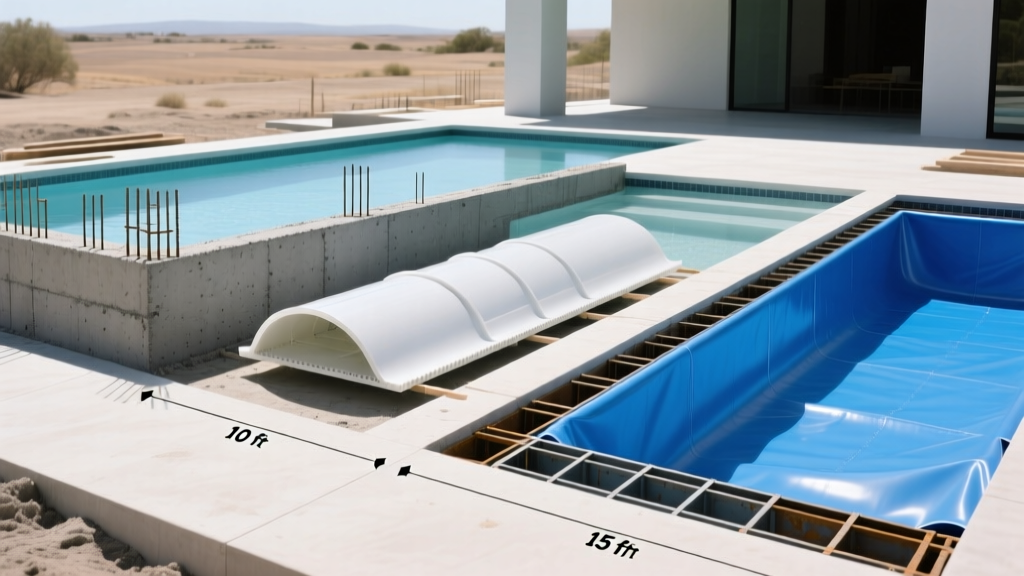
The Base Formula: Calculating Pool Costs to Build by Volume
Calculating pool costs to build requires moving beyond simple square-footage estimates. A 14x28-foot pool does not cost exactly half as much as a 28x56-foot pool due to fixed equipment costs, and a 6-foot deep end increases gunite and water volume expenses disproportionately. Builders calculate pricing using a hybrid metric: linear feet for perimeter coping, square feet for surface tiling, and cubic yards for excavation and concrete shell thickness.
Material Baselines: Vinyl, Fiberglass, and Gunite Cost Matrices
The choice of shell material dictates the baseline budget. According to national cost data aggregated by Angi, material and labor rates have stabilized in 2026, though gunite remains heavily dependent on local concrete and steel indices.
| Material Type | 10x20 (Small / Plunge) | 14x28 (Medium / Family) | 16x32 (Standard) | 20x40 (Large / Estate) |
|---|---|---|---|---|
| Vinyl Liner | $35,000 - $45,000 | $45,000 - $60,000 | $55,000 - $75,000 | $75,000 - $95,000 |
| Fiberglass | $45,000 - $55,000 | $60,000 - $80,000 | $75,000 - $95,000 | $95,000 - $120,000 |
| Gunite / Shotcrete | $60,000 - $80,000 | $85,000 - $110,000 | $100,000 - $135,000 | $140,000 - $185,000+ |
Note: Fiberglass pools are generally limited to a maximum width of 16 feet due to highway shipping restrictions. Sizes larger than 16x32 require custom on-site fabrication or multi-piece assembly, which eliminates the fiberglass cost advantage.
Scope Modifiers: Equipment and Upgrades That Inflate the Bottom Line
Base pool costs to build rarely include the mechanical and aesthetic upgrades that define modern pool ownership. When sizing your scope, factor in these specific 2026 equipment costs:
- Saltwater Chlorine Generator (SCG): Upgrading from traditional liquid chlorine to a system like the Hayward AquaRite or Pentair IntelliChlor adds $1,800 to $2,800. This requires a sacrificial zinc anode ($75) to protect metal pool components from galvanic corrosion.
- Variable-Speed Pumps: Mandatory in many jurisdictions due to DOE energy regulations. A Pentair IntelliFlo VSF adds $1,200 to $1,800 over a single-speed pump but cuts filtration energy costs by up to 90%.
- Advanced Automation: Systems like the Pentair IntelliCenter or Hayward OmniLogic allow smartphone control of lighting, heating, and water features. Budget $3,500 to $6,000 for the controller, actuators, and smart relays.
- Heating Solutions: A standard gas heater (e.g., Hayward Universal H-Series) costs $3,000 to $4,500 installed. An electric heat pump (e.g., Pentair UltraTemp) costs $4,500 to $6,500 but operates at a fraction of the monthly cost in climates where ambient air temperatures remain above 50°F.
- Coping and Decking: Standard broom-finished concrete is usually included in base quotes. Upgrading to travertine coping and stamped concrete decking adds $18 to $32 per square foot. For a standard 800-square-foot deck, expect a $14,400 to $25,600 upgrade fee.
Edge Case: Soil Conditions and Excavation Overruns
The Pool & Hot Tub Alliance (PHTA) emphasizes that subsurface conditions are the leading cause of budget overruns in pool construction. Standard excavation assumes loam or sandy soil.
Expert Insight: If your soil test reveals expansive clay, the builder must over-excavate by 12 to 18 inches and backfill with engineered ASTM C33 graded sand or crushed stone to prevent hydrostatic pressure from cracking the shell. This adds $2,500 to $5,000. If bedrock is encountered, hydraulic hammering or blasting will cost between $150 and $300 per cubic yard of rock removed, easily adding $10,000+ to the project.
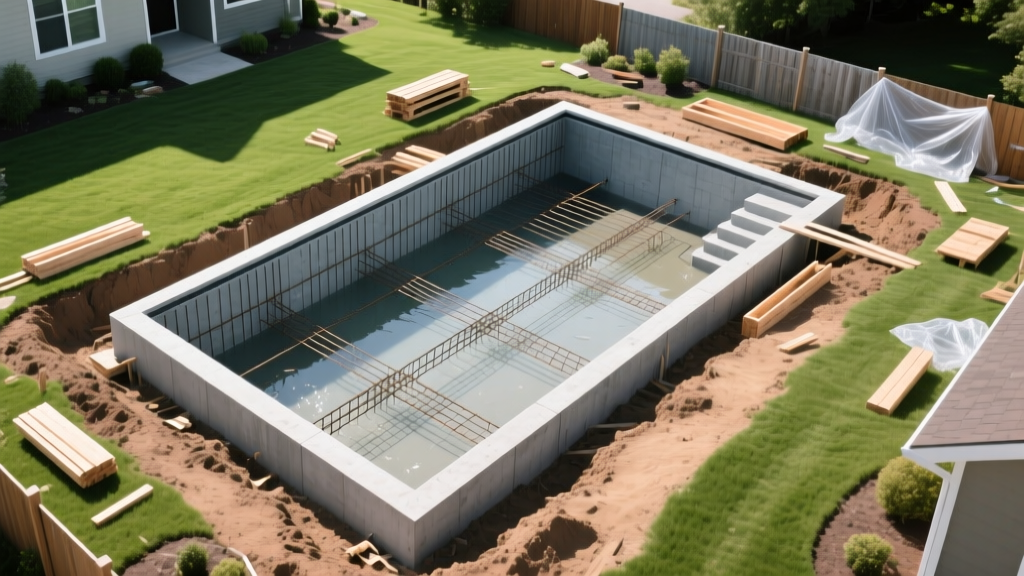
The Size & Scope Decision Framework
Use this matrix to align your budget with realistic pool sizes and materials, based on current market pricing data from HomeGuide.
Tier 1: Budget-Conscious (Under $75,000)
- Best Fit: 12x24 or 14x28 Vinyl Liner or small Fiberglass shell.
- Scope: Standard concrete deck, single-speed or basic dual-speed pump, manual chlorination, basic LED lighting.
- Trade-off: Vinyl liners require replacement every 7-10 years ($4,500+); fiberglass shapes are restricted to manufacturer molds.
Tier 2: The Standard Custom ( $85,000 - $125,000)
- Best Fit: 14x28 to 16x32 Gunite pool with a 5-foot depth profile.
- Scope: Saltwater system, variable-speed pump, basic automation, cantilever concrete coping, 600 sq ft of brushed concrete decking.
- Trade-off: Limits high-end finishes like glass tile waterlines or natural stone coping.
Tier 3: High-End Estate ($140,000+)
- Best Fit: 18x36 or 20x40 Gunite pool with integrated spa, tanning ledge, and 8-foot diving depth.
- Scope: Full automation, heat pump + gas heater combo, sheer descent waterfalls, travertine decking, 6x6 inch glass waterline tile.
- Trade-off: High initial capital expenditure and elevated monthly operational costs due to complex hydraulics and heating demands.
Long-Term Operational Costs by Pool Volume
Calculating pool costs to build is only the first step; sizing directly dictates your ongoing operational expenses. Larger volumes require more chemicals, longer pump run-times, and more BTUs to heat.
| Pool Size & Volume | Monthly Electricity (Pump) | Monthly Chemicals (Salt/Sanitizer) | Heating Cost (Spring/Fall) |
|---|---|---|---|
| 10x20 (approx. 8,000 gal) | $35 - $50 | $25 - $40 | $150 - $250 |
| 14x28 (approx. 15,000 gal) | $55 - $75 | $45 - $65 | $300 - $450 |
| 16x32 (approx. 22,000 gal) | $70 - $95 | $60 - $85 | $450 - $650 |
| 20x40 (approx. 35,000 gal) | $90 - $130 | $85 - $120 | $700 - $1,000+ |
By mapping your exact site dimensions, soil report, and desired equipment list against these matrices, you can generate a highly accurate estimate of total pool costs to build before signing a contractor agreement. Always demand a line-item breakdown that separates excavation, structural shell, plumbing, electrical, and decking to avoid hidden scope creep.
Written by
Elena RodriguezElena Rodriguez is a civil engineer and technical writer specializing in concrete technology, masonry systems, and ASTM/ACI compliance. She earned her B.S. in Civil Engineering from Texas A&M University and spent a decade at a materials testing laboratory, performing over 2,000 concrete compressive strength tests and masonry prism evaluations. Elena is an ACI-certified Field Testing Technician (Grade I) and a member of ASTM Committee C12 on Natural Building Stone. She currently consults on forensic engineering cases involving concrete failures and moisture intrusion. Based in San Antonio, TX, Elena is a proud member of the Society of Women Engineers (SWE) and coaches her daughter's FIRST Robotics team.
More from Elena Rodriguez
View all
Walls & Panels
Cost Analysis: Light Gauge Steel Framing Advantages and Disadvantages
Evaluate light gauge steel framing advantages and disadvantages through a strict cost analysis lens, comparing material, labor, and lifecycle expenses.
Aug 4, 2026

Walls & Panels
Gypsum Board Types: Exact Specifications, Thickness & Dimensions
Compare standard, Type X, and moisture-resistant gypsum board types. Get exact specifications, thicknesses, dimensions, and ASTM standards for your project.
Aug 4, 2026

Fire Resistance
Best Fire-Resistant Outdoor Decking Materials: 2026 Buyer Guide
Discover the best fire-resistant outdoor decking materials for 2026. Compare Class A PVC, aluminum, and hardwood options for WUI compliance and safety.
Aug 4, 2026