How Much Does a Car Wash Cost to Build? 2026 Calculator
Discover exactly how much a car wash costs to build in 2026. Use our size and scope calculator framework for IBA, tunnel, and self-serve models.
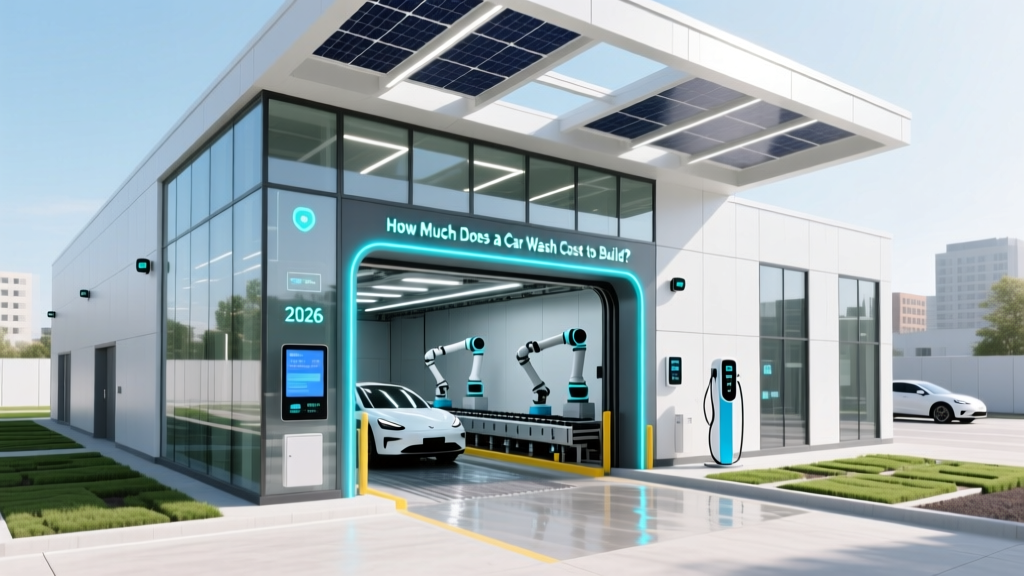
The Car Wash Size & Scope Calculator Framework
Asking how much does a car wash cost to build is essentially asking how much it costs to build a factory that processes 5,000-pound metal boxes using high-pressure water, corrosive chemicals, and heavy machinery. The answer cannot be a single flat number. In 2026, commercial construction estimating requires a strict size and scope calculator methodology. A single-bay touchless in-bay automatic (IBA) operates on an entirely different financial and structural tier than a 130-foot exterior express tunnel with a belt conveyor and 80-gallon-per-minute water reclamation system.
To accurately forecast your capital expenditure (CapEx), you must decouple the project into four distinct cost centers: civil engineering and site work, structural building envelopes, wash equipment and plumbing, and electrical/utility infrastructure. According to industry data tracked by the International Carwash Association, the gap between a basic self-serve bay and a fully automated express tunnel can exceed $3 million, driven primarily by the footprint and the complexity of the water treatment systems required by local municipalities.
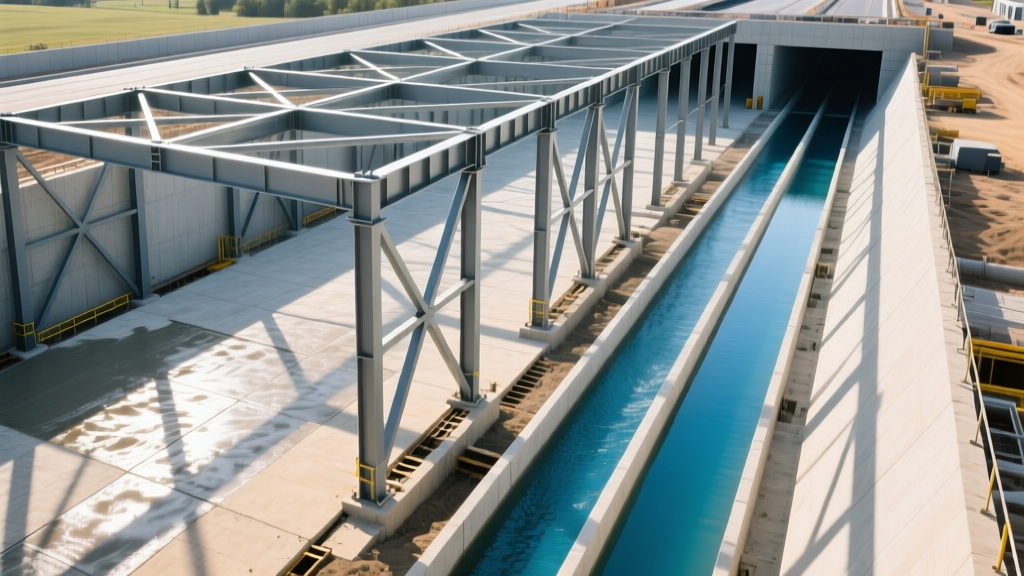
Cost Matrix: Breakdown by Wash Type & Footprint
The following matrix outlines the baseline 2026 construction costs based on the specific scope and physical footprint of the three primary car wash models. These figures assume you already own the land but exclude raw land acquisition costs.
| Wash Type | Typical Footprint | Civil & Structure Cost | Equipment & Tech Cost | Total Estimated CapEx |
|---|---|---|---|---|
| Self-Serve (Per Bay) | 600 - 800 sq. ft. | $65,000 - $85,000 | $45,000 - $60,000 | $110,000 - $145,000 |
| In-Bay Automatic (IBA) | 1,200 - 1,500 sq. ft. | $150,000 - $200,000 | $200,000 - $280,000 | $350,000 - $480,000 |
| Express Tunnel (100ft) | 4,000 - 5,500 sq. ft. | $1,200,000 - $1,600,000 | $900,000 - $1,200,000 | $2,100,000 - $2,800,000 |
| Express Tunnel (130ft) | 5,500 - 7,500 sq. ft. | $1,500,000 - $2,000,000 | $1,300,000 - $1,700,000 | $2,800,000 - $3,700,000 |
Express Tunnel Scope: The 100-Foot vs. 130-Foot Dilemma
When calculating the scope for an express tunnel, the physical length of the wash dictates not just the building size, but the mechanical complexity. A 100-foot tunnel typically accommodates a standard friction and touchless hybrid setup. However, the 2026 market trend heavily favors the 130-foot tunnel. Why? Because a longer tunnel allows for a slower conveyor speed while maintaining high hourly throughput, which drastically reduces the noise profile and allows for more complex chemical application sequences (such as dual-foam arches and ceramic coating applicators).
Conveyor Systems: Belt vs. Chain
Your scope calculator must account for the conveyor type. Traditional chain-and-roller conveyors are cheaper upfront (roughly $120,000 to $150,000 for a 100-foot run) but require extensive below-grade trenching, constant lubrication, and high maintenance. Modern belt conveyors (such as those utilizing heavy-duty modular plastic belting) cost 30% to 40% more upfront but eliminate the need for deep grease pits, reduce water consumption in the pit area, and drastically lower long-term maintenance costs. If your scope includes a premium customer experience with low noise, the belt conveyor is the mandatory choice.
Do not underestimate the electrical scope required for the dryer array. A modern 130-foot tunnel requires a minimum of six to eight 25HP to 40HP blowers. To achieve the necessary air velocity without causing massive utility spikes, specify Variable Frequency Drives (VFDs) on all blower motors. This adds roughly $15,000 to $25,000 to your electrical scope but reduces peak demand charges from your utility provider by up to 30%.
Hidden Scope Creep: Water Reclamation & Utility Upgrades
The most frequent cause of budget overruns in car wash construction is the water treatment and reclamation scope. Municipalities in 2026 are enforcing strict discharge limits. You cannot simply route wash runoff into the storm drain.
- Oil/Water Separators: You must install API-compliant oil/water separators (such as those from Highland Tank or equivalent manufacturers) before the water hits the municipal sewer. Budget $12,000 to $18,000 per separator, and you will likely need two or three depending on your bay count.
- 3-Stage Reclaim Systems: An express tunnel uses 30 to 40 gallons of water per car. A 3-stage settling and filtration reclaim system captures, filters, and reuses up to 80% of this water for the undercarriage and high-pressure rinse stages. Expect to allocate $45,000 to $65,000 for a commercial-grade ozone-injected reclaim system to prevent bacterial growth and odor.
- Reverse Osmosis (RO) Systems: For the final spot-free rinse, an RO system is non-negotiable in markets with hard water. A 15 to 20 Gallons-Per-Minute (GPM) commercial RO system requires dedicated indoor climate-controlled space, pre-filtration, and a 1,500-gallon storage tank. Scope this at $35,000 to $50,000.
Pre-Construction Multipliers: Land, Zoning, and Tap Fees
Before a single yard of concrete is poured, your scope calculator must absorb the soft costs and utility tap fees. According to construction analyses featured in Professional Carwashing & Detailing, water and sewer tap fees can be the silent killer of a car wash pro forma. Because a car wash is classified as a high-volume water user, municipalities often charge commercial impact fees that can range from $15,000 to over $60,000 just to connect to the city water main. Furthermore, you will likely need to upgrade the local electrical grid. A 130-foot express tunnel requires a 480V, 3-phase electrical service with a minimum 800-amp to 1,200-amp panel. If the local utility needs to install a new pad-mounted transformer or run new lines, add $30,000 to $75,000 to your site-work scope.
2026 Material Realities: Concrete, Steel, and Labor
The physical envelope of a car wash takes a brutal beating. The scope of your civil engineering must reflect the harsh chemical and moisture environment.
The Concrete Specification
Standard 3,000 PSI commercial concrete will spall and degrade within three years when exposed to daily tire traffic, acidic wheel cleaners, and alkaline pre-soaks. Your scope must mandate a minimum of 4,000 PSI concrete, fiber-mesh reinforced, with a diamond-troweled finish. Furthermore, the concrete in the wash bays and tunnel trench must be treated with a penetrating silane/siloxane sealer or coated with a high-build polyaspartic or epoxy system to prevent chemical intrusion. This adds $4 to $7 per square foot to your flooring scope but extends the slab life by decades.
Corrosion-Resistant Structural Steel
If you are building a tunnel with exposed steel trusses, standard red-oxide primer is insufficient. The constant atomization of water and chlorine-based cleaning agents will cause standard steel to rust rapidly. Specify hot-dip galvanized steel or a multi-part marine-grade epoxy coating for all structural members and equipment gantries. While this increases the structural steel budget by 15% to 20%, it prevents catastrophic corrosion failures and eliminates the need to shut down the wash for repainting every five years.
Frequently Asked Questions
How long does it take to build an express tunnel car wash?
From the moment ground is broken, a 130-foot express tunnel typically takes 6 to 9 months to complete. However, the pre-construction phase—including zoning approvals, environmental impact studies, and utility permitting—can easily add 9 to 14 months to the overall project timeline.
Do I need a water reclamation system for an In-Bay Automatic?
While not always legally mandated for smaller IBA setups, installing a basic reclaim system is highly recommended. An IBA uses roughly 40 to 50 gallons per wash. Reclaiming the undercarriage and high-pressure rinse water can cut your municipal water and sewer bills by 40%, achieving ROI on the $25,000 equipment investment within 24 to 36 months.
What is the most profitable car wash type to build in 2026?
The express exterior tunnel model currently offers the highest return on investment due to its ability to process 80 to 120 cars per hour with minimal labor (typically 3 to 5 employees on site). While the CapEx is the highest, the recurring monthly subscription revenue models (unlimited wash clubs) provide highly predictable cash flow that self-serve and IBA models struggle to match.
Written by
Priya KapoorPriya Kapoor is a real estate market analyst and construction economics researcher with expertise in housing affordability, development feasibility, and infrastructure investment. She holds a Master of Regional Planning from Cornell University and previously worked as a senior analyst at CBRE's Investment Properties group, where she modeled returns for $4B in mixed-use development pipelines. Priya now runs an independent research practice advising developers, municipalities, and REITs on construction cost forecasting and market timing. She publishes the quarterly "BuildMat Market Pulse" report tracking material price indices across 12 commodity categories. Based in Austin, TX, Priya serves on the board of Habitat for Humanity Austin and is a marathon runner.
More from Priya Kapoor
View all
Construction Cost
Cost to Build a 1600 Sq Ft Home in 2026: Full Breakdown
Accurate 2026 cost to build a 1600 sq ft home—material, labor, and regional pricing breakdowns included. Plan your budget with real-time estimates.
Aug 11, 2026

Wood & Lumber
Name the Types of Wood for Pressure Treatment and Preservation
Learn how to name the types of wood best suited for pressure treatment. Compare species treatability, chemical retention levels, and 2026 preservation costs.
Aug 4, 2026

Stone & Masonry
Stone Veneer Suppliers Lindenhurst: 2026 Cost Analysis
Analyze 2026 stone veneer costs in Lindenhurst, NY. Compare local supplier pricing, delivery fees, and Suffolk County installation labor rates.
Aug 4, 2026