How Much Does It Cost to Build a Casino? 2026 Scope Calculator
Calculate how much it costs to build a casino in 2026. Break down gaming floor, hotel, and security costs by square footage and project scope.
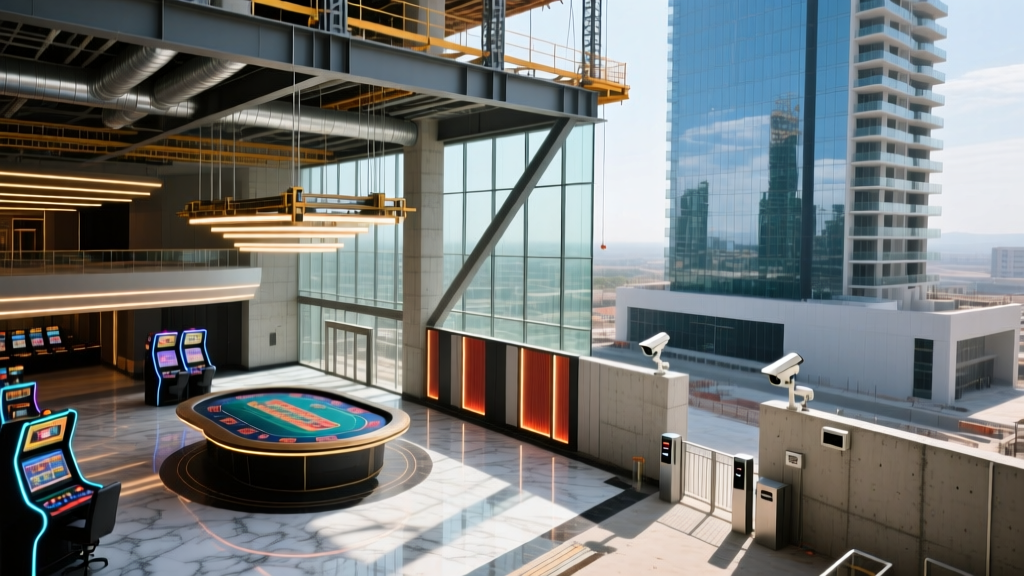
The Casino Construction Cost Matrix: Size & Scope Tiers
Estimating the cost to build a casino requires moving beyond standard commercial construction metrics. Gaming facilities demand specialized infrastructure, including heavy-duty electrical grids for slot machines, advanced surveillance networks, and complex HVAC systems designed for smoke extraction and high-occupancy cooling. In 2026, the baseline cost for a casino build ranges from $450 to over $1,200 per square foot, depending entirely on the project's scope, luxury tier, and jurisdictional requirements.
According to industry data tracked by the American Gaming Association, regional gaming expansions continue to drive mid-market construction, while destination resorts require multi-billion-dollar capital expenditures. Below is the foundational size and scope calculator matrix for 2026 casino projects.
| Casino Tier | Typical Scope & Size | Estimated Total Cost (2026) | Cost Per Sq. Ft. (Avg) |
|---|---|---|---|
| Boutique / Card Room | 10,000 - 30,000 sq ft (No hotel) | $12M - $35M | $450 - $650 |
| Regional Casino | 50,000 - 100,000 sq ft gaming + 200-room hotel | $150M - $350M | $550 - $800 |
| Destination Mega-Resort | 150,000+ sq ft gaming + 2,000+ rooms + arenas | $2.5B - $5B+ | $900 - $1,400+ |
Zone-by-Zone Cost Calculator & Specifications
A casino is not a single building; it is a composite of highly specialized zones. Accurately calculating your budget requires breaking the scope down by functional area. The following per-square-foot estimates include both hard construction costs and zone-specific MEP (Mechanical, Electrical, Plumbing) fit-outs.
1. The Gaming Floor ($500 - $850 per sq. ft.)
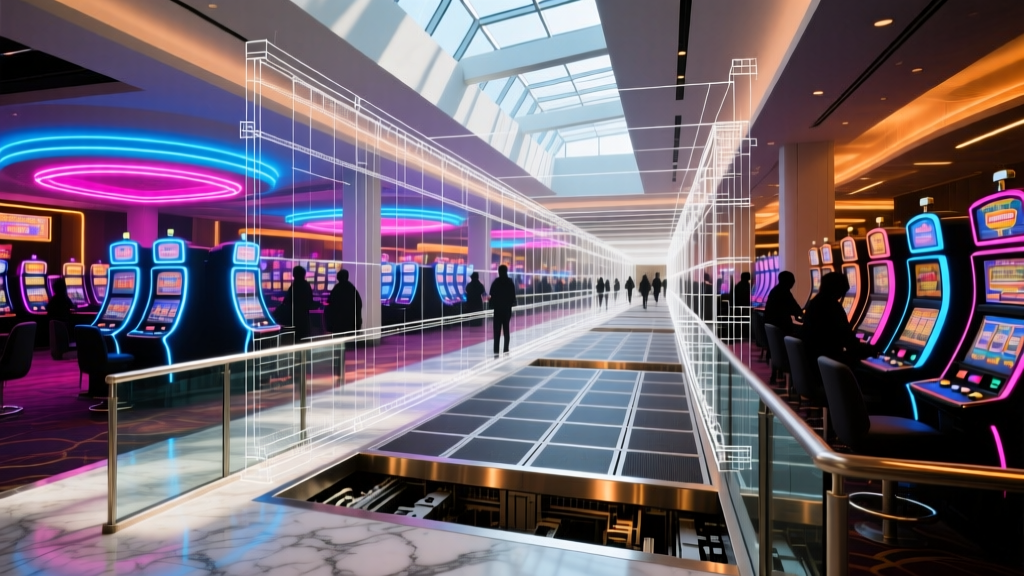
The gaming floor is the most technically complex zone. It requires a raised access flooring system (such as Tate or Armstrong heavy-duty panels) to route power, data, and HVAC directly to individual slot machines and table game pits.
- Structural Load: Flooring must support a concentrated load of 1,000 to 1,500 lbs per square foot to accommodate heavy slot cabinets and coin hoppers.
- Electrical: Requires dedicated 20-amp circuits every 4 to 6 feet, alongside localized UPS (Uninterruptible Power Supply) backups to prevent game-state data loss during grid fluctuations.
- Lighting: High-CRI LED ambient lighting integrated with dynamic architectural cove lighting to eliminate shadows on table games.
2. Hotel & Hospitality Towers ($400 - $750 per sq. ft.)
Casino hotel towers require accelerated vertical transportation and enhanced acoustic isolation. Elevator banks must be sized to handle peak check-in and casino-shift-change surges, often requiring destination-dispatch systems. Room finishes in casino resorts typically skew 20-30% higher in cost than standard luxury hotels due to the integration of in-room gaming interfaces, high-end minibars, and premium acoustic dampening to block out 24/7 resort noise.
3. Food & Beverage / Nightclubs ($600 - $1,100 per sq. ft.)
High-volume F&B spaces and nightclubs require massive grease-trap infrastructure, specialized makeup air units for commercial kitchens, and heavy structural reinforcement for multi-story nightclub mezzanines and rooftop pools.
Do not underestimate parking. Gaming jurisdictions often mandate 1.5 to 2.5 parking spaces per hotel room, plus additional spaces based on gaming floor square footage. In 2026, structured parking costs between $32,000 and $45,000 per stall. A 3,000-space garage can easily add $100M+ to your baseline scope.
Critical Infrastructure: HVAC & Smoke Evacuation
Standard commercial HVAC designs will fail on a casino gaming floor. Jurisdictions that permit indoor smoking require engineering solutions that comply with strict indoor air quality mandates. Referencing ASHRAE Standard 62.1 for ventilation and acceptable indoor air quality, casino engineers must design systems capable of massive air exchange rates.
- 100% Outside Air Makeup: To prevent smoke migration into hotel towers and non-smoking zones, the gaming floor HVAC must utilize 100% outside air makeup units (MAUs) rather than recirculating return air.
- Displacement Ventilation: Conditioned air is supplied at floor level through the raised access panels, pushing smoke upward to high-level exhaust hoods located directly above gaming pits and slot zones.
- Cost Impact: This specialized MEP engineering adds $80 to $140 per square foot to the gaming floor budget compared to standard retail HVAC systems.
Security, Vaults, and Cash Handling Specifications
Casino security construction goes far beyond standard CCTV. The physical architecture must support cash logistics, chip storage, and regulatory surveillance. The UL 752 standard for bullet-resisting equipment dictates the materials used in cashier cages and count rooms.
| Security Zone | Required Specifications | Estimated Cost Premium |
|---|---|---|
| Main Cage / Cashier | UL 752 Level 8 bullet-resistant glass, reinforced steel framing, bandit barriers, and pneumatic tube systems for drive-through windows. | +$150,000 - $300,000 per cage |
| Soft Count / Hard Count Rooms | RF-shielded walls to prevent electronic interference, specialized dust-extraction HVAC for coin counting, and interlocking mantrap entry doors. | +$800 - $1,200 per sq. ft. |
| Main Vault | UL Class 3 vault doors, reinforced concrete walls (minimum 18 inches thick with rebar matrix), and seismic sensors tied to local law enforcement. | $500,000 - $1.5M (Turnkey) |
| Surveillance Control Room | Anti-static raised flooring, dedicated cooling for server racks, and acoustic paneling. Requires redundant fiber-optic backbone routing. | +$400 per sq. ft. |
Soft Costs, Licensing, and Pre-Construction
When utilizing a size and scope calculator, hard construction costs only tell half the story. Casino development involves immense soft costs that can account for 25% to 40% of the total project budget.
- Gaming Licenses & Regulatory Fees: Depending on the state or country, initial gaming license application fees, background investigations for all principal investors, and legal retainers can range from $2M to over $15M before a single shovel hits the dirt.
- Architectural & Engineering (A&E): Because of the specialized nature of gaming floors, you must hire firms with specific casino experience. A&E fees typically run 8% to 12% of hard costs.
- Technology & Low-Voltage Integration: The IT budget for a modern casino is staggering. Integrating the Casino Management System (CMS), hotel property management system (PMS), point-of-sale (POS) networks, and thousands of IP cameras requires a dedicated low-voltage contractor, often adding $20M to $50M to a mid-sized resort's scope.
2026 Material & Labor Index Adjustments
When finalizing your calculator inputs, apply the following regional multipliers to account for 2026 labor shortages and material supply chain realities in the commercial sector:
- Las Vegas / Nevada: Base multiplier (1.0x). High union labor costs, but deep local expertise and supply chain proximity.
- Emerging Regional Markets (e.g., Virginia, Nebraska): 1.15x multiplier. Lack of local casino-specific subcontractors requires importing specialized labor, driving up per-diem and travel costs.
- Native American Tribal Lands: 0.90x to 1.10x multiplier. Highly variable depending on the tribe's sovereign procurement rules, local prevailing wage requirements, and site remoteness.
Frequently Asked Questions: Casino Scope & Budgeting
How long does it take to build a regional casino?
A standard regional casino (50,000 sq ft gaming floor, 200-room hotel) typically requires 18 to 24 months for physical construction, following 12 to 18 months of environmental review, architectural design, and gaming commission approvals. Mega-resorts routinely take 4 to 6 years from conception to ribbon-cutting.
Can I build a casino using pre-engineered metal buildings?
While the back-of-house (BOH) warehouses, maintenance facilities, and employee parking structures can utilize pre-engineered metal buildings to save costs, the gaming floor and hotel towers require structural steel and reinforced concrete. The heavy loads of slot machines, the depth of the raised access flooring, and the massive HVAC ductwork required for smoke evacuation make pre-engineered metal structures unviable for the primary guest-facing zones.
What is the most common budget overrun in casino construction?
Low-voltage and IT integration. Developers frequently underestimate the sheer volume of conduit, fiber-optic cabling, and server infrastructure required to connect thousands of slot machines, table game RFID trackers, and high-definition surveillance cameras. Scope creep in the casino management system (CMS) integration phase routinely causes 10% to 15% budget overruns if not rigidly defined in the pre-construction phase.
Written by
Marcus ChenMarcus Chen is a licensed structural engineer (PE) and building materials analyst with over 12 years of experience across residential, commercial, and industrial construction. He holds a Master of Science in Civil Engineering from UC Berkeley and spent six years at Thornton Tomasetti before transitioning to independent consulting and technical writing. Marcus specializes in material selection for seismic-prone regions, concrete reinforcement strategies, and lifecycle cost analysis. His work has been cited by the American Concrete Institute (ACI) and the Structural Engineers Association of California (SEAOC). When he is not on a job site or at his desk, you will find him hiking the Sierra Nevada or restoring a 1920s craftsman bungalow in Oakland, CA.
More from Marcus Chen
View all
Construction Cost
How Much Did the Eiffel Tower Cost to Build?
How much did the Eiffel Tower cost to build in 1889? We adjust for inflation and compare its budget to modern skyscraper construction.
Aug 4, 2026

Fire Resistance
What Is a Fire Resistant Material? Testing & Certification Guide
Discover what is a fire resistant material through ASTM and UL testing. Learn how fire ratings, certifications, and assemblies work in construction.
Aug 4, 2026

Construction Cost
How Much Did the Burj Khalifa Cost to Build?
How much did the Burj Khalifa cost to build? We break down the $1.5B project and extract 5 money-saving strategies for your next build.
Jul 30, 2026