How Much Does It Cost to Build an Intranet for Construction Firms
Discover how much does it cost to build an intranet for construction firms. Budget for hardware, BIM integration, and job site edge networks.
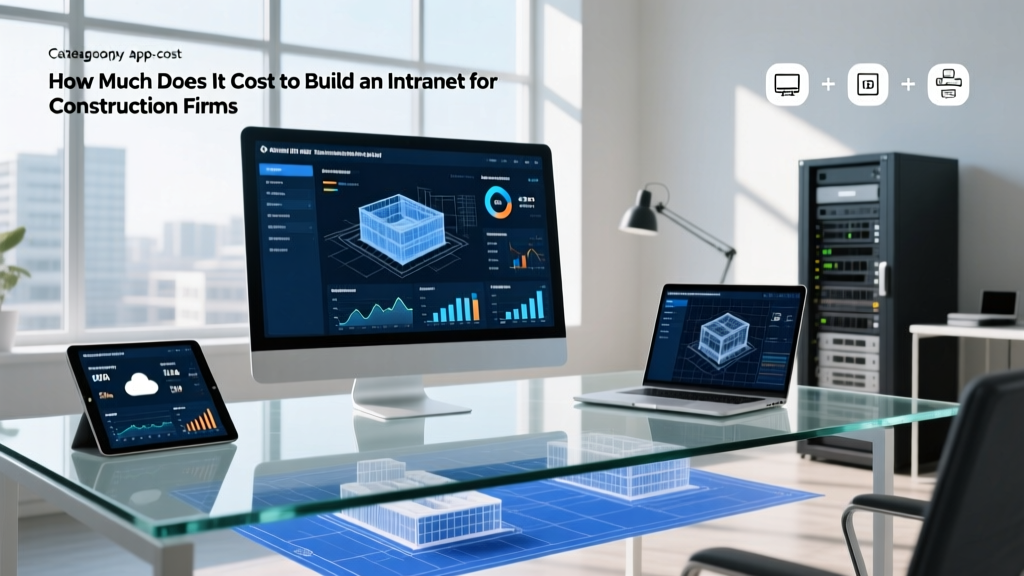
Decoding the Budget: Cloud vs. On-Premise Job Site Intranets
When construction executives and general contractors ask how much does it cost to build an intranet, the answer requires separating standard corporate IT needs from the harsh realities of active job sites. A construction intranet is not merely a digital bulletin board; it is a mission-critical pipeline for Building Information Modeling (BIM) files, daily field logs, RFI routing, and safety compliance documentation. According to industry analyses by McKinsey & Company, technology adoption in construction is accelerating, but poorly planned IT infrastructure remains a primary cause of field-to-office communication breakdowns.
For a mid-sized general contractor (handling $50M–$150M in annual revenue), building a comprehensive intranet that bridges the corporate headquarters with ruggedized job site networks typically costs between $65,000 and $185,000 in initial Capital Expenditure (CapEx), plus $2,500 to $6,000 monthly in Operational Expenditure (OpEx) for cloud hosting, licensing, and maintenance.
Quick Cost Matrix: Construction Intranet Tiers
- Tier 1: Cloud-Only Portal (SharePoint/M365): $18,000 – $35,000 setup. Best for residential builders with reliable site cellular coverage.
- Tier 2: Hybrid Edge Network (Cloud + Local Caching): $65,000 – $120,000 setup. Ideal for commercial GCs needing offline access to 3D models.
- Tier 3: Enterprise Job-Site Mesh (Full Custom API): $150,000 – $300,000+ setup. Required for heavy civil, industrial, or remote infrastructure projects.
Phase 1: Infrastructure and Hardware (The Physical Layer)
Unlike a law firm or marketing agency, a construction company must extend its intranet into environments characterized by concrete dust, moisture, and temporary power grids. The physical layer of a construction intranet requires enterprise-grade, ruggedized networking equipment deployed in job site trailers and across active floors.
| Hardware Component | Recommended Model (2026) | Unit Cost | Use Case |
|---|---|---|---|
| Outdoor/Rugged Access Point | Ruckus T350 or Cisco Catalyst IW9167 | $1,200 – $2,800 | Extending intranet Wi-Fi across open-air job sites and laydown yards. |
| Edge Server / NAS | Synology RackStation RS3621xs+ | $3,500 – $5,000 | Local caching of massive Revit and Navisworks files to prevent cloud lag. |
| SD-WAN Router | Ubiquiti Dream Machine Pro / Meraki MX68 | $400 – $1,800 | Managing failover between Starlink, 5G, and hardline fiber at site trailers. |
| Ruggedized Field Switch | Trendnet Industrial Gigabit PoE+ | $350 – $600 | Powering IP cameras and access points from temporary generator power. |
Budgeting for hardware is only half the battle. General contractors must also allocate $4,000 to $8,000 per active site for low-voltage cabling contractors to pull Cat6a or fiber-optic lines through temporary trailers and hoistways before the permanent building infrastructure is energized.
Phase 2: Software Architecture and BIM Integration
The software layer dictates how superintendents, project managers, and subcontractors interact with the intranet. A common mistake in construction budget planning is treating the intranet as an isolated website. In reality, it must act as an API orchestration layer that pulls data from your existing tech stack.
API Orchestration and Data Silos
If your firm uses Autodesk Construction Cloud for BIM, Procore for financials, and CMiC for ERP, your intranet must aggregate these data streams into a single pane of glass. Building custom API connectors to pull daily weather data, safety incident rates, and live schedule updates from Primavera P6 into a centralized dashboard requires specialized middleware development.
- Out-of-the-Box SharePoint Build: $15,000 – $25,000. Relies on native Microsoft 365 integrations. Limited customization for heavy BIM viewing.
- Custom Laravel/Node.js Portal: $60,000 – $110,000. Bespoke dashboards tailored to specific GC workflows, including native 3D model rendering via Forge APIs.
Phase 3: Labor Rates and Implementation Timelines
Labor represents 40% to 55% of the total intranet build cost. Construction firms rarely possess the in-house IT talent to architect a secure, multi-site mesh network with cloud synchronization. You will need to contract specialized roles, typically over a 3 to 5-month deployment window.
Average Contract Rates (2026)
Network Architect (Job Site Topology): $140 – $190 / hour
SharePoint / Intranet UX Developer: $110 – $160 / hour
API Integration Specialist (Procore/Autodesk): $130 – $180 / hour
Low-Voltage Cabling Crew (Per Site): $85 – $125 / hour
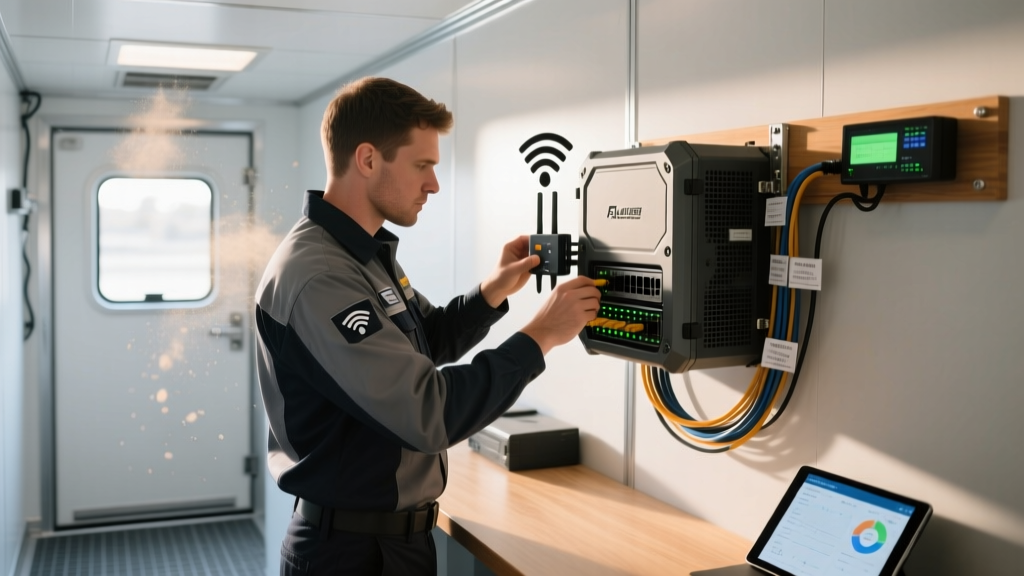
The Job Site Mesh Network: Edge Caching for Revit Models
The most expensive, yet most vital, component of a modern construction intranet is the Edge Caching Protocol. When a field engineer opens a 4GB Revit model on an iPad in a basement with zero cellular reception, a purely cloud-based intranet will fail.
To solve this, advanced GCs deploy local edge servers (like the Synology NAS mentioned above) in the job site trailer. The intranet software automatically syncs the latest approved BIM models from the cloud to the local server at 2:00 AM via the site's SD-WAN connection. During the day, field workers connect to the local intranet mesh, pulling the 3D models directly from the trailer server at gigabit speeds, completely bypassing the internet. Engineering this local-to-cloud sync logic without creating version-control conflicts adds roughly $25,000 to $40,000 to the software development budget, but it eliminates thousands of hours of field downtime.
Hidden Costs That Derail IT Budgets
When forecasting how much does it cost to build an intranet, budget planners frequently overlook operational expenses that scale as the company grows. According to UX research from the Nielsen Norman Group, intranet maintenance and continuous user-experience testing are often underfunded, leading to low adoption rates among field staff.
- Data Egress Fees: If your local edge servers are constantly pulling and pushing massive point-cloud scans to AWS or Azure, cloud egress fees can quietly add $800 to $2,500 per month to your hosting bill.
- API Rate Limits: Pulling live data from third-party construction management software may push you into higher, enterprise-tier API licensing brackets.
- Hardware Refresh Cycles: Job site equipment takes a beating. Budget for a 20% annual replacement rate for outdoor access points and ruggedized tablets due to physical damage or water ingress.
- Training and Change Management: Superintendents will not use a complex portal. Allocate $5,000 to $10,000 for on-site, hands-on training sessions to ensure field staff actually adopt the new digital tools.
Strategic ROI: Justifying the Capital Expenditure
To secure budget approval from the C-suite, frame the intranet not as an IT expense, but as a risk-mitigation asset. A properly engineered construction intranet that ensures the field is always building from the latest approved, clash-detected 3D models prevents catastrophic rework. If an edge-cached intranet prevents just one major HVAC piping collision that would have required $45,000 in demolition and re-fabrication, the entire software architecture pays for itself on a single project. By accurately mapping out hardware, API integration, and edge-network labor costs, GCs can build an intranet that survives the dust, the dead zones, and the demands of modern commercial construction.
Written by
Marcus ChenMarcus Chen is a licensed structural engineer (PE) and building materials analyst with over 12 years of experience across residential, commercial, and industrial construction. He holds a Master of Science in Civil Engineering from UC Berkeley and spent six years at Thornton Tomasetti before transitioning to independent consulting and technical writing. Marcus specializes in material selection for seismic-prone regions, concrete reinforcement strategies, and lifecycle cost analysis. His work has been cited by the American Concrete Institute (ACI) and the Structural Engineers Association of California (SEAOC). When he is not on a job site or at his desk, you will find him hiking the Sierra Nevada or restoring a 1920s craftsman bungalow in Oakland, CA.
More from Marcus Chen
View all
Construction Cost
How Much Did the Eiffel Tower Cost to Build?
How much did the Eiffel Tower cost to build in 1889? We adjust for inflation and compare its budget to modern skyscraper construction.
Aug 4, 2026

Fire Resistance
What Is a Fire Resistant Material? Testing & Certification Guide
Discover what is a fire resistant material through ASTM and UL testing. Learn how fire ratings, certifications, and assemblies work in construction.
Aug 4, 2026

Construction Cost
How Much Did the Burj Khalifa Cost to Build?
How much did the Burj Khalifa cost to build? We break down the $1.5B project and extract 5 money-saving strategies for your next build.
Jul 30, 2026