Cost to Build an 1800 Sq Ft House: 2026 Detailed Breakdown
Comprehensive 2026 cost breakdown to build an 1800 sq ft house, covering foundation, framing, mechanicals, finishes, and regional labor multipliers.
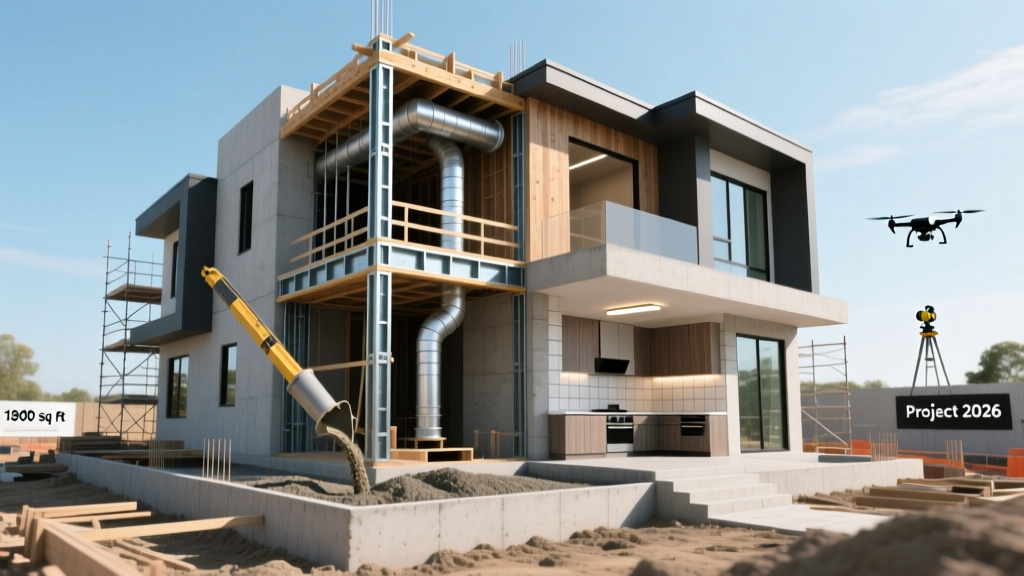
The True Baseline: 2026 National Averages for an 1800 Sq Ft Home
Constructing an 1800 square foot home—typically configured as a 3-bedroom, 2-bathroom single-story or compact two-story layout—requires navigating a complex matrix of material costs, labor rates, and site-specific variables. According to recent data tracked by the U.S. Census Bureau, the national average cost for new residential construction hovers between $150 and $250 per square foot, depending on finish levels and regional labor markets. For a 1800 sq ft footprint, this translates to a hard construction cost ranging from $270,000 to $450,000, excluding land acquisition and site development.
This detailed breakdown dissects the exact capital allocation required across every phase of construction, utilizing current 2026 material pricing and updated International Energy Conservation Code (IECC) compliance standards.
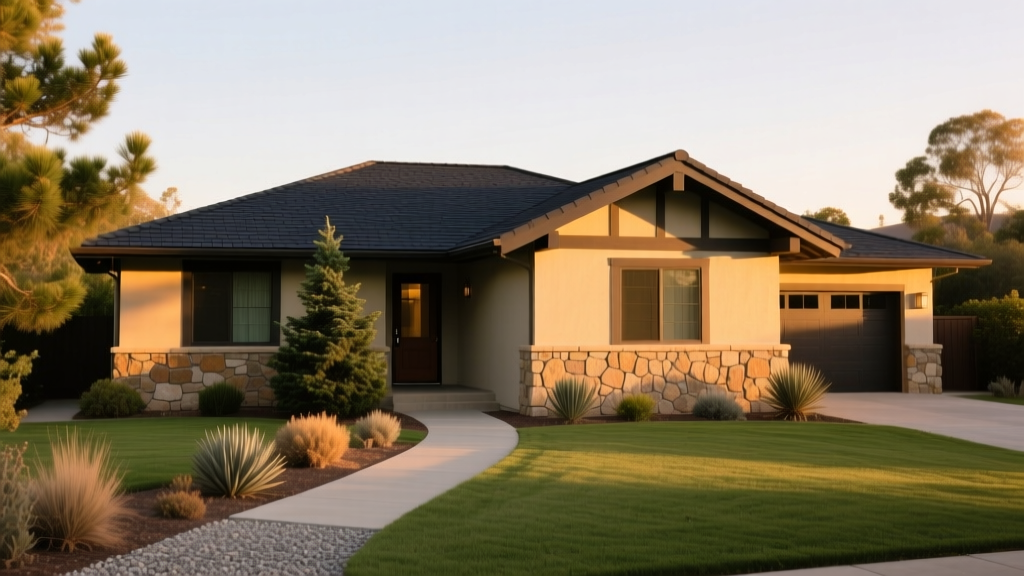
Phase 1: Site Work, Foundation, and Shell
The structural envelope accounts for roughly 30% to 35% of your total budget. Site conditions dictate the lower bound of this phase, while your choice of foundation and exterior cladding dictates the ceiling.
Foundation Cost Matrix
An 1800 sq ft footprint requires significant concrete and steel reinforcement. The choice between a slab, crawlspace, or full basement alters both the immediate budget and long-term mechanical routing.
| Foundation Type | Cost per Sq Ft | Total Cost (1800 Sq Ft) | Best Application & Constraints |
|---|---|---|---|
| Monolithic Slab | $6.50 - $8.50 | $11,700 - $15,300 | Warm climates, flat lots. Requires under-slab plumbing rough-ins before pour. |
| Stem Wall Crawlspace | $11.00 - $14.00 | $19,800 - $25,200 | Expansive soils, flood zones. Allows accessible mechanical routing. |
| Full Poured Basement | $28.00 - $35.00 | $50,400 - $63,000 | Cold climates (frost line depth). Adds usable square footage but requires extensive waterproofing. |
Framing and Exterior Envelope
To meet modern energy codes, exterior walls should be framed with 2x6 dimensional lumber at 16 inches on-center, allowing for R-21 or higher cavity insulation. For an 1800 sq ft home, the lumber package and framing labor will cost between $38,000 and $48,000.
Exterior cladding dramatically shifts the budget. Standard vinyl siding costs approximately $4.50 per square foot installed ($12,000 total), whereas upgrading to James Hardie fiber cement lap siding with factory-applied ColorPlus technology pushes the cost to $9.50 per square foot ($25,000 total). Roofing an 1800 sq ft home (assuming a standard 12/12 pitch yielding roughly 2,400 sq ft of roof area) costs $9,500 for architectural asphalt shingles or up to $28,000 for 24-gauge standing seam metal.
Phase 2: Rough-Ins and Mechanical Systems
Mechanical systems are the central nervous system of the home. Cutting corners here leads to catastrophic failure modes, including moisture intrusion, electrical fires, and inefficient climate control.
HVAC Sizing and Selection
An 1800 sq ft home with standard 9-foot ceilings and moderate window glazing typically requires a 3.0 to 3.5-ton heating and cooling system. The Department of Energy strongly recommends high-efficiency heat pumps for all-electric homes. A 16 SEER2, 3.5-ton variable-speed heat pump system, including a matched air handler and smart thermostat, will cost between $11,500 and $15,000 installed. If you opt for a dual-fuel system (heat pump paired with a natural gas furnace for extreme cold), add $4,000 to $6,000 to the budget.
Plumbing and Electrical
- Plumbing ($14,000 - $18,000): Specify PEX-A expansion piping (e.g., Uponor AquaPEX) over PEX-B crimp systems. PEX-A offers superior kink resistance and freeze tolerance. This budget covers a 2.5-bathroom layout, a kitchen, and a laundry room, including a 50-gallon hybrid electric heat pump water heater.
- Electrical ($16,000 - $22,000): A 200-amp main service panel is the minimum standard, but upgrading to a 400-amp service with a 200-amp main and two 200-amp subpanels ($2,500 extra) future-proofs the home for EV charging and induction cooking. Ensure the quote includes hardwired CAT6a ethernet drops to all bedrooms and living areas.
Phase 3: Interior Finishes and Fixtures
Interior finishes represent the highest variance in construction estimating. The National Association of Home Builders notes that finish selections can swing the final price tag by over 20%. Below is a realistic allocation for an 1800 sq ft layout across three distinct finish grades.
| Category | Builder Grade (Basic) | Mid-Grade (Standard) | Custom Grade (Premium) |
|---|---|---|---|
| Insulation & Drywall | $16,500 (Batts, Level 3) | $21,000 (Blown-in, Level 4) | $28,500 (Closed-cell foam, Level 5) |
| Flooring | $8,500 (Laminate, basic carpet) | $14,000 (LVP, mid-grade tile) | $26,000 (Site-finished hardwood, large format porcelain) |
| Cabinetry & Millwork | $12,000 (Stock RTA, MDF base) | $22,000 (Semi-custom, soft-close) | $45,000 (Full custom, dovetail, solid wood) |
| Countertops | $3,500 (Laminate, basic granite) | $7,500 (Entry-level quartz) | $14,000 (Premium quartzite, waterfall edges) |
The "Hidden" Soft Costs That Derail Budgets
Hard costs (materials and labor) only tell part of the story. Soft costs typically consume 15% to 25% of the total project budget. Failing to line-item these expenses is the primary reason custom builds run out of capital before drywall.
- Architectural & Engineering Plans: $4,500 - $9,000 for a custom 1800 sq ft design, including structural engineering stamps.
- Geotechnical Soil Report: $1,500 - $3,000. Mandatory in areas with expansive clay or high water tables to determine foundation bearing capacity.
- Permits and Impact Fees: $4,000 - $12,000. Highly dependent on local municipality; school and park impact fees are the usual culprits for high costs.
- Builder Overhead & Profit: 15% - 20% of total hard costs. This is non-negotiable for reputable general contractors and covers project management, insurance, and warranty reserves.
Regional Cost Multipliers
National averages are useful for initial feasibility, but construction is inherently local. Apply these regional multipliers to the baseline $195/sq ft national average to estimate your localized cost for an 1800 sq ft home:
- Pacific Northwest & California Coast: 1.35x - 1.60x (High seismic engineering requirements, strict energy codes, premium labor rates).
- Northeast Corridor: 1.25x - 1.45x (Union labor prevalence, deep frost-line foundation requirements, high permit fees).
- Midwest & Plains: 0.90x - 1.05x (Favorable labor markets, accessible material supply chains, standard slab/basement foundations).
- Southeast & Sunbelt: 0.95x - 1.15x (Slab-on-grade foundations reduce costs, but hurricane wind-load engineering and impact glass requirements can offset savings in coastal zones).
Expert Decision Framework: Where to Splurge vs. Save
Optimizing a 1800 sq ft build requires strategic capital allocation. Use this framework to maximize resale value and long-term durability without inflating the budget unnecessarily.
Always Splurge (Non-Negotiable)
- Building Envelope Sealing: Invest in a fluid-applied weather-resistive barrier (WRB) like Zip System liquid flash rather than traditional house wrap. It prevents bulk water intrusion and reduces air leakage, drastically improving HVAC efficiency.
- Electrical Infrastructure: Run 50-amp circuits to the garage for EV charging and the kitchen for induction ranges. Retrofitting these after drywall is installed costs 4x as much.
- Soundproofing: Use resilient channel and Rockwool Safe'n'Sound insulation in interior walls surrounding bathrooms, laundry rooms, and bedrooms. It costs less than $1,500 for the entire house but dramatically improves perceived build quality.
Strategically Save (High ROI Alternatives)
- Cabinet Boxes: Instead of full custom cabinetry, use high-quality semi-custom frameless boxes (e.g., IKEA Sektion or similar plywood-box systems) and upgrade only the hardware and drawer fronts. You save 40% with zero visual compromise.
- Trim and Millwork: Skip expensive crown molding in secondary bedrooms. Use flat-stock, paint-grade MDF baseboards and simple casing. It aligns with modern, clean-line aesthetics and cuts millwork labor by 30%.
- Lighting Fixtures: Builders often mark up lighting fixtures by 40% to 100%. Source your own decorative pendants and sconces from direct-to-consumer suppliers, and have the electrician install them during the final trim phase.
Written by
Priya KapoorPriya Kapoor is a real estate market analyst and construction economics researcher with expertise in housing affordability, development feasibility, and infrastructure investment. She holds a Master of Regional Planning from Cornell University and previously worked as a senior analyst at CBRE's Investment Properties group, where she modeled returns for $4B in mixed-use development pipelines. Priya now runs an independent research practice advising developers, municipalities, and REITs on construction cost forecasting and market timing. She publishes the quarterly "BuildMat Market Pulse" report tracking material price indices across 12 commodity categories. Based in Austin, TX, Priya serves on the board of Habitat for Humanity Austin and is a marathon runner.
More from Priya Kapoor
View all
Construction Cost
Cost to Build a 1600 Sq Ft Home in 2026: Full Breakdown
Accurate 2026 cost to build a 1600 sq ft home—material, labor, and regional pricing breakdowns included. Plan your budget with real-time estimates.
Aug 11, 2026

Wood & Lumber
Name the Types of Wood for Pressure Treatment and Preservation
Learn how to name the types of wood best suited for pressure treatment. Compare species treatability, chemical retention levels, and 2026 preservation costs.
Aug 4, 2026

Stone & Masonry
Stone Veneer Suppliers Lindenhurst: 2026 Cost Analysis
Analyze 2026 stone veneer costs in Lindenhurst, NY. Compare local supplier pricing, delivery fees, and Suffolk County installation labor rates.
Aug 4, 2026