Cost to Build a Home in Georgia: 2026 Regional Price Comparison
Analyze the 2026 cost to build a home in Georgia. Compare regional pricing, material tiers, and soil-specific foundation expenses across the state.
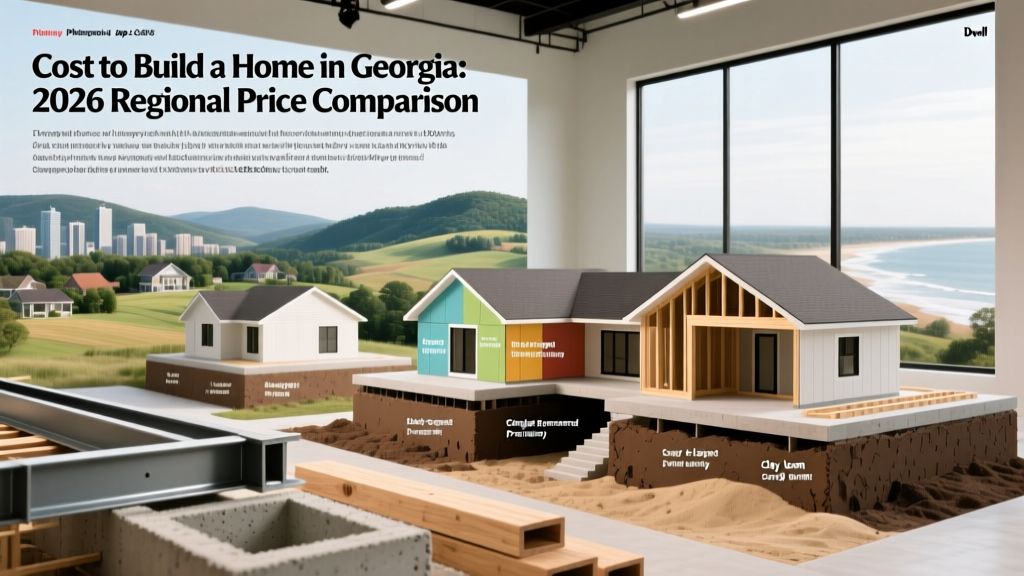
Georgia Construction Economics: The 2026 Baseline
Calculating the true cost to build a home in Georgia requires moving beyond national averages and examining the state's distinct geological and municipal micro-climates. As of 2026, the baseline cost for a custom, stick-built single-family residence in Georgia ranges from $145 to $260 per square foot, excluding land acquisition and site development. According to the National Association of Home Builders (NAHB), regional labor disparities and localized building code adoptions create massive cost variances between the Piedmont, Coastal, and Mountain regions.
Unlike states with uniform topography, Georgia builders must navigate expansive red clay soils in the north, hurricane-force wind load requirements on the coast, and stringent tree-protection ordinances in metro Atlanta. This guide deconstructs the 2026 regional pricing matrices, material tiers, and hidden site-prep costs that dictate your final construction budget.
- Statewide Average: $165 - $195 per sq. ft.
- Metro Atlanta Premium: +15% to +25% above state average
- Coastal Wind-Code Premium: +8% to +12% for impact-resistant materials
- Primary Cost Driver: Site preparation and foundation engineering in expansive soils
Regional Cost Matrix: Metro vs. Coastal vs. Rural
The cost to build a home in Georgia fluctuates drastically depending on the county. The following matrix breaks down 2026 estimated costs per square foot for a 2,500-square-foot custom home, highlighting the primary financial drivers for each zone.
| Region / Metro Area | Cost Per Sq. Ft. (2026) | Primary Cost Drivers & Code Variables |
|---|---|---|
| Metro Atlanta (Fulton, DeKalb, Cobb) | $185 - $260+ | High labor rates, strict tree ordinances, steep lot grading, high municipal impact fees. |
| Coastal GA (Savannah, Brunswick, St. Simons) | $170 - $230 | 140 mph wind-load codes, DP50 impact windows, secondary water barriers, elevated foundations. |
| Central / Augusta / Macon | $140 - $175 | Lower labor costs, favorable topography, standard slab-on-grade foundations, fewer permit delays. |
| North GA Mountains (Fannin, Union, Rabun) | $160 - $220 | Rock blasting, steep driveway engineering, well/septic installation, limited material delivery access. |
The Metro Atlanta 'Tree Ordinance' Premium
Building in counties like DeKalb, Fulton, or Gwinnett involves navigating aggressive tree protection ordinances. Before breaking ground, you must hire a certified arborist to conduct a tree survey. If your building footprint requires removing protected hardwoods, municipalities charge recompense fees that can reach $100 to $150 per inch of Diameter at Breast Height (DBH). Alternatively, builders must install specialized root-protection fencing and use hand-digging techniques near drip lines, which can add $4,000 to $12,000 to your site-prep budget.
Foundation Engineering in Georgia Red Clay
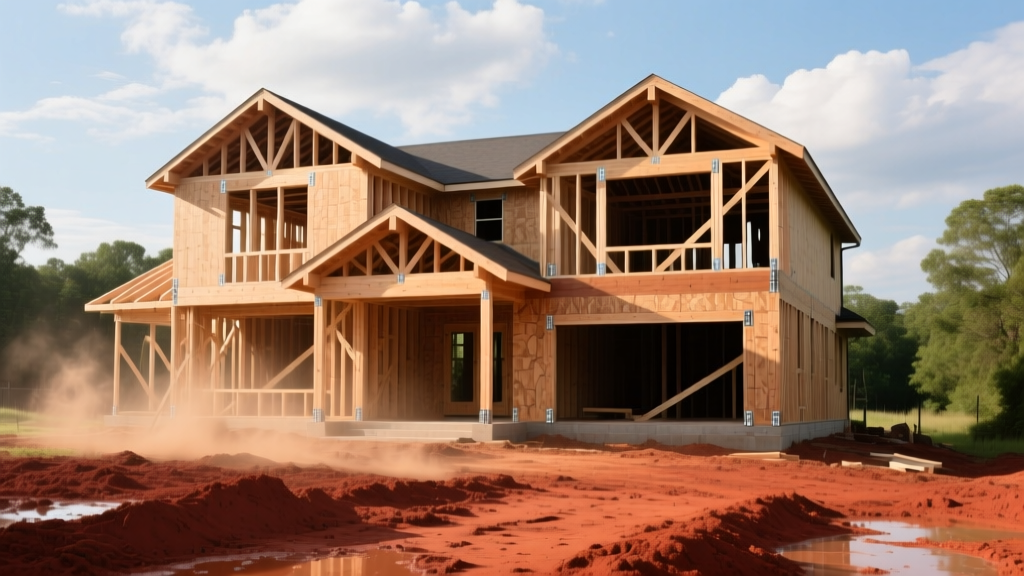
The Georgia Piedmont region is notorious for its saprolite and expansive red clay soils. These soils swell significantly when wet and shrink during droughts, exerting massive hydrostatic pressure on concrete foundations. Standard slab-on-grade foundations poured directly on native clay frequently experience differential settling and structural cracking within the first five years.
To mitigate this, structural engineers in the Atlanta and Athens corridors routinely specify over-excavation and post-tension slab foundations for 2026 builds.
- Over-Excavation and Gravel Base: Removing 12 to 24 inches of native clay and replacing it with compacted #57 granite gravel improves drainage and provides a stable base. This adds approximately $1.50 to $2.50 per square foot to foundation costs.
- Post-Tension Slabs: Instead of standard rebar grids, post-tension cables are threaded through the slab and tightened after the concrete cures. This compresses the slab, making it highly resistant to the tensile forces caused by shifting clay. Expect a premium of $1,800 to $3,500 for a standard 2,500 sq. ft. footprint.
- Drainage Systems: Installing a French drain system tied to a sump pump or daylight discharge is mandatory in many metro Atlanta subdivisions to prevent basement or crawlspace flooding. Budget $3,500 to $6,000 for comprehensive perimeter drainage.
Coastal Building Codes: The Savannah and Brunswick Factor
According to U.S. Census Bureau building permit data, coastal Georgia remains a high-growth corridor, but building here requires strict adherence to the International Residential Code (IRC) high-wind provisions. In Chatham and Glynn counties, the ultimate design wind speed is mapped at 140 mph.
Standard vinyl windows and traditional roofing felt will fail inspection in coastal GA zones. You must budget for specialized wind-mitigation materials to secure your certificate of occupancy.
Required Coastal Upgrades & Costs:
- DP50 Impact-Resistant Windows: Laminated glass windows rated for Design Pressure 50 are required for all openings. These cost 30% to 50% more than standard dual-pane vinyl windows, adding $6,000 to $10,000 to the glazing budget.
- Secondary Water Barrier (SWB): A peel-and-stick roofing membrane (such as Grace Ice & Water Shield) must be applied to the entire roof deck beneath the shingles or metal panels. This prevents water intrusion if high winds tear off the primary roofing. Cost: $1.25 to $1.75 per sq. ft. of roof area.
- Enhanced Framing Connectors: Hurricane ties, continuous load path strapping, and structural screws (like Simpson Strong-Tie SDS) must connect the roof trusses to the top plates, and the walls to the foundation. Cost: $1,500 to $2,500 in hardware and labor.
Material Tier Comparison: Standard vs. Premium
The cost to build a home in Georgia is heavily influenced by exterior envelope choices, specifically regarding humidity and termite resistance. The following comparison outlines the 2026 material costs and longevity expectations for common exterior finishes.
| Material Category | Standard Builder Grade | Premium / Custom Grade |
|---|---|---|
| Exterior Siding | Vinyl Lap Siding $3.50 - $5.00 / sq ft installed |
James Hardie Fiber Cement (Zone 3) $9.00 - $13.00 / sq ft installed |
| Roofing System | 3-Tab Asphalt Shingles $3.00 - $4.50 / sq ft installed |
26-Gauge Standing Seam Metal $14.00 - $19.00 / sq ft installed |
| Interior Flooring | Luxury Vinyl Plank (LVP) $4.00 - $7.00 / sq ft installed |
Engineered White Oak Hardwood $11.00 - $16.00 / sq ft installed |
| Insulation | Fiberglass Batts (R-38 Ceiling) $1.20 - $1.80 / sq ft |
Closed-Cell Spray Foam (R-49+) $3.50 - $5.50 / sq ft |
Siding Specifics: The Fiber Cement Advantage
Georgia's high humidity and heavy termite pressure make wood and vinyl siding problematic over the long term. James Hardie fiber cement siding, specifically manufactured in their 'HZ5' product line for the Southeast, is engineered to resist moisture absorption and swelling. While the upfront cost is nearly triple that of vinyl, it drastically reduces lifecycle maintenance and satisfies strict architectural review boards in high-end subdivisions like those in Alpharetta or Peachtree City.
Rural Infrastructure: Wells, Septic, and Access
When building outside municipal water and sewer boundaries, site development costs can eclipse the foundation budget. According to regional Bureau of Labor Statistics data, rural construction labor is cheaper, but specialized trades like well-drilling command premium rates due to equipment scarcity.
- Well Drilling: In the North Georgia mountains, hitting bedrock requires air-hammer drilling. A 300-foot deep well, complete with a submersible pump, pressure tank, and trenching to the house, averages $8,500 to $14,000 in 2026.
- Septic Systems: A conventional gravity-fed septic system costs $4,000 to $7,000, provided the soil passes a percolation (perc) test. If the soil is heavy clay or the water table is high, the county health department will mandate an aerobic treatment unit (ATU) or a mound system, pushing costs to $12,000 to $18,000.
- Driveway and Access: Cutting a 500-foot driveway through rocky terrain, installing culverts, and laying a gravel base typically costs $15 to $25 per linear foot. Paving with asphalt adds another $8 to $12 per square foot.
Actionable Framework: Estimating Your Specific Build
To generate an accurate budget for your Georgia build, follow this sequential estimation framework:
- Establish the Shell Baseline: Multiply your planned square footage by the regional baseline (e.g., 2,500 sq ft x $165 = $412,500 for Central GA).
- Add Site Prep Variables: Request a geotechnical soil report ($1,500 - $2,500) before finalizing foundation plans. Add 10% if expansive clay or rock blasting is suspected.
- Calculate Municipal Tap Fees: Contact the local county water authority. Metro Atlanta tap fees can exceed $6,000, whereas rural county fees may be under $1,500.
- Apply the Finish Multiplier: If selecting premium materials (HardiePlank, standing seam metal, spray foam), increase the shell baseline by 18% to 22%.
- Factor in 2026 Code Upgrades: Ensure your HVAC contractor is pricing units that meet the latest SEER2 efficiency mandates, which typically add $800 to $1,500 per unit compared to older inventory.
Frequently Asked Questions
Is it cheaper to build or buy an existing home in Georgia in 2026?
In most metro Atlanta and Savannah suburbs, building a custom home currently costs 10% to 15% more per square foot than purchasing a comparable existing home, primarily due to the premium of acquiring vacant, buildable lots and current labor rates. However, building allows you to integrate modern energy codes, closed-cell insulation, and low-maintenance exteriors, which significantly reduces long-term utility and maintenance expenses.
How long does the permitting process take in Georgia?
Permitting timelines vary wildly by jurisdiction. In fast-growing counties like Cherokee or Barrow, plan review and permitting can take 8 to 14 weeks due to backlog. In rural counties, permits are often issued within 2 to 4 weeks. Always factor a minimum of $2,000 to $4,000 in architectural and expediting fees to navigate complex municipal zoning overlays.
Do I need a special permit to build on a sloped lot in North Georgia?
Yes. Counties like Fannin and Rabun enforce strict Land Disturbance Agreements (LDAs) for slopes exceeding 25%. You will need to hire a civil engineer to design retaining walls, erosion control silt fences, and specialized stormwater management systems, which can add $10,000 to $25,000 to your site development budget before vertical construction begins.
Written by
Elena RodriguezElena Rodriguez is a civil engineer and technical writer specializing in concrete technology, masonry systems, and ASTM/ACI compliance. She earned her B.S. in Civil Engineering from Texas A&M University and spent a decade at a materials testing laboratory, performing over 2,000 concrete compressive strength tests and masonry prism evaluations. Elena is an ACI-certified Field Testing Technician (Grade I) and a member of ASTM Committee C12 on Natural Building Stone. She currently consults on forensic engineering cases involving concrete failures and moisture intrusion. Based in San Antonio, TX, Elena is a proud member of the Society of Women Engineers (SWE) and coaches her daughter's FIRST Robotics team.
More from Elena Rodriguez
View all
Walls & Panels
Cost Analysis: Light Gauge Steel Framing Advantages and Disadvantages
Evaluate light gauge steel framing advantages and disadvantages through a strict cost analysis lens, comparing material, labor, and lifecycle expenses.
Aug 4, 2026

Walls & Panels
Gypsum Board Types: Exact Specifications, Thickness & Dimensions
Compare standard, Type X, and moisture-resistant gypsum board types. Get exact specifications, thicknesses, dimensions, and ASTM standards for your project.
Aug 4, 2026

Fire Resistance
Best Fire-Resistant Outdoor Decking Materials: 2026 Buyer Guide
Discover the best fire-resistant outdoor decking materials for 2026. Compare Class A PVC, aluminum, and hardwood options for WUI compliance and safety.
Aug 4, 2026