Cost to Build a House in Oregon: 2026 Regional Price Guide
Discover the true cost to build a house in Oregon in 2026. We break down regional prices, WUI codes, seismic requirements, and material costs.
The Baseline: Average Construction Costs in Oregon
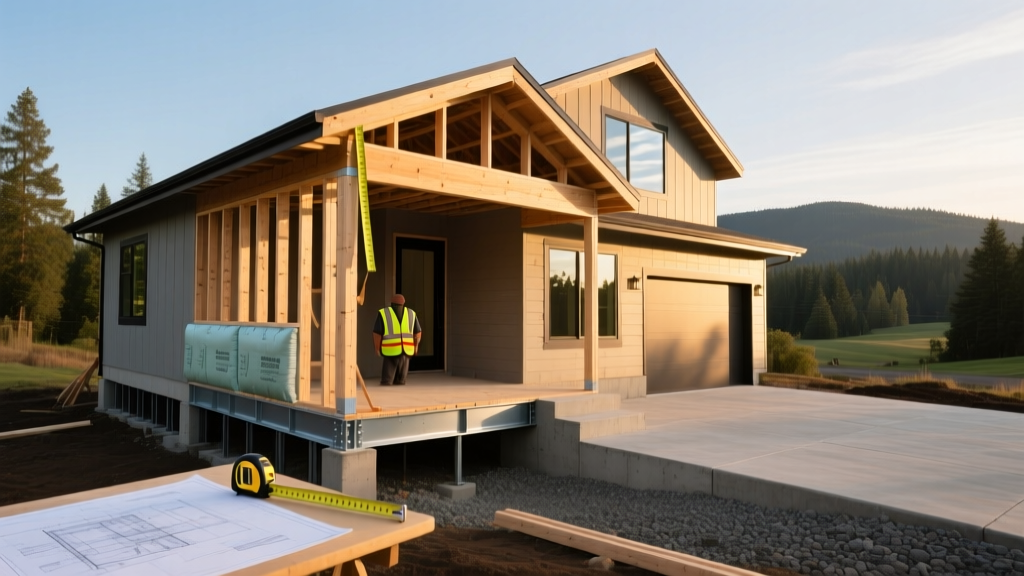
Calculating the exact cost to build a house in Oregon requires moving beyond national averages. Oregon's diverse topography, strict environmental regulations, and distinct microclimates create a highly fragmented pricing landscape. While the national average for custom home construction hovers around $150 to $200 per square foot, Oregon's baseline sits noticeably higher due to stringent energy codes, seismic engineering requirements, and localized labor shortages.
2026 Statewide Baseline Metrics
- Average Production Home: $165 - $210 per sq. ft.
- Average Custom Home: $240 - $325 per sq. ft.
- High-End Luxury / Complex Terrain: $350 - $500+ per sq. ft.
- Typical Build Timeline: 10 to 16 months (excluding permitting)
Note: These figures represent hard construction costs and do not include land acquisition, site development, or System Development Charges (SDCs).
Regional Price Variations Across the State
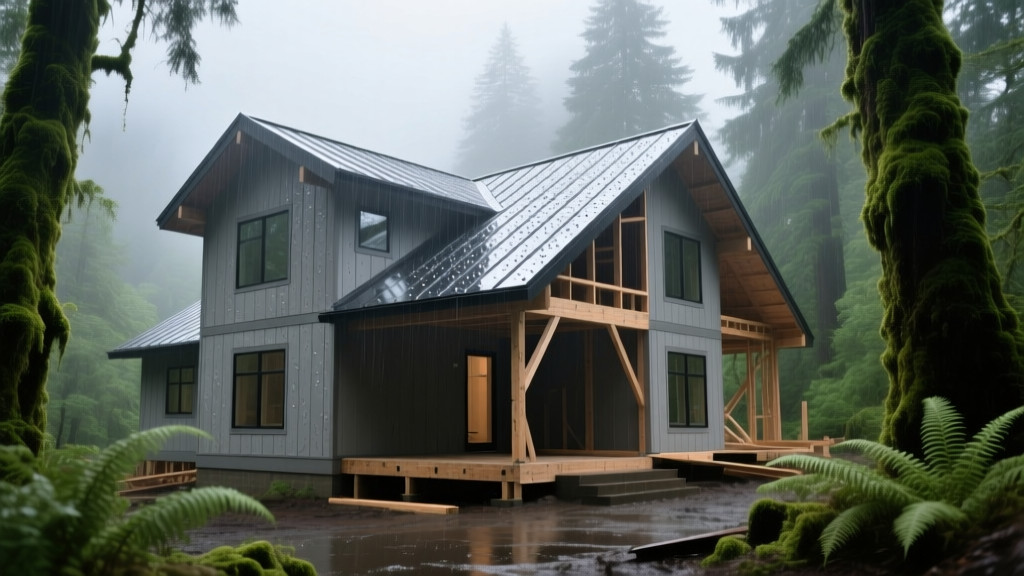
The cost to build a house in Oregon fluctuates wildly depending on the county. A build in the Portland metro area faces entirely different economic pressures than a build in the high desert of Central Oregon. Below is a regional breakdown of anticipated hard costs for a standard 2,200-square-foot custom home in 2026.
| Region | Avg Cost / Sq. Ft. | Total (2,200 sq ft) | Primary Cost Drivers |
|---|---|---|---|
| Portland Metro (Multnomah, Washington, Clackamas) | $250 - $340 | $550,000 - $748,000 | High union labor rates, strict stormwater management, steep slope engineering. |
| Willamette Valley (Eugene, Salem, Corvallis) | $200 - $260 | $440,000 - $572,000 | Agricultural land conversion, moderate labor costs, high moisture mitigation. |
| Central Oregon (Bend, Redmond, Sisters) | $275 - $380 | $605,000 - $836,000 | Wildland-Urban Interface (WUI) fire codes, heavy snow load engineering, high demand. |
| Oregon Coast (Newport, Astoria, Cannon Beach) | $280 - $400 | $616,000 - $880,000 | Corrosion-resistant materials, extreme wind engineering, remote material transport. |
| Rural Eastern (Pendleton, La Grande, Baker City) | $170 - $220 | $374,000 - $484,000 | Lower labor rates offset by high material freight costs and well/septic installations. |
Oregon-Specific Building Codes and Engineering Requirements
Oregon operates under the Oregon Residential Specialty Code (ORSC), which is heavily amended to address local environmental hazards. According to the Oregon Building Codes Division, local jurisdictions frequently adopt amendments that exceed the baseline International Residential Code (IRC). Ignoring these localized requirements during the estimating phase is the leading cause of budget overruns in the state.
Seismic Engineering (Western Oregon)
The Cascadia Subduction Zone threat mandates rigorous lateral load resistance. In the Willamette Valley and Portland Metro, expect to spend an additional $4,500 to $8,000 on structural upgrades. This includes Simpson Strong-Tie hold-downs, continuous tiedown systems, and reinforced shear walls using 1/2-inch or 5/8-inch structural plywood or Huber ZIP System sheathing to prevent racking during seismic events.
Wildland-Urban Interface (WUI) Codes (Central & Southern Oregon)
If your build falls within a designated WUI zone (common in Deschutes, Jefferson, and Jackson counties), you must comply with strict ignition-resistant construction standards. This requires Class A fire-rated roofing (such as Malarkey Vista AR shingles or standing seam metal), 1/8-inch mesh ember-resistant attic vents, and non-combustible siding materials like fiber cement or stucco. Budget an extra $12,000 to $18,000 for WUI-compliant material upgrades and specialized landscaping defensible space grading.
Climate-Driven Material Selections and Pricing
Material selection in Oregon is dictated by moisture management in the west and thermal efficiency statewide. The state's energy codes are among the strictest in the nation, often requiring blower-door testing to achieve 3.0 ACH50 (Air Changes per Hour at 50 Pascals) or better. The Energy Trust of Oregon offers incentives for exceeding these baselines, which can offset initial material premiums.
Moisture Management (West of the Cascades)
Building in the wet climate of Western Oregon requires advanced water-resistive barriers (WRB). Standard Tyvek housewrap is increasingly viewed as insufficient for high-end custom builds.
- Upgrade Recommendation: Use a rainscreen assembly. Products like Keene Driwall or MortarNet create a 1/4-inch to 3/8-inch air gap behind the siding, allowing the wall cavity to breathe and drain bulk water. Add $1.50 to $2.50 per sq. ft. of exterior wall area for this critical upgrade.
- Siding Selection: James Hardie Artisan lap siding (fiber cement) remains the gold standard for Oregon's wet climate, resisting rot and woodpecker damage. Expect installed costs of $11 to $16 per sq. ft.
Thermal Envelope and Fenestration
To meet Oregon's aggressive energy targets, dual-pane windows are often inadequate, especially in Central Oregon where winter temperatures routinely drop below freezing.
- Window Specification: Triple-pane fiberglass windows (e.g., Marvin Essential or Andersen 100 Series) with a U-factor of 0.20 or lower. Budget $800 to $1,200 per rough opening, which is roughly 40% more than standard vinyl dual-pane units.
- Insulation: Closed-cell spray foam in the roofline (R-49 minimum) combined with dense-pack cellulose or high-density fiberglass batts in 2x6 exterior walls (R-23+). Budget $3.50 to $5.00 per sq. ft. of insulated area for a high-performance envelope.
Navigating Soft Costs and System Development Charges (SDCs)
When estimating the cost to build a house in Oregon, soft costs can account for 20% to 30% of the total project budget. Oregon municipalities rely heavily on System Development Charges (SDCs) to fund infrastructure, and these fees are notoriously high compared to the national average.
Typical SDC Breakdown (Single-Family Lot)
- Portland Metro: $15,000 - $28,000 (Includes transportation, parks, water, and sanitary sewer).
- Bend / Redmond: $18,000 - $32,000 (Water and wastewater SDCs have surged due to rapid population growth and aquifer management costs).
- Eugene / Springfield: $12,000 - $20,000.
Pro Tip: Always verify current SDC rates with the local municipal planning department before purchasing land. Cities frequently adjust these rates annually on July 1st.
Additionally, stormwater management requirements in urban growth boundaries often mandate on-site retention. In Portland, this might require installing a dry well, permeable pavers, or an ecoroof, adding $5,000 to $12,000 to site development costs. In rural areas, the absence of municipal sewer means you must budget $15,000 to $35,000 for soil testing, engineering, and the installation of a specialized septic system (such as a sand filter or pressure mound system if native soils are poorly draining).
Expert Strategies for Budget Optimization
Controlling the cost to build a house in Oregon requires strategic decisions during the pre-construction phase. Implement these frameworks to protect your margin:
- Design for the Grid: Minimize exterior wall jogs and complex rooflines. A simple rectangular or L-shaped footprint with a gable roof reduces framing waste, simplifies seismic load paths, and lowers the square footage of expensive WUI-compliant siding.
- Leverage Energy Trust Incentives: Work with a certified Energy Trust of Oregon trade ally. Designing a home that qualifies for the 'Earth Advantage' or 'Net Zero' certification can unlock thousands in utility rebates and local tax abatements, effectively subsidizing the cost of high-efficiency HVAC systems (like cold-climate mini-splits from Mitsubishi or Daikin).
- Time Your Material Locks: Lumber prices in the Pacific Northwest are highly volatile, tied to both Canadian softwood lumber tariffs and local mill production. Lock in your framing package with a local supplier (like Boise Cascade or Rosboro) 90 days before ground breaks to hedge against spring market spikes.
- Hire a Local Expediter: In jurisdictions with notoriously slow permitting processes (such as Portland or Deschutes County), paying a permit expediter $2,500 to $5,000 can shave months off the pre-construction timeline, saving you tens of thousands in construction loan interest and inflation-adjusted labor rates.
Building in Oregon offers unparalleled access to diverse landscapes, but it demands rigorous financial planning and adherence to complex regional codes. By aligning your material selections with local climate realities and accurately forecasting municipal soft costs, you can execute a structurally resilient, energy-efficient home that holds its value in the Pacific Northwest market.
Written by
Elena RodriguezElena Rodriguez is a civil engineer and technical writer specializing in concrete technology, masonry systems, and ASTM/ACI compliance. She earned her B.S. in Civil Engineering from Texas A&M University and spent a decade at a materials testing laboratory, performing over 2,000 concrete compressive strength tests and masonry prism evaluations. Elena is an ACI-certified Field Testing Technician (Grade I) and a member of ASTM Committee C12 on Natural Building Stone. She currently consults on forensic engineering cases involving concrete failures and moisture intrusion. Based in San Antonio, TX, Elena is a proud member of the Society of Women Engineers (SWE) and coaches her daughter's FIRST Robotics team.
More from Elena Rodriguez
View all
Walls & Panels
Cost Analysis: Light Gauge Steel Framing Advantages and Disadvantages
Evaluate light gauge steel framing advantages and disadvantages through a strict cost analysis lens, comparing material, labor, and lifecycle expenses.
Aug 4, 2026

Walls & Panels
Gypsum Board Types: Exact Specifications, Thickness & Dimensions
Compare standard, Type X, and moisture-resistant gypsum board types. Get exact specifications, thicknesses, dimensions, and ASTM standards for your project.
Aug 4, 2026

Fire Resistance
Best Fire-Resistant Outdoor Decking Materials: 2026 Buyer Guide
Discover the best fire-resistant outdoor decking materials for 2026. Compare Class A PVC, aluminum, and hardwood options for WUI compliance and safety.
Aug 4, 2026