Cost to Build a House in Richmond VA: Size & Scope Calculator
Calculate the cost to build a house in Richmond VA. Explore 2026 pricing by size, scope, soil conditions, and local Virginia building codes.
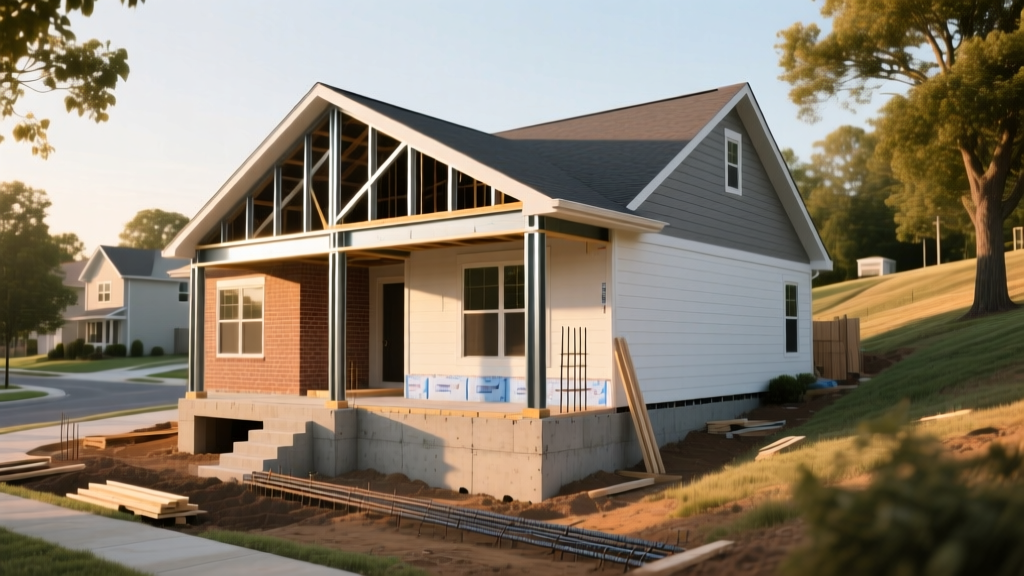
The Richmond VA Construction Market: 2026 Baseline
Estimating the cost to build a house in Richmond VA requires navigating a unique intersection of Mid-Atlantic labor rates, specific geological challenges, and strict adherence to the Virginia Uniform Statewide Building Code (USBC). Unlike national averages that smooth out regional anomalies, Richmond's construction costs are heavily dictated by your exact location relative to the Atlantic Seaboard Fall Line. In 2026, the baseline cost for a production-grade home in the Greater Richmond area (including Henrico and Chesterfield counties) ranges from $145 to $175 per square foot, while mid-range custom builds command $195 to $245 per square foot. High-end luxury specifications in corridors like the West End or Monument Avenue historic renovations frequently exceed $310 per square foot.
Quick Cost Summary (2026 Estimates)
- Production/Tract Build: $145 - $175 / sq. ft.
- Mid-Range Custom: $195 - $245 / sq. ft.
- High-End Luxury: $285 - $350+ / sq. ft.
- Average Land Prep & Site Work: $18,000 - $45,000 (highly dependent on Fall Line geology)
Size & Scope Calculator: Cost Matrix by Square Footage
The following matrix breaks down total estimated construction costs based on finished, conditioned square footage. These figures assume a relatively flat lot with standard municipal utility access and do not include the cost of land acquisition.
| Home Size (Sq Ft) | Builder-Grade Total | Mid-Range Custom Total | High-End Luxury Total |
|---|---|---|---|
| 1,500 | $217,500 - $262,500 | $292,500 - $367,500 | $427,500 - $525,000 |
| 2,000 | $290,000 - $350,000 | $390,000 - $490,000 | $570,000 - $700,000 |
| 2,500 | $362,500 - $437,500 | $487,500 - $612,500 | $712,500 - $875,000 |
| 3,200 | $464,000 - $560,000 | $624,000 - $784,000 | $912,000 - $1,120,000 |
Data synthesized from regional contractor bids and the National Association of Home Builders (NAHB) construction cost surveys, adjusted for 2026 Mid-Atlantic labor indices.
Regional Variables: The Fall Line Geology Factor
The single most unpredictable variable when calculating the cost to build a house in Richmond VA is the soil composition, dictated by the Atlantic Seaboard Fall Line. This geological boundary runs directly through the city, creating two vastly different site-prep environments.
West End & Northern Suburbs (Short Pump, Glen Allen, Midlothian)
Properties west of the Fall Line sit on the Piedmont plateau, characterized by dense, expansive red clay and shallow bedrock. Expansive clay swells significantly when wet and shrinks during droughts, exerting thousands of pounds of lateral pressure on foundation walls. For a standard 2,500 sq. ft. footprint in this zone, you must budget an additional $12,000 to $18,000 for geotechnical engineering and reinforced foundations. This often requires pouring 3,000 PSI concrete grade beams, installing helical piers driven 20+ feet into stable strata, and applying specialized dimpled drainage mats to prevent hydrostatic pressure buildup.
East End & Southern Suburbs (Sandston, Mechanicsville, Chester)
East of the Fall Line, the Coastal Plain geology takes over, featuring sandy loam and high water tables. While sandy soil drains exceptionally well and reduces the need for expensive expansive-soil engineering, it lacks load-bearing capacity for heavy masonry loads. Furthermore, the high water table in areas near the James and Chickahominy rivers necessitates advanced waterproofing protocols. Budget an extra $6,000 to $9,000 for underslab vapor barriers (minimum 15-mil polyethylene) and perimeter French drain systems tied to sump pumps with battery backups to prevent seasonal groundwater intrusion.
Envelope & Climate: Engineering for Virginia Humidity
Richmond experiences high summer humidity and significant temperature swings. Building a durable home here requires moving beyond minimum code requirements to manage moisture and thermal bridging.
Critical 2026 HVAC & Envelope Upgrades
Standard builder-grade asphalt shingles and basic fiberglass batt insulation will lead to premature envelope failure in Richmond's climate. Specify these upgrades to protect your investment:
- Roof Decking & Sheathing: Upgrade from standard OSB to ZIP System sheathing (approx. $0.85/sq. ft. premium). The integrated water-resistive barrier eliminates the need for housewrap and provides superior wind-driven rain protection during summer Nor'easters.
- Subflooring: Use AdvanTech engineered wood subflooring ($65-$72 per 4x8 sheet). Its moisture-resistant resin prevents the edge-swelling and floor squeaks common in Richmond's humid summers when standard OSB absorbs ambient moisture during the framing stage.
- HVAC Systems: The 2026 DOE mandates require higher SEER2 ratings. Upgrade from a standard 15.0 SEER2 single-stage unit to a variable-speed heat pump (e.g., Trane XV20i or Bosch IDS 2.0). Variable-speed compressors run at lower capacities for longer periods, which is critical for dehumidifying Richmond's muggy July and August air. Expect a $4,500 to $7,000 premium over builder-grade systems, offset by 20-30% annual utility savings.
Scope Adjustments: Material Selections That Move the Needle
When utilizing a size and scope calculator, the finish materials you select will cause the widest variance in your final ledger. Below is a breakdown of specific exterior material costs installed in the Richmond market.
- Exterior Siding: Vinyl siding remains the budget option at $5.00 to $7.50 per square foot installed. However, for long-term durability against UV degradation and woodpecker damage, specify James Hardie Artisan fiber cement siding. Installed costs range from $12.50 to $16.00 per square foot, requiring specialized fiber-cement cutting blades and stainless steel blind-nailing techniques to prevent moisture wicking.
- Roofing: Architectural asphalt shingles (e.g., GAF Timberline HDZ) cost $4.50 to $6.00 per square foot. For a 50-year lifespan and superior wind uplift resistance, upgrade to 24-gauge standing seam metal roofing (e.g., MBCI), which costs $14.00 to $18.50 per square foot installed.
- Windows: Double-pane vinyl windows with Low-E glass average $450 to $650 per opening. Upgrading to fiberglass frames (e.g., Marvin Ultrex) with triple-pane argon-filled glass increases the cost to $900 to $1,200 per opening but drastically reduces thermal transfer and condensation issues during Richmond's freezing January nights.
Navigating Richmond Permitting and Site Inspections
The Richmond Department of Planning and Development Review enforces the Virginia USBC. If you are building within Richmond City limits (as opposed to Henrico or Chesterfield counties), expect a more rigorous and time-consuming permitting process, particularly regarding stormwater management and tree canopy preservation.
Richmond City requires strict adherence to the Chesapeake Bay Preservation Act. If your lot contains Resource Protection Areas (RPAs) or steep slopes, you will need to hire an environmental consultant to draft a stormwater pollution prevention plan (SWPPP). This can add $3,500 to $6,000 in soft costs and delay site work approvals by 4 to 8 weeks. Always verify the exact jurisdiction of your lot before finalizing your construction timeline, as county permitting offices in Henrico and Chesterfield generally process residential site plans 30% faster than the municipal city office.

Frequently Asked Questions
How much does it cost to clear a wooded lot in Richmond?
Land clearing in the Richmond area averages $2,500 to $5,000 per acre for light brush and small timber. However, if your lot in areas like Powhatan or Goochland features heavy hardwoods and requires stump grinding and root raking to prepare for a slab-on-grade foundation, costs can escalate to $8,000 to $12,000 per acre. Additionally, Richmond City and surrounding counties have strict tree canopy replacement ordinances; you may be required to pay into a tree fund or plant specific caliper-sized native trees if you remove protected species like White Oaks or Tulip Poplars.
Is it cheaper to build a two-story or a ranch-style home in Richmond?
A two-story home is generally 10% to 15% cheaper to build per square foot than a single-story ranch of the same total area. A ranch requires a significantly larger foundation footprint and a larger roof surface area—two of the most expensive structural components. For example, a 2,000 sq. ft. ranch requires 2,000 sq. ft. of concrete slab and roofing, whereas a 2,000 sq. ft. two-story only requires 1,000 sq. ft. of foundation and roof. In Richmond's expansive clay zones, minimizing the foundation footprint saves substantial money on deep grade beams and helical piers.
What are the current tap fees for water and sewer in Richmond?
Utility connection costs vary wildly by jurisdiction. Within Richmond City limits, water and sewer capacity charges (tap fees) for a standard single-family residence typically range from $4,500 to $6,500 combined. In surrounding counties like Henrico or Chesterfield, these fees can be lower, but if your lot is outside the municipal sewer district, you will need to install a private septic system and well. A modern engineered septic system for a 4-bedroom home in Virginia's coastal plain soils costs between $15,000 and $25,000, plus $6,000 to $9,000 for a 200-foot deep well with a constant pressure pump system.
Written by
Sarah WhitfieldSarah Whitfield is a chartered quantity surveyor (MRICS) and construction cost analyst with 15 years of experience in material pricing, procurement strategy, and project budgeting. She earned her degree in Construction Management from the University of Reading (UK) and has worked on projects ranging from $2M custom homes to $180M mixed-use developments across North America and Europe. Sarah currently leads cost estimating for BuildMat Insight, maintaining a proprietary database of 4,000+ material price points updated quarterly. She is a frequent contributor to RSMeans cost data panels and has presented at the International Cost Engineering Council (ICEC) congress. Based in Denver, CO, Sarah is an avid trail runner and volunteer mentor for Women in Construction.
More from Sarah Whitfield
View all
Wood & Lumber
What Are the Different Types of Wood? A Builder's Guide
Compare structural softwoods, finish hardwoods, and engineered lumber. Analyze Janka ratings, MOE values, and 2026 pricing for construction.
Aug 4, 2026

Walls & Panels
Steel Framing vs Wood Framing: Corrosion and Moisture Defense
Compare steel framing vs wood framing for moisture resistance. Learn about galvanized coatings, condensation risks, and corrosion protection strategies.
Jul 21, 2026

Stone & Masonry
How to Cut Stone Veneer: Wet Saw vs Grinder Comparison
Compare the best tools for cutting stone veneer. We review wet saws, angle grinders, and chop saws to help you achieve clean, chip-free cuts.
Jul 21, 2026