Cost to Build a House in Virginia: Size & Scope Calculator
Calculate the cost to build a house in Virginia with our 2026 size and scope guide. Break down regional pricing, materials, and labor rates.
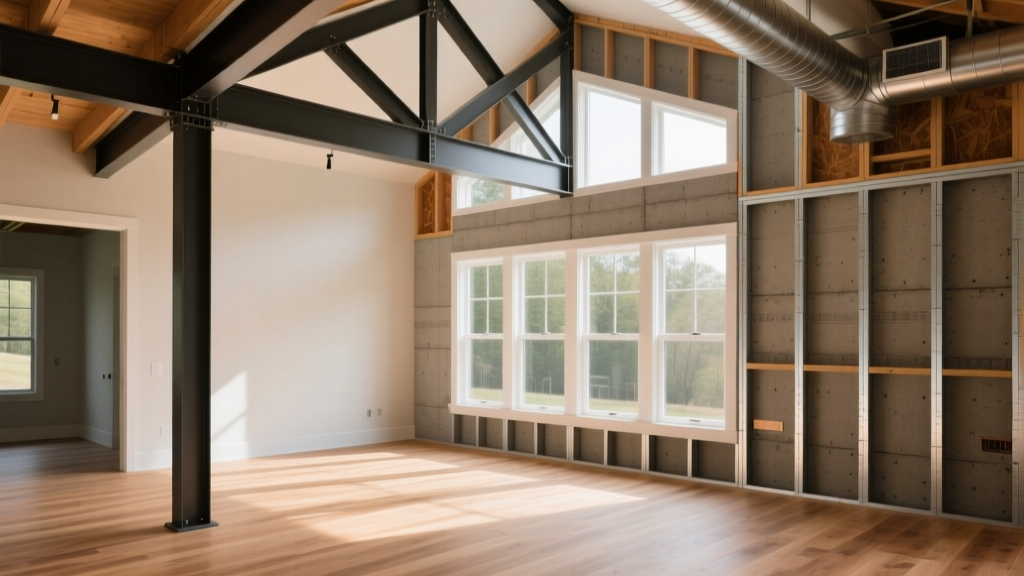
The True Cost to Build a House in Virginia (2026 Baseline)
Estimating the cost to build a house in Virginia requires navigating a highly fragmented regional market. Unlike states with uniform topography and labor pools, Virginia spans from the high-cost, heavily regulated suburbs of Northern Virginia (NoVA) to the rural, mountainous terrains of the Southwest. As of 2026, the baseline cost for a custom, stick-built single-family home ranges from $175 to $340 per square foot, depending heavily on your zip code, soil composition, and finish scope.
This size and scope calculator breaks down the exact financial variables you will encounter. According to data tracked by the U.S. Census Bureau Building Permits Survey, Virginia consistently ranks in the top 15 states for new residential construction volume, yet localized labor shortages and strict environmental overlays can inflate site-prep budgets by up to 22% compared to the national average.
Regional Cost Matrix: Northern VA vs. Central vs. Southwest
Location is the single largest multiplier in your build budget. The table below outlines the 2026 average cost per square foot for a mid-tier custom build (builder-grade to semi-custom finishes) across four distinct Virginia markets.
| Region / Market | Avg. Cost per Sq. Ft. | Labor Multiplier | Primary Cost Drivers |
|---|---|---|---|
| Northern VA (Arlington, Fairfax) | $275 - $360+ | 1.35x | Permitting delays, high land costs, strict HOA/ARB mandates, marine clay foundations. |
| Central VA (Richmond, Charlottesville) | $210 - $265 | 1.10x | Historic district overlays, moderate labor competition, standard soil conditions. |
| Hampton Roads (Virginia Beach, Norfolk) | $195 - $245 | 1.05x | Flood zone elevation requirements, hurricane wind codes, CBPA environmental setbacks. |
| Southwest / Shenandoah (Roanoke) | $175 - $215 | 0.90x | Karst topography (rock blasting), well/septic installations, longer material delivery routes. |
Size & Scope Calculator: The 2,500 Sq. Ft. Benchmark
To provide actionable data, we model a 2,500-square-foot, two-story home with a two-car garage on a standard 0.25-acre lot. This benchmark assumes a slab-on-grade or standard crawl space foundation, excluding extreme site-work anomalies.
Line-Item Cost Breakdown (Central VA Baseline)
- Site Prep & Earthwork: $12,000 - $18,000 (Clearing, grading, utility taps)
- Foundation (Poured Concrete Crawl Space): $22,000 - $28,000
- Framing & Sheathing (Lumber Package): $55,000 - $68,000
- Exterior Finishes (Siding, Brick Veneer, Roofing): $38,000 - $52,000
- MEP Rough-In (Mechanical, Electrical, Plumbing): $42,000 - $55,000
- Insulation & Drywall: $18,000 - $24,000
- Interior Finishes (Cabinetry, Flooring, Trim): $65,000 - $95,000
- General Conditions & Builder Overhead/Profit: 18% - 22% of hard costs
Total Estimated Hard Cost Range: $410,000 - $535,000 (excluding land acquisition).
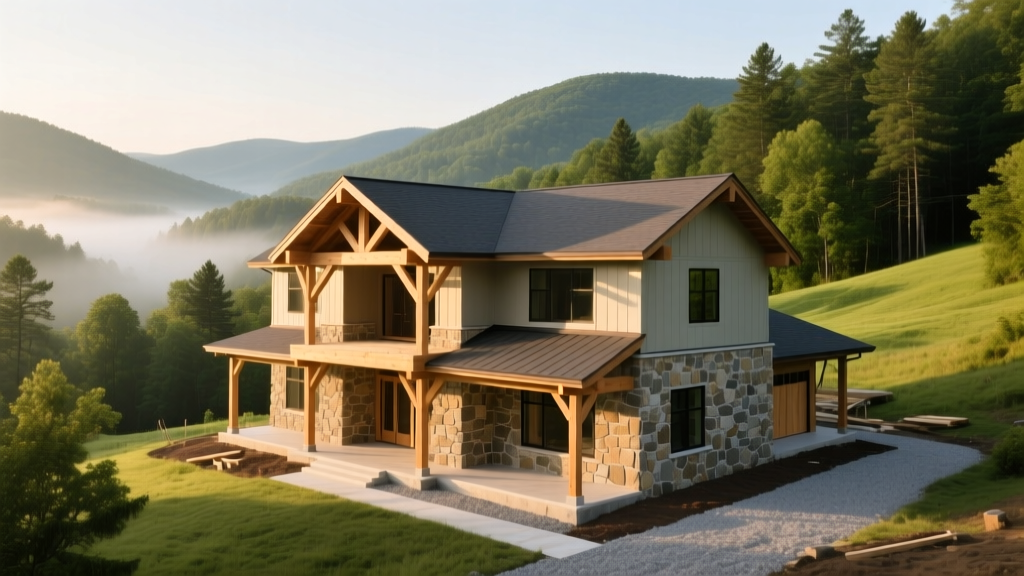
Material Specifications That Drive Virginia Build Costs
Virginia's climate demands specific material choices that directly impact your scope and budget. The state experiences high summer humidity, significant freeze-thaw cycles in the western regions, and heavy termite pressure.
Moisture and Termite Mitigation
Virginia falls into Termite Infestation Probability (TIP) Zones 1 and 2. Standard building practices require borate-treated sill plates, but upgrading to a physical termite barrier like Termimesh (stainless steel mesh) costs roughly $1,800 - $2,500 for an average footprint and provides a non-chemical, permanent defense. For moisture management, builders in the Tidewater and NoVA regions increasingly specify Huber Zip System R-sheathing. While it adds approximately $4,500 to the framing scope compared to traditional OSB and housewrap, it drastically reduces the risk of mold litigation and structural rot in Virginia's humid subtropical summers.
Foundation Engineering for Marine Clay
If you are building in Fairfax, Loudoun, or Prince William counties, you will likely encounter expansive marine clays. These soils swell when wet and shrink when dry, capable of cracking standard concrete footings. Mitigating this requires over-excavation and importing engineered structural fill, or installing helical piers. Expect to add $15,000 to $28,000 to your foundation scope for geotechnical engineering and specialized soil stabilization in these specific zip codes.
Scope Creep Triggers: Top 3 Virginia-Specific Hidden Costs
When using any size calculator, homeowners frequently overlook regulatory and environmental overlays unique to the Commonwealth. The Virginia Uniform Statewide Building Code (USBC) sets the baseline, but local amendments and environmental protections dictate the final price tag.
- The Chesapeake Bay Preservation Act (CBPA): If your lot is east of Interstate 95 or in designated Tidewater areas, you are likely in a Resource Protection Area (RPA). Setback requirements can force you to shrink your home's footprint, while stormwater management mandates may require engineered bioswales or underground infiltration trenches, adding $4,000 - $9,000 to site work.
- Appalachian Rock Blasting: In the Shenandoah Valley and western counties, digging a basement or even a standard crawl space often hits shallow limestone or shale bedrock. Blasting and rock removal can cost $8 to $15 per cubic yard, easily adding $10,000+ to your excavation budget.
- NoVA Erosion and Sediment (E&S) Controls: Northern Virginia municipalities enforce strict E&S plans. Installing silt fences, super silt fences, and construction entrances, combined with weekly third-party environmental inspections, typically costs $3,500 - $6,000 before a single framing nail is driven.
Sizing Your Build: Cost per Square Foot vs. Total Volume
Economies of scale apply to residential construction, but the curve flattens significantly after 3,000 square feet. The table below demonstrates how scaling your size impacts the cost per square foot in the Central Virginia market.
| Home Size (Sq. Ft.) | Est. Total Cost | Cost per Sq. Ft. | Scope Notes |
|---|---|---|---|
| 1,500 (Ranch / Patio Home) | $345,000 | $230 | Higher cost/sqft due to fixed costs (kitchen, HVAC, site prep) spread over less area. |
| 2,500 (Two-Story Standard) | $512,500 | $205 | Optimal efficiency. Foundation and roof footprint are halved compared to a ranch. |
| 3,500 (Large Custom) | $682,500 | $195 | Lowest cost/sqft for shell, but interior finish upgrades usually negate volume savings. |
| 5,000+ (Estate) | $1,100,000+ | $220+ | Cost/sqft rises again due to structural steel, high-end custom millwork, and complex MEP systems. |
Frequently Asked Questions
Is it cheaper to build or buy an existing home in Virginia right now?
In 2026, building a custom home in Virginia generally costs 12% to 18% more than purchasing a comparable existing resale property, primarily due to the premium on custom finishes, current labor rates, and land acquisition costs. However, building allows you to integrate high-efficiency HVAC systems (like Mitsubishi hyper-heat mini-splits or geothermal loops) and advanced insulation envelopes that drastically reduce monthly utility bills, narrowing the total cost of ownership gap over a 10-year horizon.
How do I factor in Virginia's hurricane and wind codes?
If you are building in Hampton Roads or the Eastern Shore, your home must meet strict wind-load requirements (often 120-140 mph ultimate design wind speeds). This requires structural upgrades such as Simpson Strong-Tie hurricane ties, continuous load path engineering, and impact-resistant windows (or approved shutters). Budget an additional $18,000 to $25,000 for these structural and fenestration upgrades compared to inland builds. The National Association of Home Builders provides extensive resources on regional wind-code compliance that your structural engineer must follow.
Do modular homes offer a viable cost alternative in Virginia?
Yes. Modular construction can reduce your total build cost by 8% to 12% in rural and southwestern Virginia, where stick-built labor is scarce. Because modular units are built in climate-controlled factories (often in PA or NC) and craned onto your Virginia foundation, you bypass weather delays and local labor shortages. However, in Northern Virginia, the logistical challenges of transporting wide modular boxes over congested interstates and navigating tight suburban lot setbacks often erase these savings.
Written by
Sarah WhitfieldSarah Whitfield is a chartered quantity surveyor (MRICS) and construction cost analyst with 15 years of experience in material pricing, procurement strategy, and project budgeting. She earned her degree in Construction Management from the University of Reading (UK) and has worked on projects ranging from $2M custom homes to $180M mixed-use developments across North America and Europe. Sarah currently leads cost estimating for BuildMat Insight, maintaining a proprietary database of 4,000+ material price points updated quarterly. She is a frequent contributor to RSMeans cost data panels and has presented at the International Cost Engineering Council (ICEC) congress. Based in Denver, CO, Sarah is an avid trail runner and volunteer mentor for Women in Construction.
More from Sarah Whitfield
View all
Wood & Lumber
What Are the Different Types of Wood? A Builder's Guide
Compare structural softwoods, finish hardwoods, and engineered lumber. Analyze Janka ratings, MOE values, and 2026 pricing for construction.
Aug 4, 2026

Walls & Panels
Steel Framing vs Wood Framing: Corrosion and Moisture Defense
Compare steel framing vs wood framing for moisture resistance. Learn about galvanized coatings, condensation risks, and corrosion protection strategies.
Jul 21, 2026

Stone & Masonry
How to Cut Stone Veneer: Wet Saw vs Grinder Comparison
Compare the best tools for cutting stone veneer. We review wet saws, angle grinders, and chop saws to help you achieve clean, chip-free cuts.
Jul 21, 2026