Cost to Build a Pool in Los Angeles: Detailed 2026 Price Breakdown
Discover the true cost to build a pool in Los Angeles. Get a detailed 2026 price breakdown for excavation, materials, permits, and landscaping.
The Baseline: Average Pool Costs in Los Angeles
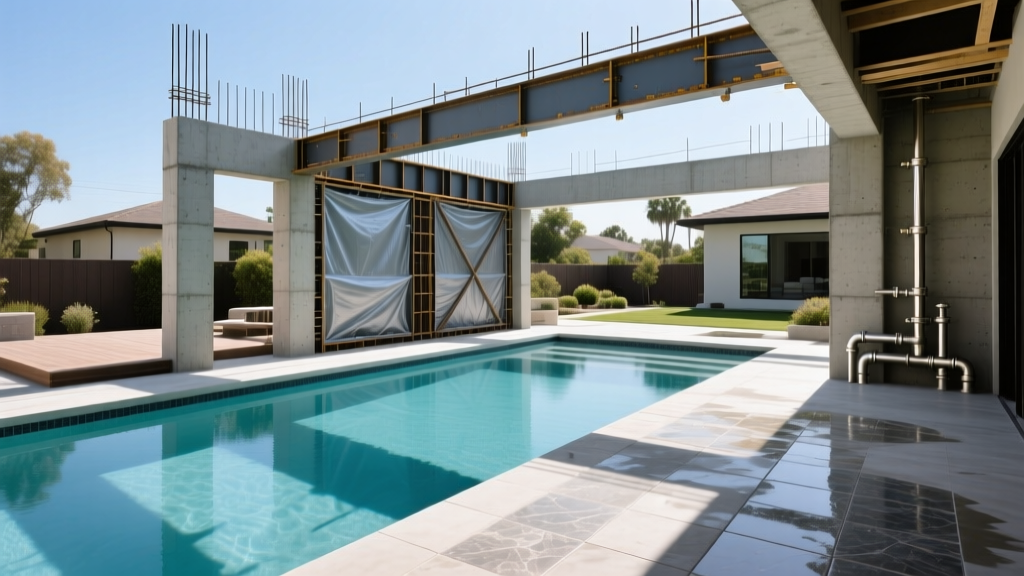
Building a swimming pool in Los Angeles involves unique geographical, regulatory, and material variables that push costs higher than the national average. While a standard backyard pool in the Midwest might cost $70,000, the cost to build a pool in Los Angeles typically ranges from $110,000 to $185,000 for a custom gunite (shotcrete) design. This variance is driven by local labor rates, strict seismic engineering requirements, and complex soil conditions.
- Average Custom Gunite Pool (14x28 ft): $135,000 - $165,000
- Average Fiberglass Pool (Pre-manufactured): $95,000 - $130,000
- Cost per Square Foot (Gunite): $125 - $160
- Average Timeline: 4 to 7 months (including LADBS permitting)
Phase-by-Phase Construction Cost Breakdown
To understand where your budget is going, you need to look at the construction process in distinct phases. The following table outlines the estimated costs for a standard 400-square-foot custom gunite pool in the greater Los Angeles area.
| Construction Phase | Estimated Cost Range | Key LA-Specific Variables |
|---|---|---|
| Engineering & Permits | $3,500 - $8,000 | Soils reports, structural engineering, LADBS fees |
| Excavation & Hauling | $8,000 - $18,000 | Bedrock blasting, hillside access, dump fees |
| Steel, Plumbing & Electric | $18,000 - $26,000 | Seismic rebar spacing, Title 24 electrical compliance |
| Gunite Shell Application | $22,000 - $32,000 | 4,000 PSI mix, pump truck access requirements |
| Tile, Coping & Interior Finish | $18,000 - $35,000 | PebbleTec vs. plaster, travertine coping upgrades |
| Equipment & Automation | $12,000 - $22,000 | Variable speed pumps, salt systems, smart controls |
| Decking & Hardscaping | $15,000 - $45,000+ | Concrete stamping, pavers, drainage integration |
Topography and Soil: The Hidden LA Cost Multipliers
Los Angeles is geologically diverse, and the ground beneath your property dictates a significant portion of your excavation and structural costs. Ignoring soil conditions is the most common reason pool projects exceed their initial estimates.
Expansive Clay in the San Fernando Valley
Much of the Valley sits on 'adobe' or expansive clay soil. This soil swells significantly when wet and shrinks when dry, which can crack a rigid gunite shell if not properly engineered. To mitigate this, contractors must over-excavate by 12 to 18 inches and backfill with structural decomposed granite or crushed rock. Expect this soil remediation to add $4,000 to $7,500 to your excavation budget.
Hillside Grading and Bedrock
If you are building in the Santa Monica Mountains, Hollywood Hills, or Palos Verdes, you will encounter sandstone bedrock and strict slope regulations. Excavating bedrock often requires heavy-duty rock breakers or controlled blasting, adding $8,000 to $20,000 to the dig phase. Furthermore, properties on slopes steeper than 15% fall under the Los Angeles Department of Building and Safety (LADBS) Hillside Grading Ordinance. This requires a specialized geotechnical report and the installation of deep caissons or grade beams to anchor the pool, easily adding $15,000+ to the structural engineering costs.
Material Selection: Gunite vs. Fiberglass in Southern California
While fiberglass pools are heavily marketed as a cheaper, faster alternative, the logistics of installing them in Los Angeles often erase the initial savings.
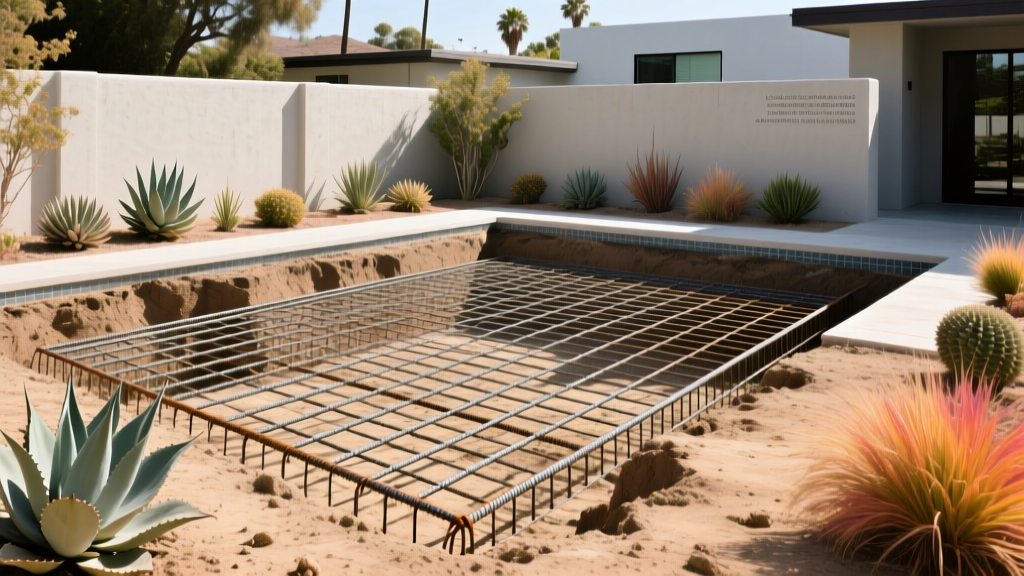
- Custom Gunite (Shotcrete): The undisputed standard in LA. It allows for infinite customization, infinity edges, and seamless integration with hillside topography. The interior finish is typically a high-end aggregate like PebbleSheen or PebbleTec, which costs between $15 and $25 per square foot but lasts 15-20 years before needing a resurface.
- Fiberglass: The shell itself is cheaper and installation takes weeks instead of months. However, LA's narrow streets, overhead power lines, and dense tree canopies often require massive mobile cranes to lift the one-piece shell into the backyard. Crane permits, street closures, and lifting fees can add $5,000 to $12,000 to a fiberglass project, narrowing the price gap with gunite.
Navigating LADBS Permits and Title 24 Compliance
You cannot dig a pool in Los Angeles without navigating a rigorous permitting process. Standard plan checks through LADBS can take 4 to 8 weeks. However, if your contractor uses pre-approved 'Express Permit' standard designs, you can bypass the lengthy structural review.
Beyond structural permits, your pool equipment must comply with California's strict Title 24 energy codes. The California Energy Commission mandates the use of variable-speed pumps for all new residential pools. You cannot install a single-speed pump. High-efficiency models like the Pentair IntelliFlo3 VSF or Hayward TriStar VS are standard, costing between $1,800 and $2,500 installed. While they increase upfront equipment costs, they reduce pool pumping energy consumption by up to 90%, saving LA homeowners roughly $600 to $900 annually on LADWP utility bills.
LADWP and local environmental agencies strictly prohibit backwashing pool filter water into the street or storm drains. Your contractor must install a dedicated sewer cleanout connection or a dry well system for filter backwash and rainwater overflow. Failing to include this in your initial plumbing bid will result in a failed final inspection.
Frequently Asked Questions
Does adding a pool increase my property taxes in LA?
Yes. The Los Angeles County Assessor will reassess your property upon completion of the pool. A $150,000 pool typically adds roughly 60% to 80% of its cost to your assessed property value, resulting in an annual property tax increase of approximately $900 to $1,300 based on the current 1.1% to 1.25% tax rate.
How much does it cost to maintain a pool in Los Angeles?
Due to the year-round swimming season and high evaporation rates during Santa Ana wind events, expect to pay $150 to $250 per month for professional weekly cleaning and chemical balancing. Additionally, budget $80 to $150 monthly for increased water and electricity usage.
What is the ROI on a pool in the Los Angeles real estate market?
According to data from the Pool & Hot Tub Alliance (PHTA) and local real estate appraisals, a well-designed pool in LA typically yields a 50% to 70% return on investment at the time of sale. However, in luxury neighborhoods like Beverly Hills, Pacific Palisades, or Encino, a pool is considered a baseline expectation; not having one can actually decrease your home's marketability and final sale price.
Written by
Sarah WhitfieldSarah Whitfield is a chartered quantity surveyor (MRICS) and construction cost analyst with 15 years of experience in material pricing, procurement strategy, and project budgeting. She earned her degree in Construction Management from the University of Reading (UK) and has worked on projects ranging from $2M custom homes to $180M mixed-use developments across North America and Europe. Sarah currently leads cost estimating for BuildMat Insight, maintaining a proprietary database of 4,000+ material price points updated quarterly. She is a frequent contributor to RSMeans cost data panels and has presented at the International Cost Engineering Council (ICEC) congress. Based in Denver, CO, Sarah is an avid trail runner and volunteer mentor for Women in Construction.
More from Sarah Whitfield
View all
Wood & Lumber
What Are the Different Types of Wood? A Builder's Guide
Compare structural softwoods, finish hardwoods, and engineered lumber. Analyze Janka ratings, MOE values, and 2026 pricing for construction.
Aug 4, 2026

Walls & Panels
Steel Framing vs Wood Framing: Corrosion and Moisture Defense
Compare steel framing vs wood framing for moisture resistance. Learn about galvanized coatings, condensation risks, and corrosion protection strategies.
Jul 21, 2026

Stone & Masonry
How to Cut Stone Veneer: Wet Saw vs Grinder Comparison
Compare the best tools for cutting stone veneer. We review wet saws, angle grinders, and chop saws to help you achieve clean, chip-free cuts.
Jul 21, 2026