Cost to Build a Pool in Texas: 2026 Size & Scope Calculator
Calculate the true cost to build a pool in Texas. Break down 2026 pricing by size, soil type, equipment scope, and regional excavation variables.
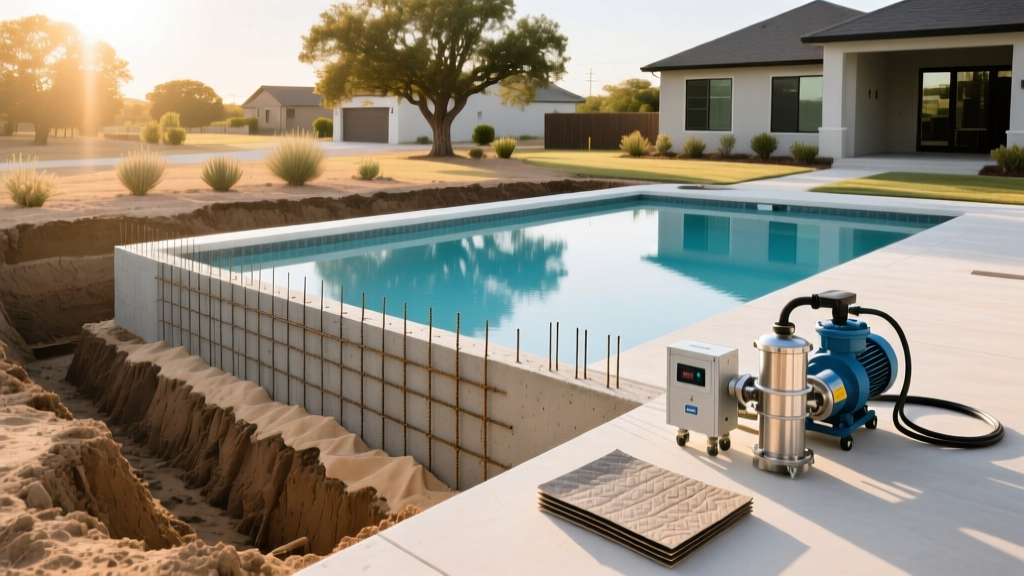
The Texas Pool Cost Matrix: Size vs. Base Scope
Estimating the cost to build a pool in Texas requires moving beyond national averages. The state's vast geographic diversity means a 15x30-foot gunite pool in the Dallas-Fort Worth metroplex faces entirely different structural demands than the exact same design in the Houston coastal plain or the Austin Hill Country. In 2026, the baseline cost for a standard shotcrete/gunite pool in Texas ranges from $85,000 to $135,000, but this figure is merely the starting point before regional soil modifiers and scope upgrades are applied.
Use the baseline matrix below to establish your foundational footprint costs. These figures assume a standard rectangular geometry, basic white marcite interior, and a single-speed or standard dual-speed pump setup without integrated spas or extensive hardscaping.
| Pool Classification | Dimensions (Approx.) | Square Footage | 2026 Base Cost Range | Cost Per Sq. Ft. |
|---|---|---|---|---|
| Plunge / Spool | 8' x 12' to 10' x 14' | 96 - 140 sq ft | $55,000 - $72,000 | $450 - $515 |
| Standard Family | 14' x 28' to 15' x 30' | 392 - 450 sq ft | $85,000 - $115,000 | $215 - $255 |
| Large Estate | 18' x 36' to 20' x 40' | 648 - 800 sq ft | $130,000 - $175,000+ | $185 - $220 |
| Lap / Athletic | 10' x 50' to 12' x 60' | 500 - 720 sq ft | $110,000 - $145,000 | $190 - $220 |
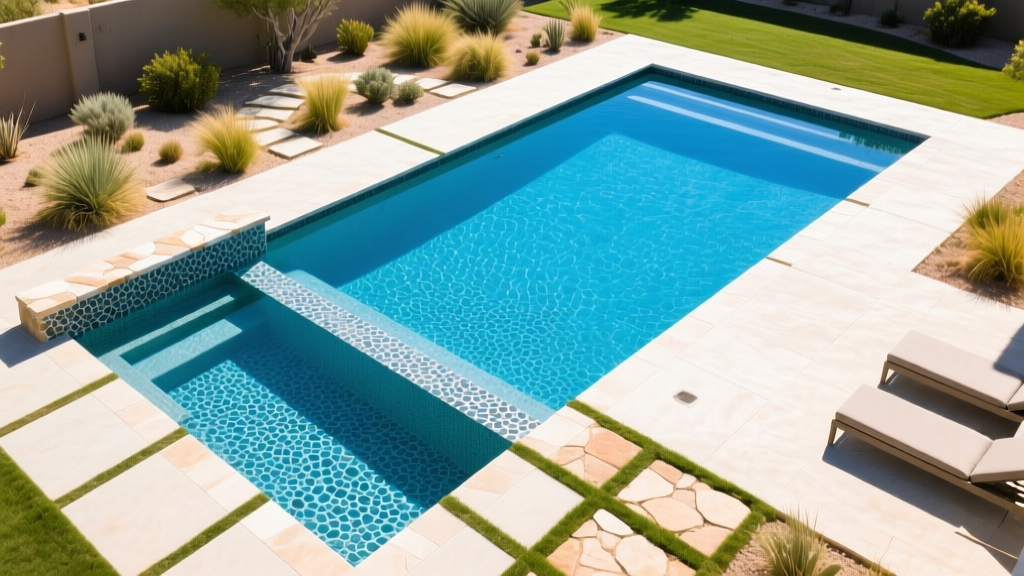
The Hidden Variable: Texas Soil Profiles and Excavation
The single largest point of financial variance when calculating the cost to build a pool in Texas is subsurface geology. According to Texas A&M AgriLife Extension, the state contains some of the most highly expansive clay soils in the United States, particularly in the Blackland Prairie region (Dallas, Austin, San Antonio). Excavating and engineering for these soils requires specialized structural reinforcements that can add 10% to 25% to your total project cost.
If your property is in the DFW Metroplex or Austin metro, your soil likely exhibits high plasticity. When wet, expansive clay swells; when dry, it shrinks. A standard 8-inch gunite shell will crack under these sheer forces. Builders must implement deep grade beams (24 to 36 inches deep) around the pool perimeter and utilize #4 or #5 steel rebar on 10-inch centers. Expect a $6,000 to $12,000 structural surcharge for over-excavation and additional steel in these zones.
Regional Excavation Multipliers
- Hill Country (West Austin, San Antonio outskirts): Characterized by shallow topsoil over solid limestone. Excavators frequently hit bedrock within the first 12 inches. Contracts here must include a "rock clause." Pneumatic hammering and rock chipping typically add $5,000 to $18,000 depending on the pool's depth and the limestone's density.
- Coastal Plains (Houston, Corpus Christi): Sandy, loose soils that are easy to dig but prone to collapsing before the gunite shell is applied. Builders must use extensive wooden or steel forming and may need to drive wooden pilings to stabilize the deep end, adding $3,000 to $8,000 to the excavation phase.
- North Texas / Red River Valley: Heavy clay requiring the aforementioned deep grade beams and sometimes "floating floors" (a thicker layer of gravel beneath the pool shell to absorb hydrostatic pressure).
Scope Modifiers: Equipment, Automation, and Interiors
Once the hole is dug and the shell is shot, the scope of your mechanical and interior finishes dictates the final price. Texas summers routinely push water temperatures above 90°F, which accelerates chlorine depletion and promotes algae growth. Sizing your equipment for this climate is non-negotiable.
The 2026 Equipment Standard
The U.S. Department of Energy mandates variable speed pumps for most residential pools, but in Texas, the electrical savings are magnified. According to the U.S. Energy Information Administration, Texas residential electricity rates fluctuate wildly, especially during peak summer grid demand. Running a Pentair IntelliFlo3 VSF (Variable Speed Filter) pump at 1,750 RPM for 8 hours a day, rather than a single-speed pump at 3,450 RPM, can reduce pool-specific energy consumption by up to 70%, saving $400 to $800 annually.
| Equipment Upgrade | Specific Model / Standard | Estimated Add-On Cost | Texas Climate Justification |
|---|---|---|---|
| Advanced Automation | Hayward OmniLogic or Pentair IntelliCenter | $3,500 - $5,500 | Remote monitoring of chemical levels and pump schedules during extreme heat waves. |
| Pool Chiller | Aquacal ChillPro or Pentair Glacier | $4,000 - $6,500 | Essential for South Texas; drops water temp 10-15°F below ambient air temp in August. |
| UV/Ozone Sanitation | Pentair ClearLight UV | $1,800 - $2,500 | Reduces reliance on liquid chlorine, which degrades rapidly in 100°F+ direct sun. |
| Robotic Cleaner | Dolphin Premier or Polaris VRX | $1,400 - $1,900 | Handles heavy debris from Texas live oaks and crepe myrtles better than suction-side cleaners. |
Interior Finish Comparison Matrix
The interior finish protects the gunite shell and defines the water's color. In Texas, UV index levels are exceptionally high, which can cause cheaper finishes to chalk, fade, or degrade prematurely.
- White Marcite (Standard): A mix of white cement and marble dust. Lifespan: 7-10 years. Cost: Included in base price. Drawback: Highly susceptible to calcium scaling and UV fading in Texas sun.
- Quartz Aggregate (Mid-Tier): Marcite mixed with crushed quartz (e.g., Diamond Brite). Lifespan: 12-15 years. Cost Adder: $4,500 - $7,000. Benefit: Harder surface, resists staining from oak tannins.
- Pebble Finishes (Premium): Portland cement mixed with smooth river pebbles (e.g., Pool & Hot Tub Alliance recognized standards like PebbleTec). Lifespan: 20+ years. Cost Adder: $8,000 - $14,000. Benefit: The ultimate choice for Texas. Highly resistant to chemical fluctuations and UV degradation. Note: Darker pebble colors (like PebbleSheen in "French Gray") will absorb solar heat, naturally warming the pool in spring but requiring a chiller in peak summer.
Sizing Your Pool: The "Usable Square Footage" Framework
A common mistake in pool planning is equating total dimensions with usable swim space. When calculating the cost to build a pool in Texas, apply the Usable Square Footage (USF) framework to ensure you aren't paying to heat and filter features you won't swim in.
- The Baja Shelf Tax: A standard 8' x 10' Baja shelf (tanning ledge) adds 80 square feet to your pool's footprint. However, because the water depth is only 6 to 12 inches, it is not usable for swimming. You are paying excavation, gunite, plumbing, and finish costs for what is essentially a submerged patio. Budget an extra $4,000 to $6,000 specifically for the shelf's structural forming.
- Freeform vs. Geometric Loss: A 15' x 30' rectangular pool yields 450 sq ft of water. A 15' x 30' freeform (kidney or lagoon-shaped) pool loses 15% to 20% of that area to curves and narrow coves, yielding only ~375 sq ft of usable swim space, while costing more to build due to complex wooden forming during the gunite phase.
- Depth Transitions: Traditional "hopper" deep ends (3' shallow to 8' deep) are largely obsolete. They require complex steel bending and reduce the usable standing area. Modern Texas pools favor a uniform 4' to 5' depth or a gradual 3.5' to 5.5' slope, maximizing the area where adults can stand and children can play safely.
Texas-Specific Regulatory and Climate Considerations
HOA Setbacks and Easements
Most master-planned communities in Texas (e.g., The Woodlands, Lakeway, Frisco) enforce strict 5-foot to 10-foot rear and side setbacks. Furthermore, utility easements often run 10 feet behind the rear fence line. If your pool encroaches on a sewer or drainage easement, you will be forced to relocate the design or pay for a costly variance application. Always pull your property's plat map from the county appraisal district before finalizing the pool's placement.
Water Restrictions and Fill Costs
Municipalities like San Antonio (SAWS) and Austin frequently implement Stage 2 or Stage 3 drought restrictions, which can prohibit filling a new pool with a hose. Builders often have to contract water delivery trucks to fill the pool initially. A 20,000-gallon pool requires roughly 3 to 4 water tanker loads, adding $800 to $1,500 to your startup costs. Ensure your contract specifies who bears the financial responsibility for the initial water fill.
Frequently Asked Questions
How long does it take to build a gunite pool in Texas?
The physical construction takes 8 to 12 weeks, but permitting and HOA approvals in densely populated Texas metros can add 4 to 8 weeks of administrative delay before excavation begins. The curing process for gunite requires a 28-day hydration period, during which the shell must be misted with water daily to prevent micro-fracturing in the dry Texas heat.
Is a saltwater system worth it in Texas?
Yes, but with caveats. Salt chlorine generators (like the Hayward AquaRite) provide a softer swim experience and reduce the need to handle liquid chlorine in extreme heat. However, salt is corrosive to certain types of natural stone coping. If you choose a salt system, you must seal your limestone or travertine coping annually with a siloxane-based penetrating sealer to prevent spalling and salt efflorescence.
Do I need a pool cover in Texas?
While winter safety covers are less common in South Texas, an automatic safety cover (e.g., CoverStar or Latham) is highly recommended in North Texas where freezing temperatures occur. More importantly, automatic covers reduce evaporation by up to 90%, which is critical during Texas summer droughts when water replacement is expensive and heavily regulated.
Written by
Priya KapoorPriya Kapoor is a real estate market analyst and construction economics researcher with expertise in housing affordability, development feasibility, and infrastructure investment. She holds a Master of Regional Planning from Cornell University and previously worked as a senior analyst at CBRE's Investment Properties group, where she modeled returns for $4B in mixed-use development pipelines. Priya now runs an independent research practice advising developers, municipalities, and REITs on construction cost forecasting and market timing. She publishes the quarterly "BuildMat Market Pulse" report tracking material price indices across 12 commodity categories. Based in Austin, TX, Priya serves on the board of Habitat for Humanity Austin and is a marathon runner.
More from Priya Kapoor
View all
Construction Cost
Cost to Build a 1600 Sq Ft Home in 2026: Full Breakdown
Accurate 2026 cost to build a 1600 sq ft home—material, labor, and regional pricing breakdowns included. Plan your budget with real-time estimates.
Aug 11, 2026

Wood & Lumber
Name the Types of Wood for Pressure Treatment and Preservation
Learn how to name the types of wood best suited for pressure treatment. Compare species treatability, chemical retention levels, and 2026 preservation costs.
Aug 4, 2026

Stone & Masonry
Stone Veneer Suppliers Lindenhurst: 2026 Cost Analysis
Analyze 2026 stone veneer costs in Lindenhurst, NY. Compare local supplier pricing, delivery fees, and Suffolk County installation labor rates.
Aug 4, 2026