The True Cost of a Cruise Ship to Build in 2026: Complete Guide
Discover the true cost of a cruise ship to build in 2026. We break down hull, outfitting, shipyard pricing, and per-berth metrics for mega-vessels.
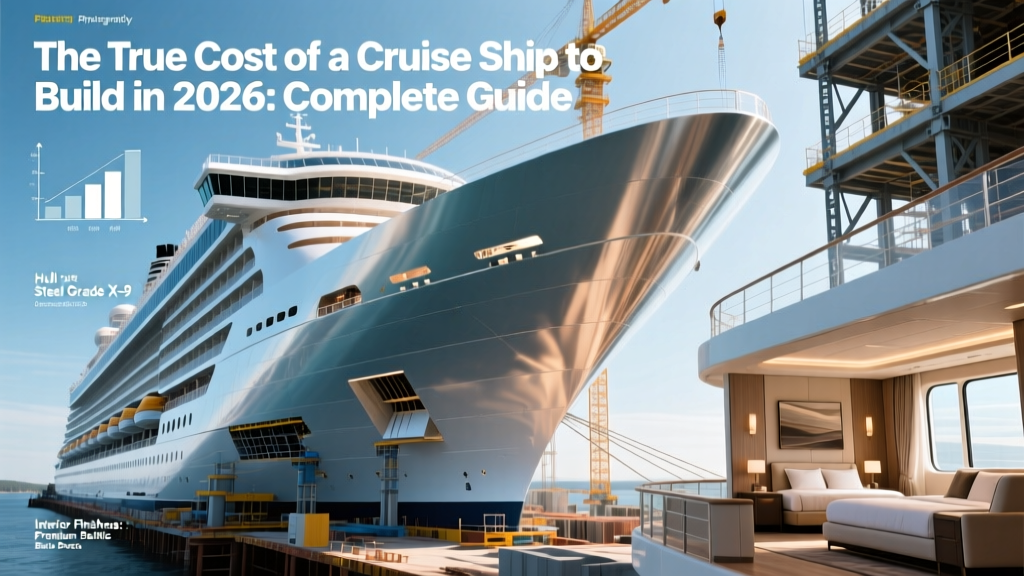
The Anatomy of Cruise Ship Construction Costs
Estimating the cost of a cruise ship to build requires moving beyond simple square-footage metrics used in commercial real estate. In 2026, modern cruise ships are highly complex, multi-billion-dollar mega-structures that combine the structural demands of a commercial maritime vessel with the luxury outfitting of a five-star resort. The baseline cost for a mainstream mega-ship (170,000 to 250,000 Gross Tonnage) currently ranges from $1.2 billion to $2.2 billion. Expedition and luxury vessels, while smaller in gross tonnage, often exceed $800 million due to specialized ice-class hulls and high-end interior finishes.
Unlike standard commercial shipping, where vessel pricing is heavily tied to deadweight tonnage (DWT) and steel weight, cruise ship valuation is driven by passenger capacity, regulatory compliance, and interior complexity. According to data tracked by Clarksons Research, the global order book for cruise vessels remains heavily constrained by shipyard capacity, keeping prices at historic highs well into the late 2020s.
The Industry Standard: Cost Per Lower Berth
Maritime estimators and cruise line CFOs rarely look at total contract price in isolation. The primary metric is the Cost Per Lower Berth (CPB). In 2026, the CPB for mainstream cruise lines averages between $280,000 and $350,000. For ultra-luxury lines (e.g., Silversea, Seabourn), the CPB frequently exceeds $550,000 due to a higher crew-to-passenger ratio, larger suite square footage, and specialized stabilization systems.
Hull vs. Outfitting: Where the Capital Goes
A common misconception in heavy construction is that the raw materials and structural assembly dictate the majority of the budget. In cruise ship manufacturing, the steel hull represents a surprisingly small fraction of the total cost. The true expense lies in the outfitting phase—transforming a watertight steel shell into a floating, self-sustaining city.
| Construction Phase | Percentage of Total Cost | Key Cost Drivers |
|---|---|---|
| Hull Construction & Steelwork | 20% - 25% | AH36/DH36 high-tensile marine steel, block assembly, drydock fees |
| Propulsion & Machinery | 15% - 20% | LNG dual-fuel engines, Azipod thrusters, scrubber systems |
| Outfitting & Interiors | 45% - 55% | HVAC, cabin modules, theaters, plumbing, fire suppression |
| Engineering & Sea Trials | 5% - 10% | Naval architecture, class society certifications, fuel for trials |
The outfitting phase relies heavily on modular construction. Cabins are typically pre-fabricated as complete 'wet units' (including plumbing and electrical) in off-site factories, then slotted into the ship's superstructure via large side-shell openings before the hull is fully sealed. Delays in the supply chain for marine-grade HVAC components or custom acoustic paneling can trigger millions in liquidated damages.
The Shipyard Monopoly: Geographic Pricing Constraints
You cannot simply bid a 200,000 GT cruise ship out to a dozen global shipyards. The market is an oligopoly dominated by three European entities, which dictates strict pricing floors. Asian shipyards, which dominate commercial bulk and container shipbuilding, have historically struggled to penetrate the complex cruise outfitting market, though recent ventures by Chinese yards (like the CSSC Carnival joint venture) are attempting to shift this dynamic.
The Big Three Yards
- Fincantieri (Italy): The largest player by volume, operating multiple yards including Monfalcone and Marghera. They specialize in both mainstream and luxury vessels, heavily leveraging Italian supply chains for high-end interior design.
- Meyer Werft (Germany) & Meyer Turku (Finland): Pioneers in LNG-powered cruise ships and indoor skydiving/complex entertainment structural integration. Their covered building docks allow for year-round construction regardless of Baltic weather.
- Chantiers de l'Atlantique (France): Located in Saint-Nazaire, this yard is famous for building the world's largest ships, including Royal Caribbean's Oasis and Icon classes. They possess the physical drydock dimensions required for vessels exceeding 360 meters in length.
Because these yards are often booked 5 to 7 years in advance, cruise lines must factor in heavy financing costs and inflation escalator clauses built into the initial contract.
Propulsion and Material Variables in 2026
Environmental regulations enforced by the International Maritime Organization (IMO) and regional bodies have fundamentally altered the material and mechanical cost structure. According to the DNV Alternative Fuels Insight database, nearly all new-build cruise ships ordered for delivery in the mid-to-late 2020s feature alternative fuel capabilities.
LNG Dual-Fuel Systems: Equipping a vessel with Liquefied Natural Gas (LNG) dual-fuel engines (such as those from WinGD or MAN Energy Solutions) adds approximately 15% to 20% to the total propulsion budget. This includes the cost of cryogenic Type C bunkering tanks, specialized fuel gas supply systems (FGSS), and reinforced deck structures to support the heavy tank loads.
Methanol Readiness: As the industry looks beyond LNG, 2026 contracts increasingly include 'methanol-ready' structural provisions. This requires applying specialized zinc-silicate coatings to fuel tanks and reserving physical footprint space for future methanol processing equipment, adding roughly $15 million to $25 million in upfront capital expenditure.
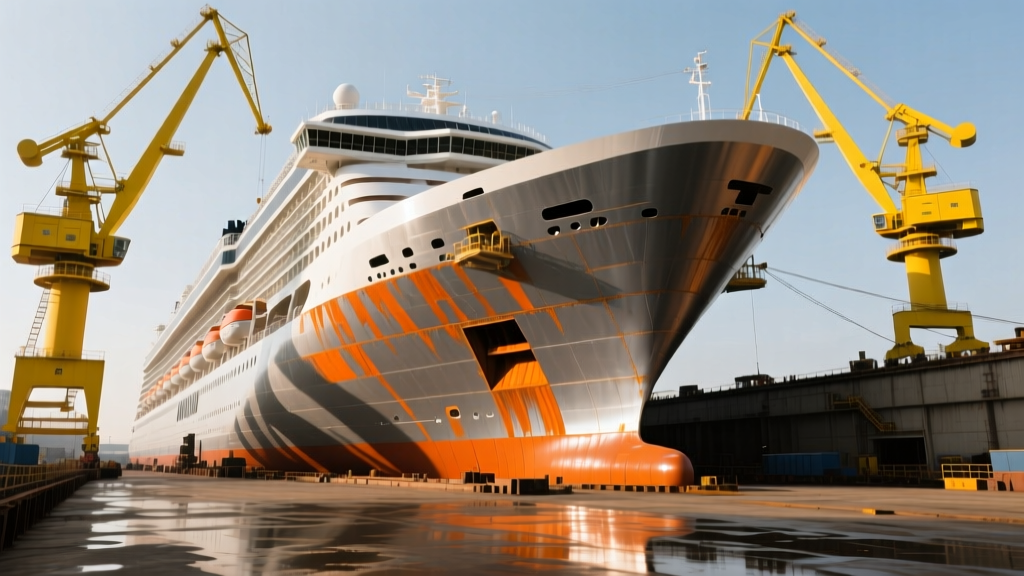
Real-World Case Studies: Recent Mega-Ship Deliveries
To understand the actual cost of a cruise ship to build, we must examine verified contract prices and estimated final delivery costs of recent benchmark vessels. These figures include the base shipyard contract, owner-furnished equipment (OFE), and capitalization of financing during the build period.
| Vessel Name | Cruise Line | Gross Tonnage | Est. Build Cost | Cost Per Berth |
|---|---|---|---|---|
| Icon of the Seas | Royal Caribbean | 248,663 GT | $2.0 Billion | $352,000 |
| Utopia of the Seas | Royal Caribbean | 236,857 GT | $1.5 Billion | $264,000 |
| Celebrity Ascent | Celebrity Cruises | 140,600 GT | $1.1 Billion | $340,000 |
| Silver Nova | Silversea | 54,700 GT | $650 Million | $890,000 |
Notice the stark contrast in the Cost Per Berth between mainstream mega-ships and luxury expedition vessels like the Silver Nova. While the luxury ship costs a fraction of the total price, its low passenger capacity (728 guests) and extreme space-to-guest ratio drive the per-berth cost to nearly $900,000.
Hidden Costs: Financing, Sea Trials, and Regulatory Compliance
The contract price signed with the shipyard is never the final capitalized cost on the cruise line's balance sheet. Estimators must account for several massive peripheral expenses:
- Export Credit Agency (ECA) Financing: Most cruise ships are financed through ECAs (such as Bpifrance for French yards or SACE for Italian yards). These government-backed entities guarantee up to 80% of the hull value, but they require extensive compliance audits, environmental impact assessments, and insurance premiums that add 2% to 4% to the total project cost.
- Owner-Furnished Equipment (OFE): Cruise lines often purchase specific high-value items directly from third-party vendors to ensure brand consistency. This includes custom casino equipment, specialized theatrical rigging, branded mattresses, and proprietary point-of-sale IT infrastructure. OFE can easily add $50 million to $100 million to the budget.
- Sea Trials and Fuel: A modern LNG-powered mega-ship undergoes multiple sea trials lasting several weeks. The cost of marine gas oil (MGO) and LNG bunker fuel required to run the main engines at 100% load, test the Azipod maneuverability, and calibrate the stabilization fins is borne by the owner, often costing upwards of $3 million per trial phase.
For a comprehensive look at how maritime regulations impact these operational and build costs, industry professionals frequently consult analyses published by The Maritime Executive, which tracks the evolving compliance landscape for marine emissions and safety standards.
Frequently Asked Questions
How long does it take to build a modern cruise ship?
From the initial steel-cutting ceremony to final delivery, the physical construction takes 18 to 24 months. However, the engineering, design, and shipyard slot reservation process begins 3 to 5 years prior to delivery.
Why are Asian shipyards cheaper but less utilized for cruise ships?
While Asian yards offer lower labor and steel costs, cruise shipbuilding requires a highly localized supply chain for luxury interiors, specialized marine HVAC, and acoustic engineering. European yards have decades of integrated supply networks that Asian yards are still developing, making the risk of costly delays too high for most cruise line investors.
What is the most expensive single component of a cruise ship?
Excluding the aggregate cost of interior outfitting, the propulsion package—specifically the combination of dual-fuel main engines, LNG cryogenic tanks, and electric Azipod propulsion units—represents the single largest mechanical capital expenditure, often exceeding $150 million.
Written by
Priya KapoorPriya Kapoor is a real estate market analyst and construction economics researcher with expertise in housing affordability, development feasibility, and infrastructure investment. She holds a Master of Regional Planning from Cornell University and previously worked as a senior analyst at CBRE's Investment Properties group, where she modeled returns for $4B in mixed-use development pipelines. Priya now runs an independent research practice advising developers, municipalities, and REITs on construction cost forecasting and market timing. She publishes the quarterly "BuildMat Market Pulse" report tracking material price indices across 12 commodity categories. Based in Austin, TX, Priya serves on the board of Habitat for Humanity Austin and is a marathon runner.
More from Priya Kapoor
View all
Construction Cost
Cost to Build a 1600 Sq Ft Home in 2026: Full Breakdown
Accurate 2026 cost to build a 1600 sq ft home—material, labor, and regional pricing breakdowns included. Plan your budget with real-time estimates.
Aug 11, 2026

Wood & Lumber
Name the Types of Wood for Pressure Treatment and Preservation
Learn how to name the types of wood best suited for pressure treatment. Compare species treatability, chemical retention levels, and 2026 preservation costs.
Aug 4, 2026

Stone & Masonry
Stone Veneer Suppliers Lindenhurst: 2026 Cost Analysis
Analyze 2026 stone veneer costs in Lindenhurst, NY. Compare local supplier pricing, delivery fees, and Suffolk County installation labor rates.
Aug 4, 2026