Cost to Build a Pond: Detailed Material and Labor Breakdown
Discover the true cost to build a pond. This detailed breakdown covers excavation, EPDM liners, filtration systems, and hardscaping expenses.
The Baseline Cost to Build a Pond
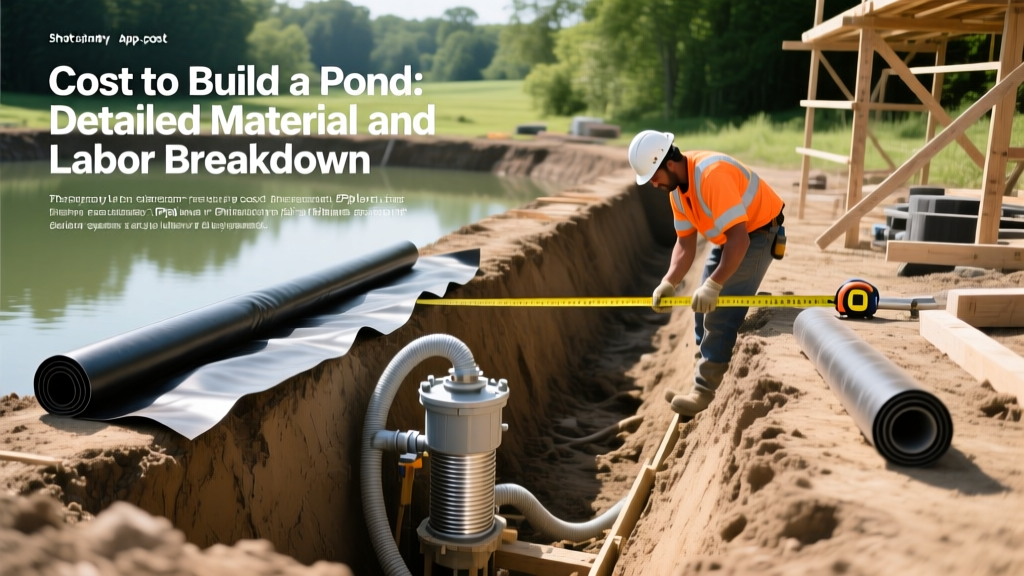
The cost to build a pond varies wildly based on volume, engineering complexity, and material grade. For a standard backyard ecosystem pond (800 to 1,500 gallons), expect to spend between $4,500 and $9,500. Large koi ponds exceeding 3,000 gallons with advanced filtration and extensive hardscaping routinely push past $25,000. Unlike above-ground pools, water gardens require a delicate balance of biological filtration, structural containment, and aesthetic integration. Cutting corners on the containment or plumbing phases inevitably leads to catastrophic water loss or chronic algae blooms, turning a premium landscape feature into an expensive liability.
• Small Water Garden (300-500 gal): $2,500 - $4,500
• Standard Ecosystem Pond (800-1,500 gal): $4,500 - $9,500
• Large Koi Pond (3,000+ gal): $15,000 - $35,000+
• Professional Labor Premium: Adds 40% to 60% over DIY material costs
Phase 1: Excavation and Earthwork
Excavation is the most physically demanding phase and the first place where hidden costs emerge. The average pond requires a depth of at least 3 feet to protect fish from winter freezing and summer overheating, alongside shallow plant shelves (12 to 18 inches deep) for marginal aquatic plants.
Soil Types and Hidden Excavation Traps
Soil composition dictates your excavation strategy. Sandy loam is easy to dig but prone to collapsing, requiring wider, sloped walls. Heavy clay holds its shape well but is incredibly dense. If you encounter bedrock or heavy shale, you will need a hydraulic hammer attachment for your excavator, which increases equipment rental costs by roughly $150 to $250 per day. Furthermore, you must account for soil disposal. An 800-gallon pond generates approximately 4 to 6 cubic yards of heavy, wet dirt. Hauling this away costs between $400 and $800 per dump truck load, depending on local landfill tipping fees. According to the Wisconsin Department of Natural Resources, proper siting is also critical; building a pond in a natural drainage swale or too close to septic drain fields can result in severe runoff contamination and structural failure.
Phase 2: Liner and Containment Systems
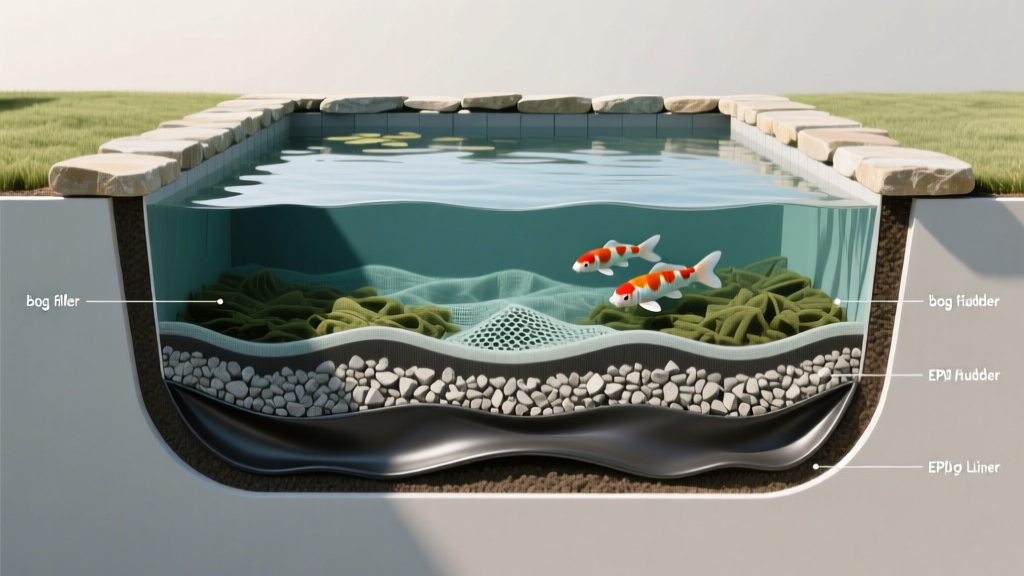
The liner is the literal foundation of your pond. Never use cheap PVC or agricultural plastics for a permanent water feature; they become brittle under UV exposure and tear easily under the weight of boulders. The industry standard remains 45-mil EPDM (Ethylene Propylene Diene Monomer) rubber, though Reinforced Polyethylene (RPE) is rapidly gaining market share due to its superior puncture resistance and lighter weight.
| Liner Material | Cost per Sq. Ft. | Lifespan | Pros & Cons |
|---|---|---|---|
| 45-mil EPDM Rubber | $1.25 - $1.75 | 20-30 Years | Highly flexible, fish-safe, heavy to maneuver. |
| RPE (Reinforced PE) | $1.80 - $2.50 | 30-40 Years | Extremely puncture-resistant, lighter, stiffer to fold. |
| Poured Concrete | $8.00 - $15.00 | 50+ Years | Permanent, requires rebar, prone to cracking if ground shifts. |
Critical Warning: Never install a liner directly on bare dirt. You must use an 8oz non-woven geotextile underlayment ($0.45 to $0.65 per sq. ft.). Woven weed barriers or old carpet will not protect against root penetration or sharp stones under the hydrostatic pressure of thousands of gallons of water.
Phase 3: Filtration, Plumbing, and Aeration
A pond is a living ecosystem. Without proper mechanical and biological filtration, the water will turn opaque green within weeks. The Texas A&M AgriLife Extension emphasizes that water garden health relies entirely on the balance between fish bio-load, plant coverage, and filtration capacity. The golden rule of pond plumbing is that your pump must turn over the total volume of the pond every 1.5 to 2 hours.
The Three Pillars of Pond Filtration
- Mechanical Skimming ($350 - $800): A skimmer box houses the main pump and catches surface debris (leaves, pollen) before it sinks and decays. Look for models with high-capacity leaf baskets and rigid weirs, such as the AquaUltra Pro or Helios skimmers.
- Biological Filtration ($600 - $2,500): This is where beneficial bacteria convert toxic fish ammonia into harmless nitrates. While pressurized bead filters work, the most effective and lowest-maintenance method is an upflow wetland bog filter. A bog filter uses a grid of PVC piping buried under 12 inches of pea gravel, planted heavily with marginal plants like iris and rushes.
- UV Clarifiers ($150 - $400): A UV sterilizer zaps single-celled algae as water passes through it. It is not a substitute for biological filtration, but it is highly effective at keeping the water crystal clear during spring algae blooms.
Phase 4: Hardscaping, Coping, and Aesthetics
Hardscaping transforms a hole in the ground with a rubber tarp into a natural-looking water feature. This phase is highly variable in cost, depending on your local stone availability and design ambition.
Boulders and Accent Stones: Boulders are typically sold by the ton. Expect to pay $150 to $350 per ton for local fieldstone, and upwards of $600 per ton for imported granite or moss rock. A standard 1,000-gallon pond usually requires 3 to 5 tons of boulders to create natural-looking waterfalls and edge breaks.
Edge Coping: The coping hides the liner edge and secures the perimeter. Flat flagstone or slate ($400 to $800 per pallet) provides a clean, modern look, while rounded river cobble ($80 to $120 per ton) offers a more rustic, natural stream appearance. Ensure all overhanging coping stones extend at least 2 to 3 inches over the water line to prevent water from wicking up the rocks and escaping the pond via capillary action.
Ongoing Maintenance and Utility Costs
The initial cost to build a pond is only the beginning. Operating an ecosystem pond requires a continuous investment in electricity, water, and biological supplements.
- Electricity: A continuous-duty external or submersible pump (running 24/7) drawing 300 to 500 watts will add $25 to $50 to your monthly utility bill. High-efficiency models from brands like Oase or Laguna can reduce this by up to 40%.
- Water Top-offs: Evaporation rates vary by climate, but expect to lose 1 to 2 inches of water per week in the summer. According to the U.S. Environmental Protection Agency, outdoor water use accounts for nearly 30% of total household consumption; installing an automatic float valve connected to a dedicated irrigation line prevents pump burnout during dry spells.
- Beneficial Bacteria & Treatments: Budget $150 to $250 annually for cold-water and warm-water bacterial additives, sludge removers, and barley straw extract to maintain biological balance.
Expert Tips for Controlling Pond Construction Costs
Design for the Site, Not the Catalog
Do not force a massive, complex waterfall into a small, flat yard. The cost of building retaining walls and hauling in tons of extra stone to create elevation will double your hardscaping budget. Instead, utilize the natural grade of your property. If your yard is flat, opt for a pondless waterfall or a low-profile wetland bog design that relies on plant filtration rather than massive aeration waterfalls.
Phase Your Hardscaping
If budget constraints are tight, prioritize the excavation, underlayment, liner, and core plumbing during the initial build. You can easily add expensive accent boulders, underwater LED lighting, and premium coping stones in subsequent seasons once the ecosystem has stabilized and your budget recovers. Never compromise on the liner or the skimmer box to afford decorative stone; a leaking pond is infinitely more expensive to fix than a bare edge is to decorate.
Written by
David NakamuraDavid Nakamura is a licensed architect (AIA) and construction technology writer focused on sustainable building methods, mass timber engineering, and high-performance building envelopes. He holds a Master of Architecture from the University of Washington and is a certified Passive House Consultant (CPHC). David spent eight years at the Seattle firm Mithun, where he led the design of three LEED Platinum projects, before founding his own practice specializing in net-zero residential design. He serves on the editorial advisory board of GreenBuilder Magazine and has authored peer-reviewed papers on cross-laminated timber (CLT) connections for the Journal of Structural Engineering. In his spare time, David teaches woodworking at Pratt Fine Arts Center and kayaks the Puget Sound.
More from David Nakamura
View all
Construction Cost
Labor Cost to Build a Deck Per Sq Ft: 2026 Installation Guide
Discover the exact labor cost to build a deck per sq ft in 2026. This installation guide breaks down contractor rates, complexity factors, and hidden fees.
Aug 4, 2026

Construction Cost
How Much Does It Cost to Build a 3 Bedroom House? Financing Guide
Learn exactly how much it costs to build a 3 bedroom house and explore 2026 financing options, construction loan types, and budget frameworks for your build.
Aug 4, 2026

Construction Cost
Cost to Build a Tennis Court: 2026 Guide
How much does it cost to build a tennis court in 2026? Breakdowns for asphalt, concrete, and synthetic surfaces plus fencing and lighting.
Jul 30, 2026