How Much Does It Cost to Build a Lake? Detailed Breakdown
Discover exactly how much it costs to build a private lake. This detailed breakdown covers excavation, dam construction, liners, and hidden fees.
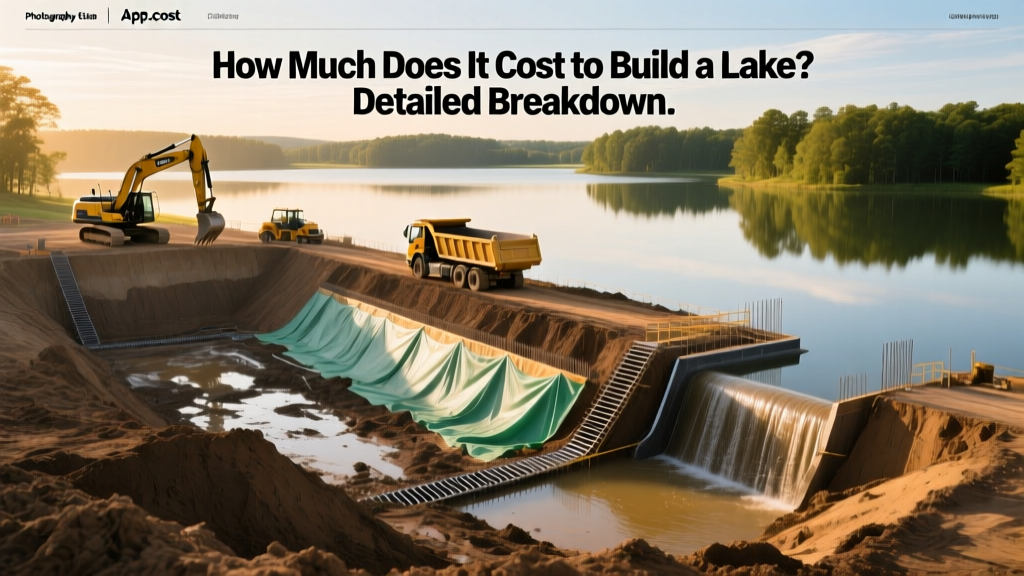
The True Economics of Excavating a Private Lake
Building a private lake is a massive earthmoving undertaking that goes far beyond simply digging a hole and waiting for rain. In 2026, the average cost to build a properly engineered, dammed lake ranges from $45,000 to $120,000 per acre. A typical 2-acre private lake will cost between $90,000 and $240,000, depending heavily on soil composition, topography, and local permitting requirements.
Unlike small backyard ponds, a true lake (generally defined as exceeding 1 to 2 surface acres and requiring an engineered dam) demands strict adherence to hydrological and structural engineering principles. According to the USDA Natural Resources Conservation Service (NRCS), the failure rate of unengineered earthen dams is exceptionally high, often resulting in catastrophic washouts, severe seepage, or costly structural retrofits. This detailed breakdown dissects the exact costs, material requirements, and hidden variables involved in constructing a permanent, structurally sound private lake.
Phase 1: Engineering, Permitting, and Geotechnical Testing
Before any heavy equipment arrives on site, you must understand what lies beneath the topsoil. Skipping geotechnical analysis is the most common reason private lake projects fail or experience massive budget overruns.
Geotechnical Soil Boring and Analysis
A geotechnical engineer must drill core samples across the proposed lake bed and dam footprint to test the soil's Atterberg limits and Plasticity Index (PI). To hold water naturally without a synthetic liner, your soil must contain at least 20% clay with a PI greater than 18. If the soil is too sandy or rocky, you will be forced to import clay or install a synthetic liner, which can add $25,000 to $60,000 to the project.
- Geotechnical Report Cost: $2,500 – $5,500
- Topographic Survey & Hydrology Study: $3,000 – $8,000
- Engineering Dam Design: $4,000 – $12,000 (Required by most state environmental agencies for dams over a certain height or volume)
Permitting and Regulatory Hurdles
If your proposed lake impacts existing wetlands, intermittent streams, or Waters of the United States, you will need a Section 404 permit from the Army Corps of Engineers. State-level Department of Natural Resources (DNR) dam safety permits are also mandatory. The Federal Emergency Management Agency (FEMA) emphasizes that local dam safety regulations dictate spillway capacities and structural inspections, which directly influence your engineering costs.
Phase 2: Earthmoving, Excavation, and Dam Construction
Earthmoving represents the largest single line item in your budget. Contractors typically bid this phase by the cubic yard (CY) or by hourly equipment rates. In 2026, expect to pay $175 to $250 per hour for a 30-ton excavator and dozer combo, or $5.50 to $12.00 per cubic yard of moved earth.
The Cut-and-Fill Balance
The most cost-effective lake designs utilize a "balanced cut-and-fill" approach. The soil excavated from the lake basin (the cut) is used to build the earthen dam (the fill). If your site requires importing clay from off-site to build the dam core, hauling costs will drastically inflate your budget.
Constructing the Impermeable Core Trench
An earthen dam cannot simply be piled on top of existing ground. The contractor must dig a "core trench" or keyway down the center of the proposed dam, extending 2 to 4 feet into an impermeable subterranean clay or bedrock layer. This trench is then backfilled with highly compacted clay to prevent water from piping or seeping under the dam. Proper compaction requires a sheepsfoot roller and strict moisture content management, often verified by nuclear density testing.
Liner Decision Matrix: Natural Clay vs. Synthetic
If your native soil lacks the necessary clay content, you must seal the lake basin. The table below compares the most common sealing methods used in modern lake construction.
| Sealing Method | Cost per Acre | Longevity | Best Application |
|---|---|---|---|
| Native Clay Compaction | $0 (Included in excavation) | 100+ Years | Sites with high-plasticity clay subsoils. |
| Sodium Bentonite Clay | $8,000 – $15,000 | 50+ Years | Sandy soils where native clay is unavailable; mixed into top 6 inches of soil. |
| EPDM Rubber Liner | $25,000 – $40,000 | 20 – 30 Years | Small, highly decorative lakes or sites with extremely porous, rocky substrates. |
| RPE (Reinforced Polyethylene) | $18,000 – $30,000 | 30 – 40 Years | Large surface areas requiring puncture resistance and lighter weight than EPDM. |
Phase 3: Spillway, Plumbing, and Erosion Control
A lake is essentially a slow-moving river held in place by a wall. If the water has nowhere to go during a massive rain event, it will overtop the dam, erode the backside, and cause a catastrophic breach. According to Texas A&M AgriLife Extension, inadequate spillway design is the leading cause of private dam failures.
Principal vs. Emergency Spillways
Your lake requires two distinct spillway systems:
- Principal Spillway (The Pipe): A high-density polyethylene (HDPE) or corrugated metal pipe (CMP) buried through the dam to handle normal water level fluctuations and small storm events. A 2-acre lake typically requires a 12-inch to 18-inch diameter HDPE pipe, complete with an anti-seep collar and a trash guard. Cost: $4,500 – $9,000.
- Emergency Spillway (The Overflow): A wide, vegetated, natural depression carved into undisturbed earth on the abutment of the dam. It is engineered to handle the 100-year storm event without allowing water to overtop the earthen dam itself. Cost: $2,000 – $6,000 for earthmoving and erosion-control matting.
Erosion Control and Seeding
Once the dam is shaped, the slopes must be immediately stabilized. Contractors use hydraulic mulch, rolled erosion control products (RECPs) like coconut fiber blankets, and deep-rooted native grasses to armor the dam against surface runoff.
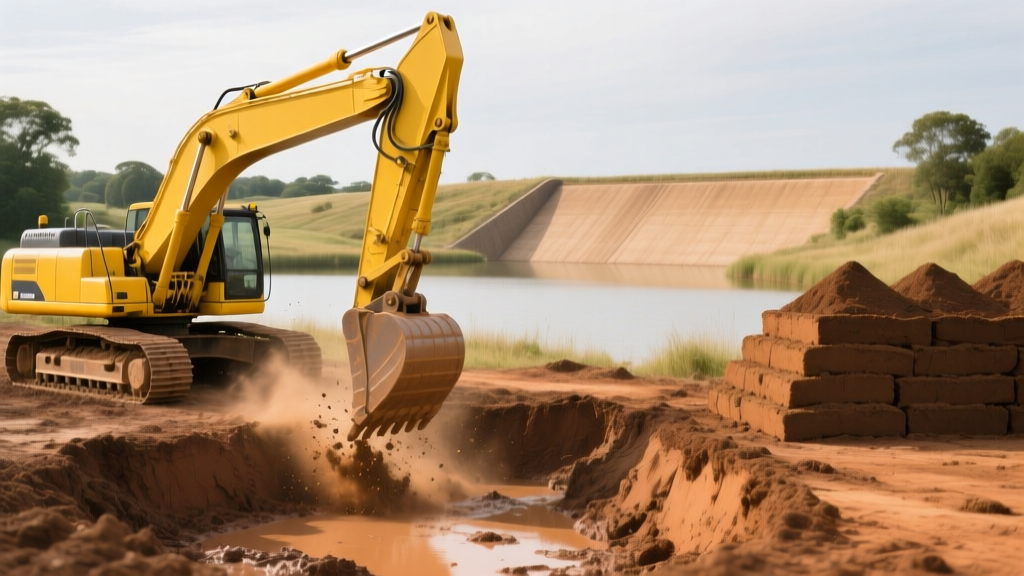
Hidden Costs and Edge Cases
When budgeting for a private lake, you must account for subterranean surprises and environmental variables that rarely appear in initial estimates.
- Rock Blasting and Ripping: If the excavator hits solid limestone or granite bedrock above the planned lake floor, blasting or mechanical ripping is required. Blasting adds $15 to $35 per cubic yard and requires specialized permits and licensed explosives handlers.
- High Water Table Dewatering: If you dig into a high water table before the dam is sealed, the basin will fill with groundwater. You will need to rent high-capacity trash pumps and lay miles of discharge hose to dewater the site so clay compaction can occur. Cost: $1,500 – $4,000 per week.
- Timber Clearing and Stump Removal: Heavily wooded sites require felling, grubbing, and burning or hauling away stumps. Stumps left in the lake bed will eventually rot, creating seepage channels through the lake floor. Cost: $3,500 – $8,000 per acre.
- Aquatic Vegetation Management: New lakes are highly susceptible to aggressive algae and invasive weed blooms due to exposed nutrient-rich topsoil. Budget for initial chemical treatments or the stocking of triploid grass carp. Cost: $1,000 – $3,000 annually.
Detailed Cost Breakdown for a 2-Acre Lake
The following budget represents a realistic 2026 estimate for constructing a 2-acre private lake on a moderately sloped, partially wooded site with adequate native clay, utilizing a balanced cut-and-fill dam design.
| Project Phase | Estimated Cost Range |
|---|---|
| Surveying, Engineering, and Permitting | $9,500 – $18,000 |
| Timber Clearing and Site Preparation (2 acres) | $7,000 – $12,000 |
| Excavation and Earthmoving (Approx. 8,000 CY) | $48,000 – $75,000 |
| Dam Core Trench and Sheepsfoot Compaction | $12,000 – $22,000 |
| HDPE Principal Spillway and Trash Guard | $5,500 – $8,500 |
| Emergency Spillway Earthmoving | $3,000 – $5,500 |
| Erosion Control, Mulching, and Seeding | $4,000 – $7,000 |
| Total Estimated Project Cost | $89,000 – $148,000 |
Building a lake is a generational investment in your property. By prioritizing rigorous geotechnical testing, adhering to NRCS dam construction standards, and budgeting realistically for heavy equipment hours, you can ensure your lake holds water, withstands extreme weather, and provides decades of recreational value without requiring catastrophic structural repairs.
Written by
Marcus ChenMarcus Chen is a licensed structural engineer (PE) and building materials analyst with over 12 years of experience across residential, commercial, and industrial construction. He holds a Master of Science in Civil Engineering from UC Berkeley and spent six years at Thornton Tomasetti before transitioning to independent consulting and technical writing. Marcus specializes in material selection for seismic-prone regions, concrete reinforcement strategies, and lifecycle cost analysis. His work has been cited by the American Concrete Institute (ACI) and the Structural Engineers Association of California (SEAOC). When he is not on a job site or at his desk, you will find him hiking the Sierra Nevada or restoring a 1920s craftsman bungalow in Oakland, CA.
More from Marcus Chen
View all
Construction Cost
How Much Did the Eiffel Tower Cost to Build?
How much did the Eiffel Tower cost to build in 1889? We adjust for inflation and compare its budget to modern skyscraper construction.
Aug 4, 2026

Fire Resistance
What Is a Fire Resistant Material? Testing & Certification Guide
Discover what is a fire resistant material through ASTM and UL testing. Learn how fire ratings, certifications, and assemblies work in construction.
Aug 4, 2026

Construction Cost
How Much Did the Burj Khalifa Cost to Build?
How much did the Burj Khalifa cost to build? We break down the $1.5B project and extract 5 money-saving strategies for your next build.
Jul 30, 2026