Cost to Build a Well for Water: 2026 Pricing Guide
Discover the 2026 cost to build a well for water. Detailed pricing for drilled, driven, and dug wells, plus pump, casing, and permitting expenses.
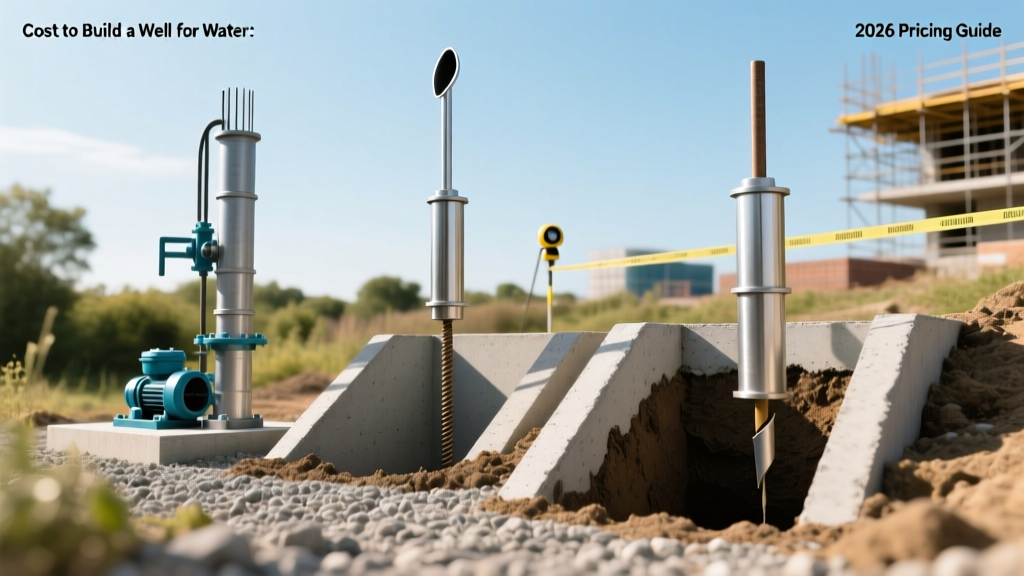
National Average Costs by Well Type
The total cost to build a well for water in 2026 averages between $5,500 and $12,000 for a standard residential drilled well. However, this figure fluctuates wildly based on your local water table, subsurface geology, and the specific construction method required. Unlike municipal water hookups, private well construction is a highly localized endeavor where soil composition dictates the budget.
| Well Type | Average Depth | Cost Per Foot | Total Estimated Cost (2026) | Best Application |
|---|---|---|---|---|
| Drilled Well | 100 – 400 ft | $30 – $65 | $5,500 – $15,000+ | Deep bedrock, reliable year-round yield, lowest contamination risk |
| Driven Well | 15 – 50 ft | $20 – $35 | $1,500 – $3,500 | Sandy or loose soils, shallow water tables, temporary or seasonal use |
| Dug / Bored Well | 10 – 30 ft | $100 – $250 (flat) | $2,500 – $5,000 | Rural properties with high water tables and heavy clay; legacy systems |
The Depth Multiplier: How Geology Dictates Your Budget
The single largest variable in well drilling is what lies beneath your topsoil. Drillers typically charge a base mobilization fee ($1,500–$2,500) and then a per-foot rate that changes based on the material they are cutting through.
Soil vs. Bedrock Drilling Rates
- Overburden (Soil, Sand, Clay): $15 to $25 per foot. Drillers use rotary mud drilling or augers to clear loose material. This requires bentonite clay to stabilize the borehole walls.
- Soft Rock (Shale, Sandstone): $25 to $40 per foot. Requires standard tricone roller bits.
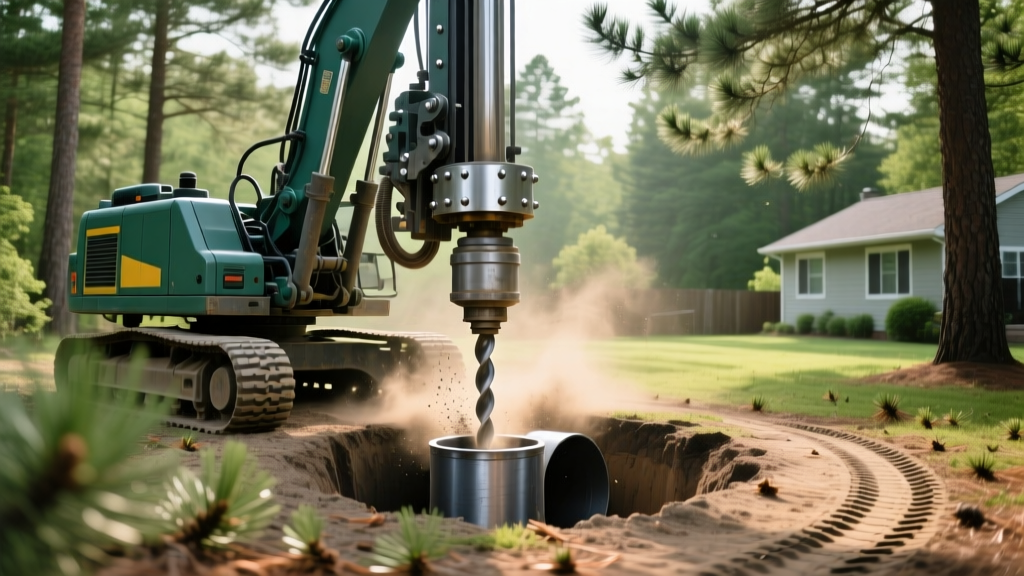
- Hard Rock (Granite, Basalt, Dense Limestone): $45 to $75+ per foot. Drillers must switch to a Down-The-Hole (DTH) pneumatic air hammer, which uses high-pressure compressors to pulverize rock. The fuel and equipment wear on air hammers drive up the per-foot cost significantly.
Component Cost Matrix: Casing, Pumps, and Pressure Systems
Drilling the hole is only half the project. Outfitting the well with code-compliant casing and a modern pumping system accounts for 35% to 45% of the total cost to build a well for water.
1. Well Casing Materials
The casing prevents the borehole from collapsing and seals out surface contaminants. According to standards outlined by the Environmental Protection Agency (EPA), casing must extend at least 12 inches above grade and be sealed with a sanitary cap.
- PVC (Schedule 40 or 80): $10 – $18 per foot. Lightweight, corrosion-resistant, and standard for the lower bedrock sections of the well. Must meet ASTM D1785 specifications.
- Carbon Steel: $25 – $45 per foot. Many state codes mandate steel casing for the upper 20 to 50 feet (the 'overburden' zone) because PVC can shear or collapse under shifting soils and frost heave. Steel meets ASTM A53 standards.
- Stainless Steel: $60 – $90 per foot. Rarely used in residential applications unless the groundwater is highly corrosive or saline.
2. Submersible Pumps and Motors
For drilled wells deeper than 25 feet, a submersible pump is mandatory. In 2026, a 1 HP to 1.5 HP pump is standard for a 3-bedroom home. Top-tier brands like Franklin Electric and Goulds Water Technology dominate the market.
- Standard 3-Wire Submersible (e.g., Franklin Electric 2445059004): $800 – $1,400 (installed). Features a separate control box above ground, making motor capacitor replacements easier and cheaper over the system's 15-year lifespan.
- 2-Wire Submersible: $700 – $1,100 (installed). All electronics are sealed inside the well. If a capacitor fails, the entire pump must be pulled from the ground, increasing long-term maintenance costs.
3. Pressure Tanks and Constant Pressure Systems
The pressure tank stores water and reduces pump cycling. The industry standard is the Amtrol Well-X-Trol series (e.g., the WX-202 or WX-203).
- Standard Bladder Tank (44-gallon drawdown): $600 – $900 installed. Operates on a standard 30/50 or 40/60 PSI pressure switch.
- Constant Pressure System (CSV + VFD): $1,800 – $2,800 installed. Utilizes a Cycle Stop Valve (CSV) or a Variable Frequency Drive (VFD) to maintain exact 50 PSI pressure in the home, even when multiple showers and appliances run simultaneously. This allows for a much smaller, space-saving pressure tank.
Hidden Costs: Permitting, Trenching, and Water Testing
Budgeting strictly for the drill rig and pump will leave you exposed to ancillary expenses. The U.S. Geological Survey (USGS) notes that groundwater quality varies drastically even within the same county, making post-drill testing a non-negotiable legal and health requirement.
| Ancillary Service | 2026 Cost Range | Details & Requirements |
|---|---|---|
| Well Permit & Registration | $150 – $600 | Required by county health departments before drilling begins. Includes aquifer mapping review. |
| Trenching & Water Line | $15 – $30 / linear ft | Excavating below the frost line (usually 4-6 ft deep) and laying 1-inch or 1.25-inch IPS polyethylene pipe to the house. |
| Pitless Adapter Installation | $400 – $800 | A frost-proof mechanical fitting that allows the water line to exit the casing below the frost line, eliminating the need for an above-ground well house. |
| Comprehensive Water Testing | $350 – $750 | Lab analysis for coliform bacteria, nitrates, arsenic, lead, and heavy metals. Required for FHA/VA mortgage approvals. |
| Electrical Run (220V) | $1,200 – $3,500 | Trenching and running dedicated 220V wiring from the home's main panel to the wellhead control box. |
Decision Framework: Which Well Type Fits Your Property?
Choosing the right well construction method is not about picking the cheapest option; it is about matching the extraction method to your local hydrogeology. Penn State Extension provides extensive guidelines on matching well types to regional topography.
Your property features sandy, loose soil (common in coastal plains), the water table is consistently within 25 feet of the surface, and you need a low-cost supplementary water source for irrigation or a seasonal cabin. Driven wells cannot penetrate rock and are highly susceptible to surface drought.
You are building a primary residence, local bedrock is deep, or you require a guaranteed year-round yield of 5+ GPM. Drilled wells are the only code-compliant option for modern residential construction in 90% of U.S. municipalities due to their superior sanitary seals and depth capabilities.
Frequently Asked Questions
How long does a private water well last?
The borehole and steel/PVC casing can last 50 to 100 years if properly capped and maintained. However, the submersible pump and pressure tank have a functional lifespan of 12 to 15 years. Budgeting $1,500 every decade and a half for a pump replacement is a standard homeownership expense for well-dependent properties.
Can I drill my own well to save money?
While DIY shallow driven well kits exist for under $500, drilling a deep bedrock well requires heavy machinery (a $350,000+ drill rig), high-pressure air compressors, and state-mandated licensing. Furthermore, DIY wells often fail municipal sanitary codes, rendering the property ineligible for standard homeowners insurance or mortgage financing.
What happens if the well yield drops over time?
Wells can suffer from 'biofouling' (bacterial slime buildup) or mineral scaling on the well screens. Before drilling a new well, contractors can perform a hydrofracturing treatment or mechanical surging ($1,500–$3,000) to clear the fissures in the bedrock and restore the original gallons-per-minute yield.
Written by
Elena RodriguezElena Rodriguez is a civil engineer and technical writer specializing in concrete technology, masonry systems, and ASTM/ACI compliance. She earned her B.S. in Civil Engineering from Texas A&M University and spent a decade at a materials testing laboratory, performing over 2,000 concrete compressive strength tests and masonry prism evaluations. Elena is an ACI-certified Field Testing Technician (Grade I) and a member of ASTM Committee C12 on Natural Building Stone. She currently consults on forensic engineering cases involving concrete failures and moisture intrusion. Based in San Antonio, TX, Elena is a proud member of the Society of Women Engineers (SWE) and coaches her daughter's FIRST Robotics team.
More from Elena Rodriguez
View all
Walls & Panels
Cost Analysis: Light Gauge Steel Framing Advantages and Disadvantages
Evaluate light gauge steel framing advantages and disadvantages through a strict cost analysis lens, comparing material, labor, and lifecycle expenses.
Aug 4, 2026

Walls & Panels
Gypsum Board Types: Exact Specifications, Thickness & Dimensions
Compare standard, Type X, and moisture-resistant gypsum board types. Get exact specifications, thicknesses, dimensions, and ASTM standards for your project.
Aug 4, 2026

Fire Resistance
Best Fire-Resistant Outdoor Decking Materials: 2026 Buyer Guide
Discover the best fire-resistant outdoor decking materials for 2026. Compare Class A PVC, aluminum, and hardwood options for WUI compliance and safety.
Aug 4, 2026