How Much Does a Cruise Ship Cost to Build? 2026 Data
Discover how much a cruise ship costs to build in 2026. Compare construction prices across mega-ships, luxury liners, and river vessels by gross tonnage.
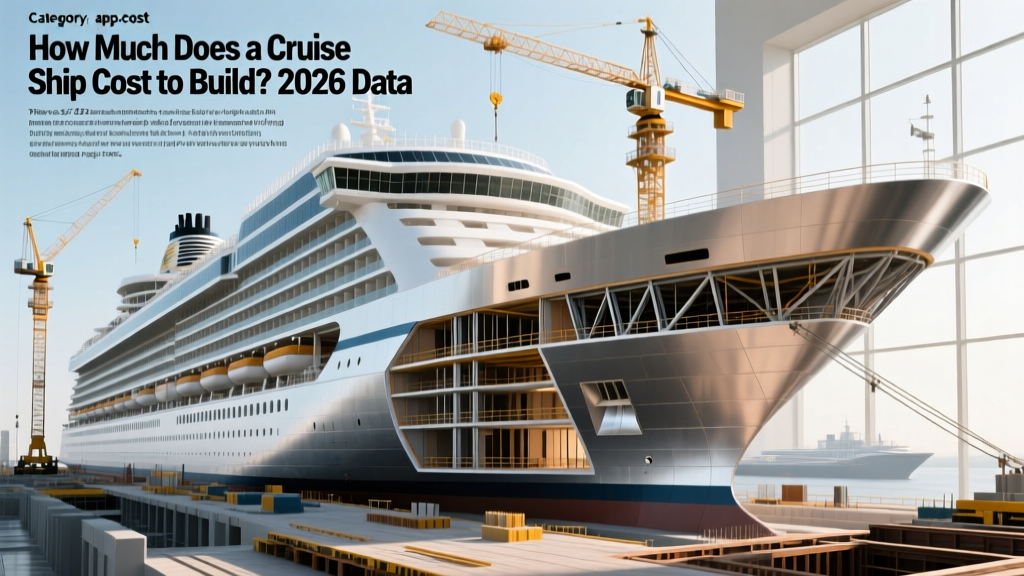
The Economics of Modern Cruise Ship Construction
Estimating the construction cost of a cruise ship requires moving beyond standard commercial real estate metrics. Unlike terrestrial buildings measured in square footage, marine construction is quantified by Gross Tonnage (GT)—a measure of internal volume—and Lower Berths (passenger capacity). In 2026, the global cruise ship construction market is dominated by a shift toward dual-fuel LNG propulsion, advanced HVAC systems, and hyper-customized interior outfitting, all of which have driven baseline capital expenditures upward.
According to maritime classification societies like DNV, modern environmental regulations such as the Energy Efficiency Existing Ship Index (EEXI) mandate heavier, more complex engineering. Consequently, the cost to build a mainstream cruise ship now averages between $6,500 and $8,200 per GT, while luxury expedition vessels can exceed $14,000 per GT due to ice-class hull reinforcement and high-end material finishes.
Cost Comparison Matrix by Vessel Class
The following matrix breaks down the estimated 2026 capital expenditures across the four primary cruise vessel categories. These figures represent the shipyard contract price and exclude owner-furnished equipment (OFE) and financing costs.
| Vessel Class | Avg. Gross Tonnage (GT) | Passenger Capacity | Est. Total Cost (USD) | Cost Per Lower Berth |
|---|---|---|---|---|
| River Cruise Ship | 3,000 - 4,500 | 150 - 190 | $35M - $45M | $210,000 - $250,000 |
| Expedition / Luxury | 40,000 - 60,000 | 500 - 750 | $550M - $750M | $900,000 - $1.2M |
| Mainstream (Panamax) | 130,000 - 150,000 | 3,500 - 4,200 | $900M - $1.15B | $260,000 - $310,000 |
| Mega-Ship (Icon/Oasis) | 230,000 - 260,000 | 5,500 - 7,000 | $1.8B - $2.2B | $280,000 - $340,000 |
Where the Capital Goes: Component Cost Breakdown
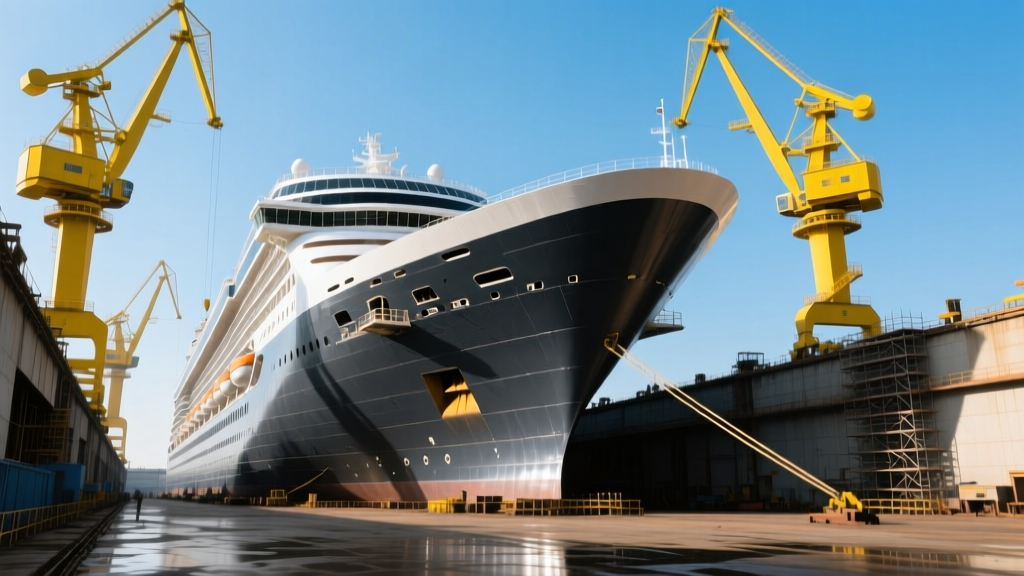
Constructing a floating city involves a highly fragmented global supply chain. A $1.5 billion mainstream cruise ship contract is typically distributed across the following core construction phases:
- Steel and Hull Fabrication (15% - 20%): Modern hulls utilize marine-grade AH36 and DH36 high-tensile steel. A 135,000 GT vessel requires approximately 25,000 to 30,000 metric tons of steel. While raw steel prices fluctuate, the cutting, welding, and block-assembly labor in European shipyards accounts for the bulk of this phase.
- Propulsion and Machinery (20% - 25%): This includes the main engines, generators, and azimuth thrusters. Most newbuilds now utilize ABB Azipod azimuthing thrusters for maneuverability and dual-fuel engines (like the Wärtsilä 31DF) capable of burning LNG or marine gas oil.
- Interior Outfitting and Cabin Modules (35% - 40%): The largest single expense. Cabins are not built stick-by-stick; they are manufactured as prefabricated modular units weighing 5 to 8 tons each, complete with plumbing, HVAC, and furniture. A standard balcony cabin module costs between $45,000 and $65,000, while luxury suites can exceed $150,000 per unit.
- HVAC, Electrical, and Life Safety (10% - 15%): Cruise ships require massive HVAC plants to condition air for thousands of passengers and crew, alongside complex marine-grade fire suppression and watertight door systems compliant with SOLAS (Safety of Life at Sea) regulations.
Global Shipyard Pricing Tiers
The geographic location of the shipyard heavily dictates the final invoice. The cruise construction industry is essentially an oligopoly controlled by three European giants, though Asian competitors are emerging.
The European Big Three
Fincantieri (Italy), Meyer Werft (Germany/Finland), and Chantiers de l'Atlantique (France) hold over 90% of the global order book for large ocean-going cruise ships. These yards command premium pricing due to their mastery of complex interior logistics and established relationships with marine interior subcontractors. Industry reporting from The Maritime Executive frequently highlights how these shipyards operate at maximum capacity, often booking berths 4 to 6 years in advance, which limits price negotiation leverage for cruise lines.
The Asian Challengers
Chinese shipyards, notably CSSC (China State Shipbuilding Corporation), have entered the market with vessels like the Adora Magic City. Asian yards typically offer base construction costs 15% to 20% lower than their European counterparts. However, the cost savings are frequently offset by the logistical expense of shipping European-manufactured interior modules to Asia and the steep learning curve associated with managing the thousands of specialized subcontractors required for cruise outfitting.
Hidden Costs: Outfitting, Sea Trials, and Delivery
The shipyard contract price is rarely the final capital expenditure. Cruise lines must budget for several critical post-construction phases:
- Owner-Furnished Equipment (OFE): Items like casino gaming machines, specialized theatrical rigging, and high-end retail fixtures are often purchased directly by the cruise line and shipped to the shipyard for installation, adding $20M to $50M to the project.
- Sea Trials and Dry-Docking: Before delivery, the vessel undergoes rigorous sea trials. Following delivery, the ship often enters a dry dock for the application of advanced silicone-based antifouling coatings (such as Hempel's Hempaguard X9), which cost upwards of $1.5M per application but reduce hydrodynamic drag and fuel consumption by up to 6%.
- Crew Familiarization: A mega-ship requires a crew of 2,000+. The cruise line must pay for crew lodging, training, and simulated operations during the final weeks of shipyard construction, a period where the vessel is generating zero revenue but burning significant operational capital.
Frequently Asked Questions
How long does it take to build a modern cruise ship?
From the initial steel-cutting ceremony to final delivery, a mainstream or mega-ship typically requires 24 to 36 months. However, the design, engineering, and financial structuring phases occur 2 to 3 years before the steel is even cut, making the total project lifecycle closer to 5 or 6 years.
Why are cruise ships so expensive to build compared to cargo ships?
A 150,000 GT container ship might cost $150 million, while a 150,000 GT cruise ship costs over $1 billion. The discrepancy lies in outfitting. Cargo ships are essentially hollow steel boxes with a propulsion system and a small crew block. Cruise ships are floating luxury hotels requiring thousands of miles of electrical cabling, complex HVAC zoning, soundproofing, theaters, and thousands of individual plumbing fixtures, all of which must meet strict marine fire safety codes.
Do cruise ships depreciate quickly?
Unlike terrestrial real estate, which generally appreciates, cruise ships are depreciating assets. A vessel typically has a primary operational lifespan of 20 to 25 years before it is sold to secondary markets or scrapped for its steel value. However, multi-million dollar 'dry-dock refurbishments' every 5 years can artificially maintain the asset's book value and passenger appeal.
Written by
Priya KapoorPriya Kapoor is a real estate market analyst and construction economics researcher with expertise in housing affordability, development feasibility, and infrastructure investment. She holds a Master of Regional Planning from Cornell University and previously worked as a senior analyst at CBRE's Investment Properties group, where she modeled returns for $4B in mixed-use development pipelines. Priya now runs an independent research practice advising developers, municipalities, and REITs on construction cost forecasting and market timing. She publishes the quarterly "BuildMat Market Pulse" report tracking material price indices across 12 commodity categories. Based in Austin, TX, Priya serves on the board of Habitat for Humanity Austin and is a marathon runner.
More from Priya Kapoor
View all
Construction Cost
Cost to Build a 1600 Sq Ft Home in 2026: Full Breakdown
Accurate 2026 cost to build a 1600 sq ft home—material, labor, and regional pricing breakdowns included. Plan your budget with real-time estimates.
Aug 11, 2026

Wood & Lumber
Name the Types of Wood for Pressure Treatment and Preservation
Learn how to name the types of wood best suited for pressure treatment. Compare species treatability, chemical retention levels, and 2026 preservation costs.
Aug 4, 2026

Stone & Masonry
Stone Veneer Suppliers Lindenhurst: 2026 Cost Analysis
Analyze 2026 stone veneer costs in Lindenhurst, NY. Compare local supplier pricing, delivery fees, and Suffolk County installation labor rates.
Aug 4, 2026