How Much Does a Driving Range Cost to Build? 2026 Cost Breakdown
Discover how much a driving range costs to build. Get detailed 2026 budget breakdowns for land, turf, lighting, and tech for your golf facility.
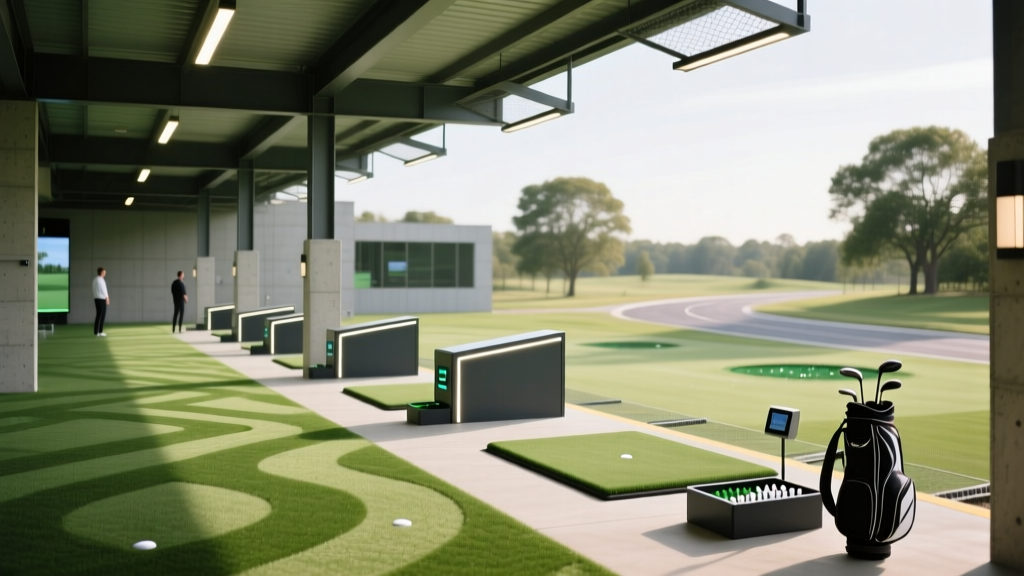
The True Cost of Building a Driving Range: Hard vs. Soft Costs
When evaluating how much a driving range costs to build, developers must separate hard construction costs from land acquisition and soft fees. As of 2026, the hard construction costs for a standard commercial driving range (15 to 20 acres, 20 tee bays, fully lit) range from $850,000 to $3.2 million. This estimate excludes the highly variable cost of purchasing the land itself, which can range from $50,000 per acre in rural zones to over $500,000 per acre in suburban corridors.
- Basic Unlit Range (10 bays, natural turf): $450,000 - $750,000
- Mid-Tier Commercial (20 bays, LED lit, natural turf): $1.2M - $1.8M
- Premium Entertainment Facility (30+ bays, tracking tech, synthetic targets): $2.5M - $4.5M+
According to facility planning data from the National Golf Foundation (NGF), the most successful modern ranges allocate at least 30% of their hard budget to technology integration and premium tee-box experiences, shifting away from the bare-bones grass tees of the past.
Phase 1: Site Preparation, Earthwork, and Drainage
A regulation driving range requires a minimum footprint of 15 acres to accommodate a 250-yard landing area, with an additional 3 to 5 acres required for parking, a clubhouse, and the tee box complex. Earthwork is the first major capital expenditure.
Grading and Shaping
The landing area must be graded with a slight crown (1% to 2% slope) to prevent water pooling. Heavy earthmoving equipment is required to strip topsoil, compact the subgrade, and establish the final contours. Expect to pay between $25,000 and $45,000 per acre for comprehensive cut-and-fill grading. For a 20-acre site, this translates to $500,000 to $900,000 in earthwork alone.
Subsurface Drainage Networks
Natural turf ranges fail without aggressive drainage. A herringbone drainage system using 4-inch perforated PVC pipes laid in gravel trenches is mandatory. The pipes must tie into a main collector line that daylight into a municipal storm sewer or a constructed retention pond. Budget $60,000 to $110,000 for a comprehensive subsurface drainage network across a 15-acre landing zone.
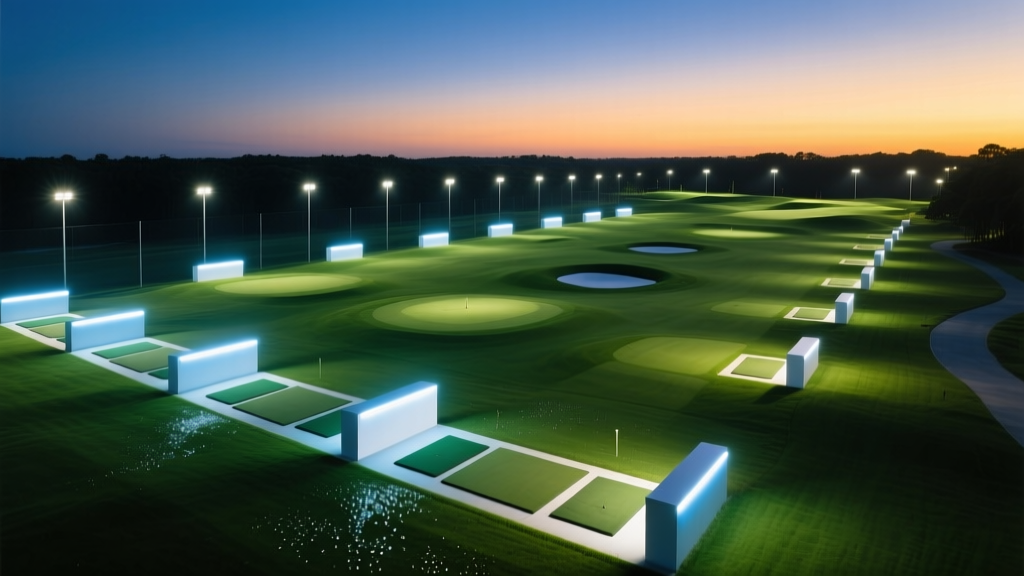
Phase 2: Turfgrass vs. Synthetic Target Surfaces
The choice between natural turf and synthetic turf dictates both your upfront capital expenditure and your long-term operational expenditure (OpEx). The Golf Range Association of America (GRAA) notes a growing trend toward hybrid models: natural grass for the primary landing area and synthetic turf for high-wear target greens and tee boxes.
| Surface Type | Installed Cost (per sq. ft.) | Lifespan | Annual Maintenance Cost |
|---|---|---|---|
| Natural Bermuda (Tifway 419) | $0.60 - $1.20 | 15-20 years (with renovation) | $0.15 - $0.25 / sq. ft. |
| Natural Bentgrass (Cool Climates) | $0.90 - $1.80 | 10-15 years | $0.30 - $0.50 / sq. ft. |
| Synthetic Nylon/Poly (Targets) | $8.00 - $14.00 | 8-12 years | $0.02 - $0.05 / sq. ft. |
For a 15-acre (653,400 sq. ft.) landing area, installing natural Bermuda grass will cost roughly $520,000 in sod and labor. Conversely, outfitting 20,000 square feet of target greens with premium synthetic turf (such as Southwest Greens or TurfNation) will cost between $160,000 and $280,000, but eliminates the need for daily mowing, fertilization, and chemical treatments in those high-traffic zones.
Phase 3: Lighting, Tee Boxes, and Technology Integration
Nighttime operations can increase a driving range's revenue by 40% to 60%. However, sports lighting is a massive capital outlay that requires precise engineering to avoid light spill into neighboring properties.
LED Sports Lighting Systems
Modern facilities exclusively use LED arrays (such as those manufactured by Musco or Eaton). A 20-bay range with a 300-yard landing area typically requires six to eight 60-foot steel poles equipped with directional LED fixtures. The installed cost for a commercial LED lighting system ranges from $180,000 to $280,000. While this is 20% more expensive upfront than legacy metal halide systems, LED arrays reduce energy consumption by 60% and eliminate the $15,000 annual bulb replacement costs associated with older technology.
Bays, Mats, and Ball Tracking
The modern tee box is an entertainment hub. Constructing a covered, cantilevered steel roof structure over 20 bays costs between $120,000 and $200,000. Inside the bays, operators must invest in high-quality hitting mats (e.g., Fiberbuilt or Country Club Elite) at $400 to $800 per mat.
Furthermore, radar-based ball tracking technology is now an industry standard. Installing Toptracer or Trackman sensors in every bay costs between $1,500 and $3,000 per unit. For a 20-bay facility, budget $40,000 to $60,000 strictly for the hardware and software licensing of the tracking systems.
Phase 4: Ball Collection and Washing Infrastructure
Efficient ball retrieval is the operational heartbeat of a driving range. Manual picking is no longer viable for high-volume facilities. You must budget for mechanized collection and washing systems.
- Tractor-Mounted Sweepers: A commercial sweeper (e.g., from Turbo Turf or similar agricultural manufacturers) pulled by a compact utility tractor costs between $25,000 and $45,000 for the combined setup.
- Automated Ball Washers: High-capacity rotary ball washers that can process 10,000 to 15,000 balls per hour cost between $15,000 and $30,000. You will also need to plumb these directly to the facility's water supply and drainage system.
- Range Balls: A 20-bay range requires an inventory of at least 60,000 to 80,000 range balls. Premium two-piece surlyn-covered range balls cost approximately $0.85 to $1.10 each, requiring an initial inventory investment of $50,000 to $88,000.
Budget Planning Framework: 3-Tier Cost Matrix
To accurately forecast your capital requirements, use the following matrix to align your budget with your target market demographic. These figures represent hard construction costs only.
| Cost Category | Tier 1: Basic Rural | Tier 2: Suburban Commercial | Tier 3: Premium Entertainment |
|---|---|---|---|
| Size & Bays | 12 Bays, 200 Yards | 20 Bays, 280 Yards | 30 Bays, 320 Yards |
| Earthwork & Drainage | $180,000 | $450,000 | $750,000 |
| Turf Installation | $250,000 (Natural) | $550,000 (Natural + Synthetic Targets) | $800,000 (Premium Hybrid) |
| Lighting & Structure | $40,000 (Unlit, open tee) | $380,000 (LED, covered bays) | $650,000 (Architectural LED, multi-level) |
| Technology & Collection | $45,000 | $120,000 | $350,000 (Full tracking & gamification) |
| TOTAL HARD COSTS | $515,000 | $1,500,000 | $2,550,000+ |
Common Budget Pitfalls to Avoid
When securing financing and planning your capital stack, avoid these frequent miscalculations that derail driving range developments:
- Underestimating Soil Amendments: Native soil rarely supports the heavy traffic of a driving range. You must budget for sand capping (adding 2 to 4 inches of sand over the subgrade) before laying sod. Failing to include $80,000 to $120,000 for sand capping will result in a muddy, unplayable facility after the first heavy rain.
- Ignoring Ball Containment Netting: If your range is adjacent to residential areas or highways, you will need high-mast perimeter netting. Steel poles and high-density polyethylene (HDPE) netting can add $100,000 to $250,000 to your budget, a cost many first-time developers overlook until the local zoning board mandates it.
- Overlooking Utility Trenching: Running commercial-grade electrical service for LED lights and trenching water lines for ball washers and irrigation across a 20-acre site is highly disruptive. Budget at least $60,000 to $90,000 for utility trenching and transformer installations.
"The most expensive mistake in range development is trying to save money on the subgrade and drainage. You can always upgrade your ball tracking software or add more bays later, but if your landing area doesn't drain, your facility will be closed every time it rains, destroying your revenue model."
By accurately forecasting these hard costs and aligning your facility's tier with your local market demographics, you can build a highly profitable driving range that meets modern golfer expectations while maintaining strict budget discipline.
Written by
Priya KapoorPriya Kapoor is a real estate market analyst and construction economics researcher with expertise in housing affordability, development feasibility, and infrastructure investment. She holds a Master of Regional Planning from Cornell University and previously worked as a senior analyst at CBRE's Investment Properties group, where she modeled returns for $4B in mixed-use development pipelines. Priya now runs an independent research practice advising developers, municipalities, and REITs on construction cost forecasting and market timing. She publishes the quarterly "BuildMat Market Pulse" report tracking material price indices across 12 commodity categories. Based in Austin, TX, Priya serves on the board of Habitat for Humanity Austin and is a marathon runner.
More from Priya Kapoor
View all
Construction Cost
Cost to Build a 1600 Sq Ft Home in 2026: Full Breakdown
Accurate 2026 cost to build a 1600 sq ft home—material, labor, and regional pricing breakdowns included. Plan your budget with real-time estimates.
Aug 11, 2026

Wood & Lumber
Name the Types of Wood for Pressure Treatment and Preservation
Learn how to name the types of wood best suited for pressure treatment. Compare species treatability, chemical retention levels, and 2026 preservation costs.
Aug 4, 2026

Stone & Masonry
Stone Veneer Suppliers Lindenhurst: 2026 Cost Analysis
Analyze 2026 stone veneer costs in Lindenhurst, NY. Compare local supplier pricing, delivery fees, and Suffolk County installation labor rates.
Aug 4, 2026