How Much Would It Cost to Build a Car Wash? 2026 Budget Guide
Discover exactly how much it costs to build a car wash in 2026. Detailed budget breakdowns for tunnels, in-bay automatics, and self-serve facilities.
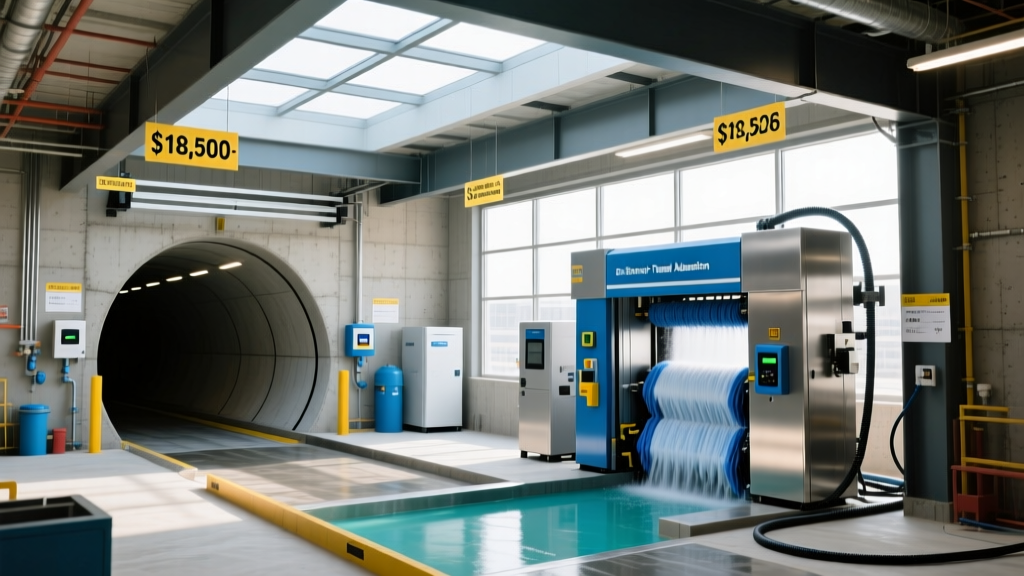
The Real Cost to Build a Car Wash: 2026 Baseline Estimates
When commercial developers ask, "how much would it cost to build a car wash?" the answer requires moving beyond generic industry averages. In 2026, the total capital expenditure for a car wash facility ranges from $180,000 for a basic self-serve bay to over $4,800,000 for a fully automated express exterior tunnel with premium finishing amenities. Budget planning must account for heavy civil work, specialized plumbing, high-voltage electrical drops, and proprietary wash equipment.
- Self-Serve (Per Bay): $150,000 – $220,000
- In-Bay Automatic (IBA): $950,000 – $1,600,000
- Express Exterior Tunnel (80-120 ft): $2,800,000 – $4,800,000
- Full-Service Flex Tunnel: $3,500,000 – $6,200,000+
Phase 1: Land Acquisition, Civil Engineering, and Site Prep
Before a single cubic yard of concrete is poured, site preparation consumes 15% to 25% of your total budget. Car washes require high-traffic visibility, specific ingress/egress geometry, and massive utility capacity.
Geotechnical and Grading Requirements
Car wash sites demand rigorous soil compaction. The stacking of wet vehicles (which weigh up to 6,000 lbs each) in the queue and on the wash floor requires a sub-base engineered to prevent differential settling. Expect to spend $45,000 to $110,000 on earthwork, including importing structural fill if the native soil has a high clay content.
- Utility Tap Fees: Municipal water and sewer tap fees for car washes are notoriously high due to the heavy load placed on municipal treatment plants. Budget $40,000 to $150,000 just for the right to connect to city water and sewer lines.
- Traffic Impact Studies (TIS): Many municipalities require a TIS before issuing a permit, costing $8,000 to $15,000. If the study mandates a dedicated turn lane or traffic signal modification, add $75,000 to $250,000 to your civil budget.
Phase 2: The Building Shell and Canopy Structures
The physical structure of a modern car wash is deceptively complex. It must withstand high humidity, corrosive chemical aerosols, and heavy wind loads while accommodating the kinetic movement of tunnel conveyors.
Concrete Specifications for the Wash Floor
Standard commercial concrete will spall and degrade within three years under the constant assault of high-pH soaps and low-pH tire cleaners. The wash floor must be poured with 4,000 to 5,000 PSI concrete, integrated with a hardening admixture (such as lithium silicate densifiers) and sloped at a precise gradient of 1/8-inch to 3/16-inch per foot toward trench drains. Reinforcement should utilize #5 epoxy-coated rebar on 18-inch centers to prevent rust-jacking. Installed cost: $14 to $22 per square foot.
Canopy and Bay Enclosures
For express tunnels, the queue canopy is a major line item. While structural steel trusses remain the standard for spans over 40 feet, tension-fabric structures (using PTFE-coated fiberglass or HDPE) are gaining traction for their lower upfront cost and natural light transmission. A 100-foot structural steel canopy with integrated LED lighting and wind-shear bracing will cost between $140,000 and $210,000 installed.
Phase 3: Core Wash Equipment and Mechanical Systems
Equipment selection dictates your throughput (cars per hour) and your long-term maintenance overhead. Leading manufacturers like Sonny's, MacNeil, and Coleman Hanna offer modular systems that scale based on your tunnel length.
| Equipment Category | Specifications | Est. Cost Range |
|---|---|---|
| Tunnel Conveyor System | 100 ft to 130 ft belt or chain drive, heavy-duty poly rollers | $180,000 – $280,000 |
| Friction & Touchless Arches | Top brushes, wrap-around side washers, high-pressure oscillators | $250,000 – $450,000 |
| Water & Air Dryers | Contour-following dryers, 50 HP to 100 HP regenerative blowers | $90,000 – $160,000 |
| Point-of-Sale (POS) & Kiosks | Automated pay terminals, LPR cameras, membership dispensers | $35,000 – $65,000 |
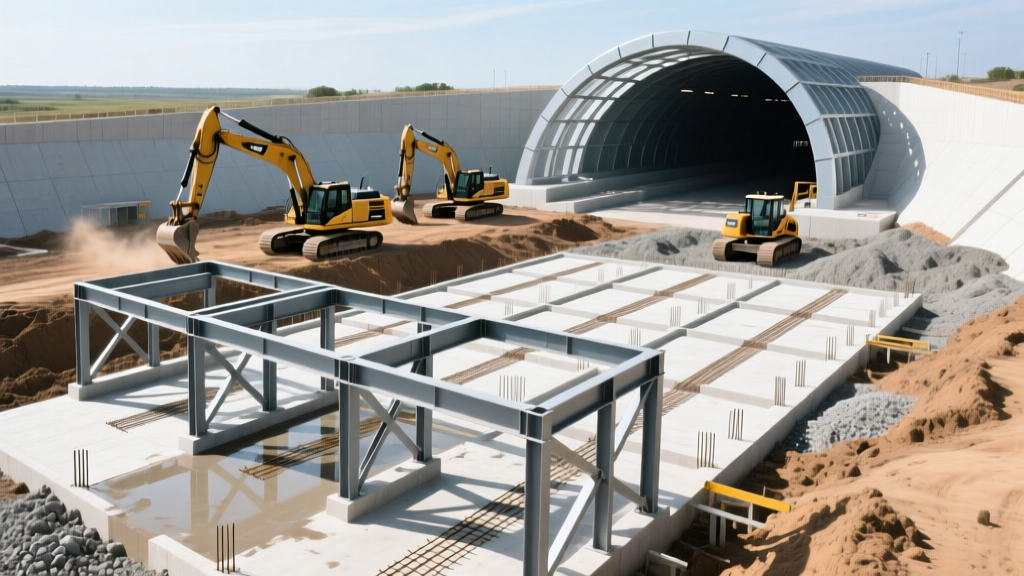
Phase 4: Environmental Compliance and Water Reclamation
Modern car washes are heavily regulated regarding effluent discharge. You cannot simply route wash water into the municipal storm drain; it must go to the sanitary sewer, and it must be pre-treated.
"Failure to properly size your oil-water separator and grease trap is the most common reason car wash construction projects fail their final municipal plumbing inspection, leading to months of delayed revenue."
Mandatory Water Treatment Infrastructure
- API Coalescing Oil-Water Separators: Sized to handle peak flow rates (often 100+ gallons per minute), these underground vaults separate automotive oils and grease from the wash water. Budget $25,000 to $45,000.
- Water Reclamation Systems: With municipal water rates climbing, integrating a reverse osmosis (RO) and ozone-injection reclamation system is no longer optional for high-volume tunnels. These systems recover up to 85% of wash water, reducing your monthly utility burden by thousands of dollars. According to the EPA Water Reuse Guidelines, commercial reclamation systems also help facilities qualify for local green-building tax incentives. Expect to invest $60,000 to $110,000 in a commercial-grade reclamation skid.
- Sound Attenuation: High-pressure pumps and 100 HP blowers generate 85+ decibels of noise. If your site is near residential zones, you will need acoustic enclosures and sound-dampening baffles, adding $15,000 to $30,000 to the mechanical budget.
Hidden Budget Killers in Car Wash Construction
Even experienced commercial developers fall victim to car-wash-specific edge cases that destroy profit margins during the build phase. Guard your contingency fund against these specific risks:
If your geotechnical report indicates a high water table, excavating the 12-foot deep pits required for your oil-water separators and reclamation tanks will require continuous dewatering and specialized sheet piling. This single issue can add $40,000 to $90,000 to your civil budget. Always review the hydrostatic pressure data before purchasing the land.
- Electrical Service Upgrades: A modern express tunnel requires 800 to 1,200 amps of 480V/3-phase power. If the local utility requires a new transformer pad or trenching from a distant pole, utility-side electrical costs can exceed $80,000.
- Chemical Storage Containment: Local fire marshals and environmental agencies require secondary containment (diked areas) for bulk acid and alkaline storage totes. Epoxy-coating these containment pads to prevent chemical degradation adds $5,000 to $12,000.
- Winterization Packages: If building in a freeze-thaw climate, you must install heated floors in the equipment room, trace-heating on all exterior water lines, and high-velocity air knives at the tunnel entrance to prevent ice buildup on the conveyor.
Financing the Build and Operational Runway
Securing capital for a car wash differs from standard retail construction because a significant portion of the budget is tied up in specialized, hard-to-liquidate equipment. The U.S. Small Business Administration (SBA) 504 Loan Program is highly utilized in this sector, allowing developers to finance real estate and heavy equipment with as little as 10% down, provided the facility meets job creation or community development criteria.
When finalizing your budget, do not stop at the certificate of occupancy. You must capitalize an operational runway. The International Carwash Association (ICA) notes that new express tunnels typically operate at a loss or break-even for the first 12 to 18 months while building a recurring membership base. Ensure your total project budget includes at least 6 months of operating capital to cover water bills, chemical replenishment, property taxes, and labor while you scale your monthly club members to the critical mass of 2,500 to 3,500 subscribers required for profitability.
Written by
Elena RodriguezElena Rodriguez is a civil engineer and technical writer specializing in concrete technology, masonry systems, and ASTM/ACI compliance. She earned her B.S. in Civil Engineering from Texas A&M University and spent a decade at a materials testing laboratory, performing over 2,000 concrete compressive strength tests and masonry prism evaluations. Elena is an ACI-certified Field Testing Technician (Grade I) and a member of ASTM Committee C12 on Natural Building Stone. She currently consults on forensic engineering cases involving concrete failures and moisture intrusion. Based in San Antonio, TX, Elena is a proud member of the Society of Women Engineers (SWE) and coaches her daughter's FIRST Robotics team.
More from Elena Rodriguez
View all
Walls & Panels
Cost Analysis: Light Gauge Steel Framing Advantages and Disadvantages
Evaluate light gauge steel framing advantages and disadvantages through a strict cost analysis lens, comparing material, labor, and lifecycle expenses.
Aug 4, 2026

Walls & Panels
Gypsum Board Types: Exact Specifications, Thickness & Dimensions
Compare standard, Type X, and moisture-resistant gypsum board types. Get exact specifications, thicknesses, dimensions, and ASTM standards for your project.
Aug 4, 2026

Fire Resistance
Best Fire-Resistant Outdoor Decking Materials: 2026 Buyer Guide
Discover the best fire-resistant outdoor decking materials for 2026. Compare Class A PVC, aluminum, and hardwood options for WUI compliance and safety.
Aug 4, 2026