How to Finance the Cost to Build 400 Sq Ft ADU Projects
Break down the true cost to build 400 sq ft ADU projects and explore the best financing options, from HELOCs to ADU-specific construction loans.
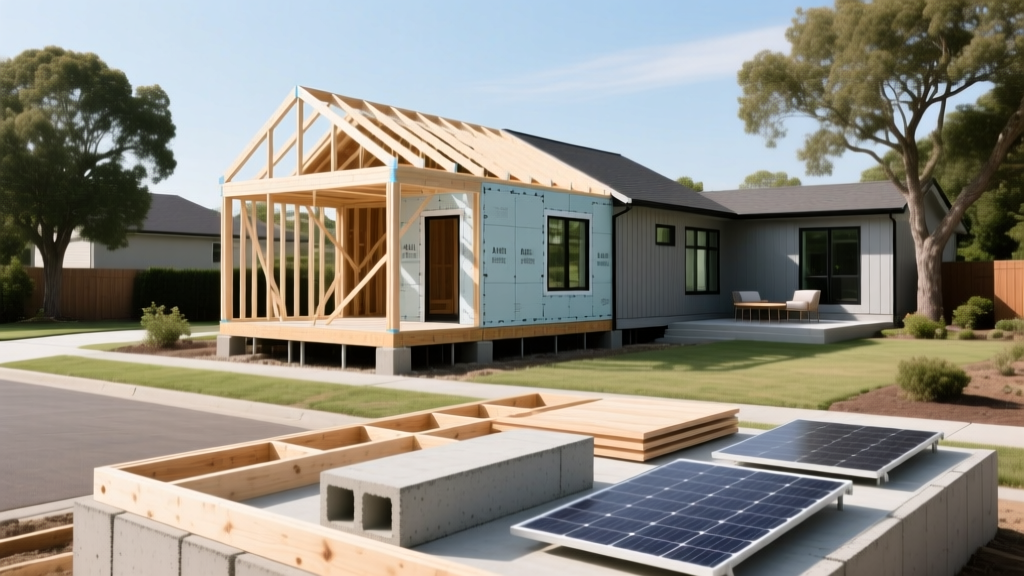
The True Cost to Build 400 Sq Ft ADU Projects
Before securing capital, you must establish a precise budget. The cost to build 400 sq ft ADU structures typically ranges from $120,000 to $180,000, translating to $300 to $450 per square foot. This wide variance depends on site topography, utility routing, and finish grades. Unlike primary residences, ADUs carry disproportionate soft costs and utility hookup fees because you are essentially building a standalone micro-house on an already developed lot.
| Construction Phase | Low Estimate | High Estimate | Cost Drivers |
|---|---|---|---|
| Soft Costs (Design, Permits, Engineering) | $15,000 | $25,000 | Local impact fees, Title 24 energy compliance, soil testing |
| Site Prep & Foundation | $20,000 | $35,000 | Grading, trenching, slab-on-grade vs. raised foundation |
| Framing, Roofing & Exterior | $35,000 | $50,000 | Lumber volatility, fire-rated materials (WUI zones), roofing type |
| MEP (Mechanical, Electrical, Plumbing) | $25,000 | $38,000 | Mini-split HVAC systems, trenching to main sewer, panel upgrades |
| Interior Finishes & Appliances | $25,000 | $40,000 | Cabinet grade, quartz vs. laminate counters, appliance packages |
| Total Estimated Cost | $120,000 | $188,000 | Average: $154,000 |
Warning: The Utility Hookup Trap
The most common budget killer in ADU construction is utility metering. If your local municipality requires a separate water or sewer meter for the ADU, expect to pay $10,000 to $20,000 in capacity fees. Always design the 400 sq ft ADU to tie into the primary home's existing sub-panels and sewer laterals where legally permissible to avoid these catastrophic soft costs.
Matching Your Equity to ADU Financing Vehicles
Financing an ADU requires leveraging the equity in your primary residence. The vehicle you choose depends entirely on your current loan-to-value (LTV) ratio, your existing mortgage rate, and your risk tolerance for variable interest.
High Equity (20%+): Cash-Out Refinance vs. HELOC
If you have substantial equity and your current mortgage rate is higher than prevailing market rates, a cash-out refinance is optimal. You replace your existing mortgage with a larger one, pulling out the $150,000 needed for the ADU in a single lump sum. However, if you are locked into a sub-4% legacy mortgage rate, refinancing is mathematically punitive.
In that scenario, a Home Equity Line of Credit (HELOC) is superior. HELOCs function as a second mortgage with a draw period (usually 10 years). You only pay interest on the capital you actually draw. For a 400 sq ft ADU, this is ideal because construction draws are phased: you might only need $20,000 for the foundation in month one, keeping your interest burden low during the 6-to-9-month build cycle.
Moderate Equity: Renovation Construction Loans
If you lack the 20% equity required for a standard HELOC, government-backed renovation loans are the solution. The FHA 203(k) loan and the Fannie Mae HomeStyle Renovation loan allow you to borrow based on the future appraised value of the property post-ADU completion, rather than its current value. This enables borrowers with minimal current equity to finance the entire cost to build 400 sq ft ADU structures, provided the future LTV remains under 75% (HomeStyle) or 96.5% (FHA 203k).
| Loan Type | Typical Rate Environment | Max LTV | Best Use Case |
|---|---|---|---|
| HELOC | Prime + 1% to 3% (Variable) | 85% Combined LTV | Homeowners with low existing mortgage rates and high equity. |
| Cash-Out Refinance | Fixed Market Rates | 80% LTV | Homeowners with high existing rates who want a single fixed payment. |
| FHA 203(k) / HomeStyle | Fixed Market Rates + PMI | 96.5% / 75% LTV | Low-to-moderate equity borrowers needing to borrow against future value. |
| ADU Construction Loan | Prime + 2% to 4% (Short-term) | Varies by Builder | Investors or those using specialized prefab ADU manufacturers. |
Navigating ADU-Specific Grants and Subsidies
Before taking on high-interest debt, investigate localized subsidies designed to promote housing density. The most prominent example is the CalHFA ADU Grant Program in California. This program provides up to $40,000 to low- and moderate-income homeowners to cover pre-development costs, architectural plans, permits, and impact fees. The grant is structured as a forgivable second mortgage; if you live in the primary residence for a set period, the $40,000 is entirely forgiven.
Outside of California, many municipalities offer density bonuses, waived impact fees, or low-interest municipal loan pools for ADUs that include deed restrictions mandating long-term affordable rental rates. Check with your local housing authority to see if attaching an affordability covenant to your 400 sq ft ADU unlocks zero-interest municipal financing.
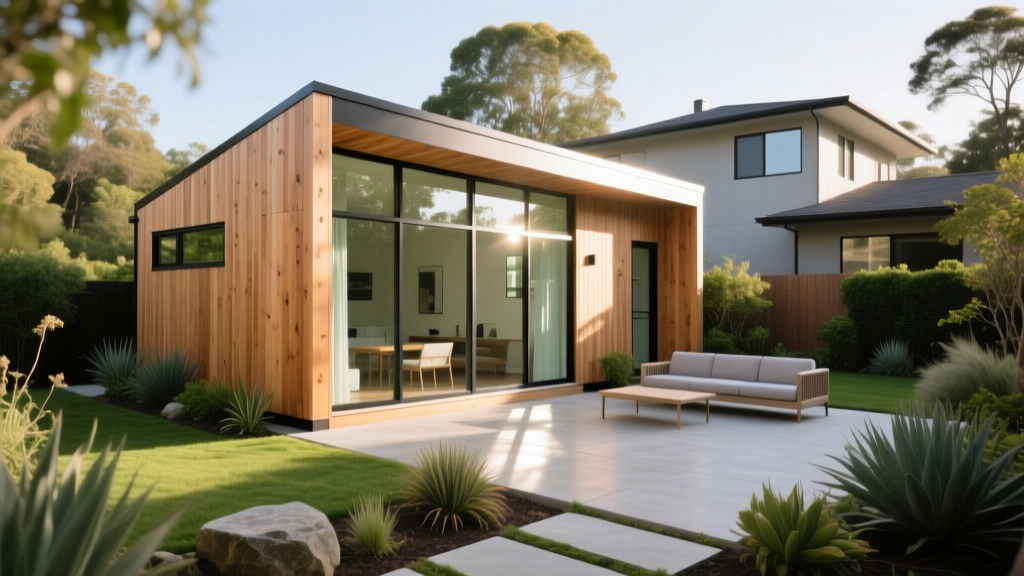
The Appraisal Gap: Financing's Biggest Hurdle
The most critical, least-discussed obstacle in ADU financing is the "appraisal gap." When you apply for a construction loan or a HomeStyle renovation loan, the lender orders a "subject-to" appraisal. The appraiser evaluates what your property will be worth after the 400 sq ft ADU is completed.
Here is the mathematical reality: building a high-end 400 sq ft ADU might cost you $160,000. However, in many suburban markets, adding that ADU only increases the property's appraised value by $90,000 to $110,000. This creates a $50,000+ appraisal gap. Because renovation loans cap their lending limits based on the future appraised value multiplied by the maximum LTV, the lender will not cover the full construction cost.
Strategic Framework: Bridging the Appraisal Gap
- Value-Engineer the Build: Reduce the cost to build 400 sq ft ADU projects by switching from custom stick-built framing to panelized or prefab systems (e.g., Cover, Studio Shed) which often appraise closer to their hard costs.
- Stack Financing: Use a primary renovation loan for 80% of the appraised future value, and bridge the remaining gap with an unsecured personal loan or a 401(k) loan, which do not rely on property collateral.
- Prove Rental Income: Under Fannie Mae guidelines, lenders can use projected ADU rental income to help you qualify for a larger loan amount, provided you supply a signed lease agreement or a verified 12-month rental history, improving your debt-to-income (DTI) ratio.
Frequently Asked Questions
Can I use the projected rental income of the ADU to qualify for the construction loan?
Yes, but with strict caveats. Fannie Mae and Freddie Mac allow lenders to factor in up to 75% of the projected rental income from the ADU to offset the mortgage payment. However, you must provide a 12-month history of rental income on the existing property, or a fully executed lease agreement for the new ADU, alongside a 1007 rent schedule appraisal form.
Does building a 400 sq ft ADU trigger a property tax reassessment?
Yes. In most jurisdictions, adding new square footage triggers a supplemental property tax assessment. However, only the added value of the ADU is reassessed, not the primary home. If your primary home is protected by tax caps (like Proposition 13 in California), your base tax rate remains untouched, and you will only pay taxes on the assessed value of the new 400 sq ft structure.
Are prefab ADUs easier to finance than stick-built ADUs?
Prefab and modular ADUs often streamline the financing process because the construction timeline is compressed from 9 months to 12 weeks. Lenders prefer shorter construction periods as it reduces the risk of interest rate fluctuations and builder default during the draw phase. Furthermore, factory-built units have fixed, guaranteed pricing, eliminating the cost-overrun contingencies that make traditional construction loans risky for underwriters.
Written by
Sarah WhitfieldSarah Whitfield is a chartered quantity surveyor (MRICS) and construction cost analyst with 15 years of experience in material pricing, procurement strategy, and project budgeting. She earned her degree in Construction Management from the University of Reading (UK) and has worked on projects ranging from $2M custom homes to $180M mixed-use developments across North America and Europe. Sarah currently leads cost estimating for BuildMat Insight, maintaining a proprietary database of 4,000+ material price points updated quarterly. She is a frequent contributor to RSMeans cost data panels and has presented at the International Cost Engineering Council (ICEC) congress. Based in Denver, CO, Sarah is an avid trail runner and volunteer mentor for Women in Construction.
More from Sarah Whitfield
View all
Wood & Lumber
What Are the Different Types of Wood? A Builder's Guide
Compare structural softwoods, finish hardwoods, and engineered lumber. Analyze Janka ratings, MOE values, and 2026 pricing for construction.
Aug 4, 2026

Walls & Panels
Steel Framing vs Wood Framing: Corrosion and Moisture Defense
Compare steel framing vs wood framing for moisture resistance. Learn about galvanized coatings, condensation risks, and corrosion protection strategies.
Jul 21, 2026

Stone & Masonry
How to Cut Stone Veneer: Wet Saw vs Grinder Comparison
Compare the best tools for cutting stone veneer. We review wet saws, angle grinders, and chop saws to help you achieve clean, chip-free cuts.
Jul 21, 2026