JW Marriott to Build All-Inclusive Resort in Costa Rica: 2026 Cost Guide
Analyze the construction costs, FF&E budgets, and luxury hospitality development metrics for the new JW Marriott all-inclusive resort in Costa Rica.
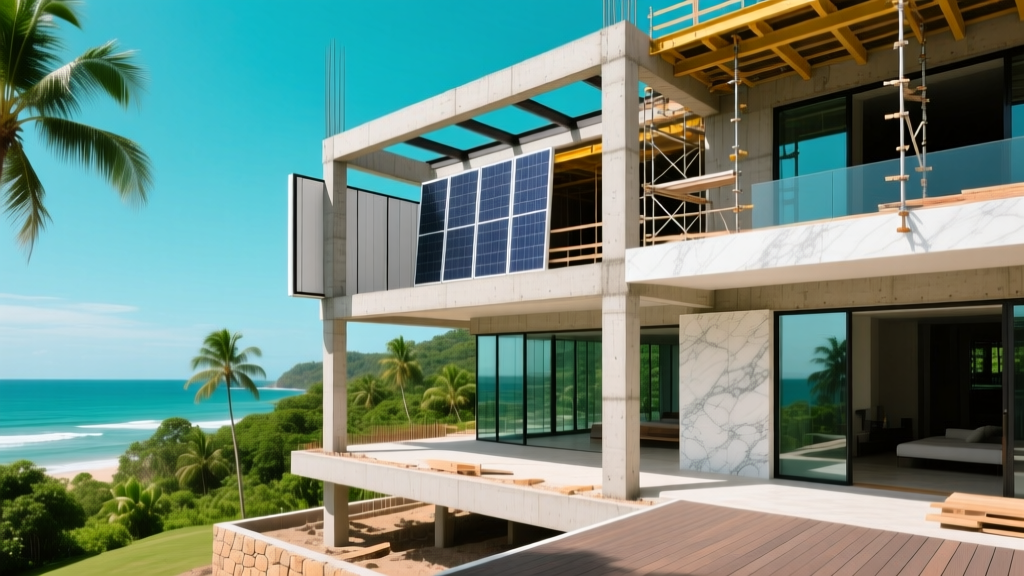
The JW Marriott Costa Rica Project: Scope and Scale
The announcement that JW Marriott is to build an all-inclusive resort in Costa Rica signals a major shift in the region's luxury hospitality development landscape. Developing a 5-star, all-inclusive property in a biodiverse, high-regulation environment like Costa Rica requires a highly specialized approach to construction cost estimating. Unlike standard select-service hotels, ultra-luxury all-inclusive resorts demand extensive food and beverage infrastructure, expansive wellness facilities, and premium site integration.
For developers, investors, and construction professionals analyzing this project or similar luxury hospitality ventures in Central America, understanding the granular cost drivers is critical. This guide breaks down the hard costs, soft costs, FF&E (Furniture, Fixtures, and Equipment), and regional logistical premiums associated with building a JW Marriott-tier resort in Costa Rica's prime development corridors, such as Guanacaste or the Osa Peninsula.
Hard Costs: Breaking Down Luxury Resort Construction
Hard costs encompass the physical construction of the resort, including site work, structural framing, MEP (mechanical, electrical, plumbing) systems, and architectural finishes. In Costa Rica, luxury resort construction relies heavily on reinforced concrete and structural steel to meet stringent seismic building codes (Código Sísmico de Costa Rica) and withstand coastal weather patterns.
For an ultra-luxury all-inclusive brand like JW Marriott, the baseline hard costs significantly exceed standard hospitality metrics. The integration of high-end materials—such as imported natural stone, custom hardwood millwork, and advanced climate control systems for tropical environments—drives the cost per square foot upward.
Estimated Hard Cost Breakdown (Per Square Foot)
| Construction Category | Standard 4-Star Resort (USD/sq ft) | Ultra-Luxury 5-Star All-Inclusive (USD/sq ft) | Cost Drivers in Costa Rica |
|---|---|---|---|
| Site Work & Earthmoving | $18 - $25 | $30 - $45 | Steep topography, erosion control, SETENA environmental mitigation. |
| Substructure & Framing | $45 - $60 | $70 - $95 | Seismic reinforcement, deep piling for coastal soil stability. |
| MEP Systems | $55 - $75 | $90 - $130 | Desalination plants, advanced greywater recycling, high-capacity HVAC. |
| Exterior Envelope & Roofing | $35 - $50 | $65 - $90 | Impact-resistant glazing, salt-air resistant cladding, clay/concrete tiles. |
| Interior Finishes | $60 - $85 | $140 - $220 | Imported marble, custom acoustic treatments, luxury bathroom fixtures. |
| Total Hard Costs | $213 - $295 | $395 - $580 | Varies by exact site location and supply chain logistics. |
Soft Costs, FF&E, and OS&E in Hospitality Development
While hard costs build the shell, soft costs and FF&E dictate the guest experience and operational viability. For an all-inclusive model, the F&B (Food and Beverage) infrastructure requires commercial-grade kitchens, extensive cold storage, and specialized ventilation, which heavily inflates both MEP hard costs and FF&E budgets.
FF&E and OS&E Budgeting
In the luxury hospitality sector, costs are often measured on a "per key" (per room) basis. According to industry benchmarks from HVS Hospitality Valuation Services, ultra-luxury resorts require substantial capital for room furnishings and public spaces.
- FF&E (Furniture, Fixtures, & Equipment): $95,000 to $160,000 per key. This includes custom bed systems, high-end lounge furniture, commercial kitchen equipment, and spa treatment tables.
- OS&E (Operating Supplies & Equipment): $12,000 to $25,000 per key. This covers linens, glassware, tableware, uniforms, and back-of-house operational tools essential for an all-inclusive service model.
Soft Costs and Professional Fees
Soft costs typically represent 18% to 25% of the total hard construction costs in Costa Rica. This includes architectural and engineering fees, legal counsel, environmental impact assessments, and project management. Navigating Costa Rican bureaucracy requires specialized local legal and engineering teams to secure permits efficiently, preventing costly project delays.
Costa Rica Regulatory Callout: SETENA and ZMT
Developers must account for the SETENA (Secretaría Técnica Nacional Ambiental) environmental viability process. A comprehensive environmental impact study (EsIA) can cost between $40,000 and $120,000 and take 6 to 14 months to approve. Furthermore, if the resort is located within the Zona Marítimo Terrestre (ZMT)—the first 200 meters from the high-tide line—developers face strict concession laws, limiting buildable density and requiring municipal concessions that add significant legal and soft-cost overhead.
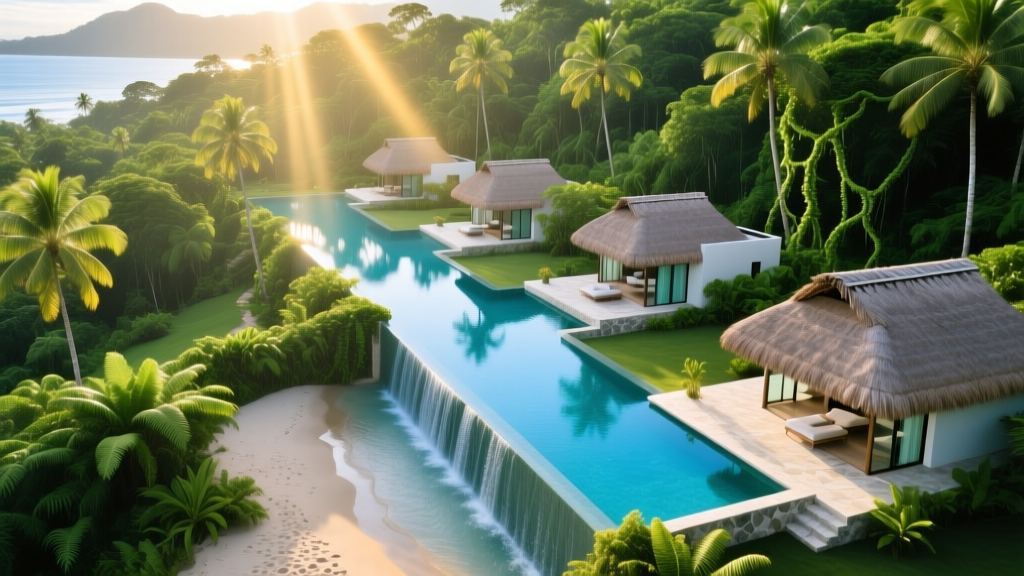
Site Infrastructure and Sustainability Requirements
Luxury resorts in Costa Rica are expected to meet rigorous sustainability standards, often pursuing LEED (Leadership in Energy and Environmental Design) certification or the local CST (Certification for Sustainable Tourism) program. The Costa Rica Tourism Board (ICT) heavily promotes eco-friendly development, and global brands like Marriott mandate sustainable building practices across their portfolio.
Integrating these systems impacts the initial capital expenditure (CapEx) but reduces long-term operational expenditure (OpEx):
- Solar Photovoltaic Arrays: A 500kW to 1MW ground-mounted or carport solar system costs $1.2 million to $2.5 million, offsetting the high cost of grid electricity in rural Guanacaste.
- Wastewater Treatment: Municipal sewer access is rare in coastal resort zones. Developers must install advanced membrane bioreactor (MBR) package plants, costing $400,000 to $800,000, to treat greywater for irrigation and blackwater to environmental discharge standards.
- Water Desalination & Storage: Given seasonal droughts in the Nicoya Peninsula, on-site reverse osmosis (RO) desalination plants and million-gallon cisterns are mandatory, adding $600,000 to $1.2 million to site infrastructure costs.
Regional Labor and Material Logistics
The physical location of the resort drastically alters the construction budget. Building in the Greater Metropolitan Area (GAM) around San José offers immediate access to materials and skilled labor. However, luxury resorts are typically built in remote coastal areas like the Papagayo Peninsula, Santa Teresa, or the Osa Peninsula.
The Logistics Premium
Remote construction incurs a 12% to 20% logistics premium on total hard costs. This includes:
- Material Transport: Moving heavy materials (steel, cement, glass) over narrow, mountainous, or unpaved roads requires specialized transport and increases freight costs by up to 30% compared to urban delivery.
- Labor Camps and Per Diems: Skilled trades (specialized MEP installers, custom finish carpenters) are scarce in rural zones. General contractors must transport workers from San José or Nicaragua, requiring the construction of temporary labor camps, daily meals, and weekly transport shuttles.
- Import Duties and Taxes: High-end finishes are rarely sourced locally. Importing Italian marble, European plumbing fixtures, and commercial kitchen equipment incurs standard import duties (up to 14%) plus a 13% Value Added Tax (IVA). Developers must apply for tax exemptions under the Ley de Incentivos Turísticos (Tourism Incentives Law) via PROCOMER and the ICT to mitigate these costs, a process that requires dedicated legal expediting.
Development Timeline and Contingency Planning
Time is money in hospitality development. A 250-key ultra-luxury all-inclusive resort in Costa Rica typically requires a 30- to 42-month timeline from land acquisition to ribbon-cutting.
- Pre-Development & Permitting: 12 - 18 months (Heavily dependent on SETENA and municipal zoning approvals).
- Site Work & Vertical Construction: 14 - 20 months.
- FF&E Installation & Commissioning: 4 - 6 months.
Due to the tropical climate, construction schedules must account for the "green season" (May to November), where heavy afternoon rains can halt earthmoving and concrete pouring. Estimators should include a 10% to 15% schedule contingency and a minimum 8% hard cost contingency to cover weather delays, supply chain disruptions at the Port of Caldera, and unforeseen geotechnical challenges.
Frequently Asked Questions (FAQ)
What is the total estimated development cost per key for a JW Marriott-tier resort in Costa Rica?
For an ultra-luxury, 5-star all-inclusive resort, the total development cost (including land, hard costs, soft costs, FF&E, and OS&E) typically ranges from $650,000 to $950,000 per key. A 200-room property would therefore require a total capital investment between $130 million and $190 million.
Can foreign developers secure construction financing in Costa Rica?
Local Costa Rican banks rarely offer competitive construction loans for large-scale foreign hospitality projects due to risk underwriting models. Most mega-resorts are financed through international private equity, cross-border commercial lenders, or institutional hospitality funds based in the US or Canada, utilizing the Costa Rican property as collateral.
How does the all-inclusive model affect back-of-house construction costs?
All-inclusive resorts require 30% to 45% more back-of-house (BOH) square footage than European-plan (room-only) hotels. This includes massive dry and cold storage facilities, multiple prep kitchens, staff cafeterias, and extensive laundry operations to handle continuous dining and high turnover, significantly increasing both MEP and structural costs.
Written by
Marcus ChenMarcus Chen is a licensed structural engineer (PE) and building materials analyst with over 12 years of experience across residential, commercial, and industrial construction. He holds a Master of Science in Civil Engineering from UC Berkeley and spent six years at Thornton Tomasetti before transitioning to independent consulting and technical writing. Marcus specializes in material selection for seismic-prone regions, concrete reinforcement strategies, and lifecycle cost analysis. His work has been cited by the American Concrete Institute (ACI) and the Structural Engineers Association of California (SEAOC). When he is not on a job site or at his desk, you will find him hiking the Sierra Nevada or restoring a 1920s craftsman bungalow in Oakland, CA.
More from Marcus Chen
View all
Construction Cost
How Much Did the Eiffel Tower Cost to Build?
How much did the Eiffel Tower cost to build in 1889? We adjust for inflation and compare its budget to modern skyscraper construction.
Aug 4, 2026

Fire Resistance
What Is a Fire Resistant Material? Testing & Certification Guide
Discover what is a fire resistant material through ASTM and UL testing. Learn how fire ratings, certifications, and assemblies work in construction.
Aug 4, 2026

Construction Cost
How Much Did the Burj Khalifa Cost to Build?
How much did the Burj Khalifa cost to build? We break down the $1.5B project and extract 5 money-saving strategies for your next build.
Jul 30, 2026