JW Marriott to Build All-Inclusive Resort in Costa Rica: Cost Tips
Discover how the JW Marriott to build all-inclusive resort in Costa Rica uses value engineering and smart sourcing to optimize commercial construction costs.
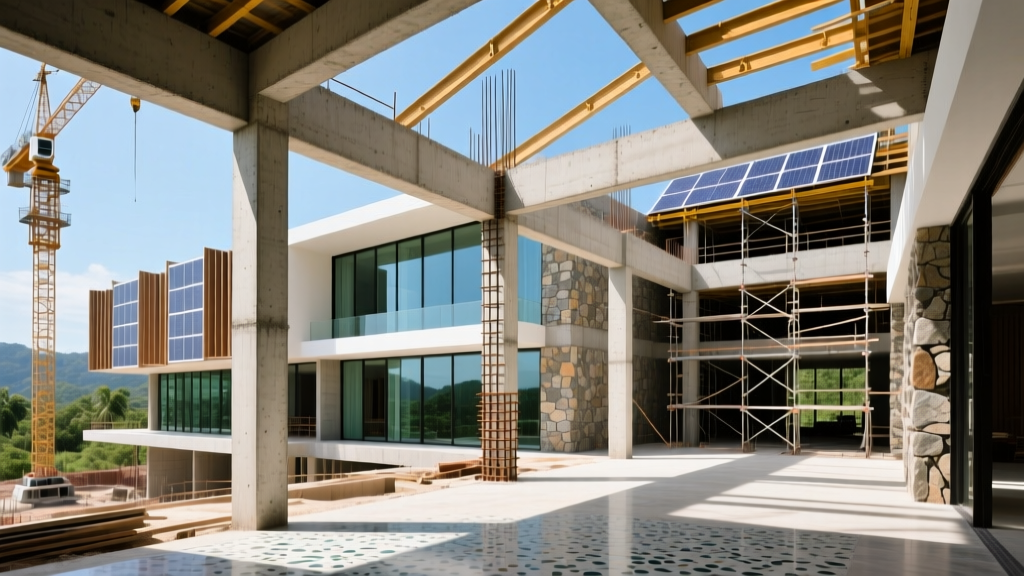
Decoding the Mega-Resort Blueprint
The strategic corporate move confirming JW Marriott to build all-inclusive resort in Costa Rica represents a masterclass in tropical value engineering and commercial cost estimation. Developing a 300-plus key luxury hospitality property in Central America involves navigating severe supply chain bottlenecks, high import tariffs, and stringent environmental regulations. For mid-scale developers, commercial contractors, and construction estimators, analyzing this mega-project provides a highly actionable framework for cutting costs without sacrificing the premium guest experience.
As of 2026, luxury resort construction in Costa Rica's premier development zones, such as Guanacaste and the Nicoya Peninsula, averages between $425 and $650 per square foot. However, elite developers are successfully compressing these hard costs by 12% to 18% through aggressive local material substitution, off-site modular fabrication, and specialized MEP (Mechanical, Electrical, and Plumbing) value engineering. Below is a deep dive into the specific money-saving strategies driving these large-scale all-inclusive builds.
Material Sourcing: Beating the Import Tariff Trap
One of the most common estimating errors in Central American resort development is relying on North American or European FF&E (Furniture, Fixtures, and Equipment) and finish schedules. Costa Rica applies the DAIE (Derechos Arancelarios a la Importación) tariff system, which can slap a 14% to 30% import duty on luxury building finishes, compounded by a 13% VAT and steep customs brokerage fees.
To circumvent this, top-tier estimators pivot to high-quality local and regional alternatives. According to data from the Costa Rican Tourism Institute (ICT), sustainable local sourcing not only reduces hard costs but also accelerates LEED certification points for regional materials.
| Original Specified Material | Landed Cost (per sq ft) | Value-Engineered Alternative | Local Cost (per sq ft) | Net Savings |
|---|---|---|---|---|
| Imported Italian Travertine | $28.00 - $45.00 | Guanacaste Volcanic Stone (Pedregal) | $12.00 - $18.00 | 55% - 60% |
| European White Oak Flooring | $22.00 - $35.00 | Plantation-Grown Costa Rican Teak | $14.00 - $20.00 | 35% - 45% |
| US-Manufactured Roof Tiles | $8.50 - $12.00 | Local Clay Micro-Tiles (Techo de Teja) | $4.50 - $7.00 | 40% - 50% |
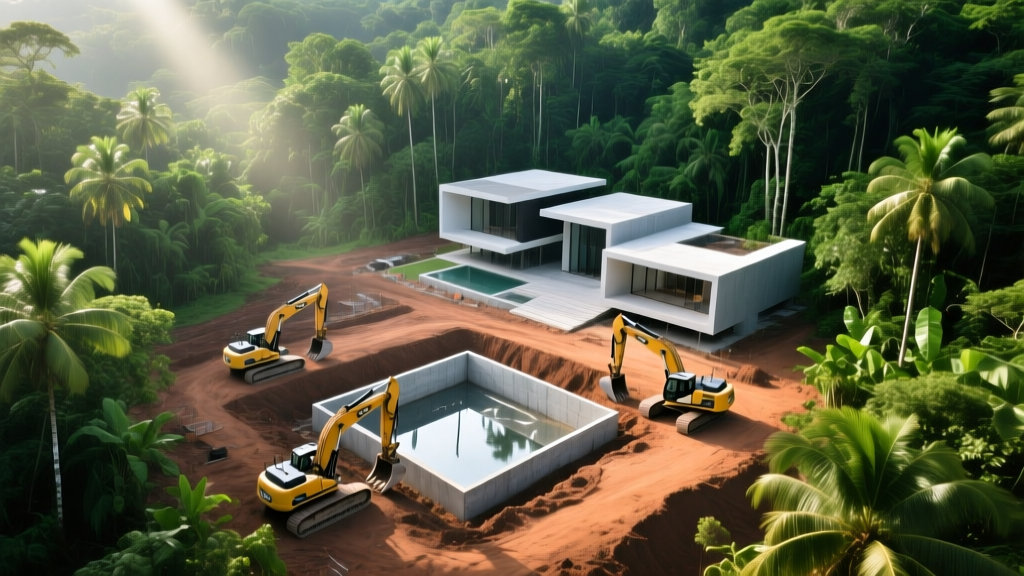
MEP Value Engineering for High-Humidity Climates
All-inclusive resorts operate 24/7, meaning MEP systems account for up to 35% of the total hard costs and dictate long-term operational viability. Costa Rica's coastal regions experience ambient humidity levels frequently exceeding 85%. Traditional central chiller plants and extensive ductwork are not only expensive to install but highly susceptible to mold and condensation failures in tropical environments.
Instead of traditional HVAC, modern resort estimators are specifying VRF (Variable Refrigerant Flow) systems. VRF technology utilizes refrigerant as the cooling and heating medium, pumped directly to individual indoor units in each guest room and villa.
- Structural Savings: VRF eliminates the need for massive central air handling units and bulky sheet metal ductwork. This reduces the required floor-to-floor height by 12 to 18 inches, saving approximately $4.50 to $6.00 per square foot in structural concrete and steel framing.
- Zoning Efficiency: Because it's an all-inclusive model, occupancy fluctuates. VRF allows the property management system to shut down climate control in unoccupied wings, cutting baseline energy loads by 22% compared to traditional chilled water systems.
- Installation Speed: VRF copper piping networks can be installed by smaller, specialized crews in roughly 40% less time than welding and insulating commercial steel ductwork, drastically reducing labor burden rates.
The ROI of Prefabricated Bathroom Pods
Labor scarcity in remote coastal development zones is a critical risk factor. Finding skilled plumbers, tilers, and waterproofing specialists in rural Guanacaste is difficult, leading to high labor premiums and severe schedule delays. To mitigate this, developers are turning to off-site modular fabrication, specifically prefabricated bathroom pods.
According to the Modular Building Institute, hospitality projects utilizing prefab pods reduce bathroom construction schedules by up to 60%. For a 350-room all-inclusive resort, the math heavily favors off-site manufacturing.
Cost Breakdown: Stick-Built vs. Prefab Pods (Per Unit)
Traditional Stick-Built (Local Labor):
Framing, cement board, waterproofing, tiling, and MEP rough-in: $26,500 - $31,000
Timeline: 45-60 days per unit (highly weather-dependent).
Prefabricated Pod (Manufactured in Mexico/US):
Factory build (FOB): $14,000 | Freight to Port of Caldera: $2,500 | Inland transport & crane setting: $3,500 | Final MEP tie-in: $2,000
Total Installed Cost: $22,000
Timeline: 4 hours for crane setting and structural connection.
Net Savings per Room Key: $4,500 to $9,000 (plus 8 weeks of saved schedule overhead).
Navigating SETENA and Environmental Compliance Costs
Cost estimation in Costa Rica is incomplete without factoring in environmental compliance. The Secretaría Técnica Nacional Ambiental (SETENA) mandates rigorous environmental impact assessments (EIA) before any earthmoving can begin. A common pitfall for foreign developers is underestimating the time and cost required for flora and fauna inventories, particularly concerning the nesting habitats of endangered species like the Howler Monkey or Olive Ridley Sea Turtle.
Proactive developers allocate a specific 3% to 5% soft-cost contingency exclusively for environmental mitigation and SETENA expediter fees. Furthermore, aligning the resort's master plan with the U.S. Green Building Council LEED for Hospitality framework often streamlines local permitting. Municipalities frequently offer density bonuses or expedited review tracks for projects that commit to net-zero water runoff and 100% renewable energy integration, effectively turning a regulatory hurdle into a financial incentive.
Actionable Estimating Framework for Tropical Resorts
To replicate the cost-saving success of mega-developments in your own commercial estimates, implement the following checklist during the schematic design phase:
- Audit the Finish Schedule: Flag any material not native to Central America. Request three local equivalents with matching ASTM durability ratings.
- Recalculate HVAC Routing: Compare the structural steel/concrete savings of a VRF system against the mechanical cost of a central chiller plant.
- Modularize Repetitive Spaces: Identify any space repeated more than 50 times (guest bathrooms, standard villas, cabanas) and price it as a prefabricated volumetric module.
- Buffer the Soft Costs: Add a minimum 4% contingency line item specifically earmarked for SETENA environmental compliance and municipal permitting delays.
- Consolidate Logistics: Negotiate a bonded warehouse agreement at the Port of Caldera to stage imported FF&E, avoiding demurrage fees while waiting for the building envelope to be sealed.
By shifting from a traditional North American estimating mindset to a localized, value-engineered approach, contractors and developers can deliver world-class all-inclusive resorts that remain highly profitable in competitive tropical markets.
Written by
Elena RodriguezElena Rodriguez is a civil engineer and technical writer specializing in concrete technology, masonry systems, and ASTM/ACI compliance. She earned her B.S. in Civil Engineering from Texas A&M University and spent a decade at a materials testing laboratory, performing over 2,000 concrete compressive strength tests and masonry prism evaluations. Elena is an ACI-certified Field Testing Technician (Grade I) and a member of ASTM Committee C12 on Natural Building Stone. She currently consults on forensic engineering cases involving concrete failures and moisture intrusion. Based in San Antonio, TX, Elena is a proud member of the Society of Women Engineers (SWE) and coaches her daughter's FIRST Robotics team.
More from Elena Rodriguez
View all
Walls & Panels
Cost Analysis: Light Gauge Steel Framing Advantages and Disadvantages
Evaluate light gauge steel framing advantages and disadvantages through a strict cost analysis lens, comparing material, labor, and lifecycle expenses.
Aug 4, 2026

Walls & Panels
Gypsum Board Types: Exact Specifications, Thickness & Dimensions
Compare standard, Type X, and moisture-resistant gypsum board types. Get exact specifications, thicknesses, dimensions, and ASTM standards for your project.
Aug 4, 2026

Fire Resistance
Best Fire-Resistant Outdoor Decking Materials: 2026 Buyer Guide
Discover the best fire-resistant outdoor decking materials for 2026. Compare Class A PVC, aluminum, and hardwood options for WUI compliance and safety.
Aug 4, 2026