How to Lower Your Pool Cost to Build: 7 Expert Savings Strategies
Discover proven strategies to lower your pool cost to build. Learn expert material choices, sizing hacks, and equipment tips to save thousands.
The True Baseline: Average Pool Cost to Build
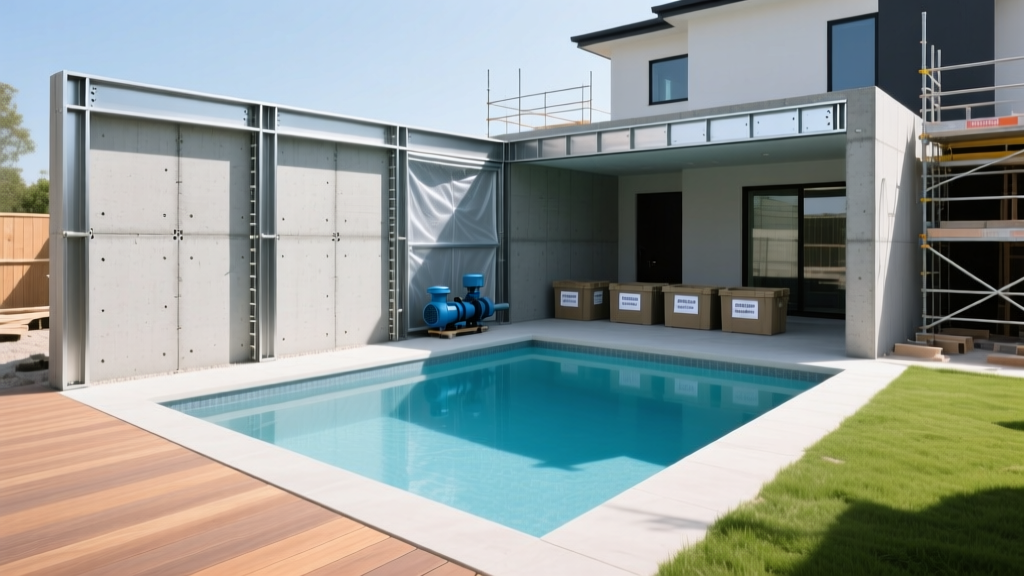
When evaluating the total pool cost to build, homeowners often face sticker shock. In 2026, the national average for a fully equipped inground gunite pool ranges from $85,000 to $130,000, while vinyl and fiberglass alternatives sit between $50,000 and $95,000. However, these averages assume standard contractor defaults—many of which are designed to maximize builder profit margins rather than optimize your budget. Lowering your pool cost to build does not require sacrificing structural integrity or aesthetic appeal. Instead, it requires strategic compromises in excavation volume, material selection, and equipment placement. By applying the following engineering and procurement frameworks, you can shave 15% to 25% off your total contract price without ending up with a substandard backyard resort.
Strategy 1: Right-Sizing the Shell (The 14x28 Rule)
The most significant driver of your pool cost to build is the volume of earth moved and the surface area of the shell. Many builders default to a 16x32-foot rectangular footprint (512 square feet). While this sounds standard, downsizing to a 14x28-foot footprint (392 square feet) yields massive compounding savings.
The Mathematics of Downsizing
A 30% reduction in surface area does not merely reduce materials by 30%. It alters the structural engineering requirements. A 16-foot wide pool often requires a heavier steel rebar cage (using #4 rebar instead of #3) and thicker shotcrete application to prevent structural flexing. By keeping the width at 14 feet, you remain within standard residential engineering tolerances, saving $3,500 to $5,500 on steel and concrete alone. Furthermore, a 14x28 pool holds approximately 15,000 gallons of water, compared to the 20,000+ gallons of a 16x32. This smaller volume allows you to downsize your filtration system, heater, and chemical consumption, lowering both upfront equipment costs and long-term operational expenses.
Depth Optimization: Avoid the Deep End Hopper
Standard pool designs often include a deep-end hopper dropping to 8 feet. Excavating to 8 feet requires specialized soil retention shoring during the dig, deeper plumbing trenches, and significantly more shotcrete to reinforce the deep walls against hydrostatic pressure. Opting for a uniform depth of 4.5 feet, or a gentle slope from 3.5 feet to 5.5 feet, eliminates the need for deep-end engineering. This single decision typically reduces the excavation and shell cost by $4,000 to $7,000 while providing a highly functional 'sports pool' layout ideal for volleyball, lounging, and children's play.
Strategy 2: Material Selection Matrix
The shell material dictates your baseline budget. Use this decision matrix to align your financial constraints with your long-term maintenance tolerance.
| Material | Avg. Cost Range | Installation Time | Lifespan & Maintenance | Best For |
|---|---|---|---|---|
| Gunite/Shotcrete | $85,000 - $130,000 | 3 - 6 Months | 50+ years; requires acid washing and replastering every 10-15 years. | Custom shapes, high-end finishes, complex integration. |
| Fiberglass | $60,000 - $95,000 | 3 - 6 Weeks | 30+ years; non-porous surface drastically reduces chemical and cleaning costs. | Fast installation, standard shapes, lowest long-term maintenance. |
| Vinyl Liner | $50,000 - $80,000 | 4 - 8 Weeks | Shell lasts 50+ years; liner requires replacement every 7-10 years ($4,500+). | Strict upfront budgets, colder climates with freeze-thaw cycles. |
Expert Insight: If your primary goal is minimizing the initial pool cost to build, a vinyl liner pool with a polymer wall system is the undisputed winner. However, if you calculate the 20-year cost of ownership, fiberglass often breaks even with vinyl due to the elimination of mandatory liner replacements and a 40% reduction in chemical usage.
Strategy 3: Equipment Pad Placement & Plumbing Hacks
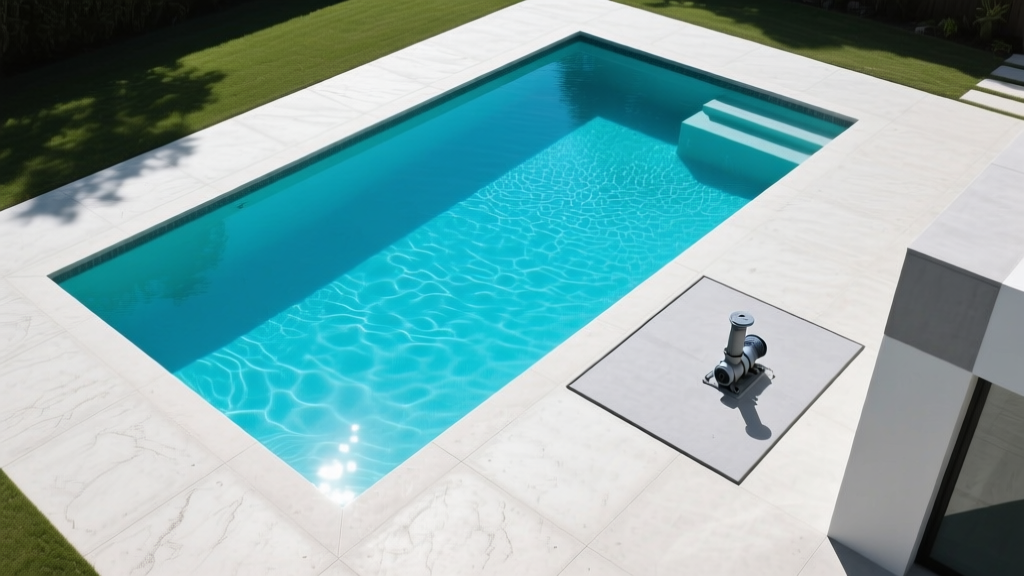
Where you place your pool's mechanical equipment pad directly impacts your plumbing and electrical costs. Builders often place the pad on the side of the house or near the AC units for convenience, sometimes routing pipes 60 to 100 feet away from the pool. This is a massive financial leak.
The 15-Foot Rule
Keep your equipment pad within 15 to 20 feet of the pool's skimmer and main drain. Every additional 50 feet of 2-inch Schedule 40 PVC plumbing adds $400 to $600 in trenching, pipe, and glue costs. More importantly, longer pipe runs increase 'head loss' (friction inside the pipe). To overcome high head loss, builders are forced to upgrade from a standard 1.5 HP pump to a 2.0 HP or 3.0 HP variable speed pump, adding $800 to $1,200 to your equipment invoice.
Mandate Variable Speed Technology
Never accept a single-speed or dual-speed pump. According to the U.S. Department of Energy, ENERGY STAR certified variable speed pool pumps can reduce energy consumption by up to 90% compared to single-speed models, saving homeowners hundreds of dollars annually. Specify the Pentair IntelliFlo3 VSF or the Hayward TriStar VS. While the upfront cost is $600 to $900 higher than a single-speed pump, the utility rebates and energy savings typically yield a return on investment in under 18 months.
Strategy 4: Decking Material Arbitrage
Hardscaping around the pool can easily consume 20% to 30% of your total budget if you select premium materials. To control the pool cost to build, utilize decking material arbitrage—choosing materials that offer a high-end look at a fraction of the premium cost.
- Travertine Pavers ($25 - $40 per sq. ft.): Beautiful and naturally cool to the touch, but highly expensive due to material and labor-intensive sand-set installation. Avoid if budget is a primary constraint.
- Stamped Concrete ($14 - $22 per sq. ft.): Offers the look of stone or brick. However, it is prone to cracking over time and requires resealing every two years, adding to long-term maintenance costs.
- Exposed Aggregate ($10 - $15 per sq. ft.): A highly durable, slip-resistant option that hides dirt well. Excellent mid-tier choice for high-traffic family pools.
- Broom-Finished Poured Concrete ($7 - $10 per sq. ft.): The ultimate budget hack. When paired with modern cantilever coping and sealed with a high-quality penetrating silane-siloxane sealer, broom-finished concrete provides a clean, minimalist, architectural look that rivals premium materials for a fraction of the price.
⚠️ The 'Do Not Skimp' Warning Zone
While saving money is the goal, cutting corners in critical structural and safety areas will cost you exponentially more in repairs or liability. Never compromise on:
- Plumbing Diameter: Always mandate 2-inch or 2.5-inch PVC for all suction and return lines. Builders who use 1.5-inch pipe are saving $150 in materials but permanently crippling your pool's flow rate and efficiency.
- Main Drain Safety: Ensure your contract specifies dual, VGB-compliant main drain covers. The Centers for Disease Control and Prevention (CDC) mandates these anti-entrapment covers to prevent fatal suction accidents. Never build a pool with a single main drain.
- Contractor Insurance: Never hire an uninsured builder to save 10%. If a subcontractor is injured on your property or an excavation collapses into your neighbor's yard, you will be held financially liable.
Strategy 5: Off-Season Contracting & Itemized Bidding
The timing of your contract signature heavily influences the final price. Pool builders operate on seasonal demand curves. In most of the United States, signing a contract in late November or January—when builders are trying to keep their crews employed during the winter lull—can yield a 5% to 10% discount on the total shell cost. Builders are far more willing to negotiate margins when their schedule is empty than when they are booking six months out in April.
Demand an Itemized Bid
Never accept a lump-sum quote (e.g., '$95,000 for complete pool and deck'). A lump-sum bid hides inflated margins in ambiguous line items. Require a fully itemized breakdown separating excavation, steel, shotcrete, plumbing, electrical, equipment, and decking. Once you have an itemized bid, you can perform targeted value-engineering. For example, if the builder quotes $18,000 for a standard 400,000 BTU gas heater, you can cross-reference that with retail prices, negotiate the markup down, or opt to supply the heater yourself, removing their labor markup on the equipment. By dissecting the bid line-by-line, you transform the pool cost to build from an opaque, non-negotiable number into a transparent, manageable ledger.
Written by
Marcus ChenMarcus Chen is a licensed structural engineer (PE) and building materials analyst with over 12 years of experience across residential, commercial, and industrial construction. He holds a Master of Science in Civil Engineering from UC Berkeley and spent six years at Thornton Tomasetti before transitioning to independent consulting and technical writing. Marcus specializes in material selection for seismic-prone regions, concrete reinforcement strategies, and lifecycle cost analysis. His work has been cited by the American Concrete Institute (ACI) and the Structural Engineers Association of California (SEAOC). When he is not on a job site or at his desk, you will find him hiking the Sierra Nevada or restoring a 1920s craftsman bungalow in Oakland, CA.
More from Marcus Chen
View all
Construction Cost
How Much Did the Eiffel Tower Cost to Build?
How much did the Eiffel Tower cost to build in 1889? We adjust for inflation and compare its budget to modern skyscraper construction.
Aug 4, 2026

Fire Resistance
What Is a Fire Resistant Material? Testing & Certification Guide
Discover what is a fire resistant material through ASTM and UL testing. Learn how fire ratings, certifications, and assemblies work in construction.
Aug 4, 2026

Construction Cost
How Much Did the Burj Khalifa Cost to Build?
How much did the Burj Khalifa cost to build? We break down the $1.5B project and extract 5 money-saving strategies for your next build.
Jul 30, 2026