Average Cost to Build a Home in Missouri: 2026 Regional Price Guide
Analyze the average cost to build a home in Missouri for 2026. Get regional price breakdowns for KC, St. Louis, and rural areas, plus site prep insights.
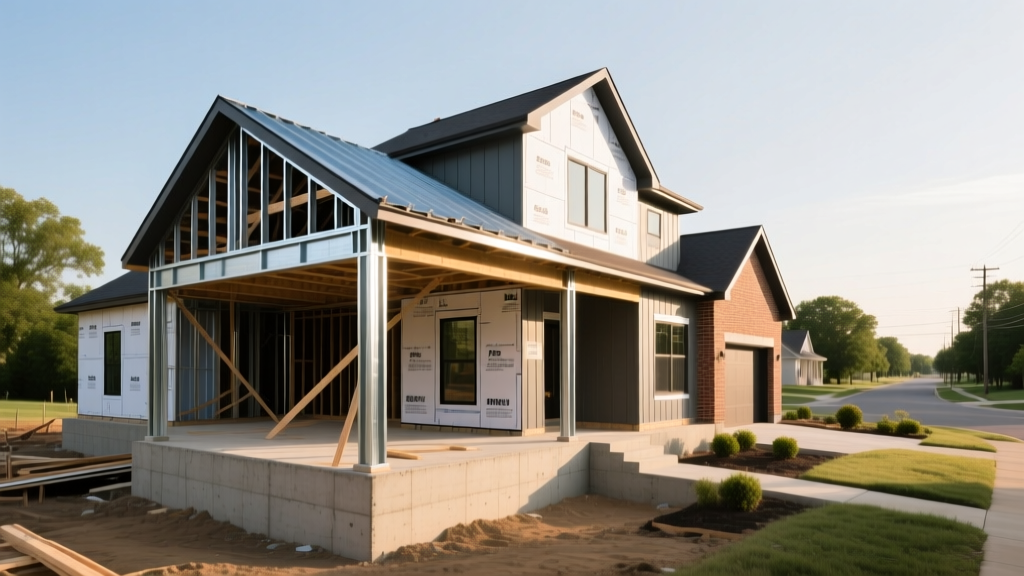
Statewide Baseline: 2026 Construction Tiers
Determining the average cost to build a home in Missouri requires moving beyond generic national averages. In 2026, Missouri's residential construction market is defined by a distinct split between high-growth urban corridors and rural expanses, resulting in significant price variances. According to data tracking from the U.S. Census Bureau New Residential Construction reports, the state continues to outpace national averages in new single-family permit volumes, yet localized labor shortages and specific geotechnical challenges heavily influence final build costs.
For a standard 2,200-square-foot, single-story home with a two-car garage, the baseline costs break down into three primary tiers based on material grades and architectural complexity:
2026 Missouri Build Cost Tiers (Per Square Foot)
- Economy/Spec Grade ($135 - $160 per sq. ft.): Vinyl siding, asphalt shingles, standard builder-grade cabinets, LVP flooring, and basic fiberglass insulation. Total for 2,200 sq. ft.: $297,000 - $352,000.
- Standard/Custom Grade ($175 - $225 per sq. ft.): Fiber cement or brick veneer siding, architectural shingles or standing seam metal roofing, quartz countertops, hardwood flooring, and upgraded HVAC systems. Total for 2,200 sq. ft.: $385,000 - $495,000.
- Luxury/High-Performance ($260 - $350+ per sq. ft.): Full masonry exteriors, slate or premium metal roofing, custom millwork, smart home integration, and geothermal or high-SEER dual-fuel HVAC. Total for 2,200 sq. ft.: $572,000 - $770,000+.
These figures encompass vertical construction and standard finishes but exclude land acquisition, extensive site preparation, and high-end landscaping. The National Association of Home Builders (NAHB) notes that hard construction costs typically account for 55% to 60% of the total project budget, with land and soft costs (permits, architectural fees, engineering) absorbing the remainder.
Regional Price Matrix: Urban vs. Rural Missouri
Missouri's geography dictates its construction economics. The labor pool, material delivery logistics, and municipal permit fees vary drastically from the western border to the southeastern boot heel. Below is a comparative analysis of the four primary construction zones in the state.
| Region | Avg. Cost / Sq. Ft. (Standard) | Labor Market Dynamics | Key Cost Drivers |
|---|---|---|---|
| Kansas City Metro | $195 - $240 | High demand, strong union presence, premium subcontractor rates. | Expansive clay soil mitigation, strict municipal zoning. |
| St. Louis Metro | $185 - $230 | Mature market, abundant skilled trades, prevailing wage influences. | Brick masonry mandates, aging infrastructure tie-ins. |
| Springfield / Ozarks | $165 - $205 | Moderate demand, lower non-union labor rates. | Bedrock blasting, septic/well installations in rural fringes. |
| Rural / Agricultural | $145 - $185 | Limited local trades, requires travel premiums for specialized crews. | Long utility runs, concrete delivery surcharges, well/septic. |
The Kansas City Clay Premium
Building in the Kansas City metropolitan area (including Johnson and Clay counties) carries a hidden geotechnical tax. The region is notorious for its heavy smectite clay soils, which expand and contract violently with moisture fluctuations. Standard shallow continuous footings are highly prone to differential settlement here. Structural engineers routinely specify drilled concrete piers extending 15 to 25 feet down to stable bedrock or load-bearing strata. This engineered foundation requirement routinely adds $18,000 to $28,000 to the site prep and foundation budget compared to a standard slab-on-grade or crawl space in less volatile soil regions.
St. Louis Masonry Culture
In St. Louis and its surrounding counties (like St. Charles and Jefferson), brick is not merely an aesthetic choice; it is a cultural baseline and frequently a mandate enforced by local HOAs and municipal design overlays. While vinyl or fiber cement siding costs between $6 and $11 per square foot installed, a full brick veneer exterior pushes that cost to $16 to $24 per square foot. For a 2,500-square-foot home with substantial exterior wall area, the masonry premium easily adds $25,000 to $35,000 to the overall envelope cost.
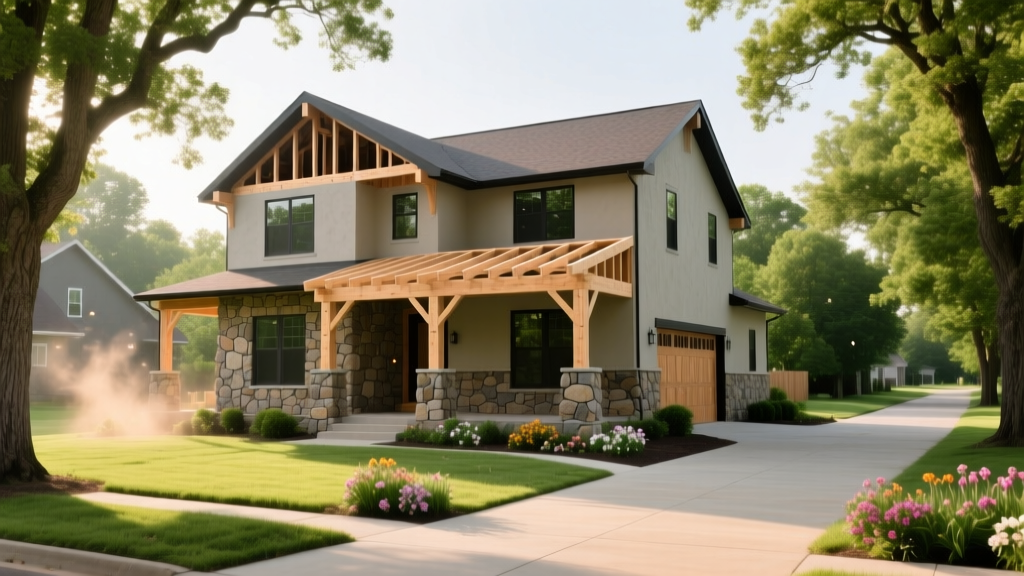
Geotechnical & Site Preparation Variables
Site preparation is where Missouri construction budgets frequently experience cost overruns. The state's diverse topography means that two identical floor plans built 150 miles apart will have vastly different earthwork budgets.
Warning: Ozark Karst Topography
If you are building in the southwestern Ozarks (Greene, Christian, or Taney counties), you will likely encounter karst topography characterized by shallow limestone, chert, and dolomite bedrock. Excavating a standard 8-foot walkout basement in these areas frequently requires controlled blasting or heavy hydraulic hammering. Blasting, fracturing, and hauling rock in the Ozarks currently costs between $12 and $18 per cubic yard. A standard basement excavation can easily yield 400+ cubic yards of solid rock, adding an unexpected $5,000 to $8,000 in demolition and hauling fees before the first concrete form is even set.
Frost Line Depth Variations
Missouri spans multiple climate zones, which directly impacts concrete foundation requirements. The state's building codes dictate that footings must extend below the local frost line to prevent frost heave.
- Northern Missouri (e.g., Kirksville, Macon): Frost line depth is 36 inches. Stem walls require significantly more concrete yardage and forming labor.
- Central Missouri (e.g., Columbia, Jefferson City): Frost line depth is typically 30 inches.
- Southern Missouri (e.g., Joplin, Poplar Bluff): Frost line depth drops to 24 inches, reducing concrete volume and forming costs by roughly 15% to 20% compared to the northern tier.
Climate Zone 4 Material Mandates
The entirety of Missouri falls within the International Energy Conservation Code (IECC) Climate Zone 4 (specifically 4A - Mixed-Humid). According to the U.S. Department of Energy Building America program, building in a mixed-humid zone requires a highly specific approach to the building envelope to manage both winter heat loss and summer moisture intrusion.
Insulation and Air Sealing Requirements
To meet 2026 code compliance and avoid costly HVAC inefficiencies, standard fiberglass batt insulation is no longer sufficient for exterior walls. Builders must utilize advanced framing techniques or continuous exterior insulation (ci). The current mandate requires a minimum of R-20 cavity insulation plus R-5 continuous insulation (or R-13 + R-10ci). This necessitates the use of 2x6 exterior wall framing (adding roughly $1.50 per square foot of wall area in lumber costs over 2x4 framing) and the application of rigid foam board or mineral wool sheathing beneath the weather-resistive barrier.
HVAC Sizing and Dehumidification
Missouri's humid summers mean that an oversized air conditioning unit will short-cycle, cooling the air rapidly but failing to extract latent humidity, leading to mold and comfort issues. Proper Manual J load calculations are critical. High-performance builds in Missouri are increasingly adopting dual-fuel systems (an electric heat pump paired with a natural gas furnace) or integrating standalone whole-home dehumidifiers (like the Aprilaire E080 or E100 series, adding $1,800 to $2,500 to the mechanical budget) to manage the heavy August moisture loads without overcooling the living space.
Actionable Budget Allocation Framework
When underwriting a custom build in Missouri, allocating your capital correctly prevents mid-project financing gaps. Based on current 2026 regional contractor bids, use the following percentage breakdown for a $450,000 vertical construction budget (excluding land):
- Sitework & Foundation (12% - 15%): $54,000 - $67,500. Includes clearing, grading, engineered piers (if in KC), and flatwork. Buffer an extra 5% if building in the Ozarks due to rock blasting risks.
- Framing & Exterior Envelope (22% - 25%): $99,000 - $112,500. Lumber packages, roof trusses, sheathing, windows, and exterior cladding.
- Major MEP Systems (14% - 16%): $63,000 - $72,000. HVAC, rough plumbing, electrical service drops, and smart panel installations.
- Interior Finishes (28% - 32%): $126,000 - $144,000. Drywall, trim, cabinetry, countertops, flooring, and painting. This is the highest variance category based on owner selections.
- General Conditions & Overhead (10% - 12%): $45,000 - $54,000. Builder's risk insurance, temporary utilities, portable sanitation, site supervision, and cleanup.
- Contingency Reserve (5% - 8%): $22,500 - $36,000. Non-negotiable for covering material price escalations, weather delays, or unforeseen geotechnical issues.
"The biggest mistake out-of-state buyers make when building in Missouri is applying a flat national cost-per-square-foot metric to their budget. A site in Johnson County with heavy clay requires a fundamentally different foundation engineering approach than a site in the bootheel with high water tables. Geotechnical engineering isn't an optional soft cost here; it is the bedrock of your budget accuracy." — Midwest Structural Engineering Consortium, 2025 Regional Build Report
By understanding the distinct micro-economies of Missouri's construction zones and respecting the state's unique geotechnical and climatic demands, you can develop a highly accurate, resilient budget for your 2026 residential build.
Written by
Sarah WhitfieldSarah Whitfield is a chartered quantity surveyor (MRICS) and construction cost analyst with 15 years of experience in material pricing, procurement strategy, and project budgeting. She earned her degree in Construction Management from the University of Reading (UK) and has worked on projects ranging from $2M custom homes to $180M mixed-use developments across North America and Europe. Sarah currently leads cost estimating for BuildMat Insight, maintaining a proprietary database of 4,000+ material price points updated quarterly. She is a frequent contributor to RSMeans cost data panels and has presented at the International Cost Engineering Council (ICEC) congress. Based in Denver, CO, Sarah is an avid trail runner and volunteer mentor for Women in Construction.
More from Sarah Whitfield
View all
Wood & Lumber
What Are the Different Types of Wood? A Builder's Guide
Compare structural softwoods, finish hardwoods, and engineered lumber. Analyze Janka ratings, MOE values, and 2026 pricing for construction.
Aug 4, 2026

Walls & Panels
Steel Framing vs Wood Framing: Corrosion and Moisture Defense
Compare steel framing vs wood framing for moisture resistance. Learn about galvanized coatings, condensation risks, and corrosion protection strategies.
Jul 21, 2026

Stone & Masonry
How to Cut Stone Veneer: Wet Saw vs Grinder Comparison
Compare the best tools for cutting stone veneer. We review wet saws, angle grinders, and chop saws to help you achieve clean, chip-free cuts.
Jul 21, 2026