How Much Does a Modular Home Cost to Build? 2026 Financing Guide
Discover how much a modular home costs to build in 2026. Explore hard and soft costs, hidden fees, and the best construction loans to finance your project.
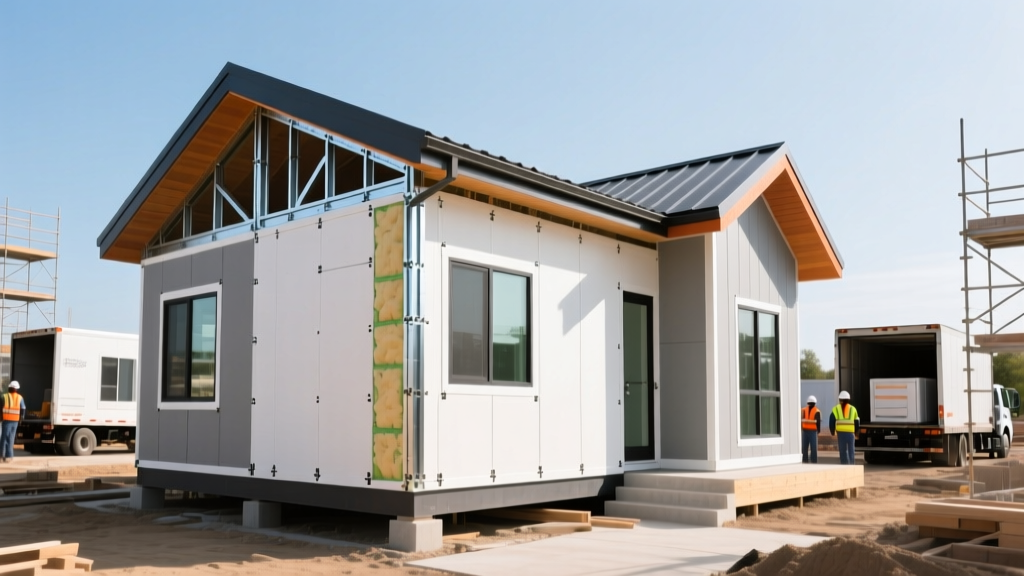
The Real Cost of Building a Modular Home in 2026
When evaluating how much does a modular home cost to build, the factory sticker price is only the beginning. In 2026, the national average for a fully finished, turnkey modular home ranges from $160 to $275 per square foot, translating to $320,000 to $550,000 for a standard 2,000-square-foot residence. However, securing financing requires a granular understanding of both factory invoices and site-development expenses, as lenders evaluate these two cost centers very differently.
- Base Factory Cost: $160,000 - $220,000 ($80 - $110/sq ft)
- Site Prep & Foundation: $35,000 - $65,000
- Delivery, Crane & Set: $18,000 - $35,000
- Interior Finish & Utilities: $45,000 - $85,000
- Total Turnkey Estimate: $258,000 - $405,000+
Hard Costs vs. Soft Costs: What Lenders Actually Finance
Construction lenders do not release funds as a single lump sum. They require a detailed line-item budget separating hard costs (physical materials and labor) from soft costs (engineering, permits, and fees). Modular construction shifts a massive portion of the hard costs off-site, which alters the traditional draw schedule.
| Cost Category | Typical 2026 Range | Financing Eligibility |
|---|---|---|
| Factory Module Construction | $80 - $130 / sq ft | 100% Financed (via factory draws) |
| Land Acquisition | $25,000 - $150,000+ | Can be rolled into loan or used as equity |
| Foundation (Poured/Basement) | $25,000 - $55,000 | 100% Financed (First site draw) |
| Crane, Rigging & Transport | $12,000 - $30,000 | Often requires out-of-pocket cash gap |
| Permits, Soil Testing, Surveys | $4,500 - $12,000 | Usually paid out-of-pocket pre-approval |
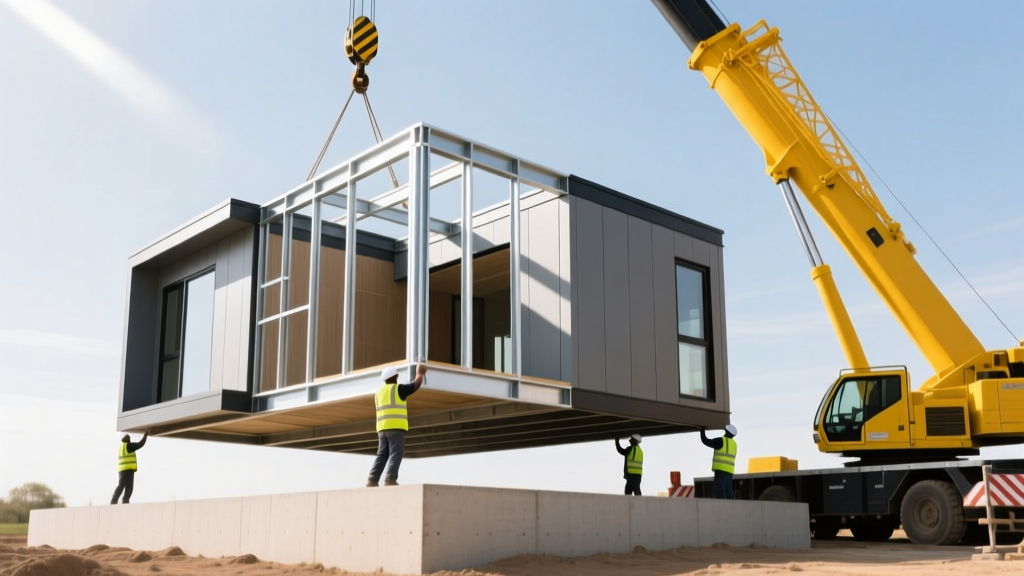
The "Set Day" Funding Gap: A Critical Warning
The most common point of failure in modular financing is the Set Day funding gap. Modular factories typically require 50% to 100% of the factory invoice paid before releasing the modules for transport. However, construction lenders disburse funds based on completed, inspected site milestones.
Because the home is not technically "set" on the foundation until the crane finishes its work, the lender will not release the site-work draw on delivery day. You must have $15,000 to $35,000 in liquid cash to pay the crane operator, rigging crew, and set foreman directly on the day of delivery, reimbursing yourself once the lender's inspector verifies the set 48 hours later.
4 Loan Structures for Modular Construction
Choosing the right loan product depends on your land ownership status, credit profile, and whether the home is classified under the International Residential Code (IRC) or the HUD code. True modular homes are built to IRC standards and are treated identically to stick-built homes by conventional lenders.
1. Construction-to-Permanent (Single-Close) Loans
This is the gold standard for modular builds. You close once, paying a single set of closing costs. The loan covers land, site prep, factory costs, and finishing. During the 4-to-8-month build phase, you pay interest-only on the funds drawn. Once the certificate of occupancy (CO) is issued, it automatically converts to a standard 30-year fixed mortgage. Expect a down payment of 10% to 20% in 2026, with interest rates typically 0.5% to 1.0% higher than standard mortgage rates during the construction phase.
2. FHA One-Time Close (OTC) Construction Loans
Backed by the Federal Housing Administration, the FHA OTC loan allows for a down payment as low as 3.5%. This is highly advantageous for first-time buyers or those with limited cash reserves. However, FHA guidelines require strict adherence to approved modular manufacturers, and the lender must approve both the factory and the local general contractor. You can review federal guidelines on construction and rehabilitation financing via the U.S. Department of Housing and Urban Development (HUD).
3. USDA Rural Construction Loans
If your land is in a designated rural area, the USDA offers a single-close construction loan with 0% down payment. The catch? The modular manufacturer must be on the USDA's approved roster, and the home must meet strict energy efficiency and thermal envelope standards. Site prep costs for rural land (well drilling, septic installation, long driveway grading) can easily add $40,000 to $70,000 to your budget, which the USDA loan will finance if appraised correctly.
4. Chattel Loans (For Non-Permanent Foundations)
If you are building a modular or manufactured home that will not be affixed to a permanent, frost-line foundation (e.g., placed on piers or a steel chassis), conventional mortgages are off the table. You will need a chattel loan, which functions like an auto loan. Expect shorter terms (15-20 years), higher interest rates (often 2-4% above conventional mortgages), and stricter debt-to-income requirements.
Hidden Site-Prep Costs That Derail Appraisals
Appraisers evaluate modular homes based on local stick-built comparables. If your site-prep costs are disproportionately high, the home may appraise for less than the total construction cost, forcing you to cover the difference in cash. Watch out for these hidden budget-killers:
- Utility Trenching & Tap Fees: Running municipal water and sewer from the street to a home set 200 feet back can cost $150 to $250 per linear foot. Tap fees in growing municipalities can exceed $15,000.
- Soil Remediation & Blasting: If your lot requires blasting through bedrock to dig a full basement for the modular set, excavation costs can jump from $8,000 to over $45,000.
- Crane Access Requirements: A standard 90-ton mobile crane requires a firm, level staging area. If your lot is heavily wooded or sloped, you may need to pay for temporary access roads or matting, adding $3,000 to $8,000 to the set day invoice.
- Marriage Wall Finishing: While factories finish 90% of the interior, the "marriage wall" (where the two halves of the home join) requires on-site drywall taping, mudding, and flooring transitions. Budget $4,000 to $8,000 for this specific labor.
Step-by-Step Financing Timeline
- Pre-Approval & Land Evaluation (Months 1-2): Secure loan pre-approval. If you own the land, the lender will order a raw land appraisal to determine your equity contribution.
- Contractor & Factory Selection (Month 3): Sign contracts with your modular dealer and local site contractor. The lender requires these fixed-price contracts to underwrite the loan.
- Loan Closing & First Draw (Month 4): Close on the construction loan. The first draw typically funds the land purchase (if applicable) and the site contractor's mobilization and foundation pouring.
- Factory Build & Second Draw (Months 5-6): As the home is built in the climate-controlled factory, the lender requires a third-party factory inspector to verify milestones before releasing the factory payment draw.
- Delivery, Set, & Final Draws (Month 7): Modules are delivered and craned onto the foundation. The site contractor finishes utility connections, drywall seams, and exterior siding. Final draws are released upon CO issuance.
Understanding the precise breakdown of factory invoices, site development variables, and the mechanics of construction draw schedules is the key to accurately answering how much a modular home costs to build. By preparing for the Set Day cash gap and selecting the correct single-close loan product, you can leverage modular construction to build a high-quality, code-compliant home while maintaining strict control over your 2026 budget.
Written by
Priya KapoorPriya Kapoor is a real estate market analyst and construction economics researcher with expertise in housing affordability, development feasibility, and infrastructure investment. She holds a Master of Regional Planning from Cornell University and previously worked as a senior analyst at CBRE's Investment Properties group, where she modeled returns for $4B in mixed-use development pipelines. Priya now runs an independent research practice advising developers, municipalities, and REITs on construction cost forecasting and market timing. She publishes the quarterly "BuildMat Market Pulse" report tracking material price indices across 12 commodity categories. Based in Austin, TX, Priya serves on the board of Habitat for Humanity Austin and is a marathon runner.
More from Priya Kapoor
View all
Construction Cost
Cost to Build a 1600 Sq Ft Home in 2026: Full Breakdown
Accurate 2026 cost to build a 1600 sq ft home—material, labor, and regional pricing breakdowns included. Plan your budget with real-time estimates.
Aug 11, 2026

Wood & Lumber
Name the Types of Wood for Pressure Treatment and Preservation
Learn how to name the types of wood best suited for pressure treatment. Compare species treatability, chemical retention levels, and 2026 preservation costs.
Aug 4, 2026

Stone & Masonry
Stone Veneer Suppliers Lindenhurst: 2026 Cost Analysis
Analyze 2026 stone veneer costs in Lindenhurst, NY. Compare local supplier pricing, delivery fees, and Suffolk County installation labor rates.
Aug 4, 2026