How Much Will It Cost to Build a Pergola? 2026 Finance Guide
Discover exactly how much it will cost to build a pergola and explore the best financing options, from HELOCs to contractor loans, to fund your project.
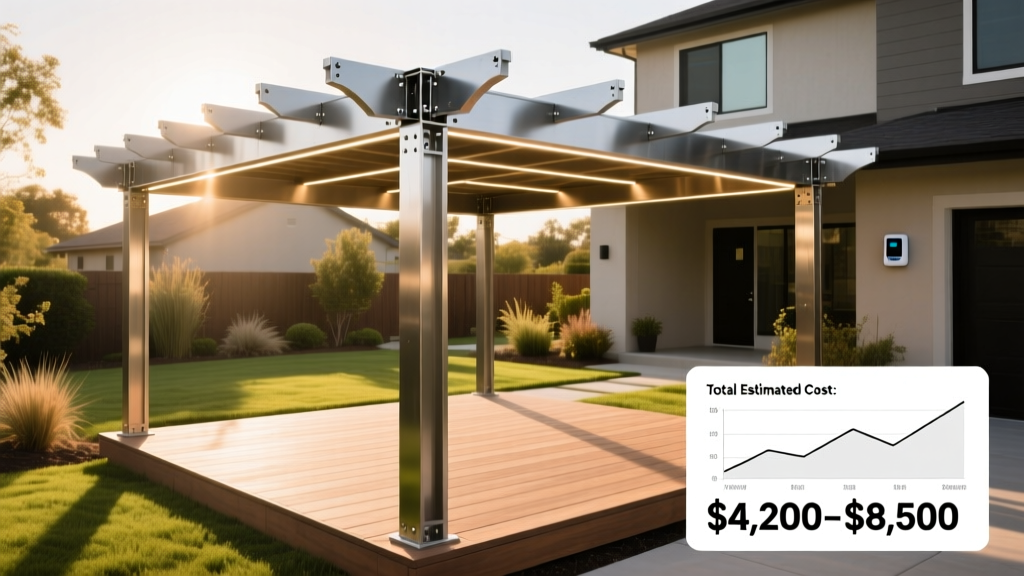
The True Cost Breakdown: How Much Will It Cost to Build a Pergola?
Determining exactly how much it will cost to build a pergola requires moving beyond national averages and examining material grades, structural footprints, and site-specific labor variables. In 2026, the national average for a professionally installed 10x10 attached pergola ranges from $4,500 to $8,500. However, luxury motorized louvered systems and high-end fiberglass models can easily push the total investment past $20,000. Because outdoor living spaces are capital-intensive, aligning your material choice with the right financing vehicle is critical to preserving your household cash flow.
| Material Type | Material Cost (per sq. ft.) | Labor Cost (per sq. ft.) | Total Installed Cost (10x10) | Maintenance Profile |
|---|---|---|---|---|
| Pressure-Treated Pine | $15 - $25 | $15 - $25 | $3,000 - $5,000 | High (Annual sealing/staining) |
| Cedar / Redwood | $30 - $45 | $15 - $25 | $4,500 - $7,000 | Medium (Bi-annual UV protectant) |
| Extruded Vinyl | $40 - $60 | $20 - $30 | $6,000 - $9,000 | Low (Power wash only) |
| Aluminum (e.g., Alumawood) | $50 - $75 | $25 - $40 | $7,500 - $11,500 | Very Low (Occasional rinse) |
| Fiberglass (e.g., Baldwin) | $65 - $90 | $25 - $40 | $9,000 - $13,000 | Low (Paintable, rot-proof) |
| Motorized Louvered Roof | $90 - $160 | $40 - $70 | $13,000 - $23,000+ | Low (Mechanical servicing req.) |
Financing Your Pergola: Matching the Loan to the Project Size
Outdoor structure projects rarely offer the immediate, dollar-for-dollar equity return of a kitchen remodel, making the cost of capital a vital metric. According to the Federal Trade Commission (FTC), tapping into home equity requires careful consideration of variable rates and closing costs. Below is a decision framework for funding your pergola based on the total capital required.
- Project Cost Under $5,000 (DIY Kits / Basic Pine): Use a 0% APR Introductory Credit Card. Pay off the balance before the 12-to-18-month promotional period expires to avoid retroactive interest.
- Project Cost $5,000 - $15,000 (Cedar / Vinyl / Standard Aluminum): Unsecured Personal Loan. Fixed APRs (currently 8% - 15% for good credit) and 3-to-5-year terms keep monthly payments predictable without risking your home as collateral.
- Project Cost $15,000+ (Motorized Louvered / Large Fiberglass): Home Equity Line of Credit (HELOC) or Home Equity Loan. Offers the lowest interest rates and potential tax deductibility if the pergola is deemed a substantial capital improvement to the property.
Option 1: Home Equity Line of Credit (HELOC)
A HELOC is optimal for high-end, multi-phase outdoor living projects where you might pair a $14,000 louvered pergola with an $8,000 stamped concrete patio. You only pay interest on the amount you draw. In the current 2026 lending environment, HELOC rates are variable and typically track 1.5% to 3% above the prime rate. The primary risk is that your home secures the debt; defaulting can lead to foreclosure. Furthermore, many lenders require a minimum initial draw of $10,000, making this unsuitable for smaller vinyl pergola kits.
Option 2: Unsecured Personal Loans
Personal loans are funded rapidly—often within 48 hours—making them ideal when a contractor has an opening in their schedule and requires a deposit. Because they are unsecured, lenders rely heavily on your FICO score and debt-to-income (DTI) ratio. A borrower with a 740+ FICO score can secure rates comparable to some secured loans, while sub-680 scores may face APRs exceeding 20%. This route is highly recommended for mid-tier aluminum or cedar builds where you want to preserve your home equity for future interior renovations.
Option 3: Contractor-Partnered Financing
Many premium pergola installers partner with fintech companies like GreenSky, Synchrony, or Wells Fargo to offer point-of-sale financing. These often feature aggressive promotional terms, such as "18 Months Same As Cash." Warning: Read the fine print regarding deferred interest. If you carry a balance of $12,000 and fail to pay it in full by month 18, you will be charged retroactive interest (often 24% - 29%) on the original $12,000 from day one. Only use this option if you have the cash reserves to guarantee payoff before the promo ends.
Hidden Costs That Derail Pergola Budgets
When calculating how much it will cost to build a pergola, homeowners frequently overlook site-specific variables that contractors bill as change orders. Budget an additional 15% to 20% above your quoted material and base labor costs for the following edge cases:
- Frost Line Excavation: In northern climates, structural posts must be set in concrete below the frost line (often 36 to 48 inches deep). If contractors hit bedrock or dense clay, manual digging or renting a hydraulic auger adds $150 to $350 per post hole.
- Electrical Trenching & Integration: Running a dedicated 20-amp circuit from your main panel to a pergola ceiling fan and integrated LED lighting requires trenching and conduit. Expect to pay an licensed electrician $600 to $1,400 for this upgrade.
- HOA and Municipal Permits: Attached pergolas exceeding 120 square feet almost universally require a structural permit ($150 - $400). HOAs may also mandate specific material colors or architectural reviews, adding $50 to $200 in administrative fees and weeks of delay.
- Landscaping Rehabilitation: Heavy equipment and material staging will compress soil and damage adjacent turf. Budget $300 to $600 for post-installation aeration, topsoil, and sod replacement.
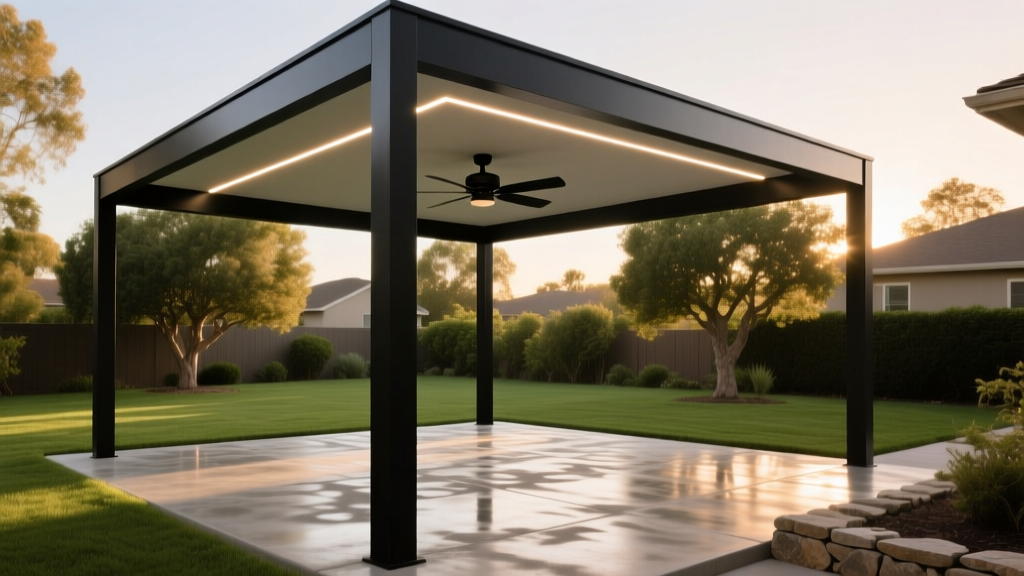
ROI and Appraisal Impact: Will a Pergola Increase Home Value?
From a strict appraisal perspective, a pergola is considered a landscaping or site improvement rather than gross living area (GLA). According to the National Association of Realtors (NAR) Remodeling Impact Report, outdoor living enhancements consistently rank among the highest for "Joy Scores" (often a perfect 10 out of 10 for homeowner satisfaction). However, the actual cost recovery at resale typically ranges from 50% to 80% of the project cost.
"While a $10,000 cedar pergola may only add $6,000 to your formal home appraisal, its true financial value lies in marketability. In competitive 2026 housing markets, turnkey outdoor entertainment spaces frequently act as the tie-breaker that sells a home faster, reducing carrying costs and price reductions."
To maximize ROI, ensure the pergola's architectural style matches the primary residence. A modern, sleek aluminum louvered roof will yield a poor return on a traditional Tudor-style home, whereas a stained cedar timber-frame structure will seamlessly integrate and appraise higher.
Step-by-Step Budgeting & Funding Action Plan
Execute this sequence to ensure your pergola project remains financially sound from conception to final inspection:
- Define the Footprint and Material: Measure your patio space. A 12x16 footprint is standard for a dining set and lounge seating. Choose your material based on your willingness to perform annual maintenance versus your upfront capital limit.
- Secure Three Itemized Quotes: Demand quotes that separate material costs, labor, permit fees, and concrete/excavation. This allows you to accurately compare bids and prevents contractors from hiding markup in vague "site prep" line items.
- Evaluate Your Debt-to-Income (DTI) Ratio: Before applying for a HELOC or personal loan, calculate your DTI. Lenders generally cap DTI at 43%. If your new pergola payment pushes you over this threshold, downsize the pergola footprint or opt for a less expensive vinyl kit.
- Lock in Financing Before Signing the Contract: Never rely solely on a contractor's in-house financing without comparing it to an external personal loan or credit union HELOC. Bring your pre-approval letter to the negotiation table; paying in guaranteed funds can sometimes yield a 5% to 10% cash discount from the builder.
- Establish a 15% Contingency Fund: Keep this capital liquid in a high-yield savings account to cover inevitable underground surprises or electrical upgrades without maxing out high-interest credit cards mid-build.
For further reading on regional material pricing and contractor vetting, resources like the Forbes Home Improvement Pergola Cost Guide provide localized data to help you benchmark your specific quotes against current market rates.
Written by
Sarah WhitfieldSarah Whitfield is a chartered quantity surveyor (MRICS) and construction cost analyst with 15 years of experience in material pricing, procurement strategy, and project budgeting. She earned her degree in Construction Management from the University of Reading (UK) and has worked on projects ranging from $2M custom homes to $180M mixed-use developments across North America and Europe. Sarah currently leads cost estimating for BuildMat Insight, maintaining a proprietary database of 4,000+ material price points updated quarterly. She is a frequent contributor to RSMeans cost data panels and has presented at the International Cost Engineering Council (ICEC) congress. Based in Denver, CO, Sarah is an avid trail runner and volunteer mentor for Women in Construction.
More from Sarah Whitfield
View all
Wood & Lumber
What Are the Different Types of Wood? A Builder's Guide
Compare structural softwoods, finish hardwoods, and engineered lumber. Analyze Janka ratings, MOE values, and 2026 pricing for construction.
Aug 4, 2026

Walls & Panels
Steel Framing vs Wood Framing: Corrosion and Moisture Defense
Compare steel framing vs wood framing for moisture resistance. Learn about galvanized coatings, condensation risks, and corrosion protection strategies.
Jul 21, 2026

Stone & Masonry
How to Cut Stone Veneer: Wet Saw vs Grinder Comparison
Compare the best tools for cutting stone veneer. We review wet saws, angle grinders, and chop saws to help you achieve clean, chip-free cuts.
Jul 21, 2026