How Much Does It Cost to Build a Batting Cage? Regional Price Guide
Discover how much it costs to build a batting cage across US regions. Compare netting, steel framing, and labor prices for your backyard project.
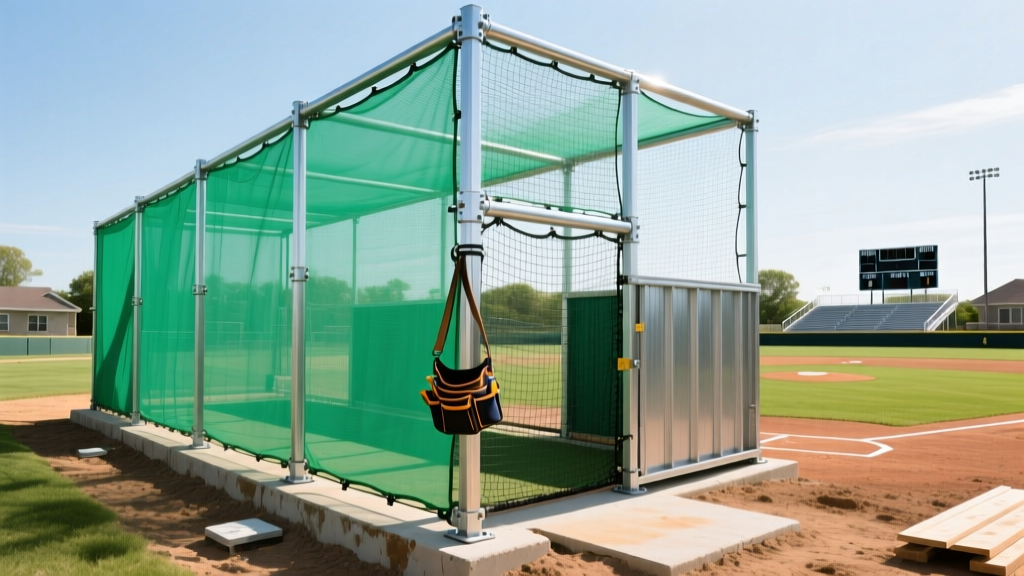
The True Cost of Building a Batting Cage: A Regional Breakdown
Building a batting cage is not a uniform expense. A standard 12-foot-high, 14-foot-wide, and 55-foot-long (12x14x55) backyard cage can range from $4,500 for a basic DIY kit on flat, soft soil to over $22,000 for a professionally installed, commercial-grade structure in a high-labor, rocky-soil region. While national averages provide a baseline, the primary variables that dictate your final invoice are regional earthwork requirements, local building codes, and localized labor rates.
According to industry data compiled by HomeGuide, the national average cost to build a batting cage sits between $7,500 and $12,000 for professional installation. However, this figure obscures the massive regional variances in excavation, concrete footing depth, and wind-load engineering required to keep the structure anchored safely.
Core Material Specifications and Baseline Pricing
Before analyzing regional labor and excavation variances, you must establish the baseline material costs. The structural integrity of a batting cage relies on three components: the netting, the frame, and the flooring. Cutting corners on any of these leads to premature failure, particularly in extreme climates.
| Material Component | Specification Grade | Estimated Cost Range | Lifespan Expectancy |
|---|---|---|---|
| Netting (12x14x55) | #42 Knotted Nylon, 1.75" mesh | $450 - $750 | 5 - 8 Years |
| Frame Poles | 1.9" OD Schedule 40 Galvanized Steel | $1,400 - $2,200 | 15 - 20 Years |
| Frame Poles (Heavy) | 2.375" OD Schedule 40 Galvanized Steel | $2,500 - $3,800 | 25+ Years |
| Artificial Turf | Nylon face, Polyurethane backing (5mm pad) | $3.50 - $7.00 per sq. ft. | 8 - 12 Years |
| Anchor System | Earth anchors vs. Concrete footings | $150 - $1,200 | Varies by soil |
Regional Labor, Excavation, and Permitting Variances
The most significant cost differentiator in batting cage construction is the ground beneath it. The American Sports Builders Association (ASBA) emphasizes that proper sub-base preparation and footing depth are critical for maintaining frame plumbness and net tension over time. Here is how regional geography impacts your budget.
Northeast & Mid-Atlantic: The Frost Line Penalty
In states like New York, Pennsylvania, and Massachusetts, the frost line can extend 36 to 48 inches below the surface. Building codes require concrete footings to be poured below this line to prevent frost heave from warping the steel frame.
- Excavation Costs: Digging 4-foot deep holes for 8 to 12 poles requires heavy machinery. If you encounter the bedrock common in New England, you may need to rent a rock breaker ($400-$600/day) or hire a blasting crew.
- Concrete Volume: A 12-inch diameter Sonotube filled to 48 inches requires roughly 3.8 cubic feet of concrete per hole. For 10 poles, that is nearly 1.5 cubic yards of concrete just for footings.
- Labor Rates: Expect to pay $85 to $135 per hour for specialized landscaping and concrete crews.
- Regional Premium: Add 20% to 35% to the national average for site prep and excavation.
The South & Southeast: Soil Shifts and UV Degradation
States like Florida, Georgia, and Texas feature shallow frost lines (often 6 to 12 inches), drastically reducing concrete and excavation costs. However, the South presents unique geotechnical and environmental challenges.
- Expansive Clay & Sand: In areas with heavy clay (like the Carolinas) or loose coastal sand, standard bell-bottom footings may fail. Engineers often recommend helical piers or wider concrete pads to distribute the load, adding $800 to $1,500 to the foundation budget.
- UV & Humidity: The intense Southern sun requires UV-inhibited turf infill (such as coated silica sand rather than black crumb rubber, which absorbs heat and degrades). You must also specify hot-dipped galvanized steel rather than painted steel to prevent rapid oxidation in high-humidity coastal zones.
- Labor Rates: More favorable, typically ranging from $50 to $85 per hour.
Midwest & Great Plains: Engineering for Wind Loads
The primary cost driver in the Midwest (Kansas, Nebraska, Illinois) is wind shear. A fully tensioned 55-foot batting cage acts like a massive sail during prairie storms.
- Upgraded Steel Requirements: Standard 1.9" outer diameter (OD) poles will bend under 60+ mph crosswinds. You must upgrade to 2.375" OD Schedule 40 steel and install diagonal cross-bracing cables at the corners.
- Deep Anchoring: Even with a shallow frost line, earth anchors must be driven 4 to 6 feet deep at a 45-degree angle to resist uplift forces.
- Cost Impact: Material costs rise by 15% due to heavier steel and specialized tensioning hardware (turnbuckles and steel aircraft cables instead of bungee cords).
West Coast & Mountain West: Premium Labor and Seismic Codes
California, Washington, and Colorado feature some of the highest labor rates in the country, alongside strict municipal permitting processes.
- Permitting & Engineering: Many municipalities require a stamped engineering drawing for any permanent structure over 10 feet tall. Expect to pay $800 to $1,500 for a structural engineer to draft plans that meet local seismic or snow-load codes.
- Labor Rates: Prevailing wages for concrete and steel assembly range from $95 to $160 per hour.
- Mountain Snow Loads: In Colorado or Utah, the cage must either be designed with a sloped roof frame to shed snow, or the netting must be designed with quick-release carabiners so it can be easily dropped during heavy winter storms to prevent frame collapse.
Hidden Cost Drivers That Destroy Budgets
When requesting quotes from contractors or ordering DIY kits, several critical components are frequently omitted from the initial estimate. According to project data analyzed by Angi, homeowners often underestimate the finishing costs required to make the cage functional and safe.
- Turf Infill and Base Prep: Excavating 4 inches of topsoil across a 770-square-foot area (14x55) and replacing it with crushed aggregate and silica sand infill adds $1,800 to $3,200 to the project.
- Netting Tensioning Systems: Cheap kits use bungee cords, which snap and sag within a year. A professional steel-cable and turnbuckle tensioning system costs an additional $250 to $400 but ensures the net remains taut, preventing dangerous ball rebound and frame stress.
- Pole Padding: Exposed steel poles in the batter's box are a severe impact hazard. High-density EVA foam pole pads cost $40 to $75 each. For an 8-pole cage, budget $320 to $600 for safety padding.
DIY vs. Professional Installation: The Financial Tipping Point
The decision to self-install or hire a professional sports construction crew hinges on your site conditions and access to machinery.
'If your site is perfectly flat, free of bedrock, and located in a region with a shallow frost line, a DIY installation using a pre-fabricated galvanized steel kit can save you $4,000 to $7,000 in labor. However, if you require rock excavation, helical piers, or engineered concrete footings, the cost of renting machinery and the risk of improper structural assembly make professional installation the only financially sound choice.' — Sports Facility Construction Guidelines
Frequently Asked Questions
How much does it cost to build an indoor batting cage?
Indoor cages eliminate the need for concrete footings, weather-resistant netting, and UV-stable turf. Because the frame can be anchored directly into an existing concrete slab using wedge anchors, and the ceiling can support the netting via sliding track systems, indoor cages typically cost 30% to 40% less than outdoor builds, ranging from $3,000 to $8,000 depending on ceiling height and turf quality.
What is the best size for a backyard batting cage?
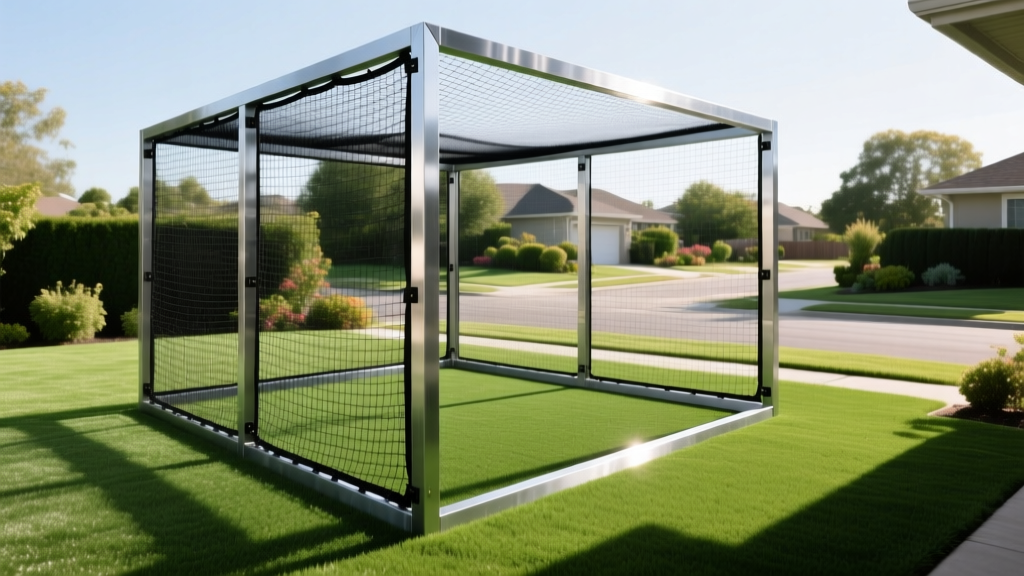
The industry standard for a functional backyard cage is 12 feet high, 14 feet wide, and 55 feet long. This length allows a pitcher to throw from a standard 60-foot-6-inch distance (with the pitcher stepping slightly into the cage) while providing enough netting buffer behind the batter to prevent foul-tip blowback. Cages shorter than 45 feet severely restrict pitcher safety and batter swing mechanics.
Does a batting cage increase property value?
A professionally installed, permitted batting cage with high-quality turf can be an attractive amenity for buyers with athletic families, but it rarely appraises for its full construction cost. If the cage is built with permanent concrete footings, it is considered a real property improvement and may trigger a slight property tax reassessment. DIY cages anchored with removable earth spikes are considered personal property and do not affect tax assessments.
Written by
Sarah WhitfieldSarah Whitfield is a chartered quantity surveyor (MRICS) and construction cost analyst with 15 years of experience in material pricing, procurement strategy, and project budgeting. She earned her degree in Construction Management from the University of Reading (UK) and has worked on projects ranging from $2M custom homes to $180M mixed-use developments across North America and Europe. Sarah currently leads cost estimating for BuildMat Insight, maintaining a proprietary database of 4,000+ material price points updated quarterly. She is a frequent contributor to RSMeans cost data panels and has presented at the International Cost Engineering Council (ICEC) congress. Based in Denver, CO, Sarah is an avid trail runner and volunteer mentor for Women in Construction.
More from Sarah Whitfield
View all
Wood & Lumber
What Are the Different Types of Wood? A Builder's Guide
Compare structural softwoods, finish hardwoods, and engineered lumber. Analyze Janka ratings, MOE values, and 2026 pricing for construction.
Aug 4, 2026

Walls & Panels
Steel Framing vs Wood Framing: Corrosion and Moisture Defense
Compare steel framing vs wood framing for moisture resistance. Learn about galvanized coatings, condensation risks, and corrosion protection strategies.
Jul 21, 2026

Stone & Masonry
How to Cut Stone Veneer: Wet Saw vs Grinder Comparison
Compare the best tools for cutting stone veneer. We review wet saws, angle grinders, and chop saws to help you achieve clean, chip-free cuts.
Jul 21, 2026