2026 Cost to Build a Wall in a House: Regional Price Analysis
Discover the 2026 regional cost to build a wall in a house. Compare labor rates, material prices, and hidden fees across major US markets.
The Geography of Framing: Why ZIP Code Dictates Wall Costs
Calculating the cost to build a wall in a house requires more than multiplying square footage by a national average. While supply chain stabilization in 2026 has normalized dimensional lumber pricing, regional labor shortages, localized building codes, and varying disposal fees create massive price disparities. A standard non-load-bearing interior partition wall that costs $9 per square foot in Indianapolis can easily exceed $24 per square foot in San Francisco.
This regional price analysis breaks down the exact material requirements, labor rates, and hidden municipal fees you will encounter across major U.S. markets, providing the precise data needed to budget accurately for your 2026 renovation.
Baseline National Averages for Interior Wall Construction
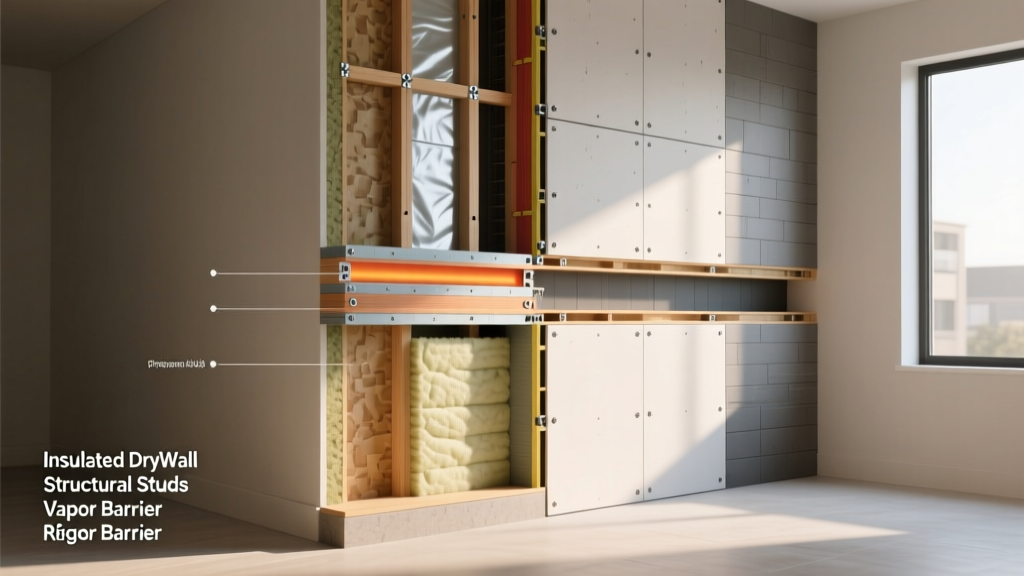
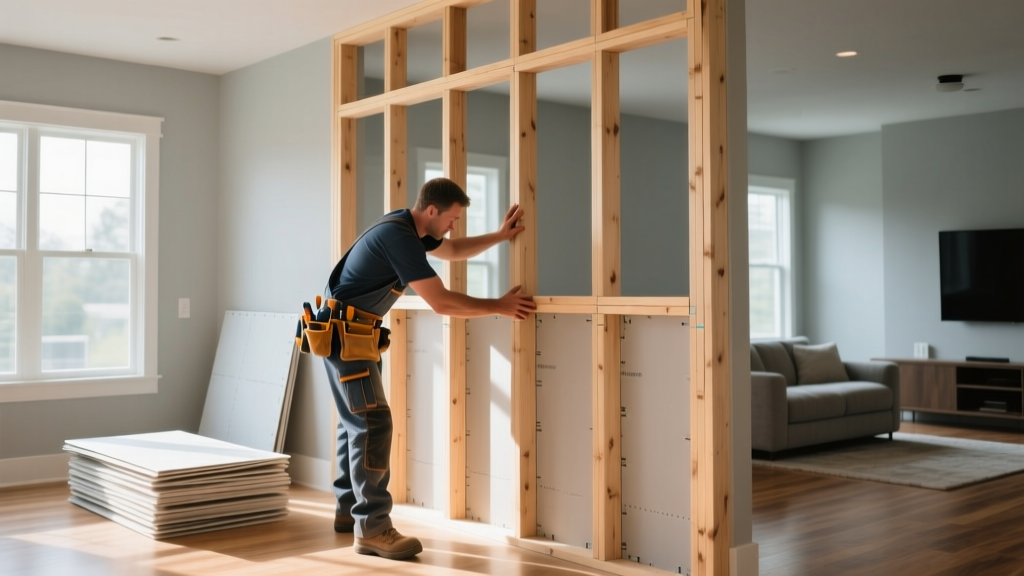
Before adjusting for regional variance, establish the baseline. A standard interior wall consists of 2x4x92-5/8 inch SPF (Spruce-Pine-Fir) studs spaced 16 inches on center, topped with a double top plate, and finished with 1/2-inch drywall on both sides (taped, mudded, sanded, and primed).
- National Material Cost: $3.50 to $5.50 per sq. ft.
- National Labor Cost: $6.00 to $12.00 per sq. ft.
- Total National Average: $9.50 to $17.50 per sq. ft.
According to industry data tracked by Angi, the typical homeowner spends between $1,200 and $2,800 to build a standard 10x12 foot room partition, but this baseline shifts dramatically once localized factors are applied.
Regional Cost Breakdown Matrix (2026 Data)
The following matrix illustrates the cost to build a wall in a house across five primary U.S. regions, factoring in localized prevailing wages, material transport premiums, and regional code requirements.
| Region | Cost per Sq. Ft. | Labor Premium | Primary Cost Drivers & Code Nuances |
|---|---|---|---|
| Northeast (NY, MA, PA) | $14.00 - $24.00 | +35% to +50% | High union labor density; strict fire codes often mandate 5/8-inch Type X drywall in attached garages and multi-family units; expensive debris disposal. |
| Southeast (FL, GA, NC) | $8.50 - $14.50 | -10% to +5% | Lower labor costs; high humidity requires moisture-resistant (green board) or fiberglass-faced drywall in ground-floor additions; termite treatment for bottom plates. |
| Midwest (OH, IL, MI) | $9.00 - $15.00 | Baseline (0%) | Balanced labor/materials; standard 1/2-inch drywall; minimal seismic or hurricane strapping requirements. |
| West Coast (CA, WA, OR) | $16.00 - $28.00 | +40% to +65% | Seismic bracing (Simpson Strong-Tie H2.5A anchors); CALGreen waste diversion mandates; high prevailing wages for licensed carpenters and finishers. |
| Southwest (TX, AZ, NV) | $9.50 - $16.50 | +5% to +15% | Steel stud preference in some metro tracts due to termite and heat risks; rapid expansion areas face contractor scarcity premiums. |
Material Variables That Shift Regional Pricing
Regional building codes and climate realities force material substitutions that drastically alter the final invoice. Understanding these localized material requirements is essential for accurate estimating.
1. Framing Lumber vs. Light-Gauge Steel
In the Midwest and Southeast, 2x4 wood framing remains the undisputed standard. However, in the Southwest (particularly Arizona and Nevada) and commercial-residential crossovers in the Northeast, 25-gauge light-gauge steel studs are frequently mandated or preferred due to termite risks and fire resistance. Steel studs cost roughly 15% less per linear foot than SPF lumber in 2026, but the specialized labor (snips, self-tapping screws, and track installation) can increase installation time by 10%, neutralizing the material savings.
2. Drywall and Fire Rating Mandates
Standard 1/2-inch USG Sheetrock Ultralight Panels cost approximately $13 to $16 per 4x8 sheet. However, regional fire codes dictate upgrades:
- Northeast & Multi-Family: 5/8-inch Type X fire-rated drywall ($18 to $22 per sheet) is frequently required for partition walls separating living spaces from garages or utility rooms.
- Southeast & Coastal: Paperless or fiberglass-faced drywall (e.g., Georgia Pacific DensArmor Plus) is highly recommended or required in high-humidity zones to prevent mold, adding $4 to $6 per sheet.
3. Acoustic Upgrades for Urban Markets
In dense urban markets like New York, Chicago, and Los Angeles, standard walls (STC rating of ~35) fail to block noise. Upgrading to staggered-stud framing, or adding Resilmount sound isolation clips with 1/4-inch Mass Loaded Vinyl (MLV) and Rockwool Safe'n'Sound insulation, adds $3.50 to $6.00 per square foot but elevates the STC rating to 55+, a necessary investment for basement apartments and ADUs.
Labor Rate Discrepancies by Metro Area
Labor accounts for 55% to 70% of the total cost to build a wall in a house. The disparity between high-cost and low-cost Metropolitan Statistical Areas (MSAs) is the single largest variable in your budget.
Data from the National Association of Home Builders (NAHB) consistently highlights regional wage gaps. In 2026, expect the following hourly ranges for specialized trades:
- Carpenters (Framing): $45-$60/hr (Midwest/South) vs. $85-$120/hr (West Coast/Northeast).
- Drywall Finishers (Taping/Mudding): $35-$50/hr vs. $65-$95/hr.
- Painters: $30-$45/hr vs. $55-$80/hr.
Furthermore, in heavily unionized areas (e.g., Cook County, IL; New York City; San Francisco), contractors must factor in prevailing wage requirements, benefits, and apprenticeship ratios, which can inflate labor costs by an additional 20% to 30% compared to right-to-work states.
Hidden Regional Costs: Permits, Disposal, and Code Compliance
Surface-level estimates frequently omit the localized administrative and logistical fees that inflate the final cost. When budgeting, allocate a 12% to 18% contingency for these regional hidden costs:
- Municipal Permitting: In rural Texas or unincorporated Florida counties, interior non-load-bearing walls often require no permit. In contrast, cities like Seattle and Portland require building permits for any framing exceeding 100 square feet, with fees ranging from $250 to $600, plus mandatory inspection scheduling delays.
- Debris Removal and Tipping Fees: California's CALGreen code mandates strict construction waste diversion (recycling), requiring specialized sorting dumpsters. Tipping fees in the Northeast and West Coast can exceed $120 per ton, whereas rural Midwest landfills may charge under $40 per ton.
- Seismic and Wind Strapping: In California and the Pacific Northwest, local amendments often require Simpson Strong-Tie H2.5A hurricane/seismic ties at the top and bottom plates of new walls, adding $2 to $4 per linear foot in hardware and labor.
Decision Framework: Estimating Your Local Project
To calculate the precise cost to build a wall in a house in your specific market, follow this sequential estimation framework:
- Calculate Gross Square Footage: Multiply wall length by ceiling height (e.g., 12 ft x 8.5 ft = 102 sq. ft.).
- Identify Local Material Base: Check current pricing at your local Home Depot Pro Desk for 2x4 studs, drywall, and joint compound. Multiply your sq. ft. by $4.50 for a baseline material cost.
- Apply the Regional Labor Multiplier: Multiply your baseline material cost by 1.5 for the South/Midwest, or by 2.5 to 3.0 for the West Coast/Northeast.
- Add Code-Mandated Upgrades: Factor in Type X drywall, pressure-treated bottom plates, or acoustic insulation if your local jurisdiction or climate demands it.
- Include Administrative Fees: Add $350 for average permitting and $200 for localized dumpster rental or debris hauling.
By anchoring your estimate to localized labor multipliers and specific municipal code requirements rather than relying on generalized national averages, you eliminate budget overruns and ensure your 2026 wall construction project remains financially predictable from framing to final paint.
Written by
Elena RodriguezElena Rodriguez is a civil engineer and technical writer specializing in concrete technology, masonry systems, and ASTM/ACI compliance. She earned her B.S. in Civil Engineering from Texas A&M University and spent a decade at a materials testing laboratory, performing over 2,000 concrete compressive strength tests and masonry prism evaluations. Elena is an ACI-certified Field Testing Technician (Grade I) and a member of ASTM Committee C12 on Natural Building Stone. She currently consults on forensic engineering cases involving concrete failures and moisture intrusion. Based in San Antonio, TX, Elena is a proud member of the Society of Women Engineers (SWE) and coaches her daughter's FIRST Robotics team.
More from Elena Rodriguez
View all
Walls & Panels
Cost Analysis: Light Gauge Steel Framing Advantages and Disadvantages
Evaluate light gauge steel framing advantages and disadvantages through a strict cost analysis lens, comparing material, labor, and lifecycle expenses.
Aug 4, 2026

Walls & Panels
Gypsum Board Types: Exact Specifications, Thickness & Dimensions
Compare standard, Type X, and moisture-resistant gypsum board types. Get exact specifications, thicknesses, dimensions, and ASTM standards for your project.
Aug 4, 2026

Fire Resistance
Best Fire-Resistant Outdoor Decking Materials: 2026 Buyer Guide
Discover the best fire-resistant outdoor decking materials for 2026. Compare Class A PVC, aluminum, and hardwood options for WUI compliance and safety.
Aug 4, 2026