Regional Cost to Build a Greenhouse in 2026: US Price Analysis
Discover the true regional cost to build a greenhouse in 2026. Compare material, labor, and permit prices across US climate zones and structural codes.
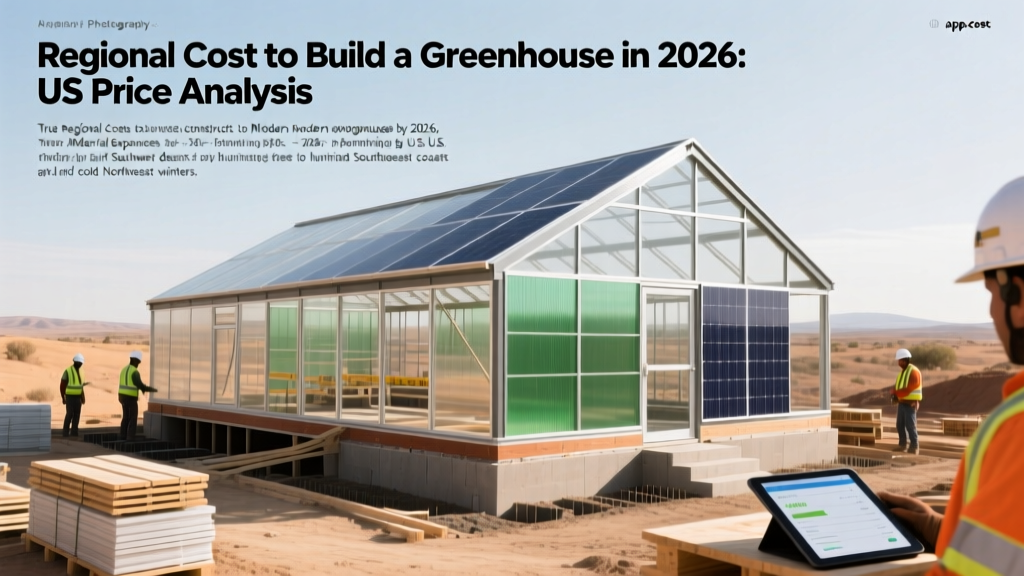
The Fallacy of National Averages in Greenhouse Construction
When researching the cost to build a greenhouse, most national estimators cite an average range of $15,000 to $25,000 for a standard 12x12 freestanding structure. In 2026, this figure is practically useless for accurate budgeting. A turnkey polycarbonate greenhouse in central Florida requires vastly different engineering, foundation work, and climate control systems than an identical footprint in upstate New York. Regional variations in frost lines, ground snow loads, wind uplift ratings, and local labor rates can swing your final budget by 40% to 80%.
• Northeast (Cold/Snow): $24,500 - $36,000
• Southeast (Hot/Humid): $13,200 - $19,500
• Midwest (High Wind): $17,800 - $26,000
• West Coast (Seismic/UV): $21,000 - $31,500
Regional Pricing Matrix: Material & Labor Breakdown by Climate Zone
The table below isolates the specific cost drivers that differentiate regional pricing for a mid-tier, 144-square-foot aluminum-framed greenhouse with 8mm twin-wall polycarbonate glazing.
| Region | Base Kit & Glazing | Site Prep & Foundation | Climate Upgrades (HVAC) | Total Est. Cost |
|---|---|---|---|---|
| Northeast | $7,500 - $9,000 | $8,000 - $12,000 (Frost walls) | $9,000 - $15,000 (Active heating) | $24,500 - $36,000 |
| Southeast | $7,500 - $9,000 | $2,500 - $4,000 (Slab/Piers) | $3,200 - $6,500 (Cooling/Dehumid) | $13,200 - $19,500 |
| Midwest | $7,500 - $9,000 | $5,000 - $8,000 (Deep piers) | $5,300 - $9,000 (Wind bracing/Heat) | $17,800 - $26,000 |
| West Coast | $8,500 - $11,000 (UV rated) | $6,000 - $10,000 (Seismic eng.) | $6,500 - $10,500 (Shade/Vent) | $21,000 - $31,500 |
Deep Dive: How Geography Dictates Structural Requirements
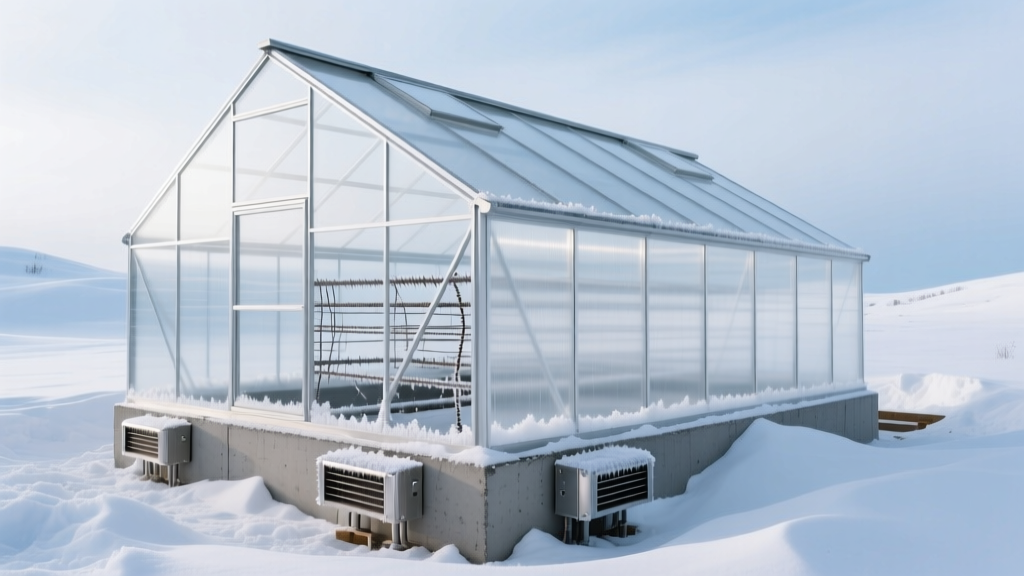
Zone 1: Northeast & Cold Climates (High Foundation & Heating Costs)
Building a greenhouse in regions with severe winters requires mitigating two primary threats: ground frost heave and roof snow collapse. According to structural guidelines referenced by the International Code Council (ICC), structures in these zones must adhere to strict ASCE 7-22 ground snow load standards, often exceeding 40 pounds per square foot (PSF) in areas like upstate New York or Maine.
- Foundation Costs: You cannot use surface-level anchors. You must excavate below the local frost line (often 48 inches deep) to pour a continuous concrete frost wall or install helical piers. This excavation and concrete work alone adds $8,000 to $12,000 to the project.
- Structural Upgrades: Standard aluminum extrusions will buckle under heavy wet snow. You must upgrade to heavy-duty steel trusses or reinforced 3x3 aluminum rafters spaced at 24 inches on-center, rather than the standard 48 inches.
- Heating Infrastructure: Passive solar gain is insufficient. Budget for forced-air natural gas or propane heaters, such as the Modine Hot Dawg HD60AS (approx. $1,800 per unit), plus the cost of running dedicated gas lines and installing interior thermal curtains to reduce nighttime heat loss by up to 40%.
Zone 2: Southeast & Humid Climates (Ventilation & Rust-Proofing)
In the Southeast, the cost to build a greenhouse is driven downward by cheaper foundation requirements but pushed back up by the need for aggressive climate control and corrosion-resistant materials. High humidity and salt air (in coastal areas) will rapidly destroy untreated steel and cheap galvanized fasteners.
- Material Selection: Avoid standard galvanized steel frames. Specify marine-grade aluminum or powder-coated steel treated with a zinc-rich primer. Expect to pay a 15% to 20% premium on the base kit for these corrosion-resistant materials.
- Cooling Systems: Exhaust fans and intake louvers are mandatory. A properly sized 144 sq. ft. greenhouse in Georgia requires a minimum of two 36-inch belt-drive exhaust fans and opposing intake shutters to achieve a complete air exchange every 60 seconds. Add evaporative cooling pads (celdek media) to drop interior temperatures by 10°F to 15°F during peak summer months.
- Dehumidification: To prevent powdery mildew and botrytis, commercial-grade dehumidifiers or horizontal air flow (HAF) fans are required to keep the plant canopy dry at night, adding $1,200 to $2,500 to the electrical and appliance budget.
Zone 3: Midwest & Plains (Wind Uplift & Deep Piers)
The Midwest presents a dual threat of extreme temperature fluctuations and severe wind events, including derechos and tornadoes. The primary cost driver here is lateral wind bracing and uplift resistance.
According to agricultural engineering resources from Penn State Extension, greenhouse structures in high-wind zones must be engineered to withstand uplift forces that can literally rip the glazing off the frame or pull the entire structure from the ground. Budget an additional $3,000 to $5,000 for heavy-duty knee braces, cross-ties, and deep-driven concrete piers at every structural post. Polycarbonate panels must be secured with specialized batten tape and stainless-steel screws with neoprene washers, rather than standard aluminum H-channels, to prevent panels from blowing out during 70+ MPH wind gusts.
Zone 4: West Coast & Seismic Zones (Engineering & Glazing)
California and the Pacific Northwest introduce seismic activity and intense UV exposure into the cost equation. If you are building in a designated seismic zone, local building departments will require stamped engineering plans verifying that the greenhouse frame can absorb lateral ground movement without shattering the glazing. Engineering stamps and specialized flexible silicone gaskets (instead of rigid polycarbonate H-channels) add $2,500 to $4,500 to the pre-construction budget.
Furthermore, the intense UV radiation in high-altitude or southern West Coast areas degrades standard polycarbonate rapidly. You must specify UV-co-extruded 8mm or 10mm twin-wall polycarbonate (such as Polygal or Palram brands with a 10-year yellowing warranty), which costs roughly $3.50 to $4.50 per square foot compared to $2.00 for standard uncoated panels.
Hidden Regional Costs: Permits, Zoning, and Utility Trenching
Warning: Many rural landowners assume a greenhouse is an 'agricultural outbuilding' exempt from permits. While the USDA supports agricultural exemptions, local county zoning boards frequently classify attached or heated greenhouses as 'habitable' or 'accessory structures' requiring full building permits, electrical inspections, and setback compliance.
Before finalizing your budget, account for these localized soft costs:
- Utility Trenching ($15 - $35 per linear foot): If your greenhouse is located 100 feet from your main electrical panel, trenching for a dedicated 240V line (required for heavy heaters and exhaust fans) will add $1,500 to $3,500. In rocky terrains like the Northeast or parts of Texas, trenching costs can double due to the need for rock saws or blasting.
- Water Line Installation ($10 - $25 per linear foot): Running a dedicated, frost-proof water line is essential. In freezing climates, this line must be buried below the frost line and equipped with an automatic drain-back valve to prevent winter pipe bursts.
- Impact Fees and Permits ($500 - $2,500): Highly regulated municipalities (particularly in coastal California or affluent Northeast suburbs) may charge hefty impact fees for adding impervious surface area (the concrete foundation) or increasing water/electrical usage.
Actionable Framework: Budgeting for Your Specific Zip Code
To move beyond generic online calculators and determine the true cost to build a greenhouse on your specific property, follow this sequential framework:
- Step 1: Pull Local Code Data. Visit your local building department's website and identify your specific Ground Snow Load (PSF), Basic Wind Speed (MPH), and Frost Line Depth (inches). Hand these three numbers to your greenhouse kit supplier.
- Step 2: Request a 'Code-Compliant' Quote. Do not accept a base kit price. Ask the supplier for a quote that includes the structural upgrades required to meet your specific PSF and MPH ratings. If they cannot provide this, find a commercial-grade supplier like Rimol or Gothic Arch Greenhouses.
- Step 3: Conduct a Soil Percolation and Bearing Test. Before pouring concrete, ensure your soil can support the load. Expansive clay soils (common in the Southeast and Texas) may require over-excavation and gravel compaction, adding $2,000+ to site prep.
- Step 4: Map Utility Distances. Measure the exact trenching distance from your main breaker and water main to the greenhouse site. Multiply by $25/foot to get your utility connection baseline.
By anchoring your estimates to local geological and meteorological data rather than national averages, you will eliminate the budget overruns that derail 60% of DIY and contractor-led greenhouse projects.
Written by
Priya KapoorPriya Kapoor is a real estate market analyst and construction economics researcher with expertise in housing affordability, development feasibility, and infrastructure investment. She holds a Master of Regional Planning from Cornell University and previously worked as a senior analyst at CBRE's Investment Properties group, where she modeled returns for $4B in mixed-use development pipelines. Priya now runs an independent research practice advising developers, municipalities, and REITs on construction cost forecasting and market timing. She publishes the quarterly "BuildMat Market Pulse" report tracking material price indices across 12 commodity categories. Based in Austin, TX, Priya serves on the board of Habitat for Humanity Austin and is a marathon runner.
More from Priya Kapoor
View all
Construction Cost
Cost to Build a 1600 Sq Ft Home in 2026: Full Breakdown
Accurate 2026 cost to build a 1600 sq ft home—material, labor, and regional pricing breakdowns included. Plan your budget with real-time estimates.
Aug 11, 2026

Wood & Lumber
Name the Types of Wood for Pressure Treatment and Preservation
Learn how to name the types of wood best suited for pressure treatment. Compare species treatability, chemical retention levels, and 2026 preservation costs.
Aug 4, 2026

Stone & Masonry
Stone Veneer Suppliers Lindenhurst: 2026 Cost Analysis
Analyze 2026 stone veneer costs in Lindenhurst, NY. Compare local supplier pricing, delivery fees, and Suffolk County installation labor rates.
Aug 4, 2026