Does It Cost More to Build a House? 2026 Regional Cost Guide
Discover if it costs more to build a house in your area. Our 2026 regional price analysis breaks down labor, materials, and permit fees by state.
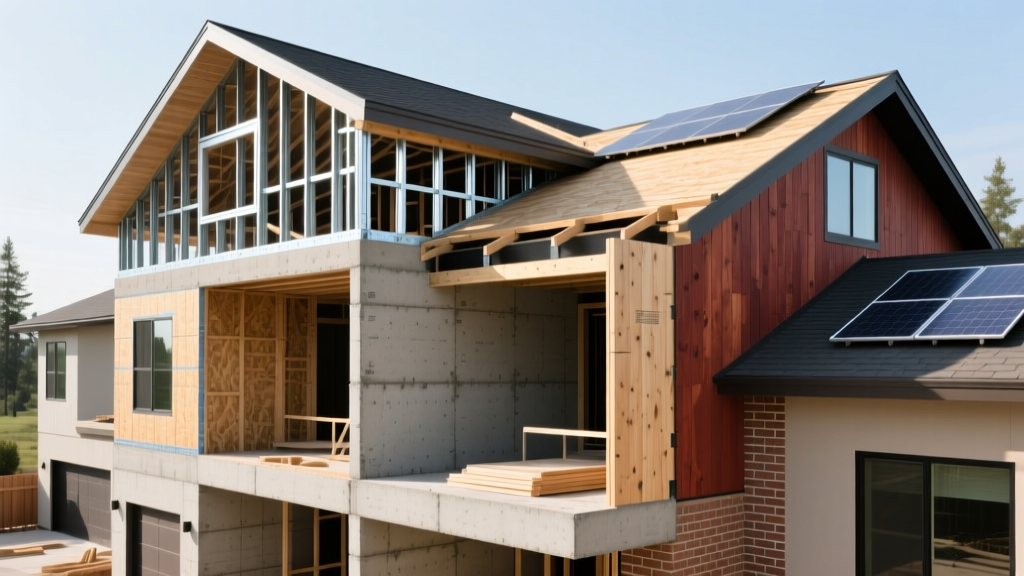
The Core Question: Does It Cost More to Build a House Today?
When prospective homeowners ask, "does it cost more to build a house" compared to buying an existing property, the answer is rarely a simple yes or no. In 2026, the national average cost to build a single-family home hovers between $155 and $210 per square foot for base construction. However, this national metric is practically useless for individual budgeting. The true cost of building is dictated by hyper-local variables: regional labor availability, municipal zoning fees, geographic climate requirements, and soil composition.
While the volatility of the early 2020s lumber market has largely stabilized, a severe shortage of skilled tradespeople—particularly framers, electricians, and plumbers—has permanently elevated labor costs in high-growth and high-regulation regions. According to the National Association of Home Builders (NAHB), labor now accounts for up to 45% of total construction costs in the Northeast and West Coast, compared to just 30% in parts of the Southeast.
2026 Macro Cost Snapshot
- National Average Base Build: $182 per sq. ft.
- Highest Regional Premium: Pacific Northwest & Bay Area (+42% above national average)
- Most Affordable Region: Deep South & Rural Midwest (-18% below national average)
- Primary Cost Driver: Skilled trade labor shortages and localized energy code upgrades
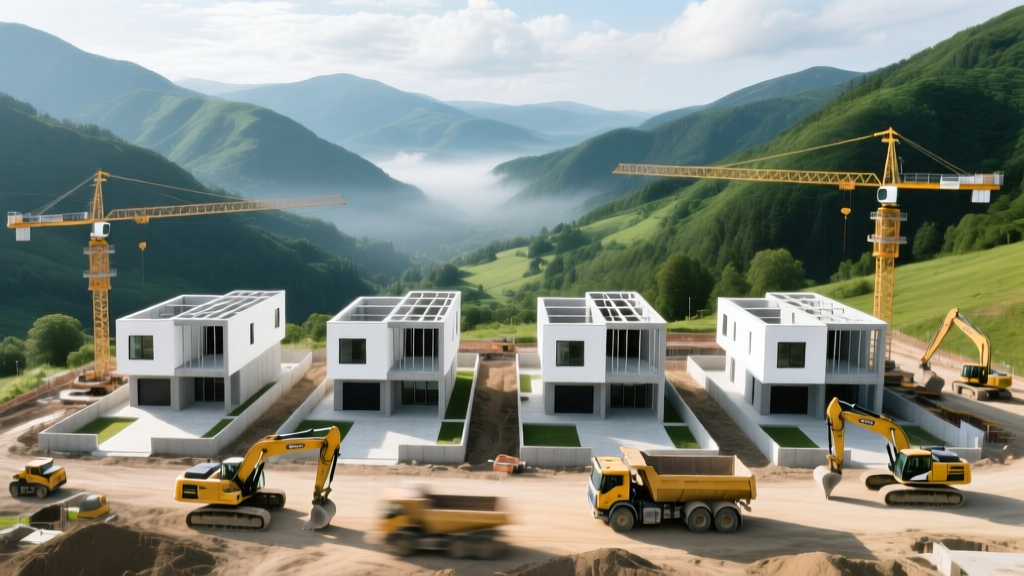
Regional Construction Cost Matrix
To understand how geography impacts your bottom line, we must break down the country into distinct construction zones. The following matrix illustrates the base construction costs (excluding land acquisition and site prep) across the four primary U.S. census regions. Data is cross-referenced with regional building permit valuations tracked by the U.S. Census Bureau.
| Region | Avg Cost / Sq. Ft. | Framer Labor Rate | Standard Foundation | Code Multiplier |
|---|---|---|---|---|
| Northeast | $210 - $275 | $65 - $85 / hr | Full Basement (Frost Wall) | 1.15x (Energy/Insulation) |
| Midwest | $160 - $195 | $45 - $60 / hr | Walkout or Frost-Protected Slab | 1.05x (Wind/Snow Load) |
| South | $145 - $180 | $35 - $50 / hr | Monolithic Slab-on-Grade | 1.08x (Hurricane Tie-downs) |
| West | $220 - $340+ | $70 - $95 / hr | Engineered Raised Foundation | 1.25x (Seismic/Fire/Title 24) |
Deep Dive: Why the West Coast and Northeast Cost 30% More
If you are building in California, Washington, New York, or Massachusetts, you will inevitably ask: why does it cost more to build a house here than almost anywhere else in the country? The premium is not just about the cost of living; it is driven by stringent structural and environmental building codes.
Seismic and Energy Code Upgrades (The West)
In California, building to Title 24 energy standards requires high-performance building envelopes. This means upgrading from standard R-19 wall insulation to R-21 or higher, installing triple-pane low-E windows, and mandating solar PV readiness. Furthermore, seismic zones require continuous load paths, engineered shear walls, and specialized hold-downs tied directly to the foundation. These structural reinforcements add roughly 8% to 12% to the total framing and foundation budget compared to a non-seismic zone.
Union Density and Prevailing Wage Impacts (The Northeast)
The Northeast features a much higher concentration of unionized labor and municipalities that enforce prevailing wage laws on residential projects over a certain square footage. According to wage data from the Bureau of Labor Statistics (BLS), the mean hourly wage for construction trades in the New York-Newark-Jersey City metro area is nearly 45% higher than in right-to-work states like Texas or Florida. Additionally, the Northeast's deep frost lines (often 48 inches or more) necessitate full frost walls and excavated basements, which cost $40,000 to $70,000 more to pour than a southern slab-on-grade.
Hidden Regional Variables That Blow Up Budgets
Beyond labor and lumber, local geology and climate dictate hidden costs that national estimating software often misses. When calculating your regional build cost, factor in these specific geographic edge cases:
- Expansive Soils (Texas & Colorado): Building in areas with high clay content requires post-tension concrete slabs or drilled pier-and-beam foundations to prevent structural cracking as the soil swells and shrinks. Expect to pay an additional $8,000 to $15,000 for geotechnical engineering and specialized foundation work.
- Hurricane Wind Zones (Florida & Gulf Coast): Homes in High-Velocity Hurricane Zones (HVHZ) require impact-resistant glazing (adding $15,000 to $25,000 for a 2,500 sq. ft. home) and secondary roof-to-wall connections. Concrete block construction (CBS) is also standard here, which costs roughly 5% to 8% more than traditional wood framing.
- Deep Frost Lines (Minnesota & Dakotas): A 42-inch frost footing requires three times the excavation and concrete volume of a shallow frost-protected slab. This adds $5,000 to $9,000 in raw material and heavy equipment rental costs before framing even begins.
- Wildland-Urban Interface (WUI) Zones (Mountain West): Building in fire-prone areas of Colorado or Montana requires Class A fire-rated roofing, non-combustible exterior siding (like fiber cement or stucco), and ember-resistant venting. This can increase exterior cladding costs by 20% to 30%.
Land Prep and Site Work: The Great Geographic Divider
The question "does it cost more to build a house" must also account for the dirt the house sits on. Site work is the most unpredictable line item in any construction budget, and it varies wildly by region.
Warning: The Rural Utility Trap
In rural parts of the Midwest and South, land is cheap, but utility hookups are not. If your lot lacks municipal water and sewer, you will need to drill a well ($6,000 - $12,000) and install an engineered septic system ($15,000 - $35,000 for aerobic or mound systems in poor-soil areas). Bringing power from the street to a rural pad can also cost $25 to $50 per linear foot if trenching is required.
Conversely, in densely populated suburban areas of the Northeast, site work costs are driven by tight lot access. If a standard concrete pump truck or excavator cannot fit between neighboring properties, contractors must resort to smaller, less efficient equipment or manual labor, increasing grading and foundation costs by 15% to 25%.
Actionable Framework: How to Adjust Your Budget by Zip Code
Do not rely on national averages to secure your construction loan. Use this three-step framework to localize your cost estimates:
- Establish the Base RSMeans Metric: Start with the national average for your desired build quality (e.g., $180/sq. ft. for mid-range custom). Multiply this by your planned square footage to get a baseline.
- Apply the City/County Multiplier: Contact three local general contractors and ask for their current "cost per square foot" for a completed, turnkey build on a flat, serviced lot. Divide their number by your national baseline to find your local multiplier (e.g., if they say $230/sq. ft., your multiplier is 1.27).
- Add the Geo-Tech Contingency: Before finalizing your budget, spend $1,500 to $3,000 on a geotechnical soil test. If the soil report requires over-excavation, importation of structural fill, or specialized foundations, add that exact quote to your budget. Finally, add a strict 15% contingency for regional supply chain delays or permit expediting fees.
Frequently Asked Questions
Does it cost more to build a house in the winter?
Yes, building in winter in northern climates adds 3% to 5% to the total project cost. This covers "winter conditions" fees, including heated enclosures for concrete curing, ground thawing equipment, snow removal, and reduced daylight working hours. However, in the South, winter is actually the premium building season due to cooler temperatures and lower humidity, which accelerates framing and roofing schedules.
Are modular or prefab homes cheaper to build regionally?
Modular homes can bypass some regional labor shortages because the bulk of the assembly happens in a climate-controlled factory. However, you still pay local costs for the foundation, utility hookups, and the crane required to set the modules. In high-labor-cost areas like California or New York, modular builds can save 10% to 15% compared to stick-built homes, but in the rural South, stick-building is often cheaper due to abundant, affordable local labor.
How do local impact fees affect the final cost?
Municipal impact fees (charges levied by local governments to fund schools, roads, and parks) vary drastically. In some Texas suburbs, impact fees can exceed $15,000 per single-family lot. In contrast, rural unincorporated counties may charge less than $1,000 in total permit and impact fees. Always check with the local building department for a complete fee schedule before purchasing land.
Written by
Priya KapoorPriya Kapoor is a real estate market analyst and construction economics researcher with expertise in housing affordability, development feasibility, and infrastructure investment. She holds a Master of Regional Planning from Cornell University and previously worked as a senior analyst at CBRE's Investment Properties group, where she modeled returns for $4B in mixed-use development pipelines. Priya now runs an independent research practice advising developers, municipalities, and REITs on construction cost forecasting and market timing. She publishes the quarterly "BuildMat Market Pulse" report tracking material price indices across 12 commodity categories. Based in Austin, TX, Priya serves on the board of Habitat for Humanity Austin and is a marathon runner.
More from Priya Kapoor
View all
Construction Cost
Cost to Build a 1600 Sq Ft Home in 2026: Full Breakdown
Accurate 2026 cost to build a 1600 sq ft home—material, labor, and regional pricing breakdowns included. Plan your budget with real-time estimates.
Aug 11, 2026

Wood & Lumber
Name the Types of Wood for Pressure Treatment and Preservation
Learn how to name the types of wood best suited for pressure treatment. Compare species treatability, chemical retention levels, and 2026 preservation costs.
Aug 4, 2026

Stone & Masonry
Stone Veneer Suppliers Lindenhurst: 2026 Cost Analysis
Analyze 2026 stone veneer costs in Lindenhurst, NY. Compare local supplier pricing, delivery fees, and Suffolk County installation labor rates.
Aug 4, 2026