Cost to Build a Well: 2026 Budget Planning Breakdown
Plan your budget with our detailed breakdown of the cost to build a well. Explore drilling depths, casing materials, pump systems, and hidden site fees.
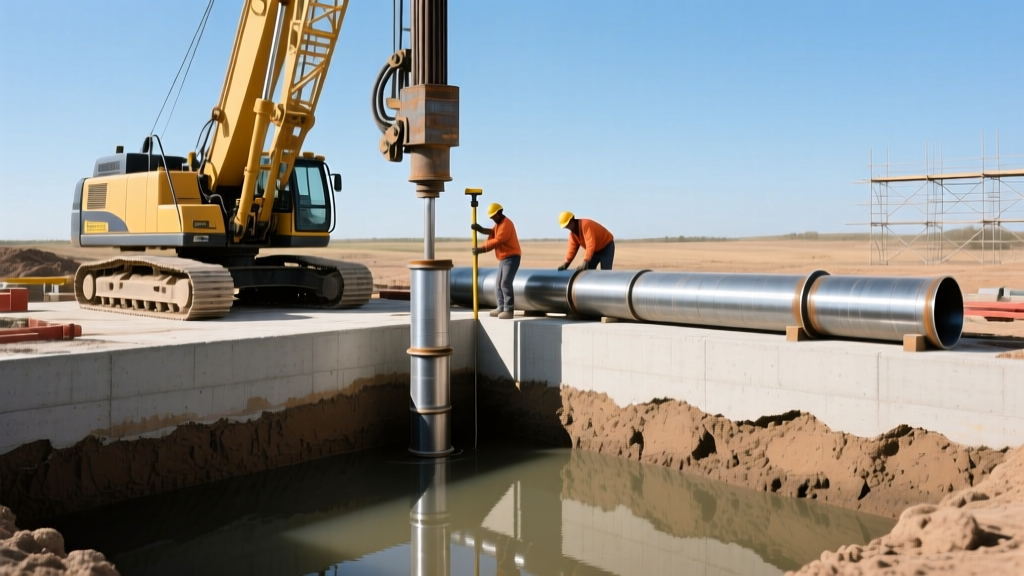
The True Cost to Build a Well: Beyond the Drill Bit
When budgeting for a private water supply, the cost to build a well extends far beyond the simple per-foot drilling rate quoted by local contractors. While the national average for a complete residential water well system ranges from $5,500 to $12,500, complex geological conditions or deep aquifer requirements can push this figure past $25,000. According to the Environmental Protection Agency (EPA), over 23 million households rely on private wells, meaning accurate upfront budget planning is critical for rural and semi-rural property development.
Effective budget planning requires dissecting the project into five distinct cost centers: geological drilling, casing and grouting, pump and pressure systems, site infrastructure, and regulatory compliance. This guide breaks down the exact material specifications, labor rates, and hidden variables you must account for to prevent budget overruns.
Baseline Budget Snapshot
- Shallow Well (20-50 ft): $1,500 - $3,500 (Sand/Gravel aquifers)
- Standard Residential Well (100-300 ft): $5,500 - $12,500 (Mixed soil/bedrock)
- Deep Bedrock Well (400-800+ ft): $15,000 - $35,000+ (Hard granite/shale)
Drilling Depth and Geological Cost Variables
The single largest variable in your budget is the subsurface geology. Drillers typically charge between $15 and $25 per foot for unconsolidated soil (sand, clay, gravel) using mud-rotary drilling methods. However, once the drill bit hits bedrock, the process shifts to down-the-hole (DTH) air hammer drilling, which increases the cost to $30 to $65 per foot due to higher equipment wear, fuel consumption, and slower penetration rates.
To understand your specific risk, consult the United States Geological Survey (USGS) groundwater data for your county. If your neighbors are hitting water at 150 feet in topsoil, but your lot sits on a granite ridge, your budget must accommodate deep bedrock drilling.
| Geological Layer | Drilling Method | Cost Per Foot | Penetration Rate |
|---|---|---|---|
| Topsoil & Clay | Mud Rotary | $15 - $22 | Fast (50+ ft/hr) |
| Sand & Gravel | Mud Rotary / Hollow Stem Auger | $20 - $30 | Moderate (20-40 ft/hr) |
| Fractured Shale | Air Hammer (DTH) | $35 - $45 | Slow (10-20 ft/hr) |
| Solid Granite / Basalt | Air Hammer (DTH) | $50 - $75 | Very Slow (2-8 ft/hr) |
Casing, Screen, and Grout Material Selection
Once the borehole is drilled, it must be lined to prevent collapse and surface contamination. The two primary casing materials are Schedule 40 PVC and carbon steel. While PVC is significantly cheaper and immune to galvanic corrosion, many state environmental codes mandate steel casing through the top 20 to 50 feet of overburden to protect against shifting soils and surface runoff.
Material Cost Comparison
- Schedule 40 PVC (4-inch to 6-inch): $6 to $12 per foot. Lightweight, easy to install, but vulnerable to crushing in unstable, deep bedrock formations.
- Carbon Steel (ASTM A53): $18 to $35 per foot. Heavier, requires welded or threaded joints, mandatory in many jurisdictions for the upper overburden section.
- Stainless Steel Well Screens: $40 to $90 per foot. Installed only at the aquifer intake zone to filter sediment while maximizing water flow.
Budget Tip: Do not skimp on the annular grout seal. The space between the outside of the casing and the drilled earth must be filled with neat cement grout or bentonite clay. Budget an additional $300 to $600 for proper grouting materials and labor to ensure surface contaminants do not migrate down the outside of your casing.
Pump Systems, Yield Testing, and Pressure Sizing
The cost to build a well is incomplete without the extraction system. Submersible pumps are the industry standard, with reliable brands like Franklin Electric and Goulds Water Technology dominating the market. A standard 1 HP submersible pump with a conventional pressure switch and a 32-gallon bladder tank will cost between $1,800 and $2,500 installed.
However, your budget must adapt to the well's recovery rate. After drilling, the contractor must perform a 4-hour drawdown test to measure the well's yield in gallons per minute (GPM).
Low-Yield Well Budget Adjustment
If your well yields less than 3 GPM, a standard pump setup will cause rapid short-cycling, burning out the motor within months. You must budget an additional $1,200 to $2,200 for a low-yield mitigation system. This includes upgrading to a massive 119-gallon Well-X-Trol pressure tank and installing a Cycle Stop Valve (CSV) or a variable frequency drive (VFD) like the Franklin Electric SubDrive system to maintain constant household pressure without exhausting the aquifer.
Hidden Budget Killers: Permits, Power, and Testing
Homeowners frequently blow their budgets by ignoring the peripheral infrastructure required to make a well functional. Allocate funds for the following non-negotiable site costs:
- Electrical Trenching and Wiring: The wellhead requires a dedicated 240V circuit. Trenching from your main panel to the wellhead costs $15 to $25 per linear foot. For a well located 200 feet from the house, expect to pay $3,000 to $5,000 just for electrical site work, including direct-burial UF wire and a weatherproof disconnect box.
- Wellhead Pitless Adapter: In freezing climates, the water line must connect to the casing below the frost line using a brass pitless adapter (e.g., Merrill or Simmons). Budget $400 to $700 for the adapter and the excavation required to install it.
- Water Quality Lab Testing: The driller will flush the well, but you must pay an independent certified lab to test for coliform bacteria, nitrates, arsenic, and heavy metals. Comprehensive panels cost $250 to $450. If treatment is required, add $1,500 to $4,000 for UV purification or reverse osmosis systems.
- Local Permitting and Inspections: County health departments charge $150 to $500 for well construction permits and final inspections. Never bypass this; an unpermitted well can result in massive fines and complicate future property sales.
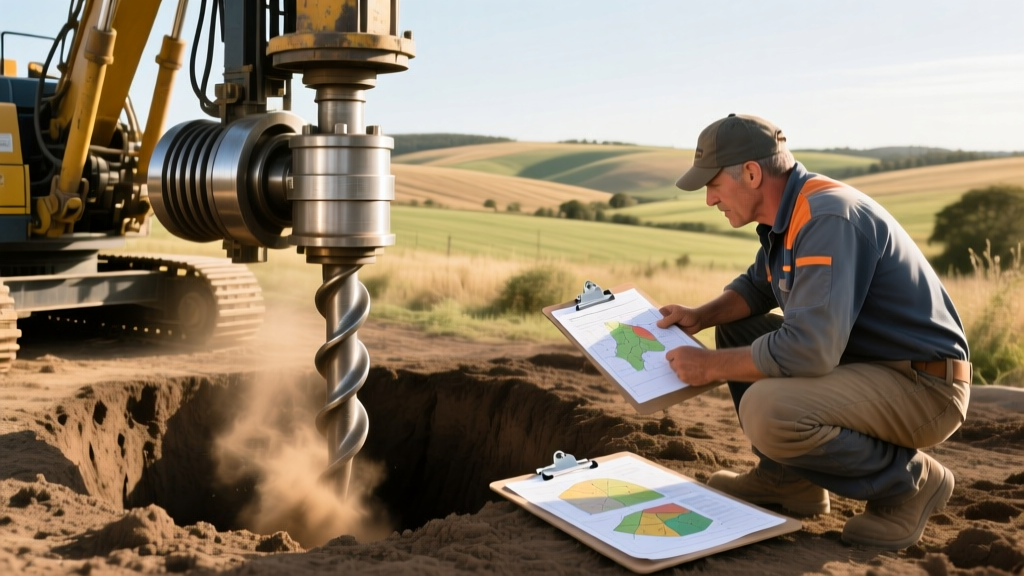
Mitigating the 'Dry Hole' Financial Risk
The most devastating scenario in well drilling is hitting a dry hole—drilling 500 feet into bedrock and finding no viable aquifer. Before signing a contract, explicitly discuss the driller's dry hole policy.
Some drillers offer a 'dry hole guarantee' where you only pay a reduced mobilization fee (often $1,500 to $2,500) if no water is found. Others charge full price for every foot drilled regardless of water presence. Always get this policy in writing and factor a 15% contingency into your overall budget to cover exploratory hydrogeological surveys or secondary drill sites.
Step-by-Step Budget Allocation Framework
To maintain strict financial control, use this percentage-based framework when securing construction financing or allocating cash reserves for a standard 200-foot residential well project:
- 45% - Drilling and Casing: The physical borehole, steel/PVC casing, and grouting.
- 20% - Pump and Pressure Equipment: Submersible pump, wiring, drop pipe, and pressure tank.
- 15% - Electrical and Site Prep: Trenching, conduit, panel upgrades, and grading around the wellhead.
- 10% - Permitting, Testing, and Pitless Setup: Health department fees, lab tests, and frost-line adapters.
- 10% - Contingency Reserve: Held strictly for unexpected bedrock depth, low-yield tank upgrades, or minor water treatment needs.
By breaking down the cost to build a well into these granular, material-specific categories, you eliminate guesswork and ensure your property's water infrastructure is funded, permitted, and built to last for decades.
Written by
Marcus ChenMarcus Chen is a licensed structural engineer (PE) and building materials analyst with over 12 years of experience across residential, commercial, and industrial construction. He holds a Master of Science in Civil Engineering from UC Berkeley and spent six years at Thornton Tomasetti before transitioning to independent consulting and technical writing. Marcus specializes in material selection for seismic-prone regions, concrete reinforcement strategies, and lifecycle cost analysis. His work has been cited by the American Concrete Institute (ACI) and the Structural Engineers Association of California (SEAOC). When he is not on a job site or at his desk, you will find him hiking the Sierra Nevada or restoring a 1920s craftsman bungalow in Oakland, CA.
More from Marcus Chen
View all
Construction Cost
How Much Did the Eiffel Tower Cost to Build?
How much did the Eiffel Tower cost to build in 1889? We adjust for inflation and compare its budget to modern skyscraper construction.
Aug 4, 2026

Fire Resistance
What Is a Fire Resistant Material? Testing & Certification Guide
Discover what is a fire resistant material through ASTM and UL testing. Learn how fire ratings, certifications, and assemblies work in construction.
Aug 4, 2026

Construction Cost
How Much Did the Burj Khalifa Cost to Build?
How much did the Burj Khalifa cost to build? We break down the $1.5B project and extract 5 money-saving strategies for your next build.
Jul 30, 2026