The True Cost to Build a New Deck: Upfront vs. 20-Year Maintenance
Discover the true cost to build a new deck by comparing upfront 2026 material prices with 20-year maintenance expenses for wood, composite, and PVC.
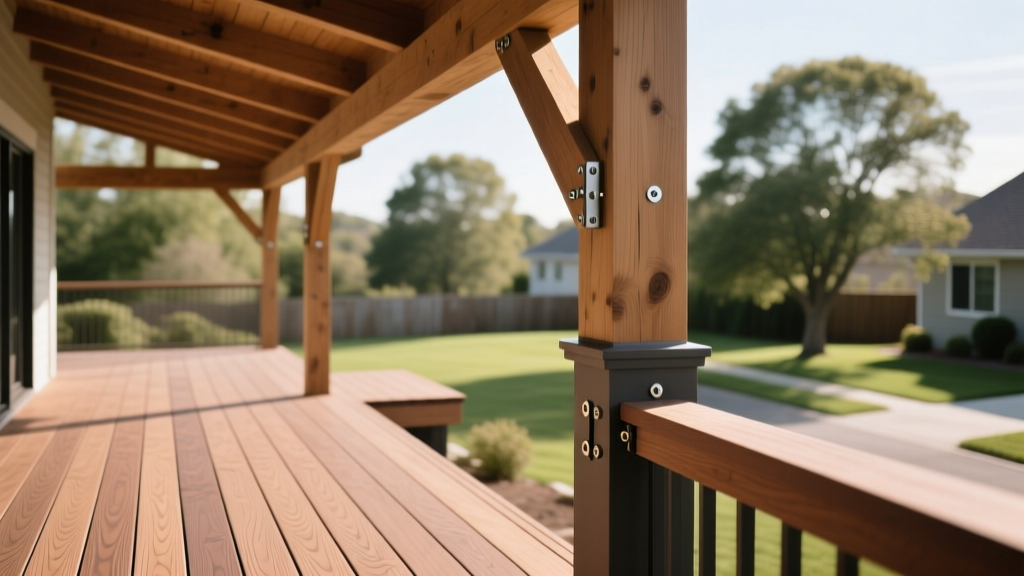
The Day-One Cost to Build a New Deck (2026 Baselines)
When homeowners calculate the initial cost to build a new deck, they typically only factor in the immediate material and labor expenses. However, viewing deck construction strictly through a day-one lens leads to severe budget miscalculations over the structure's lifespan. In 2026, the national average for a professionally installed deck ranges from $18 to $65 per square foot, heavily dependent on the decking material and substructure complexity.
According to data tracked in the Remodeling Magazine Cost vs. Value Report, outdoor living additions remain high-ROI projects, but the material you choose dictates your financial exposure for the next two decades. Below is the current baseline pricing for a standard 400-square-foot rectangular deck with a basic railing system.
| Decking Material | Upfront Cost (Installed per Sq. Ft.) | Total 400 Sq. Ft. Estimate | Expected Surface Lifespan |
|---|---|---|---|
| Pressure-Treated (PT) Pine | $18 - $25 | $7,200 - $10,000 | 10 - 15 Years |
| Western Red Cedar | $28 - $38 | $11,200 - $15,200 | 15 - 20 Years |
| Capped Composite (e.g., Trex Enhance) | $35 - $48 | $14,000 - $19,200 | 25 - 30 Years |
| Capped PVC (e.g., Azek Vintage) | $45 - $65 | $18,000 - $26,000 | 30 - 50+ Years |
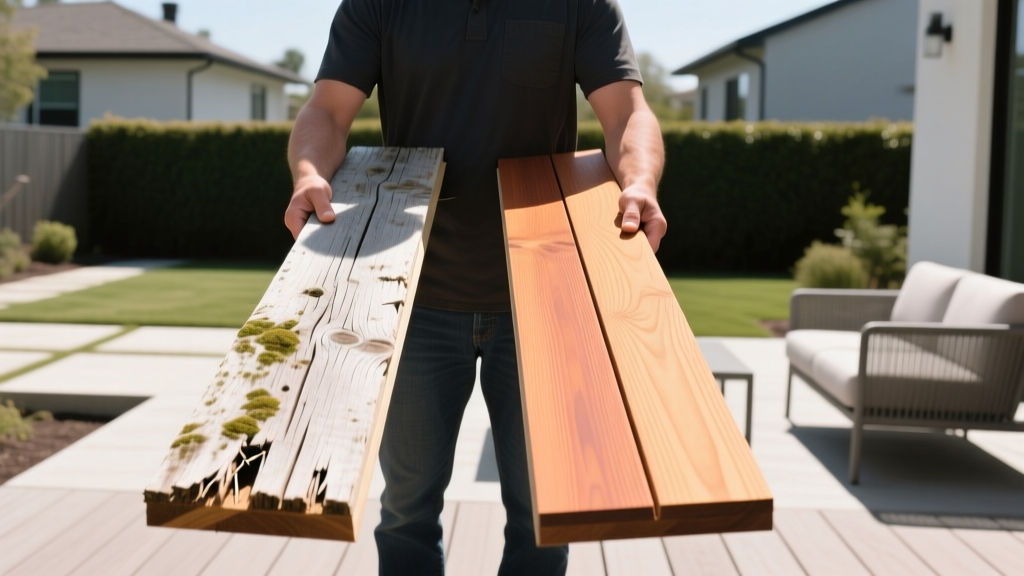
The Maintenance Matrix: What Each Material Actually Demands
To understand the true cost to build a new deck, you must map the mandatory maintenance schedule for your chosen material. Neglecting these intervals results in premature structural failure, voided warranties, and expensive board replacements.
Pressure-Treated Wood & Cedar (The High-Maintenance Route)
Natural wood is highly porous and susceptible to UV degradation, moisture intrusion, and fungal decay. The EPA guidelines on treated wood note that while chemical preservatives protect against termites and rot, they do not prevent surface checking, warping, or UV graying.
- Year 1: Wait 30 to 90 days for the wood to dry and acclimate. Apply a penetrating water-repellent sealer.
- Annual: Power wash at a low PSI (under 1,500) using an oxygenated bleach cleaner to remove mildew and dirt.
- Bi-Annual (Every 2-3 Years): Sand lightly and apply a high-quality penetrating oil stain (e.g., Cabot Australian Timber Oil or Penofin). Cost: $1.50 to $2.50 per sq. ft. if hired out, or $0.40 per sq. ft. DIY.
Capped Composite & PVC (The Low-Maintenance Route)
Modern capped composites feature a high-density polyethylene (HDPE) or PVC shell that repels moisture and resists staining. As outlined in the Trex Care and Cleaning Guide, these materials eliminate the need for sanding and staining, but they are not entirely "no-maintenance."
- Bi-Annual: Wash with a soft-bristle brush and a specialized composite deck cleaner (e.g., 30 SECONDS Outdoor Cleaner) to prevent mold spores from taking root in the embossed wood-grain textures.
- As-Needed: Remove snow with a plastic shovel; metal shovels will gouge the polymer cap, voiding the fade and stain warranty.
Calculating the 20-Year Lifecycle Cost
This is where the true cost to build a new deck reveals itself. Let us project the 20-year financial commitment for a 400-square-foot deck, assuming a 4% annual inflation rate on maintenance materials and professional labor.
20-Year Cost Projection (400 Sq. Ft. Deck)
Pressure-Treated Wood:
Upfront Build: $8,500
Maintenance (10 stain cycles, 20 cleanings): $6,800
Board Replacement (20% of deck at year 12): $1,800
Total 20-Year Cost: $17,100
Capped Composite:
Upfront Build: $16,500
Maintenance (20 cleanings, zero staining): $1,200
Board Replacement: $0
Total 20-Year Cost: $17,700
The Break-Even Point: Financially, a capped composite deck typically crosses the break-even threshold with pressure-treated wood between Year 7 and Year 9. If you plan to stay in your home for a decade or more, composite is mathematically the cheaper option when factoring in labor and material maintenance.
Hidden Maintenance Traps That Destroy Deck Budgets
When researching the cost to build a new deck, most guides ignore the substructure. The most catastrophic failure mode in deck building is not the surface boards rotting—it is the underlying joists decaying while the top boards look perfectly fine.
Water drains through the gaps in your deck boards and pools on top of the wooden joists. Over 10 years, this causes the joists to rot from the top down. Replacing deck boards costs $15-$40 per linear foot; replacing the structural joists requires tearing off the entire deck and costs upwards of $8,000.
The Fix: During construction, mandate the installation of butyl-based joist flashing tape (such as Trex Protect or G-Tape) over every joist and the ledger board. This adds roughly $200 to $350 to your initial build cost but extends the substructure lifespan to 50+ years.
Fastener Selection and Future Board Replacement
Your choice of fasteners dictates how difficult maintenance will be when a board inevitably cracks or stains.
- Face Screws with Plugs (e.g., Cortex System): Offers the strongest hold and easiest board replacement. You simply drill out the plug, remove the screw, and swap the board.
- Hidden Clips (e.g., Tiger Claw): Provides a seamless, fastener-free surface. However, if a middle board gets damaged, you must remove every board between the damaged one and the edge of the deck to slide the new one in. This turns a 15-minute repair into a 4-hour teardown.
Decision Framework: Which Deck Should You Build?
Use your timeline in the home to dictate your material choice and accurately forecast the cost to build a new deck.
- Selling in 1 to 5 Years: Build with Pressure-Treated Wood. You will not reach the composite break-even point. Perform one professional power wash and stain right before listing the house to maximize curb appeal and ROI.
- Staying 5 to 10 Years: Build with Mid-Tier Capped Composite (e.g., TimberTech Prime or Trex Select). You will recoup the higher upfront cost through zero staining expenses and will enjoy a pristine surface while you live there.
- Forever Home (10+ Years): Build with Capped PVC or Premium Composite (e.g., Azek Landmark or Trex Transcend). Factor in the joist tape and hidden fasteners. The day-one cost to build a new deck will be high, but your annual maintenance will be reduced to a simple soap-and-water wash, yielding the lowest total cost of ownership over 30 years.
Written by
Elena RodriguezElena Rodriguez is a civil engineer and technical writer specializing in concrete technology, masonry systems, and ASTM/ACI compliance. She earned her B.S. in Civil Engineering from Texas A&M University and spent a decade at a materials testing laboratory, performing over 2,000 concrete compressive strength tests and masonry prism evaluations. Elena is an ACI-certified Field Testing Technician (Grade I) and a member of ASTM Committee C12 on Natural Building Stone. She currently consults on forensic engineering cases involving concrete failures and moisture intrusion. Based in San Antonio, TX, Elena is a proud member of the Society of Women Engineers (SWE) and coaches her daughter's FIRST Robotics team.
More from Elena Rodriguez
View all
Walls & Panels
Cost Analysis: Light Gauge Steel Framing Advantages and Disadvantages
Evaluate light gauge steel framing advantages and disadvantages through a strict cost analysis lens, comparing material, labor, and lifecycle expenses.
Aug 4, 2026

Walls & Panels
Gypsum Board Types: Exact Specifications, Thickness & Dimensions
Compare standard, Type X, and moisture-resistant gypsum board types. Get exact specifications, thicknesses, dimensions, and ASTM standards for your project.
Aug 4, 2026

Fire Resistance
Best Fire-Resistant Outdoor Decking Materials: 2026 Buyer Guide
Discover the best fire-resistant outdoor decking materials for 2026. Compare Class A PVC, aluminum, and hardwood options for WUI compliance and safety.
Aug 4, 2026