Deck Material Yarmouth Cost Breakdown: 2026 Coastal Guide
Discover the 2026 deck material Yarmouth cost breakdown. Compare composite, PVC, and marine-grade wood pricing for coastal New England climates.
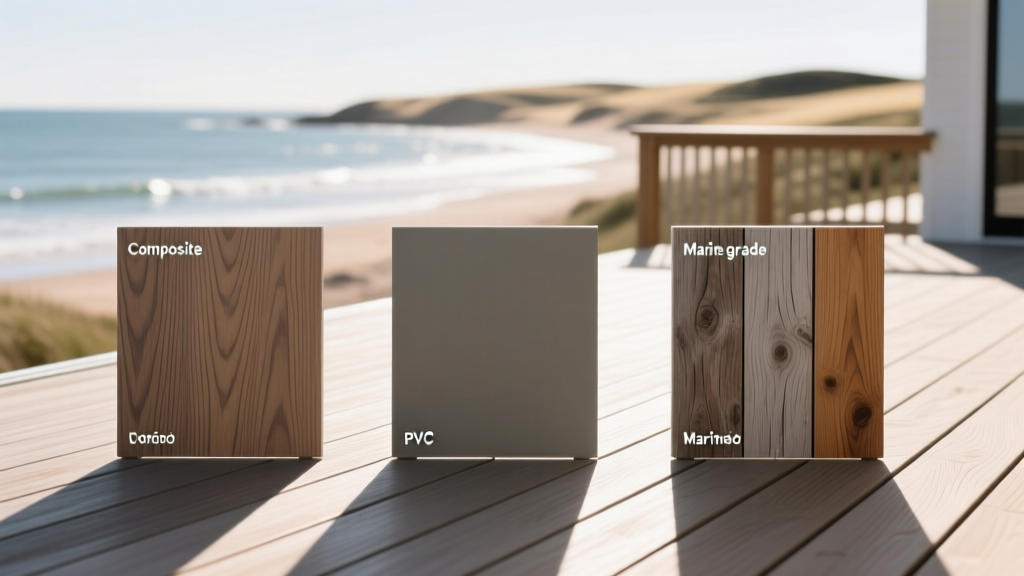
The Yarmouth Climate Factor: Why Material Choice Dictates Long-Term Cost
Building a deck in Yarmouth—whether situated along the coastal bluffs of Maine or the sandy shores of Cape Cod, Massachusetts—requires navigating a highly aggressive microclimate. The intersection of salt-laden air, high UV exposure, and severe freeze-thaw cycles (averaging over 100 cycles annually in New England) accelerates material degradation. Standard pressure-treated lumber that might last 15 years inland often succumbs to cupping, splintering, and fastener corrosion within 7 to 9 years in these coastal zones.
Coastal Engineering Alert
According to the USDA Forest Products Laboratory, wood decay rates in coastal splash zones increase by up to 40% compared to inland environments. Furthermore, salt spray compromises standard zinc-coated joist hangers, necessitating G185 hot-dipped galvanized or 316-grade stainless steel hardware, which adds roughly $1.50 to $2.25 per square foot to your framing budget.
2026 Deck Material Yarmouth Cost Breakdown (Per Square Foot)
The following matrix outlines current 2026 material and installed costs for a standard 400-square-foot, single-level deck. Labor rates reflect the premium for coastal New England contractors who specialize in marine-grade fastening and frost-proof footing installation.
| Material Type | Material Cost (sq ft) | Labor & Framing (sq ft) | Total Installed | Coastal Lifespan |
|---|---|---|---|---|
| Pressure-Treated Pine | $4.50 - $6.00 | $14.00 - $18.00 | $18.50 - $24.00 | 8 - 12 Years |
| Capped Composite (WPC) | $9.50 - $12.50 | $22.00 - $28.00 | $31.50 - $40.50 | 20 - 25 Years |
| Capped Polymer (PVC) | $11.50 - $15.00 | $24.00 - $30.00 | $35.50 - $45.00 | 30 - 50 Years |
| Tropical Hardwood (Ipe) | $14.00 - $19.00 | $30.00 - $42.00 | $44.00 - $61.00 | 25 - 40 Years |
Deep Dive: Top Material Contenders for Coastal Environments
When evaluating the deck material Yarmouth market, homeowners must look beyond the initial price tag and calculate the 10-year Total Cost of Ownership (TCO), which includes maintenance, sealing, and premature replacement risks.
Capped Polymer (PVC) Decking: The Coastal Gold Standard
For homes directly facing the ocean, capped PVC (such as the AZEK Landmark Series or TimberTech Advanced PVC) is the superior choice. Unlike wood-plastic composites, PVC contains zero wood flour. This makes it entirely impervious to the moisture absorption that causes mold and mildew in high-humidity coastal fog zones. PVC boards also feature superior thermal expansion tolerances, which is critical when surface temperatures swing from freezing winter nights to 140°F+ on summer afternoons. Expect to pay a 15% premium over composite, but eliminate the $2.50/sq ft annual cleaning and sealing costs associated with wood.
Capped Wood-Plastic Composite (WPC)
High-end capped composites like Trex Transcend Lineage offer a realistic wood grain and excellent fade resistance. However, in Yarmouth's environment, the exposed core at the cut ends must be meticulously sealed with manufacturer-approved end-tape or sealant. If saltwater penetrates the wood-flour core through an unsealed cut or a deep scratch from winter ice-shoveling, the board will swell and delaminate. WPC is best suited for homes set back from the immediate splash zone or those shielded by heavy tree canopies.
Tropical Hardwoods (Ipe and Cumaru)
Ipe boasts a Janka hardness rating of 3,680 lbf, making it virtually immune to physical scratching and highly resistant to rot. The North American Decking and Railing Association (NADRA) notes that properly maintained tropical hardwoods can outlast most synthetic alternatives. The catch in Yarmouth is maintenance: to prevent the wood from weathering to a silvery-gray under intense UV exposure, Ipe requires annual applications of penetrating UV-inhibiting oil (like Ipe Oil or Messmer's), costing roughly $1,200 to $1,800 per year for a 400 sq ft deck if hired out.
Hidden Costs: Framing, Fasteners, and Permitting in Yarmouth
The surface material only accounts for roughly 40% of your total project cost. The substructure and local regulatory environment in Yarmouth introduce significant variable expenses.
- Helical Piles vs. Sonotubes: Coastal soils in Yarmouth are often sandy, loamy, or subject to high water tables. Traditional concrete sonotubes are prone to frost heave. Helical piles (e.g., Techno Metal Post) screw deep into the load-bearing strata, bypassing the frost line entirely. Budget an additional $250 to $450 per footing for helical pile installation.
- Marine-Grade Fasteners: Standard galvanized nails will rust and stain your decking within two seasons in a salt-air environment. You must specify 304 or 316 stainless steel screws for the decking surface, and G185 hot-dipped galvanized or ZMAX coatings for structural joist hangers. This upgrades the hardware budget from $300 to over $1,100 for an average deck.
- Conservation Commission & Setbacks: Both Yarmouth, ME, and Yarmouth, MA, have strict wetland and coastal dune protection bylaws. If your property falls within the 100-foot buffer zone, you will need a Notice of Intent (NOI) and potentially an environmental engineering survey, adding $1,500 to $3,500 in soft costs and delaying the project timeline by 30 to 60 days.
- Wind Uplift Engineering: Coastal building codes require decks to withstand 110+ mph wind uplift. This necessitates continuous load-path hardware (like Simpson Strong-Tie hurricane ties) and may require a structural engineer's stamp ($800 - $1,200) to satisfy local building inspectors.
ROI and Resale Value in the Yarmouth Housing Market
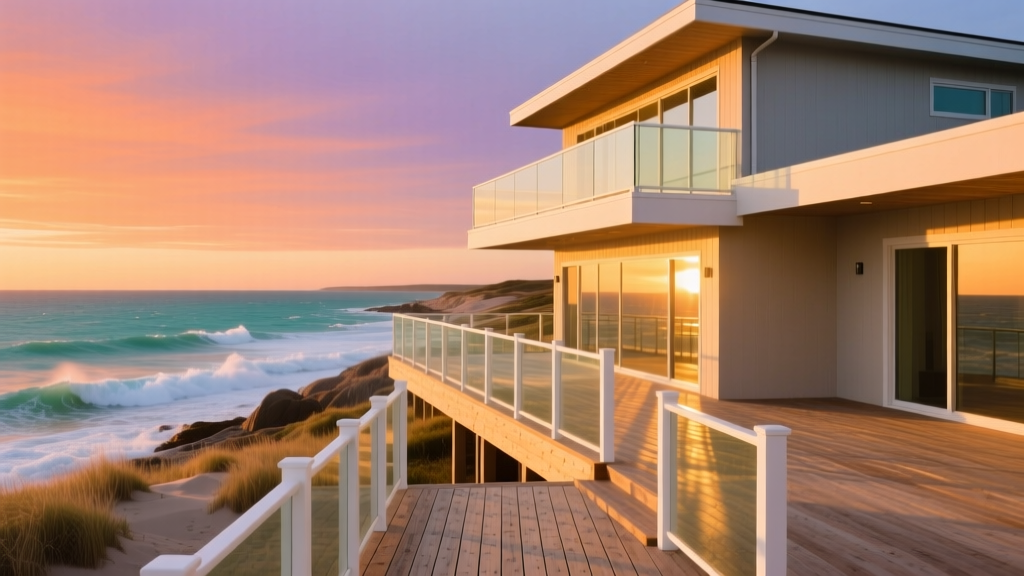
Outdoor living spaces are heavily weighted in coastal real estate appraisals. According to FEMA's Building Science guidelines for coastal construction, properly elevated and engineered decks not only survive storm surges but significantly elevate property valuation. In the Yarmouth market, a high-end PVC or Ipe deck with integrated coastal lighting and glass railings (to preserve ocean views while blocking wind) routinely yields a 65% to 75% return on investment at resale, outperforming the national average of 50% for mid-grade composite decks.
"In coastal New England, buyers are increasingly scrutinizing the substructure. A deck built with marine-grade hardware and helical piles appraises significantly higher than one built on standard concrete piers, as it signals to the buyer that the home's exterior envelope was engineered for the climate, not just built to code minimums."
Frequently Asked Questions
Can I use aluminum decking in Yarmouth?
Yes, marine-grade aluminum decking (like Craft-Bilt or Wahoo Decks) is an exceptional, albeit niche, choice for Yarmouth. It is completely waterproof, non-combustible, and immune to salt corrosion. However, it costs between $18 and $24 per square foot for materials alone and can become slippery when wet or frosted, requiring specialized anti-slip powder coatings.
How deep do deck footings need to be in Yarmouth?
The frost line in coastal New England generally requires footings to extend a minimum of 48 inches below grade. However, local inspectors may require deeper piers (up to 60 inches) if the soil is predominantly unconsolidated sand near the dunes. Always verify with the local Yarmouth building department before pouring concrete.
Is it worth paying extra for hidden fasteners?
For PVC and Composite, absolutely. Hidden clip systems (like the Trex Hideaway or AZEK Cortex) prevent water from pooling in screw holes, which reduces the risk of freeze-thaw cracking. For Ipe, the Ipe Clip Extreme system allows for the natural expansion and contraction of the dense hardwood without snapping the screws.
Written by
David NakamuraDavid Nakamura is a licensed architect (AIA) and construction technology writer focused on sustainable building methods, mass timber engineering, and high-performance building envelopes. He holds a Master of Architecture from the University of Washington and is a certified Passive House Consultant (CPHC). David spent eight years at the Seattle firm Mithun, where he led the design of three LEED Platinum projects, before founding his own practice specializing in net-zero residential design. He serves on the editorial advisory board of GreenBuilder Magazine and has authored peer-reviewed papers on cross-laminated timber (CLT) connections for the Journal of Structural Engineering. In his spare time, David teaches woodworking at Pratt Fine Arts Center and kayaks the Puget Sound.
More from David Nakamura
View all
Construction Cost
Labor Cost to Build a Deck Per Sq Ft: 2026 Installation Guide
Discover the exact labor cost to build a deck per sq ft in 2026. This installation guide breaks down contractor rates, complexity factors, and hidden fees.
Aug 4, 2026

Construction Cost
How Much Does It Cost to Build a 3 Bedroom House? Financing Guide
Learn exactly how much it costs to build a 3 bedroom house and explore 2026 financing options, construction loan types, and budget frameworks for your build.
Aug 4, 2026

Construction Cost
Cost to Build a Tennis Court: 2026 Guide
How much does it cost to build a tennis court in 2026? Breakdowns for asphalt, concrete, and synthetic surfaces plus fencing and lighting.
Jul 30, 2026