Inexpensive Deck Materials Compared: Wood, Composite, and PVC
Compare the true costs of inexpensive deck materials. We analyze pressure-treated wood, entry-level composite, and budget PVC for 2026 builds.
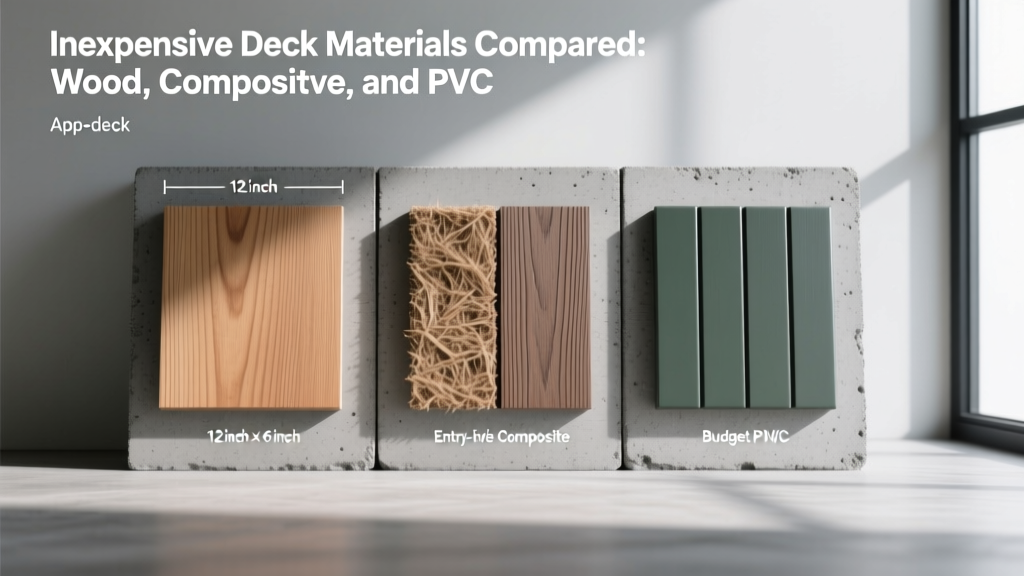
The True Definition of 'Inexpensive' in Decking
When evaluating inexpensive deck materials, the initial price tag per square foot is only a fraction of the actual financial commitment. The decking market is broadly split into three budget-friendly tiers: pressure-treated (PT) lumber, entry-level capped composites, and budget-tier cellular PVC. While PT lumber dominates the upfront cost metric, its mandatory maintenance cycle rapidly erodes its financial advantage. Conversely, entry-level composites utilize manufacturing shortcuts—like scalloped bottom profiles—to lower extrusion costs without sacrificing the protective polymer cap. Understanding the metallurgical, chemical, and structural differences between these materials is required to calculate the true lifecycle cost of your outdoor space.
Upfront Material Cost Matrix
The following matrix outlines the baseline material costs for a standard 400-square-foot deck footprint, excluding substructure framing and labor. Pricing reflects early 2026 market averages for standard dimensional profiles.
| Material Category | Specific Grade / Model Example | Material Cost (per sq. ft.) | Required Fastener Type | Estimated 10-Year Maintenance Cost |
|---|---|---|---|---|
| Pressure-Treated Pine | #2 Common Southern Yellow Pine (ACQ/MCQ) | $2.80 - $4.20 | Hot-dipped galvanized or Stainless Steel | $800 - $1,200 (Stain/Sealant) |
| Entry-Level Composite | Trex Enhance Naturals / Fiberon Good Life | $5.50 - $7.50 | Composite-specific hidden clips or color-matched screws | $50 (Basic soap cleaning) |
| Budget Cellular PVC | Wolf Serenity / AZEK Landmark (Budget Lines) | $7.00 - $9.50 | Stainless steel or PVC-rated hidden fasteners | $60 (Mold/mildew preventative wash) |
Pressure-Treated Pine: The Upfront Champion
Pressure-treated Southern Yellow Pine remains the most inexpensive deck material at the point of purchase. However, not all PT lumber is identical. The budget tier typically relies on '#2 Common' grades, which permit larger knots, wane (bark edges), and a higher tolerance for warping. For a marginally higher cost, 'Select Structural' or 'Premium' grades offer tighter grain patterns and fewer defects, significantly reducing the labor required to straighten bowed boards during installation.
The Chemistry of Modern Treated Wood
Since the phase-out of Chromated Copper Arsenate (CCA), modern PT lumber is treated with Alkaline Copper Quaternary (ACQ) or Micronized Copper Quaternary (MCQ). These copper-based preservatives are highly effective against fungal decay and termites, but they introduce a critical hidden cost: fastener corrosion. According to the USDA Forest Products Laboratory, the alkaline nature of ACQ acts as an electrolyte, rapidly corroding standard zinc-plated screws and aluminum joist hangers. Builders must upgrade to hot-dipped galvanized (G185 coating minimum) or 304/316 stainless steel fasteners, which adds approximately $0.40 to $0.80 per square foot to the total hardware budget.
Entry-Level Composite: The Middle-Ground Compromise
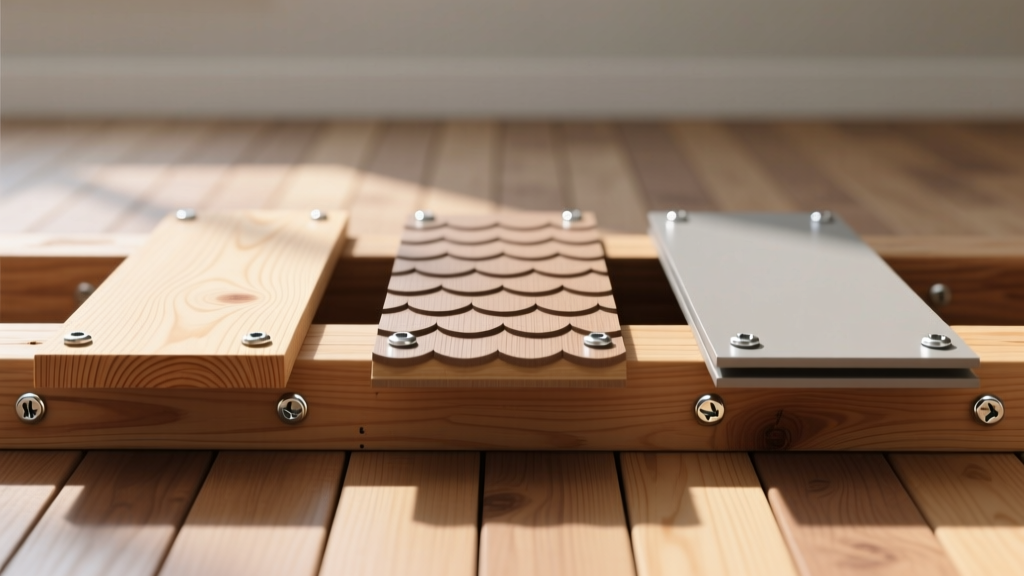
Entry-level capped composites bridge the gap between the low upfront cost of wood and the zero-maintenance promise of premium synthetics. To achieve a lower price point, manufacturers reduce the volume of raw polyethylene and wood-flour core material. They accomplish this by extruding boards with scalloped bottoms rather than solid, square profiles.
Scalloped vs. Solid Profiles
A scalloped bottom removes up to 20% of the board's mass. This reduces material costs and makes the boards lighter for installers to handle. However, this structural compromise dictates specific installation methods. You cannot blindly drive a top-down screw into a scalloped board without risking a blowout or cracking the thinner bottom ridges. Installers must either use manufacturer-specified hidden fastener clips that lock into the side grooves, or pre-drill and drive screws at a precise 45-degree angle through the thicker outer shoulders. As noted in Consumer Reports' decking buying guide, while scalloped composites perform well in standard residential applications, they exhibit slightly higher deflection (bending) under heavy concentrated loads compared to solid-profile composites, requiring joists to be spaced strictly at 16 inches on-center (OC) rather than the 24-inch OC sometimes permitted for solid boards.
Budget PVC: The Hidden Costs of 'Cheap' Plastic
Cellular PVC is generally considered a premium material, but budget-tier lines (often featuring thinner caps or less dense cellular cores) compete with high-end composites. PVC contains no organic wood fibers, making it entirely impervious to moisture absorption, rot, and insect damage. However, budget PVC introduces significant thermal challenges.
Thermal Expansion and Heat Retention
PVC has a high coefficient of thermal expansion. A 16-foot PVC board can expand or contract by up to 1/8 inch for every 100-degree Fahrenheit temperature swing. If an installer butt-joins two PVC boards tightly together on a cold morning without leaving the manufacturer-mandated expansion gaps, the boards will buckle and warp violently once summer temperatures rise. Furthermore, lighter budget PVC lines often lack the advanced infrared-reflective pigments found in premium tiers. In direct sunlight, dark or mid-tone budget PVC can reach surface temperatures exceeding 140°F, making it unusable for barefoot traffic in southern climates.
The 10-Year Lifecycle Cost Reality
To determine which material is truly the most inexpensive, we must project the costs over a 10-year period for a standard 400-square-foot deck. Industry data from Angi's deck cost analysis confirms that labor and framing remain constant across materials, isolating the decking and maintenance as the primary variables.
- Pressure-Treated Pine: Initial material cost: $1,400. Over 10 years, the deck will require power washing, sanding, and re-staining at least three times (Years 3, 6, and 9). At $2.50 per sq. ft. for professional staining (or $1.00/sq. ft. for DIY materials), maintenance adds $1,200 to $2,400. Total 10-Year Cost: $2,600 - $3,800.
- Entry-Level Composite: Initial material cost: $2,600. Maintenance requires only bi-annual soap and water washing ($0 in professional labor). Total 10-Year Cost: $2,600.
- Budget PVC: Initial material cost: $3,400. Maintenance is minimal, requiring occasional mold-preventative treatments in shaded areas ($150 over 10 years). Total 10-Year Cost: $3,550.
Final Decision Framework
Select your decking material based on your specific budget constraints, climate, and willingness to perform physical maintenance.
Choose Pressure-Treated Pine If:
- Your absolute maximum budget is capped at the initial construction phase.
- You are building in a heavily shaded, dry climate where UV degradation and moisture rot are minimized.
- You enjoy the annual ritual of power washing, sanding, and applying oil-based semi-transparent stains.
- You are utilizing complex, angled picture-framing designs where the ease of cutting and routing solid wood outweighs the benefits of synthetic grooves.
Choose Entry-Level Composite If:
- You want to eliminate staining and sealing from your annual chore list.
- You are building a standard, rectangular deck where hidden fastener systems can be installed quickly without complex miter cuts.
- You plan to stay in the home for at least 5 to 7 years, allowing you to cross the lifecycle break-even point.
Choose Budget PVC If:
- You are building a ground-level or floating deck where moisture wicking from the soil would rapidly destroy wood or wood-flour composites.
- You live in a coastal environment where salt spray and high humidity accelerate the corrosion of metal fasteners and the decay of organic materials.
- You are committed to using light-colored boards (white, light gray, or pale tan) to mitigate the severe heat retention inherent in budget PVC formulations.
Written by
Sarah WhitfieldSarah Whitfield is a chartered quantity surveyor (MRICS) and construction cost analyst with 15 years of experience in material pricing, procurement strategy, and project budgeting. She earned her degree in Construction Management from the University of Reading (UK) and has worked on projects ranging from $2M custom homes to $180M mixed-use developments across North America and Europe. Sarah currently leads cost estimating for BuildMat Insight, maintaining a proprietary database of 4,000+ material price points updated quarterly. She is a frequent contributor to RSMeans cost data panels and has presented at the International Cost Engineering Council (ICEC) congress. Based in Denver, CO, Sarah is an avid trail runner and volunteer mentor for Women in Construction.
More from Sarah Whitfield
View all
Wood & Lumber
What Are the Different Types of Wood? A Builder's Guide
Compare structural softwoods, finish hardwoods, and engineered lumber. Analyze Janka ratings, MOE values, and 2026 pricing for construction.
Aug 4, 2026

Walls & Panels
Steel Framing vs Wood Framing: Corrosion and Moisture Defense
Compare steel framing vs wood framing for moisture resistance. Learn about galvanized coatings, condensation risks, and corrosion protection strategies.
Jul 21, 2026

Stone & Masonry
How to Cut Stone Veneer: Wet Saw vs Grinder Comparison
Compare the best tools for cutting stone veneer. We review wet saws, angle grinders, and chop saws to help you achieve clean, chip-free cuts.
Jul 21, 2026