Average Cost to Build a Fence in 2026: Installation Pricing Guide
Discover the true average cost to build a fence in 2026. This installation guide breaks down material, labor, terrain, and hidden pricing variables.
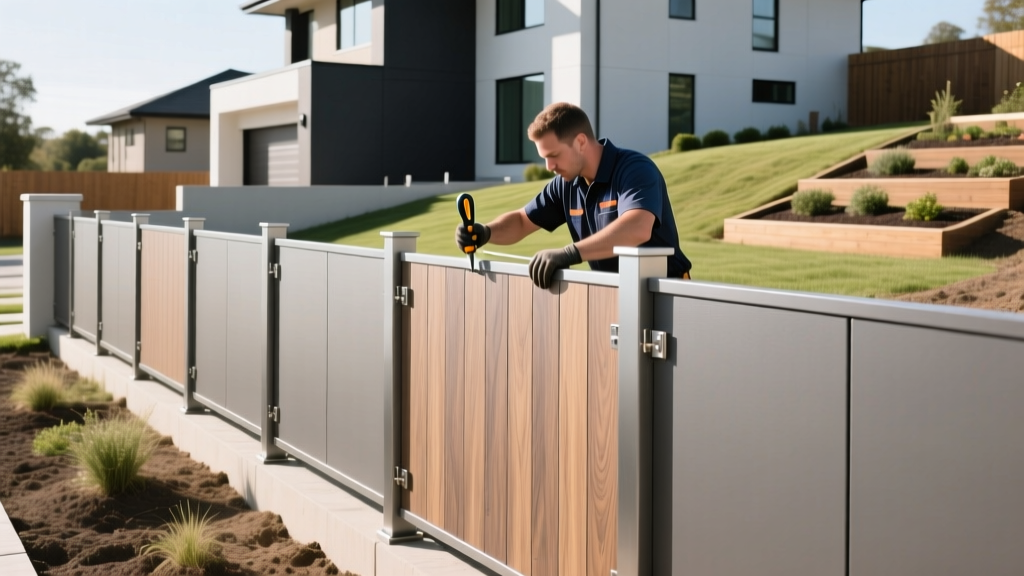
The True Breakdown: Material vs. Labor Costs
When budgeting for a perimeter enclosure, the average cost to build a fence in 2026 typically ranges from $3,200 to $7,800 for a standard 150-linear-foot residential yard. However, this national baseline obscures the mechanical realities of installation. According to data tracked by HomeAdvisor, labor now accounts for 40% to 55% of the total project cost, driven by specialized equipment requirements and regional prevailing wage shifts. Understanding the intersection of material selection and installation complexity is the only way to forecast an accurate budget.
| Material Type | Material Cost (Per Lin. Ft.) | Labor Cost (Per Lin. Ft.) | Total Installed Cost (Per Lin. Ft.) |
|---|---|---|---|
| Pressure-Treated Pine (#2 Grade) | $14 - $22 | $16 - $26 | $30 - $48 |
| Western Red Cedar (Clear Grade) | $28 - $42 | $18 - $28 | $46 - $70 |
| Virgin Vinyl (PVC with UV Inhibitors) | $32 - $50 | $20 - $32 | $52 - $82 |
| Ornamental Aluminum (Powder-Coated) | $38 - $60 | $22 - $38 | $60 - $98 |
| Wood-Plastic Composite | $48 - $75 | $24 - $40 | $72 - $115 |
Hidden Installation Variables That Spike Your Bill
Surface-level quotes rarely account for subsurface conditions and topographical anomalies. The physical act of setting posts and aligning rails introduces variables that can inflate labor costs by 20% to 45%.
Excavating in heavy clay or caliche rock requires different tooling than loam. If your local building code mandates post holes below the frost line (e.g., 42 inches in the Midwest, 12 inches in the South), the volume of concrete required per post increases exponentially. A standard 50lb bag of Quikrete Fast-Setting covers roughly 0.375 cubic feet. A 48-inch deep hole for a 4x4 post requires approximately 3.5 bags of concrete, plus a 6-inch gravel drainage base to prevent frost heave.
Post Hole Excavation Methods and Pricing
- Manual Clamshell Digging ($0 - $5 per hole): Only viable for soft topsoil and short runs under 50 linear feet. High physical toll; inconsistent depth.
- Two-Man Gas Auger ($8 - $15 per hole): Standard for professional crews. Struggles with heavy clay or roots exceeding 2 inches in diameter.
- Skid-Steer Mounted Auger ($15 - $25 per hole): Required for commercial jobs or large acreages. Requires wide access gates (minimum 60 inches) to enter the property.
- Hydro-Excavation ($40 - $85 per hole): Mandatory when digging near marked utility lines or in bedrock-heavy terrain. Uses pressurized water to fracture soil and a vacuum to extract it, preventing line strikes.
Topography: Stepping vs. Racking
If your yard slopes more than 2 inches over an 8-foot span, standard panel installation fails. Installers must choose between racking (adjusting the panel parallelogram to follow the slope, common with chain link and specific vinyl systems) or stepping (keeping panels level and stepping down the slope, leaving triangular gaps at the bottom that require custom-cut kickboards). Stepping wood or composite fences adds roughly $8 to $14 per linear foot in custom cutting and additional post height requirements.
Step-by-Step Installation Cost Milestones
To manage contractor bids or DIY budgets, track expenses across these five critical installation phases.
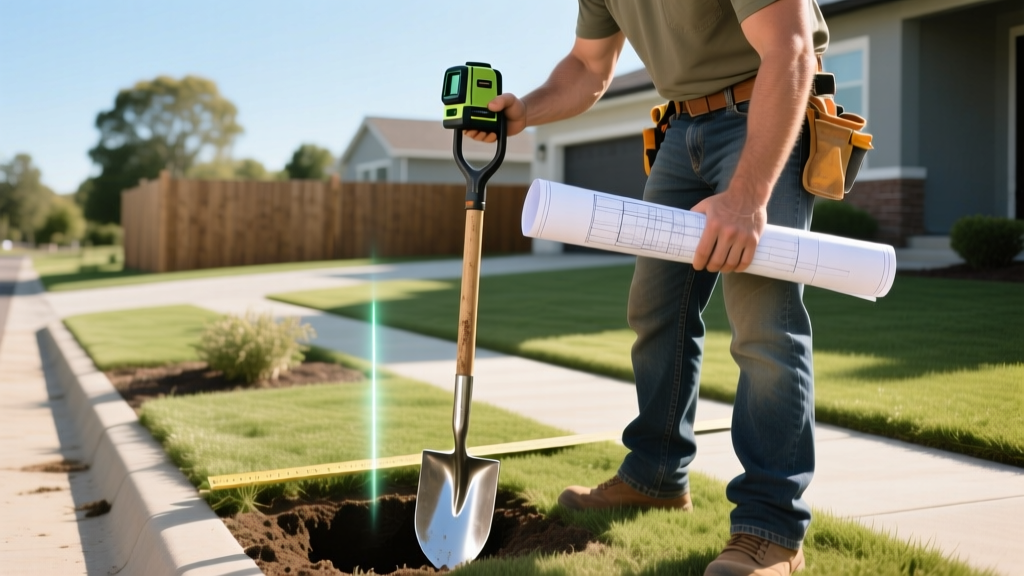
- Site Layout and String Line Calibration (5% of Labor Budget): Using a laser transit to establish a perfectly straight grade line. Skipping this results in wavy fence lines that are visually obvious and structurally weak.
- Utility Locating and Clearance (0% - 2% of Budget): Hitting a buried fiber-optic or gas line halts the project and incurs massive liability. Always utilize Call 811 at least 72 hours before breaking ground. Private utility locators (for lines running to detached garages or landscape lighting) cost $250-$450 out of pocket.
- Excavation and Base Preparation (25% of Labor Budget): Digging holes 1/3 the height of the above-ground post. Pouring 4 inches of 3/4-inch crushed gravel at the base for drainage before setting the post.
- Post Setting and Curing (30% of Labor Budget): Bracing posts perfectly plumb while the concrete cures. In 2026, many pros use closed-cell spray foam for post setting in non-load-bearing vinyl fences, which cures in 15 minutes and reduces water retention around the wood core, though traditional concrete remains the gold standard for heavy wood and composite gates.
- Rail and Picket Attachment (40% of Labor Budget): The most time-intensive phase. Using pneumatic nail guns with hot-dipped galvanized ring-shank nails (for wood) or routing and locking mechanisms (for vinyl).
Hardware and Gate Engineering
The most common point of failure in any fencing system is the gate hardware. Standard strap hinges sag within two years on heavy 6-foot cedar or composite gates. The American Fence Association recommends heavy-duty cantilever hinges or adjustable ball-bearing hinges for any gate wider than 4 feet.
"A 6-foot composite gate can weigh over 120 pounds. If the hinge post is not reinforced with a steel pipe core or set in a massive concrete bell footing, the kinetic energy of the gate swinging will eventually pull the post out of plumb, causing the latch to misalign."
Budget an extra $85 to $150 per gate for heavy-duty hardware, drop rods, and magnetic latches. For double-drive gates, a center astragal and heavy-duty drop pin are mandatory to prevent wind uplift.
Permitting, Surveys, and Legal Boundaries
Before purchasing a single bag of concrete, verify your legal boundaries. Building a fence even 6 inches on your neighbor's property or over a municipal utility easement can result in a forced teardown at your expense.
- Property Survey ($400 - $800): If you do not have a recent plat map, a licensed surveyor must drive physical iron pins at your property corners. Never rely on existing sidewalks or neighbor's fences as boundary markers.
- Municipal Permits ($50 - $250): Most jurisdictions require permits for fences over 6 feet tall, or any fence in a front-yard setback. Corner lots often have strict "sight triangle" ordinances, prohibiting solid fences taller than 3 feet within 25 feet of the intersection to maintain driver visibility.
- HOA Approvals ($0 - $150 Application Fee): Homeowners Associations frequently dictate exact material types, color palettes, and require the "finished" side of the fence to face outward.
Decision Framework: DIY vs. Professional Installation
Determining whether to self-perform the installation or hire a licensed contractor depends on your access to tooling, soil conditions, and available time.
| Factor | DIY Installation | Professional Contractor |
|---|---|---|
| Tooling & Equipment | Requires renting a tow-behind auger ($250/day), laser level, and pneumatic compressor. | Crews own skid-steers, transit lasers, and specialized jigs for rapid alignment. |
| Timeline (150 Lin. Ft.) | 3 to 5 full weekends for a novice crew. | 2 to 3 consecutive days with a 3-man crew. |
| Error Tolerance | High risk of posts shifting out of plumb during concrete curing; difficult to correct. | Bracing systems ensure perfect plumb; warranties cover post-heave for 1-5 years. |
| Material Sourcing | Retail pricing at big-box stores; limited access to commercial-grade extrusions. | Wholesale distributor pricing; access to thicker-gauge aluminum and virgin PVC. |
Ultimately, calculating the average cost to build a fence requires looking past the per-linear-foot material stickers. By accounting for subsurface excavation realities, topographical stepping, and commercial-grade gate hardware, you can engineer a perimeter enclosure that remains structurally sound and financially predictable for decades.
Written by
Elena RodriguezElena Rodriguez is a civil engineer and technical writer specializing in concrete technology, masonry systems, and ASTM/ACI compliance. She earned her B.S. in Civil Engineering from Texas A&M University and spent a decade at a materials testing laboratory, performing over 2,000 concrete compressive strength tests and masonry prism evaluations. Elena is an ACI-certified Field Testing Technician (Grade I) and a member of ASTM Committee C12 on Natural Building Stone. She currently consults on forensic engineering cases involving concrete failures and moisture intrusion. Based in San Antonio, TX, Elena is a proud member of the Society of Women Engineers (SWE) and coaches her daughter's FIRST Robotics team.
More from Elena Rodriguez
View all
Walls & Panels
Cost Analysis: Light Gauge Steel Framing Advantages and Disadvantages
Evaluate light gauge steel framing advantages and disadvantages through a strict cost analysis lens, comparing material, labor, and lifecycle expenses.
Aug 4, 2026

Walls & Panels
Gypsum Board Types: Exact Specifications, Thickness & Dimensions
Compare standard, Type X, and moisture-resistant gypsum board types. Get exact specifications, thicknesses, dimensions, and ASTM standards for your project.
Aug 4, 2026

Fire Resistance
Best Fire-Resistant Outdoor Decking Materials: 2026 Buyer Guide
Discover the best fire-resistant outdoor decking materials for 2026. Compare Class A PVC, aluminum, and hardwood options for WUI compliance and safety.
Aug 4, 2026