Top Boat Flooring Options Compared: 2026 Marine Guide
Compare top boat flooring options for 2026. We analyze EVA foam, woven vinyl, synthetic teak, and carpet with real costs, weights, and hull-specific advice.
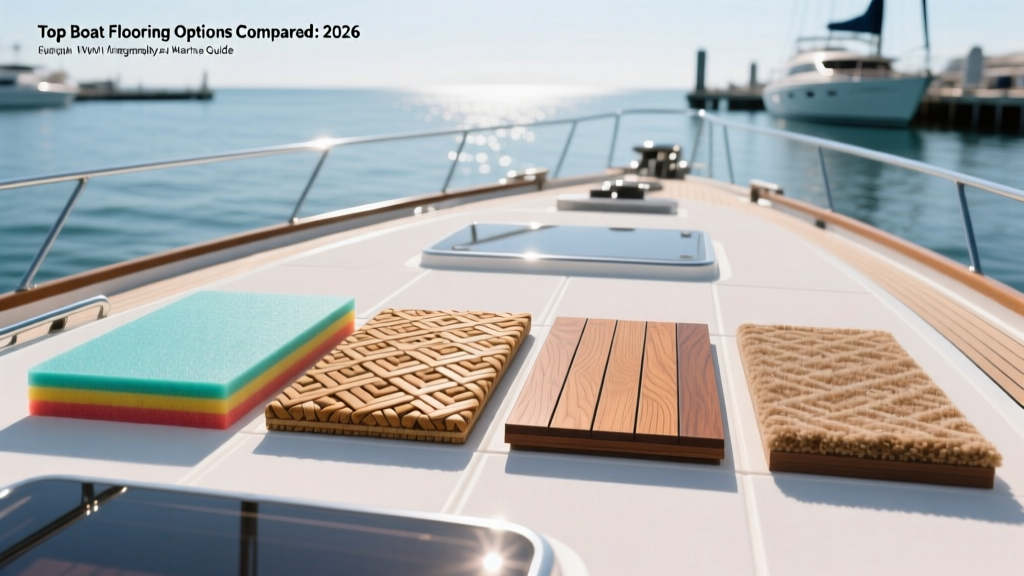
The Marine Flooring Matrix: Quick Comparison
Choosing the right deck covering requires balancing comfort, weight, maintenance, and budget. The marine environment is brutally unforgiving; materials that perform well in residential settings will delaminate, mildew, or degrade under constant UV exposure and saltwater intrusion. Below is a high-level comparison of the five dominant materials used in modern vessel outfitting.
| Material | Avg. Cost (per sq. ft.) | Weight (per sq. ft.) | UV & Water Resistance | Best Hull Application |
|---|---|---|---|---|
| Closed-Cell EVA Foam | $4.50 - $7.00 | 0.20 - 0.30 lbs | Excellent | Center Consoles, Bay Boats, Skiffs |
| Luxury Woven Vinyl | $7.00 - $12.00 | 1.10 - 1.40 lbs | Excellent | Pontoons, Deck Boats, Cruisers |
| Synthetic Teak | $25.00 - $45.00 | 2.20 - 2.80 lbs | Good (Heat issues) | Motor Yachts, Cabin Cruisers, Cockpits |
| Marine Carpet (Poly) | $2.50 - $5.00 | 0.90 - 1.20 lbs | Fair (Mildew risk) | Bass Boats, Budget Pontoons |
| Aluminum Tread Plate | $3.00 - $6.00 | 1.50 - 2.00 lbs | Excellent | Workboats, Jon Boats, Utility Skiffs |
Deep Dive: Top 5 Boat Flooring Options Analyzed
1. Closed-Cell EVA Foam (The Angler's Standard)
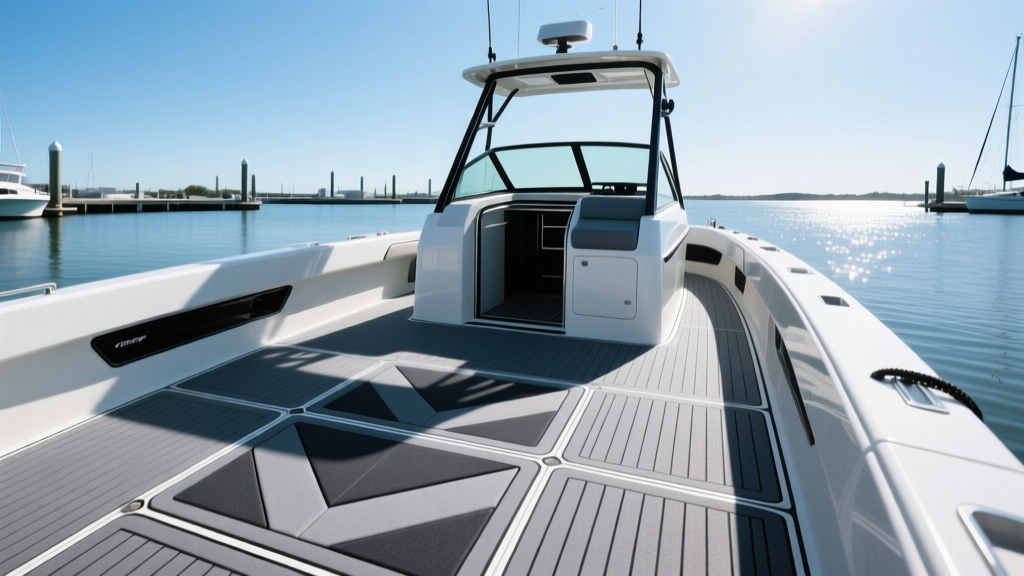
Closed-cell Ethylene-Vinyl Acetate (EVA) foam has entirely disrupted the saltwater fishing market. Brands like SeaDek and GatorStep utilize CNC routing to create custom-fit, multi-layered kits that provide exceptional traction and fatigue reduction for anglers standing all day. The 2026 standard is a dual-layer 24mm thickness with a textured micro-dot surface.
- Pros: Outstanding shock absorption, non-skid even when wet, highly customizable aesthetics, lightweight.
- Cons: Susceptible to tearing from sharp hooks or coolers, can stain from fish blood or fuel if not cleaned immediately.
2. Luxury Woven Vinyl (The Pontoon & Cruiser Upgrade)
Woven vinyl has effectively killed traditional marine carpet in the premium pontoon and cruiser market. Products like Infinity Luxury Woven Vinyl and AquaMat feature a tight, textile-like weave that mimics high-end indoor rugs but is extruded from 100% polyvinyl. The backing is typically a closed-cell foam or specialized marine felt that prevents water migration.
- Pros: Extremely easy to clean (spills wipe right off), resists mold and mildew, luxurious aesthetic, excellent UV stability.
- Cons: Heavier than EVA foam, requires professional heat-welding or specific adhesive taping for seams, higher material cost.
Installation Insight: Never use standard indoor carpet adhesive for woven vinyl. The plasticizers in the vinyl backing will migrate into standard glues, turning them into a gooey, non-curing mess. You must use a vinyl-compatible marine adhesive, such as Infinity's Vinylock or a high-solids acrylic marine adhesive.
3. Synthetic Teak (The Yacht Aesthetic)
For vessels requiring the classic look of Burmese teak without the relentless maintenance of sanding and oiling, synthetic teak (PVC-based) is the undisputed choice. Flexiteek 2G and Dek-King are the industry leaders, offering planks that are CNC-machined, heat-welded at the seams, and feature integrated black or white caulking lines.
- Pros: Zero maintenance (cleans with soap and water), identical visual appeal to real wood, highly durable against impacts.
- Cons: Very expensive, extremely heavy (impacting vessel center of gravity and fuel economy), high heat retention.
4. Marine-Grade Carpet (The Budget Traditionalist)
Traditional 20oz to 28oz polypropylene marine carpet remains a staple for budget-conscious builds and tournament bass boats. While it offers a soft feel and low initial cost, it is fundamentally a legacy material being phased out of premium builds.
- Pros: Lowest upfront cost, soft on bare feet, easy to stretch and install around complex curves.
- Cons: Traps moisture, dirt, and fish slime, leading to odors and rot. Backing can degrade and separate from the subfloor.
Subfloor Protection: If you must use carpet, ensure the plywood subfloor is sealed with at least two coats of marine-grade epoxy resin before laying the carpet. The rubber or felt backing of marine carpet acts as a sponge; if water penetrates the weave, it sits against the wood, causing catastrophic plywood delamination over time.
5. Aluminum Tread Plate (The Workboat Workhorse)
For commercial fishing vessels, landing craft, and utility jon boats, bare aluminum diamond tread plate (often 1/8" or 3/16" thick) is the standard. It is typically welded directly to the aluminum hull stringers.
- Pros: Indestructible, handles heavy cargo and cleated boots, zero rot risk, structural integrity.
- Cons: Extremely slippery when wet or covered in fish slime, conducts heat rapidly, noisy.
To mitigate the traction and heat issues, many owners apply a textured polyurethane coating like Tuff Coat or lay down removable, heavy-duty rubber mats (like Horse Stall mats) in high-traffic zones during the summer months.
The Surface Prep Protocol: Why Marine Floors Fail
According to marine surveyors and industry guidelines from organizations like the National Marine Manufacturers Association (NMMA), 80% of aftermarket flooring failures are due to improper substrate preparation, not material defects. Fiberglass decks are pulled from molds coated with silicone or wax-based mold release agents. If these agents are not chemically stripped, no adhesive will bond to the gelcoat.
- Initial Sanding: Scuff the entire fiberglass surface with 80-grit sandpaper to create a mechanical profile.
- Chemical Stripping: Wipe the surface with a clean, lint-free rag soaked in Acetone or Methyl Ethyl Ketone (MEK). Note: MEK is a stronger solvent but requires strict respiratory PPE and is illegal to sell in some jurisdictions (like California) due to VOC limits.
- The Water Break Test: Spray the deck with clean water. If the water beads up, mold release is still present. If it sheets out evenly, the surface is ready for adhesive.
- Adhesive Application: Apply glue to both the substrate and the flooring backing (double-glue method). Allow it to flash off (become tacky) for 15-20 minutes before pressing the materials together.
For comprehensive maintenance and hull prep standards, resources provided by BoatUS Expert Advice emphasize that rushing the solvent-wipe phase is the primary cause of costly warranty voids on custom SeaDek and Flexiteek installations.
Decision Framework: Match the Floor to the Hull
Do not choose a material based solely on aesthetics; match the physical properties of the floor to the operational reality of your vessel.
- Offshore Center Console / Bay Boat: Choose EVA Foam. You need lightweight material that won't affect the hull's running pad, and the shock absorption is vital when pounding through 4-foot chop. Stick to lighter colors (storm gray/white) to prevent the deck from warping under intense UV.
- Pontoon / Deck Boat: Choose Luxury Woven Vinyl. These boats are meant for entertaining, food, and drinks. Woven vinyl cleans up instantly from spilled wine or sunscreen and provides a high-end residential feel that appeals to passengers.
- Motor Yacht / Express Cruiser: Choose Synthetic Teak. The weight penalty is negligible on a 15,000 lb vessel, and the prestige and barefoot comfort of a teak-look cockpit are mandatory for the yacht resale market. Consult Yachting Magazine archives for specific resale value data on synthetic teak retrofits.
- Tournament Bass Boat: Choose Marine Carpet (28oz). Bass boats require carpet to prevent hard plastic baits and heavy trolling motor batteries from scuffing the gelcoat. The soft pile also allows anglers to use brush grips on fish without damaging the slime coat.
Written by
Priya KapoorPriya Kapoor is a real estate market analyst and construction economics researcher with expertise in housing affordability, development feasibility, and infrastructure investment. She holds a Master of Regional Planning from Cornell University and previously worked as a senior analyst at CBRE's Investment Properties group, where she modeled returns for $4B in mixed-use development pipelines. Priya now runs an independent research practice advising developers, municipalities, and REITs on construction cost forecasting and market timing. She publishes the quarterly "BuildMat Market Pulse" report tracking material price indices across 12 commodity categories. Based in Austin, TX, Priya serves on the board of Habitat for Humanity Austin and is a marathon runner.
More from Priya Kapoor
View all
Construction Cost
Cost to Build a 1600 Sq Ft Home in 2026: Full Breakdown
Accurate 2026 cost to build a 1600 sq ft home—material, labor, and regional pricing breakdowns included. Plan your budget with real-time estimates.
Aug 11, 2026

Wood & Lumber
Name the Types of Wood for Pressure Treatment and Preservation
Learn how to name the types of wood best suited for pressure treatment. Compare species treatability, chemical retention levels, and 2026 preservation costs.
Aug 4, 2026

Stone & Masonry
Stone Veneer Suppliers Lindenhurst: 2026 Cost Analysis
Analyze 2026 stone veneer costs in Lindenhurst, NY. Compare local supplier pricing, delivery fees, and Suffolk County installation labor rates.
Aug 4, 2026