Top Flooring Financing Options in Jacksonville FL: 2026 Cost Guide
Compare 2026 flooring financing options in Jacksonville, FL. Analyze HELOCs, POS retail plans, and local credit union loans for your next install.
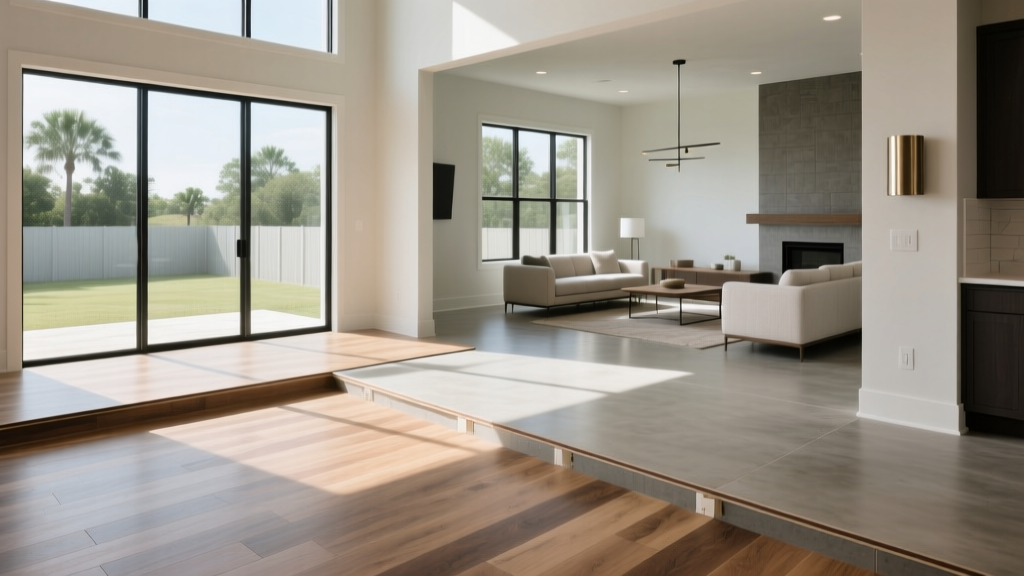
The True Cost of Flooring in Jacksonville's 2026 Market
Jacksonville’s humid subtropical climate and shifting real estate landscape dictate strict requirements for residential flooring. In 2026, the Duval County median home value hovers around $325,000, meaning homeowners in neighborhoods from Riverside to Southside are increasingly investing in moisture-resistant, high-ROI materials like Luxury Vinyl Plank (LVP) and large-format porcelain tile. However, upgrading a standard 1,500-square-foot home is a significant capital expenditure. Before selecting a payment method, you must understand the localized cost baseline.
Average 2026 Flooring Costs in Jacksonville, FL (1,500 Sq. Ft.)
| Material Type | Material Cost (Per Sq. Ft.) | Local Labor Cost (Per Sq. Ft.) | Total Project Estimate |
|---|---|---|---|
| Rigid Core LVP (Waterproof) | $3.50 - $5.50 | $2.00 - $3.50 | $8,250 - $13,500 |
| Porcelain Tile (Wood-Look) | $4.00 - $8.00 | $4.50 - $7.00 | $12,750 - $22,500 |
| Engineered Hardwood | $6.00 - $10.00 | $3.50 - $5.00 | $14,250 - $22,500 |
Note: Labor rates in Jacksonville reflect 2026 prevailing wages for licensed contractors. Demolition of existing flooring and subfloor leveling (common in older Arlington or Avondale homes) can add $1.50 to $3.00 per square foot.
With total project costs frequently exceeding $10,000, relying solely on cash reserves is impractical for many households. Below, we break down the structural mechanics, hidden costs, and strategic applications of every major flooring financing option available to Jacksonville residents.
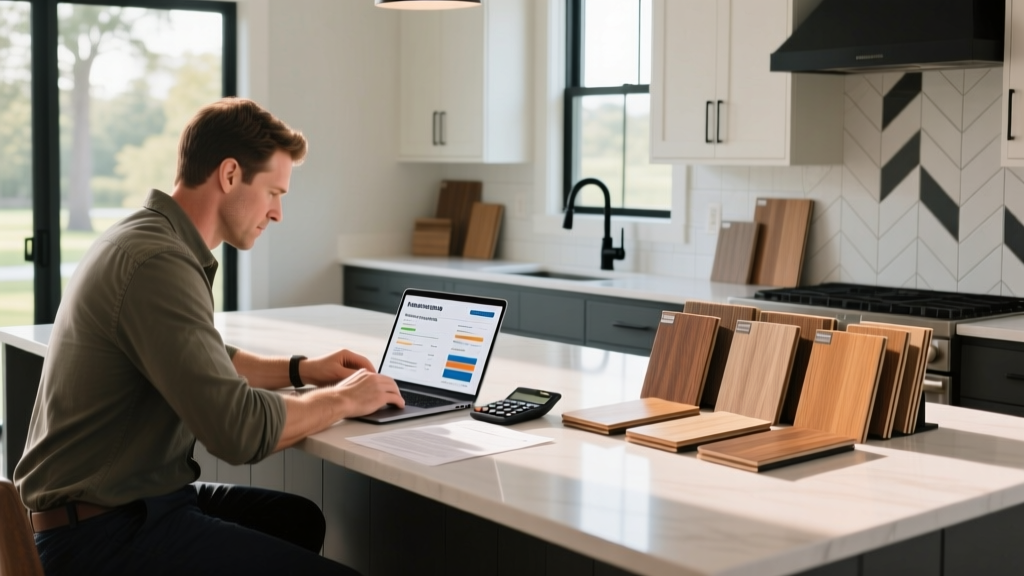
Point-of-Sale (POS) Retailer Financing: The Deferred Interest Trap
Walk into any major flooring retailer on Southside Boulevard or Beach Boulevard, and you will be offered a store-branded credit card—typically issued by Synchrony Bank or Wells Fargo. These Point-of-Sale (POS) plans usually advertise '0% APR for 18 or 24 months' on purchases over $2,500. While this appears to be free money, the underlying mechanics require intense scrutiny.
How Deferred Interest Actually Works
Most retail flooring cards do not offer a true 0% interest waiver. Instead, they utilize deferred interest. If you finance a $12,000 LVP installation at a promotional 0% APR for 18 months, interest is still accruing in the background at the card's standard APR (often 28.99% to 31.99%). If you fail to pay the exact $12,000 balance before the 18th month ends—even if you are short by $10—you will be retroactively charged nearly 30% interest on the entire original $12,000 from day one.
Best Use Case: POS financing is only mathematically sound if you have the cash to pay off the entire balance sitting in a high-yield savings account, and you are simply using the 18-month term to maintain liquidity while earning interest on your cash. If you are relying on monthly income to pay down the balance, the risk of retroactive interest makes this a high-danger option.
Home Equity Lines of Credit (HELOC) and Home Equity Loans
For Jacksonville homeowners who have built substantial equity, tapping into your property’s value remains the most cost-effective way to finance a major flooring overhaul. With Duval County property values appreciating steadily over the last five years, many residents possess the equity required to secure favorable rates.
HELOC vs. Home Equity Loan: Which Fits Your Project?
- Home Equity Loan: Provides a lump-sum payout with a fixed interest rate (averaging 7.8% to 9.2% in early 2026). Ideal for a single, massive flooring project where the total cost is known upfront, such as tiling an entire 2,500 sq. ft. home in St. Johns County.
- HELOC: Functions like a credit card secured by your home, featuring a variable interest rate and a 'draw period' (usually 10 years). Ideal for phased renovations—for example, installing hardwood in the main living areas this year, and upgrading the bathrooms and bedrooms next year.
According to the CFPB's comprehensive guide on HELOCs, borrowers must account for closing costs, which can range from 2% to 5% of the loan amount. However, many local Jacksonville institutions, such as VyStar Credit Union or Ameris Bank, frequently run promotions that waive HELOC origination and appraisal fees for existing members, significantly reducing the barrier to entry.
'When financing a home improvement project that adds permanent value to the property, such as high-end tile or engineered hardwood, leveraging home equity usually yields the lowest effective interest rate and offers potential tax advantages that unsecured loans cannot match.'
Unsecured Personal Loans: Speed Without Collateral Risk
If you lack sufficient home equity, or if you are purchasing flooring for a condominium in Jacksonville Beach where structural modifications and equity extraction are complex, an unsecured personal loan is your primary alternative. Personal loans provide a lump sum of cash with fixed monthly payments and fixed terms, typically ranging from 24 to 60 months.
2026 Personal Loan Rate Matrix (Excellent to Good Credit)
| Credit Score Tier | Estimated APR Range | Max Loan Amount | Best For |
|---|---|---|---|
| Excellent (760+) | 8.5% - 11.0% | $50,000 - $100,000 | Whole-home luxury tile or hardwood installs |
| Good (700 - 759) | 11.5% - 15.0% | $35,000 - $50,000 | Standard LVP or carpet replacement |
| Fair (660 - 699) | 16.0% - 24.0% | $15,000 - $25,000 | Single-room repairs or small area rugs |
The distinct advantage of a personal loan is speed and lack of collateral risk. Local Jacksonville credit unions can often fund a personal home improvement loan within 48 hours, compared to the 30-to-45-day underwriting process required for a HELOC. The trade-off is a higher interest rate, as the lender assumes all the risk. For a detailed breakdown of how these unsecured products are regulated and structured, review the CFPB's overview of personal loans.
Strategic Decision Framework: How to Choose Your Financing
Do not default to the financing option presented by the flooring contractor at the kitchen table. Use this step-by-step framework to align your financial vehicle with your specific project parameters.
- Assess Project Scale and Timeline: If your flooring project costs under $5,000 (e.g., replacing carpet in three bedrooms), a 0% introductory APR general-purpose credit card (not a store card) paid off within 12 months is the most efficient route. If the project exceeds $15,000, move to equity-backed options.
- Calculate Your Equity Position: Pull your current mortgage statement and compare it to Jacksonville's 2026 localized Zillow or Redfin estimates. If you have more than 20% equity post-renovation, apply for a Home Equity Loan to lock in a fixed rate before the Federal Reserve adjusts baseline rates further.
- Interrogate the Contractor's Preferred Lender: Many local Jacksonville flooring installers partner with third-party financing networks like GreenSky or Service Finance. These platforms often offer 'reduced APR' (e.g., 5.99% for 60 months) rather than deferred interest. However, the contractor pays a 3% to 8% merchant discount fee to offer this. Ask your contractor if they will reduce the total price of the flooring installation by 5% if you choose to pay cash or use your own HELOC instead of their in-house financing.
- Factor in Florida's Climate Taxes: When budgeting your loan amount, always add a 10% contingency for subfloor remediation. Jacksonville's high water table and frequent summer thunderstorms mean that ground-level slab foundations (common in Mandarin and Orange Park) often harbor hidden moisture damage that must be sealed with epoxy before new flooring can be laid.
Securing the right flooring financing in Jacksonville requires looking past the glossy '0% APR' banners in retail showrooms and analyzing the mathematical reality of deferred interest, local equity positions, and unsecured loan rates. By matching the loan structure to the physical scale of your project, you protect your household cash flow while upgrading your home's durability against Florida's demanding climate.
Written by
Elena RodriguezElena Rodriguez is a civil engineer and technical writer specializing in concrete technology, masonry systems, and ASTM/ACI compliance. She earned her B.S. in Civil Engineering from Texas A&M University and spent a decade at a materials testing laboratory, performing over 2,000 concrete compressive strength tests and masonry prism evaluations. Elena is an ACI-certified Field Testing Technician (Grade I) and a member of ASTM Committee C12 on Natural Building Stone. She currently consults on forensic engineering cases involving concrete failures and moisture intrusion. Based in San Antonio, TX, Elena is a proud member of the Society of Women Engineers (SWE) and coaches her daughter's FIRST Robotics team.
More from Elena Rodriguez
View all
Walls & Panels
Cost Analysis: Light Gauge Steel Framing Advantages and Disadvantages
Evaluate light gauge steel framing advantages and disadvantages through a strict cost analysis lens, comparing material, labor, and lifecycle expenses.
Aug 4, 2026

Walls & Panels
Gypsum Board Types: Exact Specifications, Thickness & Dimensions
Compare standard, Type X, and moisture-resistant gypsum board types. Get exact specifications, thicknesses, dimensions, and ASTM standards for your project.
Aug 4, 2026

Fire Resistance
Best Fire-Resistant Outdoor Decking Materials: 2026 Buyer Guide
Discover the best fire-resistant outdoor decking materials for 2026. Compare Class A PVC, aluminum, and hardwood options for WUI compliance and safety.
Aug 4, 2026