Cracked Foundation Repair Cost: 2026 Selection Framework
Evaluate cracked foundation repair cost with our 2026 selection framework. Compare epoxy, carbon fiber, and piering prices to choose the right fix.
The Triage Protocol: Identifying Crack Severity
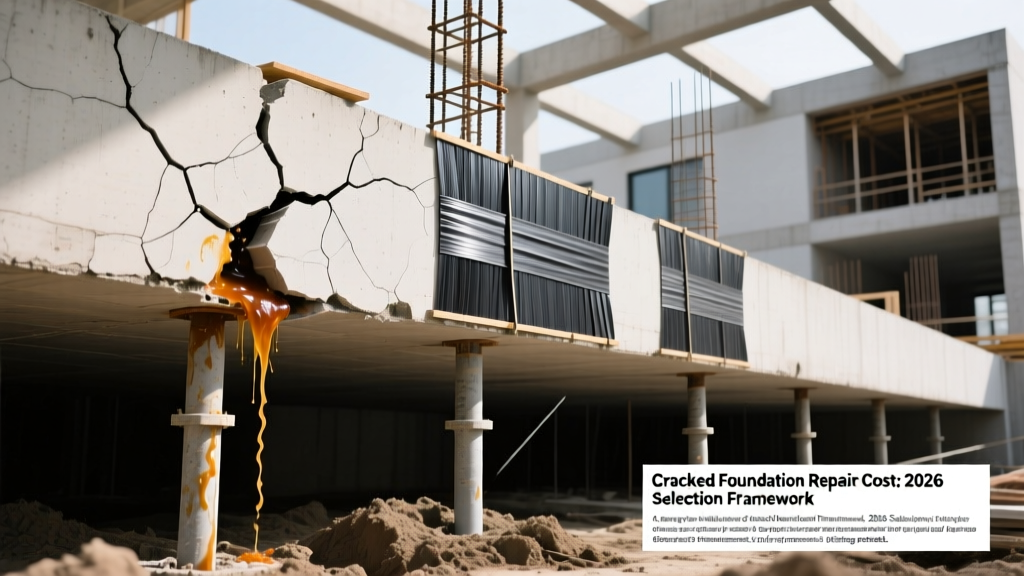
Not all foundation cracks threaten structural integrity, and misdiagnosing a crack is the fastest way to overspend on unnecessary repairs. Before evaluating the cracked foundation repair cost, you must categorize the failure mode. According to the American Concrete Institute (ACI) guidelines, concrete cracking is inevitable, but structural versus non-structural cracks dictate entirely different repair pathways. Non-structural shrinkage cracks typically measure less than 1/16-inch wide and run vertically or diagonally from corners. Structural cracks often present as horizontal bowing indicators, stair-step patterns in masonry, or vertical shear cracks exceeding 1/4-inch in width.
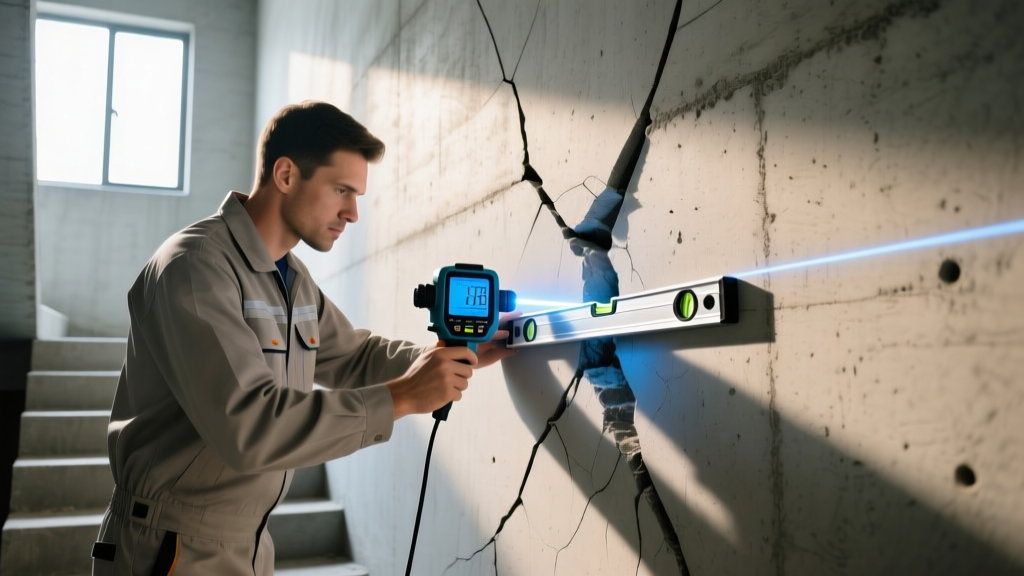
If a crack is wide enough to fit a US quarter coin (approx. 0.95 inches) or shows progressive widening over a 30-day monitoring period using a rigid acrylic crack monitor, bypass cosmetic sealants. You require a structural engineering assessment before selecting a repair method.
Cracked Foundation Repair Cost Matrix (2026 Data)
Pricing for foundation repair fluctuates based on regional soil conditions, accessibility, and material costs. The following matrix reflects national averages for 2026, synthesizing data from major home service aggregators like Angi and financial analysts at Bankrate.
| Repair Method | Primary Application | Average Cost Range | Unit Cost Metric |
|---|---|---|---|
| Epoxy Injection | Structural welding of dormant shrinkage cracks | $350 - $900 | $8 - $12 / linear foot |
| Polyurethane Foam | Sealing active leaks & flexible crack bridging | $500 - $1,800 | $15 - $25 / linear foot |
| Carbon Fiber Straps | Stabilizing inward bowing walls (< 2 inches) | $3,500 - $7,000 | $400 - $600 / strap |
| Steel I-Beams | Severe wall deflection & heavy lateral loads | $5,000 - $12,000 | $700 - $1,100 / beam |
| Helical Piers | Lifting settled footings in expansive soils | $10,000 - $25,000+ | $1,800 - $2,800 / pier |
| Push Piers | Stabilizing heavy dead loads to bedrock | $8,000 - $20,000 | $1,400 - $2,200 / pier |
Selection Framework: Matching Repair to Failure Mode
Selecting the correct repair method requires mapping the symptom to the underlying geotechnical or structural failure. Applying a cosmetic sealant to a settling foundation will result in recurrent cracking and water intrusion within months.
Scenario A: Non-Structural Shrinkage & Moisture Intrusion
If your foundation is structurally sound but suffers from water seepage through dormant or slightly active cracks, you must choose between epoxy and polyurethane injections.
- Low-Modulus Epoxy: Use this for dry, dormant cracks where you want to restore the original tensile strength of the concrete. Epoxy effectively 'welds' the concrete back together, boasting a tensile strength exceeding 4,000 PSI. It is rigid and will re-crack if the foundation shifts again.
- Hydrophobic Polyurethane: Select this for actively leaking cracks or areas with minor seasonal soil movement. Polyurethane expands up to 20 times its liquid volume, chasing water through the capillary network of the soil outside the wall. It remains flexible, accommodating minor thermal expansion and contraction without tearing.
Scenario B: Bowing Walls & Lateral Hydrostatic Pressure
Horizontal cracks or stair-step cracks accompanied by inward wall lean indicate lateral soil pressure exceeding the wall's shear capacity. The selection here depends on the degree of deflection.
If inward deflection is less than 2 inches, utilize Carbon Fiber/Kevlar grid straps bonded with structural epoxy. They require zero excavation and preserve interior square footage. If deflection exceeds 2 inches, carbon fiber is insufficient; you must install adjustable steel I-beams (e.g., PowerBrace systems) anchored to the floor joists and slab to actively push the wall back to plumb over time.
Scenario C: Differential Settlement & Vertical Shear
When one section of the foundation sinks relative to another, it creates vertical shear cracks that taper (wider at the top or bottom). This requires underpinning to transfer the structural load to stable soil strata.
- Helical Piers: Shaped like giant screws, these are torqued into the soil. The installation torque directly correlates to the load-bearing capacity (verified via the FEMA Building Science guidelines for deep foundations). They are ideal for lighter structures or new construction additions where bedrock is exceptionally deep.
- Push Piers: These rely on the sheer weight of the structure to drive steel pipe sections down to load-bearing bedrock. They are the mandatory choice for heavy, multi-story masonry homes where helical piers cannot achieve sufficient torque without fracturing the existing footing.
Hidden Cost Variables That Inflate Quotes
The cracked foundation repair cost provided in initial estimates rarely accounts for site-specific complications. Budget an additional 15% to 30% contingency for the following edge cases:
- Interior Finish Destruction: If your basement is finished, contractors must remove drywall, insulation, and flooring to access the foundation wall. Rebuilding these finishes is almost never included in the structural repair quote.
- Exterior Excavation & Landscaping: Installing exterior French drains or applying exterior waterproofing membranes requires digging down to the footing. Replacing destroyed HVAC lines, sprinkler systems, or mature landscaping adds $2,000 to $5,000 to the project.
- Geotechnical Engineering Reports: For severe settlement, contractors will require a third-party soil analysis and structural engineer stamp before pulling municipal permits. Expect to pay $800 to $1,500 for this documentation.
- Concrete Footing Condition: If the existing concrete footing is spalling or degraded, the crew must pour new concrete 'pillows' or encase the footing in steel brackets before attaching piers, adding $300 to $500 per pier location.
The 4-Step Contractor Vetting Checklist
The foundation repair industry is fraught with high-pressure sales tactics and proprietary systems that lack independent testing. Protect your investment by enforcing this vetting framework:
- Demand ICC-ES Reports: Never accept a contractor's internal testing data. Require the International Code Council Evaluation Service (ICC-ES) report for the specific pier or carbon fiber product being installed. This proves the product meets IBC (International Building Code) standards.
- Verify Manufacturer Certification: Top-tier manufacturers (like Foundation Supportworks or Chance Helical Piers) require installers to pass rigorous certification. An uncertified crew using premium materials will void the lifetime warranty.
- Require a 'Lock-Out' Warranty: Ensure the warranty covers not just the materials, but the performance of the repair. If the wall bows again or the pier settles, the contractor must return and adjust it at zero cost. Verify if this warranty is transferable to the next homeowner, which preserves your property's resale value.
- Check for Municipal Permits: Structural underpinning and wall stabilization almost always require local building department permits. If a contractor suggests bypassing permits to 'save you money,' walk away immediately. Unpermitted structural work will halt future real estate transactions.
Frequently Asked Questions
Does homeowners insurance cover cracked foundation repair?
Standard HO-3 policies explicitly exclude foundation cracking caused by soil expansion, contraction, settling, or hydrostatic pressure. Insurance will only cover foundation damage if it is the direct result of a covered peril, such as a sudden plumbing leak under the slab or a vehicle striking the structure.
Can I just patch the crack myself with hydraulic cement?
Hydraulic cement is a rigid, brittle material designed for plugging active, high-volume water flows temporarily. It lacks the flexibility to handle seasonal foundation movement and will inevitably crack again, often trapping water inside the wall cavity and accelerating rebar corrosion. It is not a permanent repair solution.
Written by
Sarah WhitfieldSarah Whitfield is a chartered quantity surveyor (MRICS) and construction cost analyst with 15 years of experience in material pricing, procurement strategy, and project budgeting. She earned her degree in Construction Management from the University of Reading (UK) and has worked on projects ranging from $2M custom homes to $180M mixed-use developments across North America and Europe. Sarah currently leads cost estimating for BuildMat Insight, maintaining a proprietary database of 4,000+ material price points updated quarterly. She is a frequent contributor to RSMeans cost data panels and has presented at the International Cost Engineering Council (ICEC) congress. Based in Denver, CO, Sarah is an avid trail runner and volunteer mentor for Women in Construction.
More from Sarah Whitfield
View all
Wood & Lumber
What Are the Different Types of Wood? A Builder's Guide
Compare structural softwoods, finish hardwoods, and engineered lumber. Analyze Janka ratings, MOE values, and 2026 pricing for construction.
Aug 4, 2026

Walls & Panels
Steel Framing vs Wood Framing: Corrosion and Moisture Defense
Compare steel framing vs wood framing for moisture resistance. Learn about galvanized coatings, condensation risks, and corrosion protection strategies.
Jul 21, 2026

Stone & Masonry
How to Cut Stone Veneer: Wet Saw vs Grinder Comparison
Compare the best tools for cutting stone veneer. We review wet saws, angle grinders, and chop saws to help you achieve clean, chip-free cuts.
Jul 21, 2026